


Europe’s quest for financial sovereignty
Spooked by US adventurism, Russian aggression and Chinese protectionism, the EU is rushing to assert its financial sovereignty through a range of initiatives. Will they work?

When the Italian bank UniCredit started building a significant stake in the German lender Commerzbank in 2024 as part of a takeover strategy, the German government strongly opposed the move, calling it ‘hostile,’ partly due to Commerzbank’s importance to German industry. Commerzbank rejected the offer, although officials at the European Central Bank (ECB) warned that such resistance undermined the single European banking market. The episode, however, served as a stark reminder of a contradiction in the EU’s financial architecture: although member states support deeper integration, they are often reluctant to surrender control. Yet further consolidation may still lie ahead, as calls for EU autonomy in finance continue to grow.
Pushing for autonomy
Ever since the EU single market emerged in the 1990s, experts have argued that the EU will never become a true superpower unless its financial services sector becomes both genuinely European and globally competitive. Yet it has been a recent confluence of internal and external pressures that has added urgency to these demands. Brexit marked a setback for the EU by depriving it of the City of London, its single globally significant financial centre; since then, the bloc has relied on a patchwork of hubs – including Frankfurt, Dublin, Paris, Milan and Amsterdam – none of which match the scale of New York or Hong Kong. Then came Russia’s invasion of Ukraine, which prompted financial sanctions against Russia, including the exclusion of Russian banks from the Brussels-based SWIFT system and the freezing of Russian assets in Europe, all stressing the EU’s alignment with US financial architecture.
Even more significant was Trump’s victory in the 2024 presidential election, which reminded Europeans that nationalism is a feature rather than a bug of 21st-century America. Since Trump returned to the presidency, US economic policy has been staunchly anti-European, with higher tariffs on EU products making the need for European sovereignty more pressing. A speech by Vice President JD Vance in Munich last year unsettled European policymakers, as did renewed pressure on Denmark over Greenland, including suggestions the territory could come under US control.
Fears that the invisible thread holding together the transatlantic alliance has frayed are now spilling over into the financial sector. European policymakers are openly questioning whether the Federal Reserve, under a nationalist US administration, would still fulfil its role as the global lender of last resort, as it did during the Great Recession.
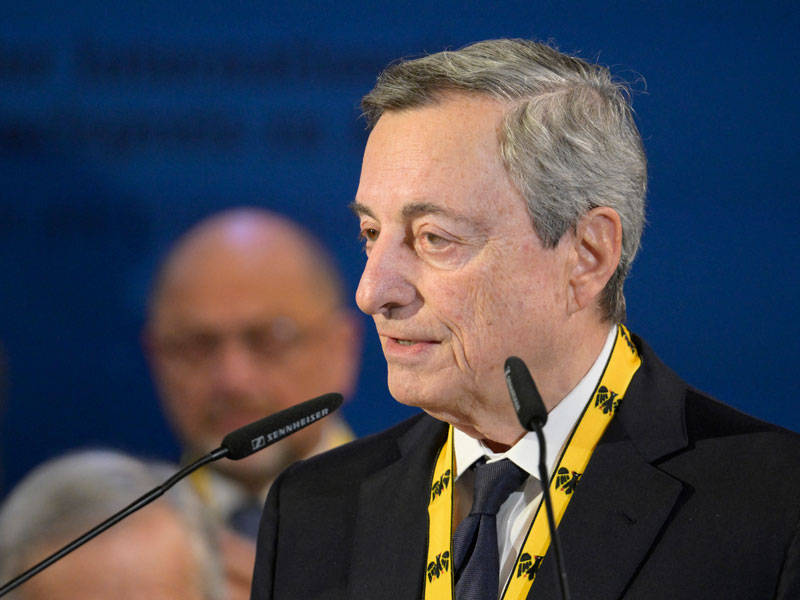
A report led by Mario Draghi has injected fresh urgency into calls for European financial sovereignty, arguing that the EU risks falling behind competitors unless it accelerates financial integration. The former ECB president frames the challenge as a strategic imperative in an era of geopolitical fragmentation. A separate EU-commissioned report led by Enrico Letta reinforces the message from a single market perspective. Letta argues that Europe must complete its internal market to unlock scale. His proposals emphasise removing barriers to cross-border investment, harmonising rules and strengthening common institutions to mobilise private capital. Both reports highlight structural weaknesses – fragmented capital markets, limited risk-sharing and insufficient depth in financial services – and warn that without reform Europe will struggle to fund priorities such as the green transition, digital innovation and, crucially in a fraying geopolitical environment, defence. True to form, European policymakers have taken their time to absorb the lessons. “The Draghi report has been widely discussed by political leaders,” says Holger Schmieding, chief economist at Berenberg Bank, the world’s oldest merchant bank. “In that sense, it has shaped the debate. But so far, few of the steps Draghi has recommended have been taken.” Yet, taken together, the two reports have helped crystallise a consensus that financial integration is essential if Europe is to secure its strategic autonomy.
A question of capital
At the epicentre of the debate lies the consolidation of EU capital markets, a project the bloc has been pursuing for over a decade. One of the weaknesses in Europe’s economic model identified by the Draghi report is the underuse of the bloc’s accumulated capital. Compared with the US, Europe has struggled to channel savings into investment for companies, particularly in the technology sector. Approximately €14trn of retail capital in Europe is estimated to be sitting idle in deposits.
Another concern is that Europe’s investment landscape is gradually being dominated by US firms. American investment banks already play a leading role in Europe’s capital markets, accounting for roughly 40 percent of investment banking fees and an even larger share in key areas such as M&A and equity underwriting. Three US asset managers – BlackRock, Vanguard and State Street – have been steadily expanding their presence in Europe while often maintaining a home bias toward US investments. The sector remains underdeveloped in Europe, as governments discourage cross-border activity to retain domestic savings and sustain demand for public debt.
In a bid to deepen Europe’s capital markets, the European Commission has relaunched its plans for a capital markets union under the broader banner of a ‘Savings and Investment Union.’ Measures under consideration include tax incentives to encourage retail investment in European assets, changes in capital requirements for banks and insurers to support lending, and reforms to private pension and savings frameworks aimed at channelling household savings into capital markets.
Another goal is to build a unified regulatory regime for equities, bonds and other investment vehicles that could improve investor confidence and reduce regulatory arbitrage. By harmonising regulations and removing barriers to cross-border investments, the scheme aims at diversifying funding sources for businesses beyond the banking sector.
The reforms aim to indirectly tackle a long-standing problem in the European economy: overbanking – too many banks competing for a relatively fixed pool of capital. The large number of banks across Europe has limited economies of scale and weakened competition, while encouraging firms to rely more heavily on bank lending than on bonds or equity financing. This, in turn, has slowed the development of deeper capital markets. Sceptics warn that even if implemented, the plans do not go far in addressing structural problems. “The proposals so far will further harmonise capital markets but not complete it {the union},” says Carsten Brzeski, global head of macro research at ING Research, part of the Dutch bank ING, adding: “Another hampering issue will be tax issues and how to deal with different taxation of capital gains and asset wealth.”
What is fuelling optimism, though, is a gradual change in the political mood. The bloc’s largest economies have backed the Commission’s proposal to expand the supervisory role of the European Securities and Markets Authority (ESMA) in Paris, giving it direct oversight of major cross-border market infrastructures, including central counterparties, securities depositories, selected trading venues and crypto-asset service providers.
Currently supervision remains largely national, even for institutions whose activities span multiple jurisdictions, as member states resist EU-level oversight. “National regulators have and will continue to have for a long time a key role as components of the euro area-wide supervisory system,” argues the economist Ignazio Angeloni, senior policy fellow at the Leibniz Institute for Financial Research SAFE and former member of the ECB’s supervisory board. A mixed model, such as the one created for banking supervision within the ECB during the eurozone debt crisis, would be the best option, he suggests. “The structure of the Single Supervisory Mechanism (SSM), where the supervisory board, effectively its decision-making arm, includes national banking supervisors as voting members, has proved viable and can be extended to market supervision.”
Long-awaited banking union is closer
Reforming Europe’s financial architecture requires reviving the politically sensitive project of a fully fledged banking union. However, removing the national barriers that fragment European banking has long proved difficult. The plan was announced with great fanfare in 2012 during the Eurozone debt crisis, but the job remains unfinished. Eurozone banking remains a loosely connected collection of national banking markets, given that deposit and loan markets have stayed largely under national control. The crisis triggered a retrenchment in cross-border banking activity, with EU banks’ cross-border exposures and interbank lending falling by 25 percent and 40 percent respectively. Yet Angeloni argues that the banking union has achieved its original goal: making banks safer and preserving financial stability. “No significant banking crises have occurred since then, while there have been some elsewhere in the world, bank balance sheets have been cleaned and bank profitability restored,” he says.
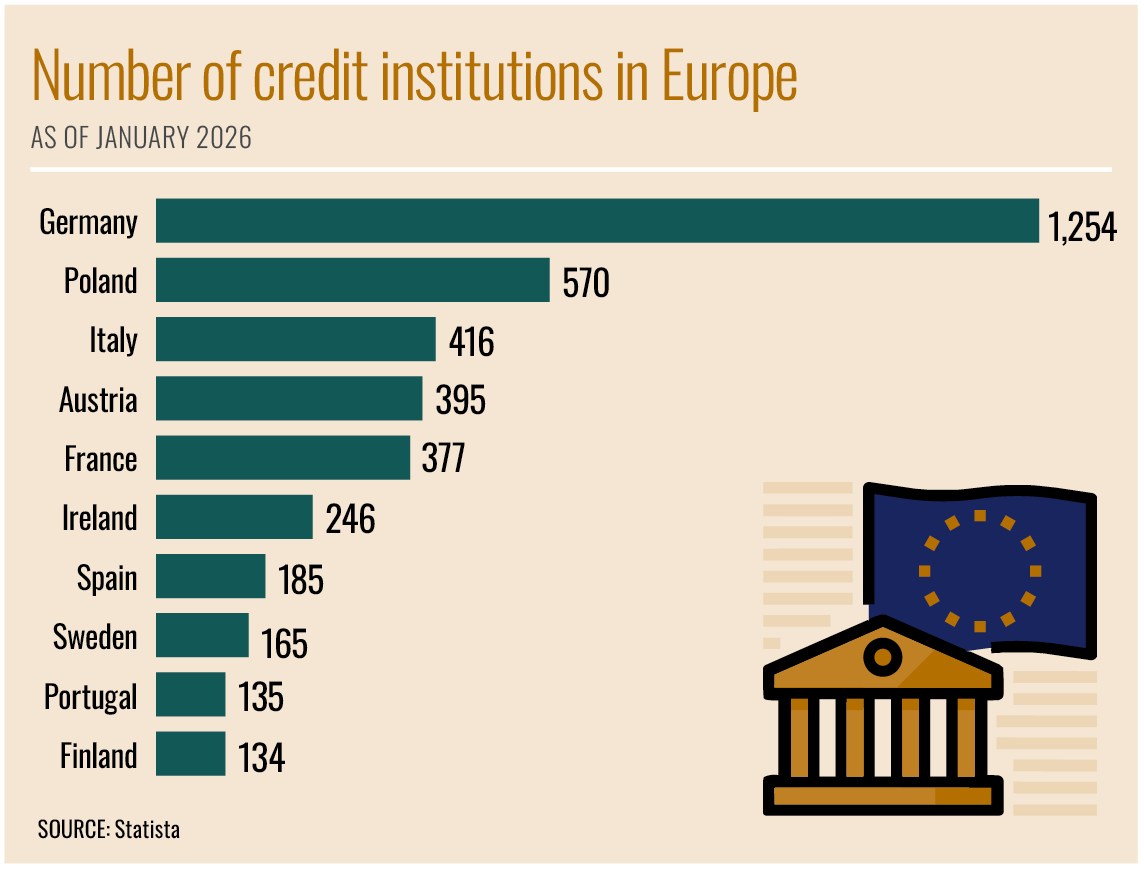
Most analysts agree that the missing piece is a shared deposit insurance scheme that would serve as a common safety net for depositors. Without it, national governments remain tied to their domestic banking systems. The Commission hopes that reviving plans for a European Deposit Insurance Scheme (EDIS) could unlock deeper integration by boosting cross-border banking groups and making it easier for lenders to operate across borders. “In an ideal world, it is critical,” Brzeski says about the plan. “In a more realistic world, a second-best capital markets union would not necessarily require a full EDIS but simply enough trust in the stability and solidity of harmonised national schemes.” The political obstacles that have stalled the project have not disappeared. Countries such as Germany and the Netherlands have long expressed concerns about risk-sharing, wary of underwriting banking systems in countries where non-performing loans have historically been higher. For their part, Southern member states argue that without shared protections, integration will remain incomplete.
Encouraging cross-border mergers and acquisitions is another key objective. Greater consolidation, Brussels argues, could strengthen profitability in a sector facing digital disruption and tighter margins. The Draghi report goes one step further, suggesting that cross-border banking activity should become fully equivalent to national activity through a ‘country-blind’ supervisory regime. Yet smaller countries fear that consolidation could mark the end of their national banking sectors and leave their financial systems dominated by larger economies. Many governments still provide direct or indirect guarantees to their domestic banks and seek to maintain a so-called ‘national champion’ that can compete internationally. Regional banks also continue to play a significant role in several countries, benefiting from less stringent supervision by national regulators than that applied to large banks under ECB oversight. Yet fostering a few large players that can compete with US and Asian banks is essential if the EU is to achieve financial sovereignty, Angeloni warns. “At present, even the largest EU banks have a largely national footprint. Because of lack of scale, they cannot compete with non-EU banking giants even in EU markets, particularly in investment banking and related areas, such as M&A and IPOs.”
Digital money
On the monetary front, the EU’s grant project is the ECB’s push for a digital euro, a central bank digital currency. A pilot phase is expected to be rolled out next year, with full issuance before the end of the decade. While still subject to political approval, the project has become a pillar of Europe’s ambition to reduce external dependencies, particularly from an increasingly hostile US and its dollar. “The aggressive stance adopted by the US over the past year toward the EU has certainly contributed to unblocking the legislative process related to the digital euro,” says Matteo Bursi, a researcher at the Italian think tank Istituto Affari Internazionali who specialises in the digital economy.
Europe’s investment landscape is gradually being dominated by US firms
At its core, the digital euro would offer European citizens and businesses a state-backed electronic means of payment, complementing cash. For policymakers, it addresses a strategic concern: Europe’s heavy reliance on foreign payment providers, including US card networks and fast-growing private platforms. With a digital currency, Europeans will have access to a secure public payment option in an era where private stablecoins and big tech payment systems expand. Such a development would also preserve the role of central bank money in the digital age, says Rebecca Christie, an expert on capital markets at the Brussels-based think tank Bruegel. “It is important that the ECB be the reference point for all things euro, not some kind of privately developed product that becomes the default because it found an unoccupied niche in the markets.”
Still, the initiative faces scrutiny. European banks have expressed concerns over potential deposit outflows, while privacy advocates question how user data will be protected. The ECB has sought to address these concerns by proposing holding limits and emphasising that transactions would be highly confidential. “The significant limitations currently being imposed on the digital euro, such as the absence of interest on deposits and the introduction of holding limits, substantially weaken the instrument, preventing it from serving monetary policy purposes and constraining its potential as an alternative to private bank deposits,” Bursi claims, adding that uptake could remain low, an outcome that would vindicate those who oppose the project, portraying it as a waste of public resources.
Ultimately, the digital euro is as much a political project as a technological and financial one. But expectations that it could reinforce the euro’s international role should be tempered, Bursi warns: “It would be misleading to expect a substantial impact, given that the use of the euro as a global reserve currency remains constrained by limited financial integration among European countries, in particular by the absence of a safe asset comparable to US Treasurys.”

Common debt, different priorities
This is one reason why calls for a deeper, more liquid EU-issued bond market are gaining traction in Brussels. Advocates argue that a larger pool of jointly issued debt as a European safe asset could attract long-term global capital and lower borrowing costs across the bloc.
Compared with the vast $40trn US Treasury market, Europe’s sovereign debt landscape remains fragmented. National bond markets dominate, limiting scale and reducing the euro’s appeal as a global reserve currency.
Momentum has been building since the pandemic-era launch of joint borrowing through a recovery fund, which demonstrated both investor appetite and the bloc’s capacity to issue large volumes of common debt. Supporters now see an opportunity to turn that temporary experiment into a more permanent feature of the EU’s financial architecture. Political resistance, however, has long been a barrier. Frugal northern countries where fiscal prudence is a deeply ingrained principle have been wary of mutualised debt, concerned it could amount to subsidising more indebted member states. “Jointly issued debt would enhance the international role of the euro and strengthen the financial sovereignty of the EU. But in the multi-national EU, joint bonds must be subject to strict conditions. They should only be issued to finance genuinely new common tasks, for instance as help for Ukraine or for common defence projects,” says Schmieding of Berenberg Bank. “They should not finance pre-existing EU tasks or national budgets. Otherwise, they would dilute the fiscal discipline that is required to keep borrowing costs low enough to be sustainable.”
The digital euro is as much a political project as a technological and financial one
Another concern is the EU’s lack of fiscal capacity to support debt issuance. “You need to embed Eurobonds in a political framework, which is essentially a fiscal union where you also have tax revenue at the European level to back those bonds,” says Nicolas Véron, a senior fellow at the US think tank Peterson Institute for International Economics and an expert on financial reform. “That requires treaty change, which is very difficult under the current circumstances.” Yet geopolitical tensions, the need for large-scale investment in defence and energy, and a growing recognition of Europe’s financing gaps are reshaping the debate. Fiscal conditions in southern Europe have also improved, with Spain, Italy, Portugal and Greece seeing debt levels stabilise or fall alongside upgrades in credit ratings. These trends are softening opposition and opening the door to incremental steps towards greater common debt issuance.
Europe’s Fintech Dependency
Europe’s ambition for financial sovereignty runs up against a critical vulnerability: much of the backbone of its financial system relies on non-European providers. European banks depend on US cloud companies such as Amazon Web Services, Microsoft Azure and Google Cloud to store data and run critical operations, a solution that creates concentration risk and exposes the sector to geopolitical or regulatory disruptions. Europe’s fintech sector has also struggled to match the dynamism of its US counterparts. Investment levels remain comparatively lower and the market is fragmented along national lines, limiting the ability of European fintechs to grow into global players.
Many flee to the US in search of deeper investor pockets; Revolut, Europe’s biggest fintech, has indicated that it is likely to choose the US as its listing destination. Payments are another crucial front. Much of Europe’s card-based payments system is routed through US giants such as Visa and Mastercard, while Chinese players like Alipay and WeChat Pay are also making forays into the European market. In response, EU policymakers and industry groups are exploring initiatives to build alternative payment solutions, but addressing these challenges will require sustained investment, regulatory coordination and political will. “The digital euro, if designed appropriately, would lead to the creation of a payment system that is independent from those currently in use, primarily US-based, and could therefore help reduce Europe’s reliance on foreign providers,” Bursi says.
Yet without a stronger domestic fintech ecosystem, Europe risks remaining dependent on foreign technology, undermining its goal of achieving financial sovereignty in a digital age. “The likelihood that the US could exploit Europe’s dependence on payment systems has remained limited, yet with Donald Trump’s return to the White House, those risks have increased,” warns Bursi, adding: “Although some initiatives have begun to take shape in Europe, the EU still lacks major private solutions capable of ensuring strategic autonomy in areas such as proximity payments.”
Together we stand
Optimists in Brussels hope that, although disparate in scope, these projects will reinforce one another, creating a virtuous cycle that will help Europe’s financial sector rediscover its mojo. A stronger banking union would support the savings and investments union by creating more stable cross-border banks able to channel savings into capital markets. In turn, robust capital markets would reduce overbanking and indirectly support banking consolidation. Eurobonds would provide the common safe asset needed to deepen those markets, while the digital euro would reinforce European payment infrastructure and reduce dependence on foreign providers.
“The banking union is a project of rationalising European banking into a single system instead of 27 national ones. That should in principle help to address the problem of overbanking, because this has partly to do with national fragmentation,” says Véron, adding: “Conversely, if you make capital markets more attractive and trustworthy, you could have rebalancing from banking intermediation to capital markets activity, which is needed to enhance the European economy’s growth potential.”
Yet, for all the momentum behind deeper integration, Europe’s path to financial sovereignty remains obstructed by a familiar set of barriers. Chief among them is the enduring power of national interests, expressed through lobbying by regulators, governments and banks that fear losing influence in a more centralised system. Control of finance can be a sensitive issue, given the role financial institutions play in funding domestic industries. Fragmentation limits cross-border consolidation, hinders the development of deep capital markets and complicates crisis management, yet national players remain loath to cede control to Brussels. Even if the Commission’s plans are up to the challenge, the question remains whether they will be diluted during implementation or delayed to the point of becoming untimely and ineffective, Angeloni warns. “This will largely depend on political cohesion among the member states. Lack of cohesion has repeatedly hampered EU reform in the past.”
Crises have historically been the catalyst for European integration, from the eurozone debt turmoil to the pandemic. External pressures, including geopolitical competition and the need to finance large-scale investments, may again push member states toward compromise. There is growing awareness that the bloc is losing ground. Crucially, the Commission proposals do not require unanimity but only qualified majority to move forward. Ultimately, says Brzeski, integration is a means to an end: closing the gap with US markets – though it will require difficult compromises. “If Europe really wants to become fully European, national preferences and partly national sovereignty would always have to take a step back.”

