


The business of insuring conflict
From missile strikes and cyber-attacks to disrupted shipping lanes and AI-powered warfare, today’s conflicts are reshaping the global insurance market – forcing insurers to adapt
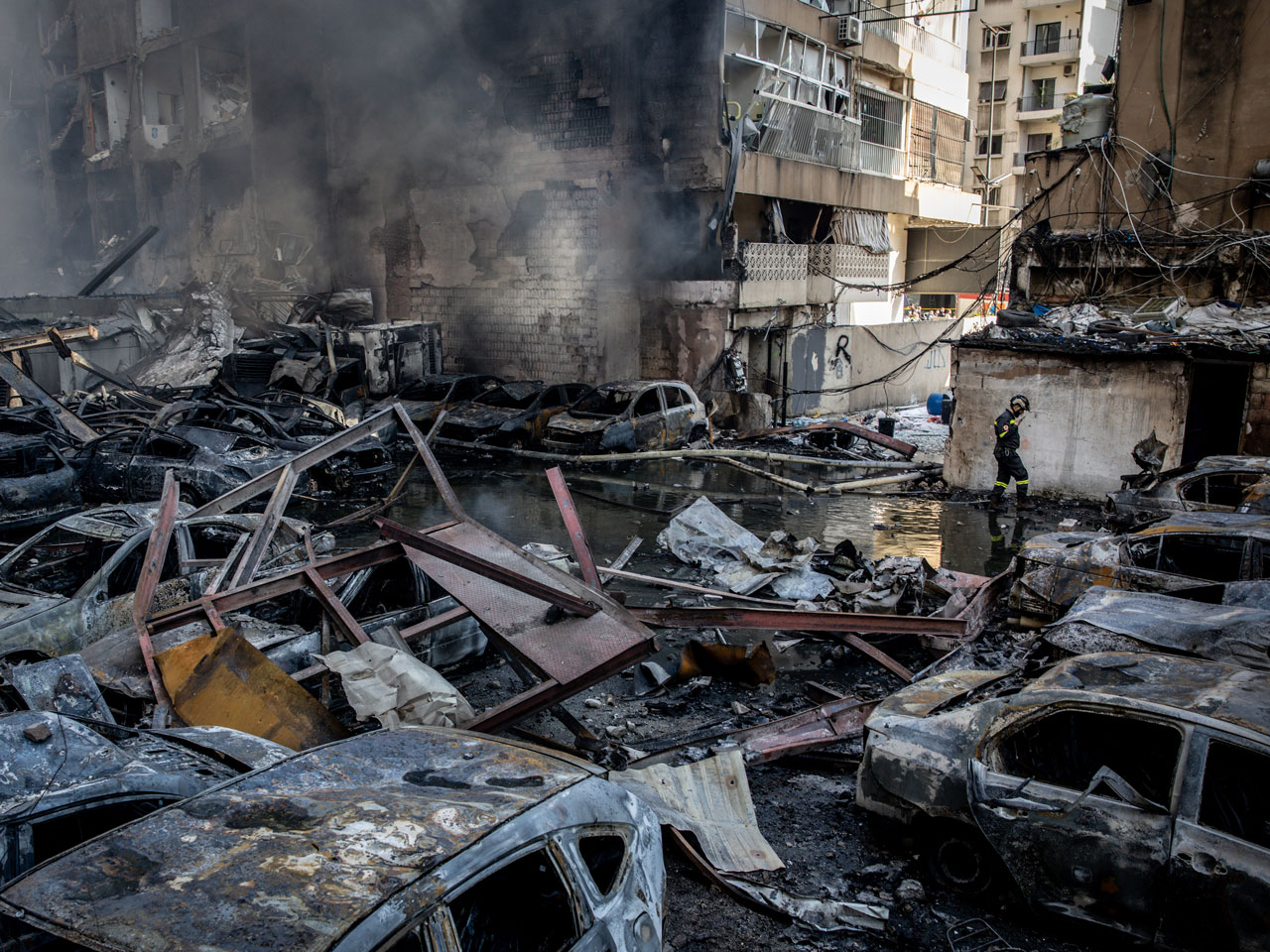
The war in the Middle East has thrust war risk insurance into the spotlight with claims for damaged and trapped ships, property damage, aviation and cyber-attacks already mounting up. Further down the line there will be claims under business interruption policies as supply chains are impacted by the blockade of the Strait of Hormuz.
In mid-May reinsurance giant Munich Re said it was reserving €90m to meet anticipated claims, although CEO Andrew Buchanan said it was a very cautious figure at this stage: “It’s literally claims that we might end up paying if, for example, there are claims coming through the marine war markets or the political violence and terrorism market, that kind of thing.” He added that it was less than they paid out in the first year of the war in Ukraine.
The complex world of war risks cover, and the crucial role it plays in keeping commerce operating in war zones, surfaced very early in the conflict when President Trump announced on his Truth Social platform that the US government would put in place a back-stop reinsurance scheme to provide insurance cover to ship owners. The clear implication was that the mainstream insurance market might not be providing cover for ships seeking to travel through the Persian Gulf, including the Strait of Hormuz. This claim that lack of insurance cover was restricting shipping movements in the Gulf baffled the well-established war risks insurance market centred in London and Lloyd’s.
“Iran and the Persian Gulf is, of course, currently an area of maximum risk severity, but insurance is still available to operators in the area, including the Strait of Hormuz,” Chris Jones, CEO of the International Underwriting Association, a trade body representing non-Lloyd’s underwriters in the London market, said in a press statement issued shortly after Trump’s announcement in early March. The Lloyd’s Market Association was similarly emphatic: “Three weeks since the start of hostilities in the Middle East, we are still seeing reports that suggest insurance coverage is cancelled or unaffordable and that this is the reason that vessels are not transiting the Strait of Hormuz. This is not accurate.”
By the end of March, however, the US government, through its International Development Finance Corporation (DFC), had persuaded the leading US insurer Chubb to front a $20bn Maritime Reinsurance Plan “designed to resume commercial shipping in the Gulf.” DFC and Chubb said they had identified several other American insurance companies to provide reinsurance policies behind Chubb and alongside DFC to expand market capacity and were looking for additional reinsurance partners. Two months later none of the additional partners had been named.
The myth of an uninsured Gulf
The launch announcements focused on the role of the scheme in ensuring that trade through the Strait of Hormuz resumed, again suggesting that lack of affordable insurance might be part of the cause of the almost complete shutdown of shipping through the Strait. “DFC is pleased to partner with Chubb, one of the world’s leading insurance companies, to help get energy and trade flowing again through the Strait of Hormuz. DFC’s Maritime Reinsurance plan combines Chubb’s premier underwriting expertise with the financial commitment of the US Government. With this announcement, we are one step closer to restoring market confidence and resuming energy and commercial trade disrupted by the conflict with Iran,” said DFC CEO Ben Black.
Months later very little shipping was moving and lack of insurance was not the problem, as Andrew James, managing director, marine at London market broker Gallagher explained: “There has been a huge miscommunication. It has probably been misdirected by some people not inside the industry. Lloyd’s and the London market and other markets have always, always been open for war.
“The major change since any of the previous conflicts is that the captains and crew are far more aware of what is going on. Now the captain has the full command of the ship. If he doesn’t want to go through or his crew don’t want to go through, they just sit there and there is not much anyone can do about it.
“With the technology they now have available, they have all got very up-to-date information. So, when ships aren’t going through, it isn’t because there isn’t coverage available, it is because the captain and crew do not want to run the risk of going through.
“It was perceived that there wasn’t coverage available, which is why the US government put forward this facility, which is going to be led by Chubb and a number of other American insurers. It still isn’t actually up and running yet [in early May]. We are still trying to find out the details. But there is no real need for it. Coverage has always been available.”
Chubb failed to respond to requests for information on the current state of its scheme.
Lessons from the Black Sea
Meanwhile, in April, speciality Lloyd’s insurer Beazley announced a new consortium offering $1bn of capacity to complement the existing marine war risks cover available in the London Market. “This consortium demonstrates the agility of the market to respond to the needs of global supply chains,” said Beazley CEO Adrian Cox. In short, the traditional war-risks insurance market has risen to the challenge and is providing cover for ships and their cargoes.
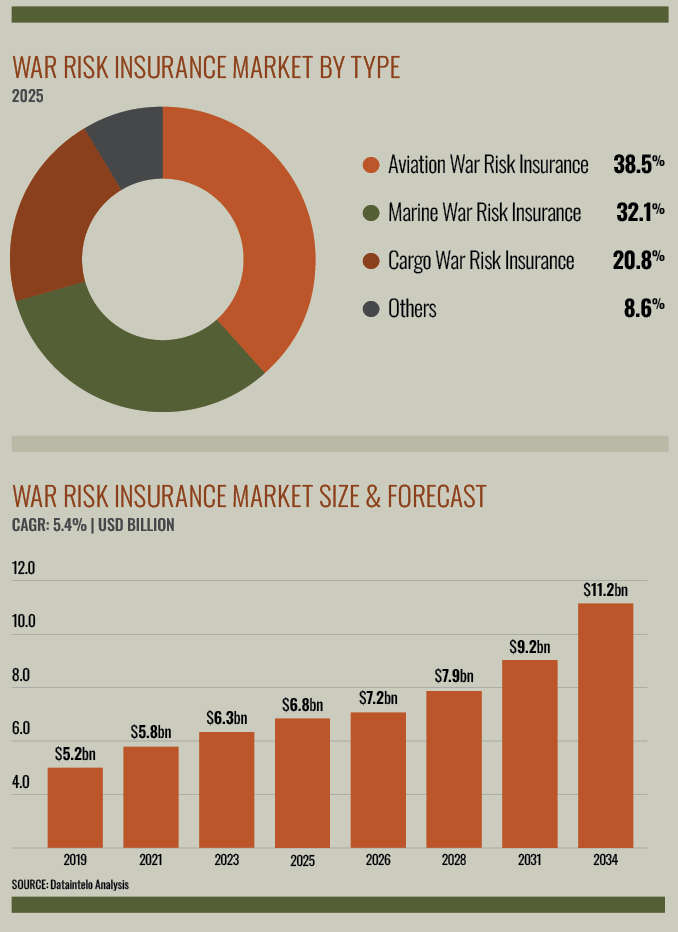
This is not surprising because it is an experienced market, well versed in meeting the challenges of international conflicts. It has demonstrated its adaptability many times in recent decades. The war in Ukraine posed challenges to the marine insurance market but gave it a chance to show how a collaborative approach can produce innovative solutions.
For the outside world, the sharpest focus was on facilitating grain and fertiliser exports from Ukraine, especially since the collapse of the Black Sea Grain Corridor deal that was negotiated between the United Nations, Ukraine, Russia and Turkey. This only lasted a year until Russia pulled the plug on it in July 2023. Since then, Ukraine has created its own corridor from its main Black Sea ports – principally Odesa, Chornomorsk and Pivdennyi – that hugs the western coast of the Black Sea until it enters the relative security of Romanian territorial waters.
Precise figures are hard to come by but, coupled with the transport of grain and other foodstuffs by road to ports on the River Danube and by road through Poland, it is estimated that Ukrainian exports are up to around 90 percent of pre-war levels, providing a substantial boost to the Ukrainian economy and the world’s food resources. Insurance has been at the heart of ensuring the return to these levels.
There was a short period after the initial Russian invasion in February 2022 when so many ships were trapped, Ukrainian ports were being heavily shelled and bombed and the Black Sea was being mined by both sides that insurers backed away from providing cover, said Rory Colacicchi, a partner in the marine and cargo team at brokers McGill & Partners.
“It was the first event for many years where multiple ships were trapped with the potential for significant losses. For a long time war risks rates had been at zero percent but we saw them jump to three percent and spike at five percent in a very short time after the invasion.”
Insuring the frontline economy
The rate settled down to three percent of a ship’s value for most voyages into and out of Odesa and through the western Black Sea as the new grain corridor became operational, but when a Liberian-flagged ship was hit in a Russian attack on Odesa the rates threatened to go up again. That is when a scheme backed by the Ukrainian and UK governments, brokered by Marsh and led in the London market by the Ascot syndicate at Lloyd’s, was unveiled. It has provided up to $50m of hull war risk and the same amount in protection & indemnity (P&I) cover for crews and third-party liabilities.
This flexibility is no surprise, says Oscar Seikaly, CEO of Miami-based NSI Insurance Group: “The key lesson is speed and adaptability. Initially, coverage disappears because of war exclusions. But it comes back once the market can quantify the risk. London has consistently led in structuring solutions, often through consortiums that allow multiple insurers to deploy capacity quickly. Technology has also played a role, particularly in monitoring corridors like the Black Sea and the Strait of Hormuz in real time. The takeaway is simple: once risk becomes measurable, capital returns.”
We are seeing physical threats to aircraft from areas we wouldn’t have seen before
The Ukraine conflict has also thrown a fresh focus on land-based war risks with constant Russian attacks on its cities and, in particular, its energy infrastructure. Ukrainian insurers were able to expand cover for businesses following the announcement of a €110m reinsurance facility, put together by Aon and the European Bank for Reconstruction and Development. This includes some basic war risks cover, according to Andrii Semchenko, who was appointed as CEO of INGO, one of the top three Ukrainian insurers, last July: “In 2023, we were able to provide some very limited war risks coverage on a first loss basis for our small to medium business clients. Initially, we offered a product with a limit of $250,000. We have been working to increase our offer to $500,000 per object,” Semchenko said. The new reinsurance backing enabled this to go forward. Semchenko said the firm had to be careful to manage its exposures. “We only introduced this cover when we had a clear understanding of where the fixed battlefield was. We do not insure any object closer than 100 kilometres to the battlefield because that is the range of most drone and rocket attacks and maybe some artillery. If the battlefield comes closer than 50 kilometres to our insured this coverage is suspended.” There is a Ukrainian government war risks scheme that picks up the larger risks, cover above the limits and those near the frontline.
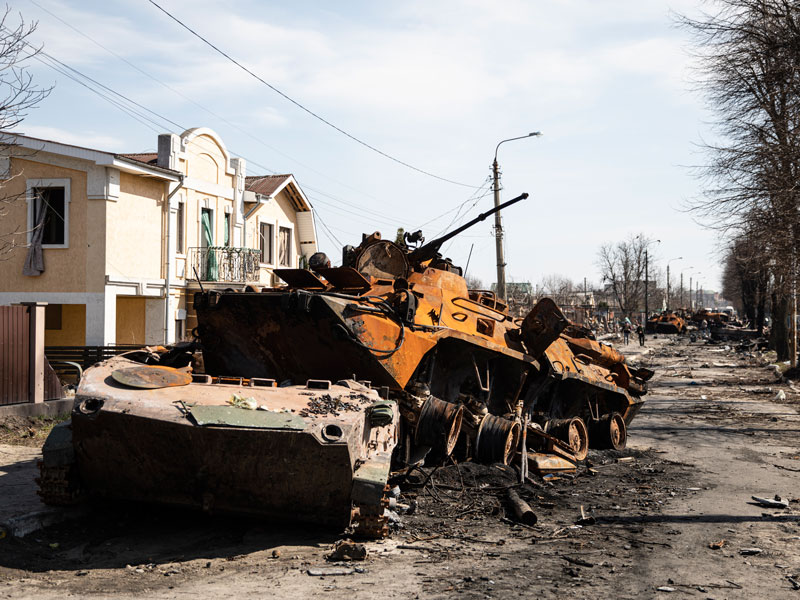
Generally, land-based war risks are difficult to cover, especially for energy infrastructure, oil terminals and refineries, which are the most obvious targets, says Blaine Rogers, partner at US law firm Davis Levin Livingston: “These risks are largely written under political violence or terrorism policies rather than traditional property coverage with strict sub-limits and exclusions for acts of war. Insurers are also requiring extensive risk mitigation measures. Disputes frequently arise when insurers attempt to re-characterise an event in order to trigger exclusions.”
Turbulence in the skies
Disputes are almost inevitable, as the nature of modern warfare changes and the propensity of regimes to resort to force with little notice grows. Aviation war risk underwriters suffered a big shock in the wake of the Ukrainian conflict. When Russia invaded Ukraine in February 2022, Western sanctions required aircraft leasing companies to terminate leases with Russian airlines. Russia then seized the aircraft, leaving roughly 400 leased planes stranded in Russia and triggering one of the largest aviation insurance disputes ever litigated.
The core dispute was whether the losses should be covered under the standard all risks insurance, or war risks extensions. With the estimated total losses topping $10bn, both sets of underwriters were anxious to pass the claim to the other. A further complication was that the limits of payouts under the general all risks policies were lower than those on the war risks policies, meaning the leasing companies were understandably keen to claim under their war risks cover.
We have been here before
The start of the Gulf War in 1991 saw Lloyd’s open on a Saturday and Sunday for the first time in its 300-year history. In the pre-internet era the decision to open over the weekend was taken for the benefit of policyholders because of the ever-changing situation.
The invasion of Kuwait led to a United Nations Security Council embargo and sanctions on Iraq and a US-led coalition air and ground war, which began on January 16, 1991, and ended with an Iraqi defeat and retreat from Kuwait on February 28, 1991. On the Sunday, Lloyd’s invited journalists to walk the underwriting floor and speak to leading war risks underwriters such as Christopher Rome and Stephen Merrett.
By contrast, Lloyd’s declined to contribute to this article. Ten years later, in the aftermath of the attacks on the Twin Towers, Lloyd’s once again opened on a Sunday to organise emergency cover for high-profile US properties.
In June 2025, the English High Court largely ruled in favour of the lessors, including companies such as AerCap and Dubai Aerospace Enterprise. The court found that the aircraft were effectively lost on March 10, 2022, when Russian legislation prohibited their export. The judge concluded that the proximate cause of the loss was action by the Russian government, meaning the claims fell under the war risk cover rather than standard all risks policies. The claims went to the war risk insurers, including AIG, Lloyd’s of London syndicates, Chubb and Swiss Re.
Proceedings continue in some jurisdictions, particularly Ireland where the largest leasing companies are based, and some insurers were granted permission to appeal aspects of the English courts’ ruling, although these have been unsuccessful so far. This setback hasn’t stopped the aviation market responding calmly to the Middle East conflict, says Bill Smith, global executive for aerospace at Gallagher: “After the first few days it all calmed down. With the ceasefire, the aviation market has pretty much, to a man, suspended charging additional premiums.
“We have a standard clause giving us a seven days’ notice of cancellation or review in the event of hostilities, which means if something has occurred, then under it we have the right to amend their rates and conditions. And I have to say, I think the market has acted from our perspective very responsibly. So you have seen, very, very little of that. Some underwriters still have some additional premiums for people who are flying into Tel Aviv and Lebanon but there are no additional premiums being charged for aircraft flying into the wider Middle East.”
AI, drones and cyber escalation
The big fear for aviation underwriters and airlines, as well as the wider world, is escalation, especially involving even a modest tactical nuclear weapon, says Smith: “We are very familiar with the countries that have these weapons. If a small tactical nuclear weapon was deployed that would affect just a 20-mile radius, a 30-mile radius, it would still trigger the automatic cancellation of all airlines liability policies around the world.”
There are other concerns short of a nuclear attack that are worrying aviation war risks insurers. Ed Lluth, head of Liberty Specialty Markets, told an Aviation Summit in London organised by global broker Marsh in mid-April that the aviation industry and its insurers lack a coherent response plan to the deployment of AI-powered drones against commercial and civil aircraft: “We are seeing physical threats to aircraft from areas we wouldn’t have seen before. We have seen the elimination of the Russian strategic bomber fleet using drones which were piloted and driven by artificial intelligence from 4,000 miles away. If you unleash that kind of threat against a commercial asset, there is no defending that, there is no stopping that.”
He warned that insurers would struggle to price and cover such risks. Technology looms large in the roll call of new threats from global conflicts and this is where major businesses and financial institutions could find themselves in the firing line, as war expands beyond the physical dimension. “Cyber and physical war risks may arise in the same circumstances, as cyber has become one of the tools used by combatants or their proxies in the run-up to war or to increase disruption during a physical war,” says Neil Roberts, head of marine and aviation at the Lloyd’s Market Association. Cyber cover is an area fraught with hazard and where many major firms may find themselves badly exposed if they come under attack, a recent report from S&P Global Ratings warned.
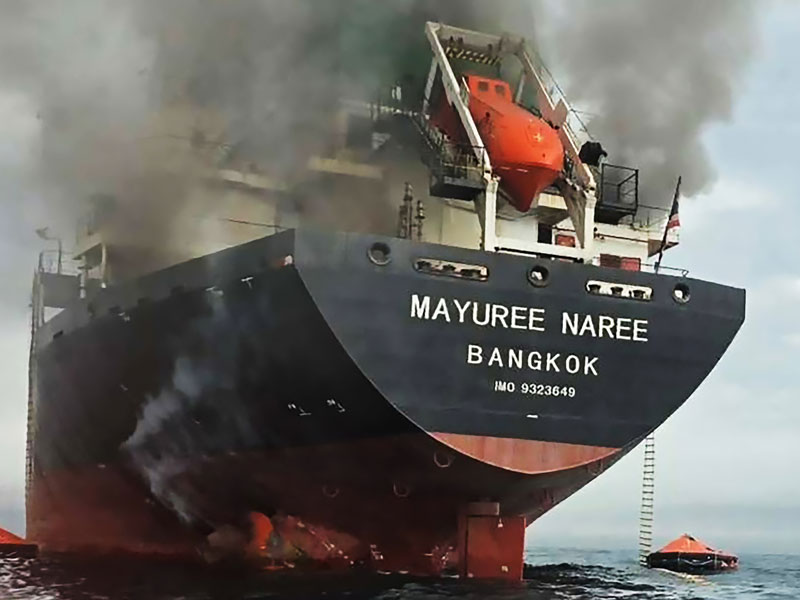
It highlighted the Ukraine war, the Middle East conflict and the potential for the dispute around the status of Taiwan escalating as all being potential triggers for intensifying cyber-attacks. It warned many firms were naïve as to how the ‘hostile cyber operation’ exclusions common in stand-alone cyber policies might operate and the difficulty of defining when such exclusions might apply. It is often impossible to identify the source of an attack with confidence: it could be a nation-state, but they frequently operate through proxies, including organised crime.
This is a real and growing threat, says Nick Robinson, a consultant in digital crisis and security strategy at Gallagher: “The cyber dimension of the conflict has started to materialise, marked most visibly by the disruptive cyber incident affecting US medical technology manufacturer Stryker on March 11, 2026. The attack, claimed by the Iran-linked hacktivist persona Handala, caused global disruption to Stryker’s Microsoft environment by wiping devices and disabling internal systems, resulting in a prolonged and uncertain recovery timeline.
“Pro-Iranian hacktivist groups are mobilising across Telegram, X and underground forums, with threats to Israeli, Bahraini, Qatari and Jordanian infrastructure all being monitored. While these groups have historically demonstrated limited sophistication, the Stryker incident underscores the growing potential for destructive state-aligned activity.”
Cyber insurance claims can be added to the list of potential legal disputes, says Blaine Rogers: “A lot of physical attacks now have a cyber component and insurers have responded with broad cyber war exclusions, but courts are starting to scrutinise those provisions. Overly broad or ambiguous cyber-war exclusions are becoming a litigation flashpoint.”
Chokepoints and future shocks
Inevitably, firms are reluctant to talk about the cover they have in place and their preparations for potential cyber-attacks, but one operations director for a major asset manager acknowledged they face a major challenge in keeping up with the latest threats, especially the potential for powerful AI-driven attacks: “We are constantly testing our defences but can never say with 100 percent confidence that we are totally protected. We have insurance and detailed response plans but they too are being tested to the limits.”
Overly broad or ambiguous cyber-war exclusions are becoming a litigation flashpoint
Another big unknown is the extent of the business interruption claims. Again, there is huge potential for disputes over what is covered as there are a plethora of exclusions for war, terrorism and hostile acts. With the impacts of the war on different business sectors – aviation, travel, hospitality, energy, food and a wide range of logistics businesses – growing longer everyday, claims are inevitable. The larger they are, the more likely insurers are to dispute them, as we have seen in the UK with the claims for business closures during the Covid-19 epidemic.
We are in an era of global geopolitical instability and eyes are already nervously turning to where the next flare-up could occur with the potential for conflict over China’s ambitions to end Taiwan’s independence top of the list. A conflict across the South China Sea and beyond has similar potential to cause global disruption to Trump’s ill-judged intervention in the Middle East. At the end of April, Singapore’s Foreign Minister Vivian Balakrishnan, speaking at a conference, highlighted the strategic importance of global maritime chokepoints, noting that recent tensions in the Middle East underscored their vulnerability.
“Chokepoints matter,” he said, pointing to Singapore’s position along the Strait of Malacca, one of the world’s busiest shipping lanes. At its narrowest, the Strait of Malacca is about two nautical miles wide, compared with 21 nautical miles for the Strait of Hormuz. Big questions would certainly be asked of the global insurance market if that was threatened with closure.

