


Inside India’s infrastructure revolution
From freight rail and green energy to manufacturing and maritime trade, India is betting big on infrastructure-led growth – and the world is starting to take notice
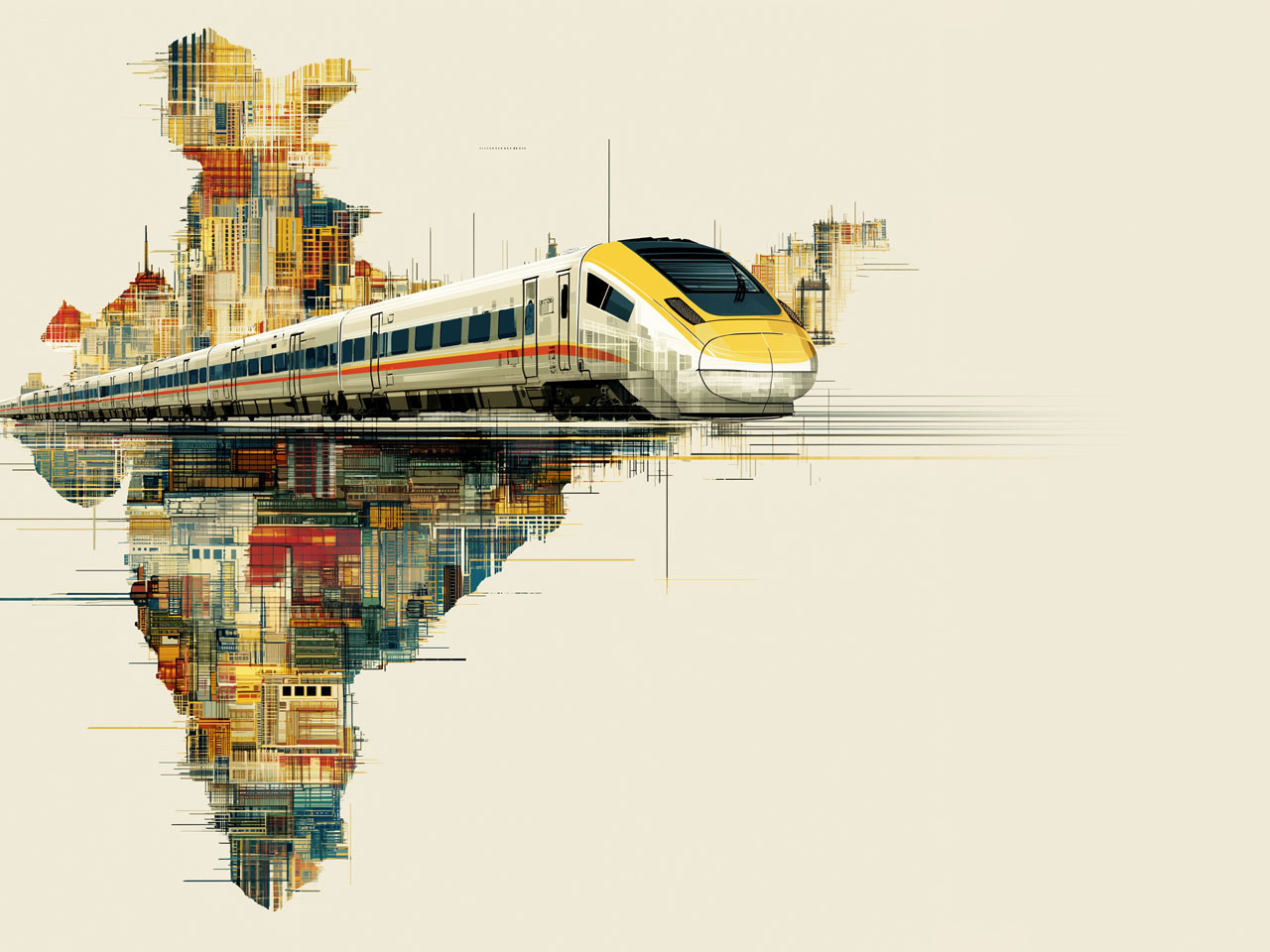
When a container is hoisted ashore at Jawaharlal Nehru Port in India, it is placed aboard a high-capacity freight train running from Mumbai to the industrial cities of Dadri and Khurja in Uttar Pradesh 1,500 kilometres away. The container is lifted off a day later, much faster than in many other countries, including America.
Even more impressive, the entire high-speed route is now electrified, with the final sections hooked up in January 2026 in a pivotal moment for India. Before electrification, the container would have taken three to four days. Not only did this last connection complete the country’s longest rail freight link, known as the Western Dedicated Freight Corridor, it gave India one of the longest electrified rail systems in the world. India has electrified 100 percent of its network, which is right up there with Switzerland, one of the jewels of railroads.
By comparison, the UK can claim 37 percent rail electrification and America just one percent. The rapidity of electrification is astonishing – during the last six years Indian Railways was adding over 15 kilometres every single day. The result is that today India boasts no less than 70,000 kilometres of electrified broad-gauge rail that is part of a grand plan to modernise all its vital systems – transport, energy and shipping – under the government of Prime Minister Narendra Modi. This remarkable achievement symbolises a continuing economic rejuvenation that has largely escaped the world’s attention.
Modinomics
Since Modi won power in 2014 after decades of socialist governments, these policies were dubbed ‘Modinomics,’ mostly by critics who said they weren’t working – or at least not as well as was promised. Supporters however said reform was long overdue in a country notoriously difficult to govern.
Demonetisation gave a massive boost to cashless payments
With 28 sprawling states and eight territories spread over a vast area, India is the seventh biggest country in the world in terms of geography and one of the most culturally diverse. And with a population of 1.47 billion, it is the most populous. “Significant hurdles persist, including entrenched bureaucracy, social fragmentation, and deep-seated political divisions,” notes an article in Springer Nature that summarises the challenges of reform.
One of those significant hurdles was the labour market. When Modi introduced radical changes to employment laws in 2014 that were designed to weaken obstructive union power and boost the creation of jobs, nearly 150 million workers in banking, manufacturing and construction immediately went on strike for 24 hours at a cost of $3.5bn to the economy. Even rickshaw drivers stayed at home in sympathy. Yet the reforms are seeing results. According to Australia’s Treasury, the economy forged ahead at an annual rate of between 6.5 and seven percent during Modi’s first 10 years in power – that is, to 2024 – and “maintained its position among the world’s fastest-growing major economies despite a significant contraction in 2020 due to the pandemic.” Most analysts including the International Monetary Fund predict a rosy longer-term outlook with a similar growth rate persisting all the way through to 2035.
However, in a nation of volatile politics, Modi continues to attract his fair share of criticism for making changes, however overdue they may have been. And one of the most overdue was what is known as ‘the demonetisation of the currency.’ With just a few hours’ notice, on November 8, 2016, the 500 and 1,000-rupee bank notes were replaced in a move to put a stop to the long-running practice of ‘black money’ – cash used for illicit activities that had escaped the tax net and was being used to fuel terrorism, among other purposes. The demonetisation was comprehensive, covering 86 percent of the currency.
But did it work? Some economists say it didn’t because the action caused serious economic disruption for a few months, but others point to the long-running damage caused by the existence of this parallel economy. As Bhaskar Chakravorti, Dean of Global Business at The Fletcher School at Tufts University wrote for the Brooking Institute a year later, only one percent of Indians had been declaring their earnings for tax purposes.
But suddenly, the money ended up back in the system: “When the policy change was announced, people were given until December 30, 2016, to return 500 and 1,000 rupee notes to banks, or else risk losing the value of them. Banks were estimated to have received 14.97 trillion rupees ($220bn) by the deadline, or 97 percent of the 15.4 trillion rupees’ worth of currency demonetised.
Also, as other economists explain, demonetisation gave a massive boost to cashless payments such as Paytm’s mobile wallet business and, more importantly for the long run, in the intervening years the tax base has widened. The government followed up by overhauling a confusing system of local consumption taxes with the introduction of a centralised goods and services tax.
Grandiose goals
The Modi government sometimes shoots itself in the foot by setting sky-high goals and making what the critics describe as ‘grandiose claims.’ For instance, a key reform is ‘Make in India,’ a strategy intended to turn the country into a manufacturing powerhouse by, among other measures, encouraging foreign investment and technology. Unveiled in 2014, the targets were unrealistically high – a doubling of manufacturing’s growth rate, the addition of 100 million jobs in the sector by 2022, and a 25 percent share for manufacturing in gross domestic product by the same year. As it happens, there has been a decline in the sector’s share of GDP and only a small growth in employment.
Battery swapping technology is a growing trend that could potentially turbo-charge EV sales
Part of the blame can be attached to India’s outdated manufacturing structure. Nearly three quarters of manufacturers employ less than five paid staff. And they are historically highly unproductive. It is widely accepted that these small enterprises put out less than 20 percent of the volume of products of larger Indian manufacturers and way less than similarly sized factories in western nations, especially the US.
Red tape is a big part of a historic productivity problem. With regards to India’s economic bottenecks the IMF states, “Many of these enterprises remain small for decades due to complex compliance requirements, rigid labour regulations and product market rules that discourage growth. Easing these constraints would help businesses expand and, in turn, dramatically lift productivity.”
However, there is no magic wand and Modinomics constantly runs into impasses. “While employment in the manufacturing sector has grown, the ‘Make in India’ push has not resulted in manufacturing outpacing other sectors of the economy in employment generation,” notes an article in The Print, an independent news platform. “Another priority area for the initiative was to boost exports and cut down on imports. The data over the last 10 years revealed the programme has failed to do the former but has been marginally successful in achieving the latter, although even this improvement has recently been reversing,” the article continued.
Yet under Modinomics manufacturing has been reconfigured away from heavy industry towards high-margin and higher-potential sectors such as electronics, defence and electric vehicles. Without ‘Make in India’ it is unlikely that the production of mobile phones, for instance, would have quadrupled in value between 2016 and 2024, or that India would become one of the world’s biggest manufacturers of solar panels. The Modi government also set an audacious target for an all-electric transport sector by 2030, a deadline that outdoes even China’s ambitions. When this was announced in 2015, it certainly looked like a grandiose goal.
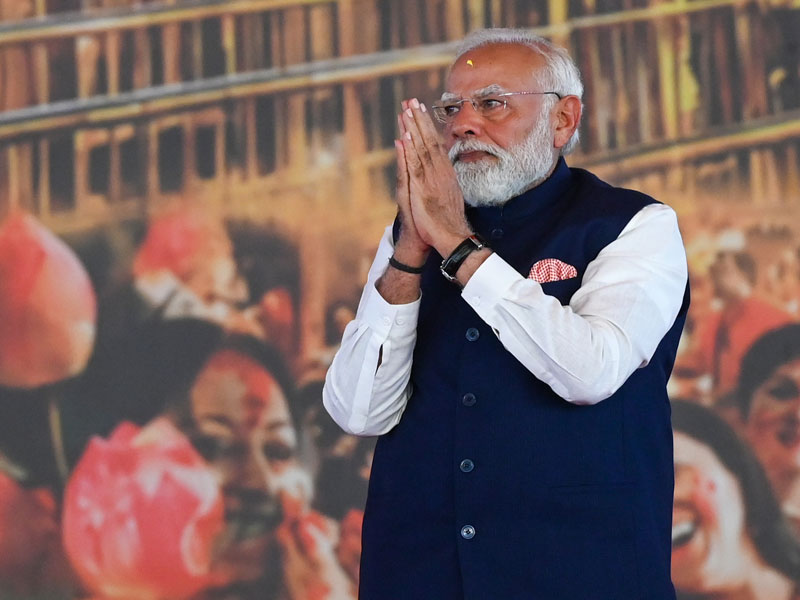
At that time just one percent of the country’s 200 million vehicles were electrically powered and only one domestic automotive group could put a battery-powered car in the showroom. Called FAME (Faster Adoption and Manufacturing of Electric Vehicles in India), the programme was designed to start with rickshaws and move on to commercial vehicles, most of which are little two and three-wheelers, and then buses. Cars would come last.
To help along the transition, manufacturers were awarded tax breaks to build cars without batteries; these would be available in battery-exchange stations where the swap would take about two and a half minutes. The idea was that the subsidised battery-free vehicles would cost up to 70 percent cheaper than with batteries. A lot of automotive companies could see the potential, including Honda and Piaggio. In fact, the Italian scooter manufacturer quickly established a 100 percent-owned subsidiary in India. Both companies have adopted battery-swapping strategies. Shell could also see the potential of the strategy.
As Kasturi Gomatham, the energy giant’s global head of battery swapping, told a conference around that time, “Battery swapping decouples certain critical links that inherently create bottlenecks for EV adoption. For instance, the concept decouples grid from that of the dynamic EV-charging needs and decouples battery from the vehicle itself. This enables users to not feel the brunt of the battery upfront cost and extend vehicle life beyond that of the battery packs.”
And how did this work? According to an article by the World Economic Forum, “battery swapping technology is a growing trend that could potentially turbo-charge EV sales.”
One company, SUN Mobility, certainly thought so. The Bengaluru-based start-up began by exchanging shoe box-sized batteries at 50 stations spread over 14 cities under a pay-as-you-go subscription service run on Microsoft’s Cloud. Simultaneously with FAME, the Modi government ordered the nation’s refineries to embark on a $46bn conversion to lower-emission fuels, a decision upheld by the Supreme Court.
Modi’s biggest goal is a zero-emission nation by 2070
But let’s look at what has happened since. A recent review by the International Society of Markets and Development (ISMD) sees significant developments in the EV market that was mainly driven by highly systematic government policies to reduce urban emissions and promote sustainable mobility. But while noting how FAME has fallen short of expectations, it also says that “both stages of FAME have been pivotal in shaping the EV ecosystem in India, addressing the challenges of affordability, infrastructure and market growth.”
But where would India’s road transport be without FAME? So far it has increased EV adoption nationwide by about 50 percent, “but primarily in the two-wheel market,” notes ISMD. Buses and cars are lagging behind, but the latter are less important in the race to electric transport because only 7.5 percent of Indians own four-wheeled cars. As for SUN Mobility, the latest data showed over 1.4 million swaps a month at nearly 650 stations across over 20 cities. Battery-swapping has been a roaring success.
Energy revolution
The birth of the e-rickshaw is a portent of India’s energy future. At the start of 2026 there were about 270 million two-wheelers in India and about 10 million three-wheelers, the vehicle of choice for transport in teeming cities, for deliveries and taxis. “As India’s pivot from fossil fuels to clean energy accelerates, these vehicles are helping drive the switch,” explains one motoring expert.
Half of India’s imports of oil are burned by vehicles, but that is expected to fall as more e-rickshaws hit the road; this would enable Modi’s biggest goal – a zero-emission nation by 2070. The Colorado-based Rocky Mountain Institute calculates that as early as 2030 about 80 percent of two and three-wheelers sold in India could be electric and make a substantial contribution to the zero-emission goal that gets closer almost by the day. The volume of sales certainly looks promising, having jumped from just over 95,000 EVs in 2017 to 1.6 million in 2024.
The Atlas think tank summarises, “EV sales in India have seen a remarkable upward trajectory in recent years, largely driven by growth in the two- and three-wheeler segments,” citing a compound annual growth rate of 61 percent. In the salt deserts bordering Pakistan, the world’s biggest renewable energy project is under development.
The Khavda renewable energy park, covering an area five times the size of Paris, will produce 30 gigawatts of green energy from high-efficiency solar modules and hybrid solar-wind systems. Run by Indian group Adani Green Energy, it is due for completion as early as 2029, when it will power over 16 million homes.
Currently about half of India’s installed power capacity comes from non-fossil sources such as solar, wind and hydroelectric. Once again, the government is nothing if not ambitious, with a target of providing 500 gigawatts of non-fossil capacity and five million tonnes of green hydrogen that will be used to clean up the steel and other heavy industries. All this is due to happen by 2030 in what some saw as yet another grandiose scheme, but so was the electrification of the railways and it was done four years early. Although India still uses a lot of coal – “a critical source for grid stability,” according to energy experts, the direction of travel is clear. Forests are being planted to create a gigantic carbon sink of 2.5 to 3.0 billion tonnes of CO2 equivalent. Water is being managed more scientifically. Attention is being paid to the Himalayan ecosystem. The critics can’t complain that India has fallen short in its clean energy ambitions. Between 2005 and 2023, its emissions intensity was slashed by 39 percent, which is ahead of target. It is the world’s third-largest producer of solar energy and could overtake China in the number of solar-powered homes. And production of renewable energy is also beating official goals.
Maritime India
True to form, when the government launched a revival of India’s neglected maritime industry, it immediately ran into a disjointed federal system of governance with powerful political cliques running rival states that almost routinely refused to cooperate with each other – or just couldn’t be bothered. Yet this equally ambitious programme is happening. The country was once a maritime power based on natural credentials. It has an 11,000-kilometre coastline. The Indian Ocean, the third largest in the world, links the country to the Middle East, Africa, South Asia and Southeast Asia. India is near four maritime chokepoints – the currently beleaguered Strait of Hormuz, Bab-el-Mandeb, Malacca Strait and Lombok Strait. And there are the military implications – Modi is concerned about an aggressive China, which is busily establishing ports and infrastructure in the Indian Ocean.
“Militarisation of the Indian Ocean region is not desirable,” the government has warned.
Despite a sluggish bureaucracy, India’s got off to a good start in its maritime ambitions. In early 2026 the container shipping giant, CMA CGM, placed a landmark order for six LNG-fuelled vessels to be built at India’s Cochin Shipyard. They aren’t huge ships, with a capacity of just 1,700 containers each, but they will advance the expansion and renewal of the country’s ports, shipping industry and coastal trade.
In another boost CMA CGM will recruit 1,500 Indian seafarers, establish an R&D hub, register some of its vessels under the Indian flag, which helps build local trade, and support sustainable ship-recycling, a growth industry where India aims to be the world leader. Other container giants look like they will follow suit.
About half of India’s installed power capacity comes from non-fossil sources
Simultaneously, India is building deep-draught mega-ports like Vadhaven 150 kilometres from Mumbai that is due for completion in 2034. When it opens, Vadhaven will rank among the 10 biggest ports in the world and it is strategically placed in a key trading corridor that links India with the Middle East and Europe. Already trade deals are being signed along this valuable supply line. Construction is finally due to start in another mega-port in the Bay of Bengal after years of legal challenges, red tape and the local opposition that have historically blighted important economic projects in India and, in the case of shipping, prevented modernisation. Impatient with such delays, in 2025 the government passed laws that simplify paperwork and improve cross-port cooperation. The Ministry of Ports, Shipping and Waterways is in a hurry, acknowledging “the capacity of the ports in terms of their berths and cargo-handling equipment needs to be vastly improved to cater to the growing requirements of overseas trade.”
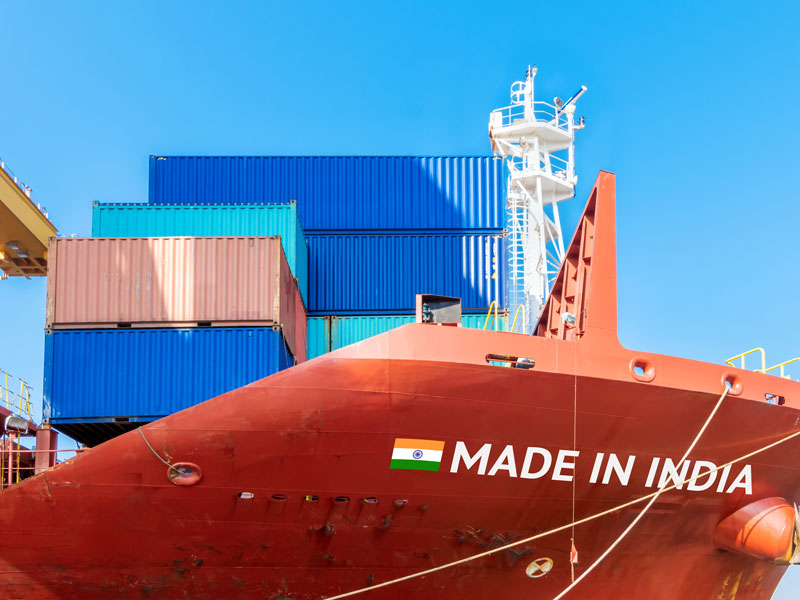
India may soon also have its very own state-backed container line. In early 2026, the government approved a $1.66bn kick-start for an all-Indian shipping company that may also exploit the country’s 14,500 kilometres of largely neglected inland waterways. According to a study by the Observer Research Foundation, a not-for-profit Indian think tank, “it is only now that they are beginning to be used for commerce.” Current ambitions intend that this vast interconnected natural network will soon carry four times its current capacity in what would be a massive boost to trade along its banks. In maritime matters India has a long way to go – its merchant fleet ranks just 18th in the world – but the government has earmarked $7.7bn that will be dedicated to this economically vital project over the next decade.
Mafia Raj
The government is tackling corruption, albeit slowly. Only a few short years ago India was infamous for dirty dealing. In the first decade of the millennium the World Bank cited the ‘Mafia Raj’ among other miscreants who got their hands on development funds intended for roads, bridges and other much-needed infrastructure. At the time India was the World Bank’s single biggest borrower and the institution was trying to place people of integrity along the funding pipeline to make sure the money ended up in the right hands, such as a billion-dollar, interest-free loan to clean up the Ganges River.
The situation was so serious that India’s then chief justice, K.G.Balakrishnan, bemoaned at an anti-corruption conference how “the quality of governance suffers when decisions are made on account of extraneous considerations related to political patronage, kinship or caste and linguistic identity among other factors.” Back then Transparency International ranked India at 84th on its Corruption Perception Index, right up (or down there) with Guatemala and Panama. India’s Central Bureau of Investigation (CBI) was burdened at that time by well over 9,000 pending cases, 2,000 of which had been pending for a decade or longer.
But endemic corruption is hard to root out and despite the best efforts of the Modi government, in 2026 India ranked 91st in the index, roughly halfway. However, it appears the CBI is making some progress. In late 2025 it reported just over 7,000 pending cases, of which 2,660 were 10 years old and 380 a full 20 years old. Petty corruption is down, for instance small bribes to various government agencies, while senior tax and customs officials have been kicked out for high-level fraud. Meanwhile, one of India’s most successful innovations is in sport, although the Modi government can’t take the credit here.
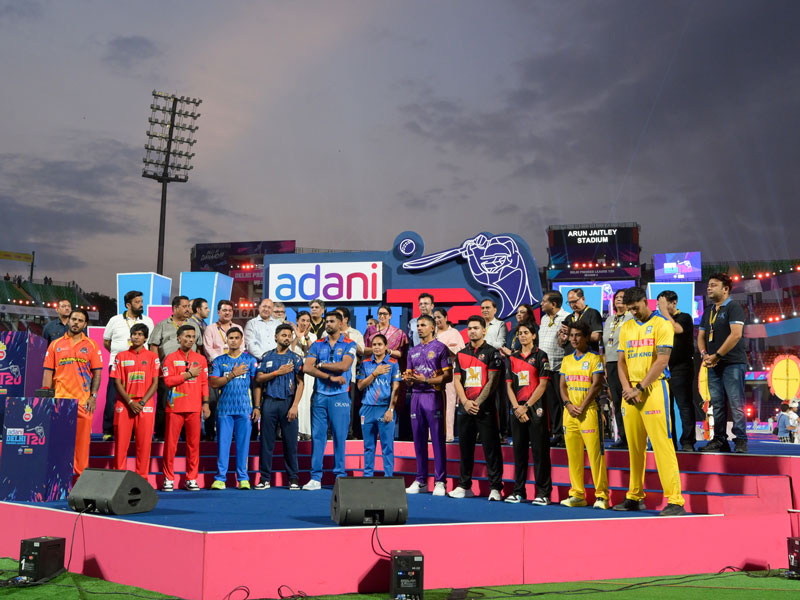
Every year the world’s best cricketers flock to the India Premier League, a sporting spectacle founded in 2008 by the Indian Board of Cricket Control. Judged by revenue, it is among the top 10 most valuable sports league in the world. It is based on an original franchise model in which the teams are owned by rich corporations and celebrities. As one fan, a rich businessman, explained, this 20-over format is “a high-action alternative to the five-day game” that is seen as a symbol of the country’s commercial as well as sporting creativity. “It is not just replicating something else; it is creating a new business model,” he summarised. Indians are extremely proud of the league because it is home-grown, just as they are of their rail system.
Just to recap, it was in 2014 that the Modi government began to pour funds into a fully electrified railway. The results were off the scale. While Britain, for example, as a rail enthusiast points out, is electrifying its railways at a speed of two kilometres a year and while the US isn’t even matching that, Indian Railways was quadrupling its electrification programme. In the 2022–23 financial year, for example, no less than 6,565 kilometres of track was hooked up.
“India’s rail crews got more done by their mid-morning tea-break on January first than Britain got done all year,” wrote the rail expert. And nor would that have happened without Modinomics.

