


The politics of the last barrel
As conflict in the Middle East sends shockwaves through global energy markets, governments are rushing to deploy strategic oil reserves to prevent economic turmoil
The single most important energy objective for the US today is to resolve our internal differences and put ourselves on the road toward energy independence.” These were the words of Gerald R. Ford, the 38th President of the US soon after he signed the Energy Policy and Conservation Act on December 22, 1975.
One of the key features of the Act was the establishment of the strategic petroleum reserve (SPR), a desperate measure by the US to stockpile emergency oil. This came after the 1973 oil crisis instigated by Arab members of the Organisation of Petroleum Exporting Countries (OPEC) imposing an embargo on crude exports in retaliation for Washington’s decision to support Israel during the fourth Arab–Israeli War. With the US having grown increasingly dependent on foreign oil, the cut in supplies wreaked havoc on the economy, the severity of which resulted in stagflation.
To President Ford, who rose to power at the peak of the crisis, never again would the US experience the magnitude of supply disruptions and skyrocketing prices ignited by the embargo, or whatever other form of unforeseen eventuality. The SPR, in essence, would be the line of defence in protecting the economy, and the American populace, from future shocks.
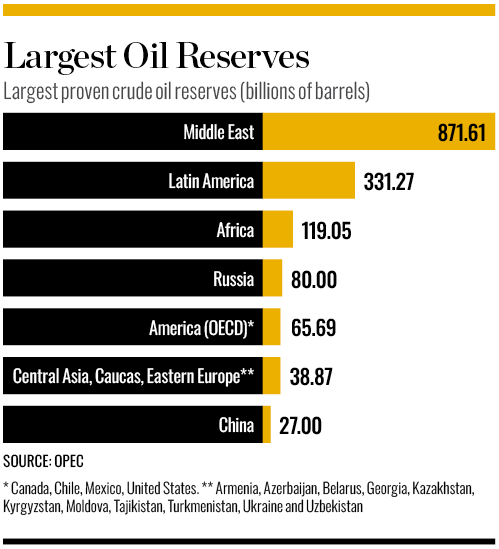
Today, half a century later, President Ford’s words and actions are echoing across the globe. The Middle East conflict, which broke in late February and whose end remains foggy, is yet again exposing the soft underbelly of the global crude oil supplies, with unprecedented disruptions causing political and socio-economic mayhem, including threatening stability in some countries. In the current uncertain environment, a new reality is dawning – stockpiling of emergency oil reserves is perhaps the most pressing need facing nations in modern times. This reality is given credence by the frequency in which the world is experiencing crude supply disruptions. In the past six years alone, disruptions have occurred three times, first occasioned by Covid-19, then the Russia–Ukraine war and now the Middle East conflict. “Strategic stocks are held to buffer supply shocks,” says Kenneth Medlock, Senior Director, Centre for Energy Studies at the Baker Institute for Public Policy. He adds that with energy security being the primary motivator for holding strategic stocks, the Middle East conflict is a stark reminder that countries must put their minds and souls into accumulating emergency stocks. “The entire policy push behind strategic stocks is precisely for times like these.”
Energy crisis from the Blue Moons
On February 28, most of the world was caught flatfooted when the US launched Operation Epic Fury, a code-name for military action against Iran. For Washington, in collaboration with Israel, the objectives of the operation were clear, “obliterating” Iran’s missiles, production facilities, navy and other security infrastructure. Of high importance though, was ensuring that Iran never gets to have nuclear weapons.
In launching the operation, the Trump administration had hoped for a quick and swift military action that would ostensibly have minimal global ripple effects. Experts, however, reckon that the US did not envisage Iran’s guerrilla-like responses. By triggering a torrent of hundreds of retaliatory missiles and thousands of drones across the Middle East, Tehran has sparked anarchy across the whole region, an epicentre of crude oil production. Data by the International Energy Agency (IEA) show the region accounts for roughly 30 percent of global oil production and 17 percent of natural gas production. Considering that most of the countries in the region are US allies and some host military bases and troops, Iran has been calculative even in targeting crude facilities and refineries in countries like Saudi Arabia and Kuwait with missiles and drone attacks.
For Tehran, however, one critical aspect of its fightback has been instigating the closure of the Strait of Hormuz, ultimately sending shockwaves of the conflict to every corner of the globe. “President Trump seems to have started this conflict with limited knowledge of the Iranian regime or the critical geography of the Strait of Hormuz,” explains Sarah Emerson, President of Boston-based consulting firm ESAI Energy. She adds that owing to the disjointed handling of the war on the part of Washington, the world should brace for a conflict that could run for months.
Crude prices hitting $150 is anguish the global economy cannot endure
In normal times, the Strait of Hormuz is just another waterway connecting the Persian Gulf with the Gulf of Oman and the Arabian Sea. Stretching some 168 kilometres in length and 34 kilometres in width, the sea passage separates the Arabian Peninsula and Iran. In times of war, the dynamics of Hormuz assume totally different configurations, with its critical importance explicitly amplified. The waterway is one of the busiest shipping chokepoints in the world, facilitating the transportation of around 20 percent of global oil consumption.
According to IEA data, some 20 million barrels per day of crude oil and oil products were shipped through the strait in 2025. During the year, nearly 15 million barrels per day of crude oil, some 34 percent of global crude oil trade, passed through the passageway destined for markets in Asia, mainly China and India. The two countries consume 44 percent of crude passing through Hormuz. For Saudi Arabia, the United Arab Emirates (UAE), Kuwait, Qatar, Iraq, Bahrain and Iran, the strait is the primary export route for crude oil. UAE and Qatar also near-entirely rely on the waterway for liquefied natural gas (LNG) exports, which represents 19 percent of global LNG trade.
Global shockwaves
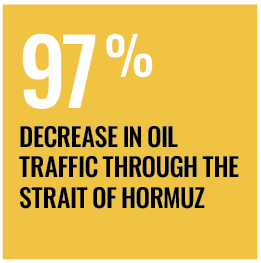
Owing to the sheer volume of oil and gas that is exported via the strait, and the limited options to bypass it, its closure has instigated the largest supply shock in history. Put in context, the shock is 18 times larger than what was witnessed during the initial weeks of the Russian–Ukraine conflict in 2022. At some point, during the first weeks of the Middle East conflict, oil flows through the Strait of Hormuz plunged by as much as 97 percent with about 2,000 tankers affected.
The disruption of crude flows has come with catastrophic consequences for the global oil markets, with the ripple effects being devastation to the global economy. Before the onset of the conflict, crude oil prices averaged $65 per barrel but spiked to around $115 in April. So far, there are no signs of prices stabilising, with the current gloomy environment further clouded by UAE’s decision to quit OPEC in order to focus on ‘national interests’ and forge its own path in terms of crude production. UAE, which has been OPEC’s member for six decades, accounts for about 15 percent of the Vienna-based oil cartel’s production capacity.
Compounding the situation is the continued US blockade of Iranian ports, a standoff that could last for months unless Washington reaches a deal with Tehran in ongoing peace talks. By the end of April, crude oil prices had crossed the $120 per barrel mark, a rate last recorded in 2022. “If shipping through Hormuz is not allowed for another four to six months, we can expect oil prices to rise over $150 a barrel,” reckons Adi Imsirovic, a guest lecturer at UK’s University of Oxford.
Crude prices hitting $150 is anguish the global economy cannot endure. Already, the International Monetary Fund (IMF) and the World Bank are warning the conflict has halted momentum that would have seen global growth expand by 3.4 percent this year. With the conflict reaching 60 days in late April and crude prices rising, the IMF forecast is gravitating towards an adverse scenario in which growth is expected to decline to 2.5 percent this year with inflation rising to 5.4 percent. In a severe scenario where energy supply dislocations extend into next year, growth would plummet to two percent this year and next year, while inflation would exceed six percent.
Indermit Gill, World Bank Chief Economist, reckons that the war is hitting the global economy in cumulative waves: first through higher energy prices, then higher food prices, and finally, higher inflation. Extreme waves, including interest rate spikes and debt becoming even more expensive, are also bound to strike as the conflict prolongs. “The poorest people, who spend the highest share of their income on food and fuels, will be hit the hardest, as will developing economies already struggling under heavy debt burdens. All of this is a reminder of a stark truth: war is development in reverse,” said Gill.
SPRs to the rescue
The unprecedented disruption of crude supplies due to the Middle East conflict has seen countries across the globe resort to desperate coping mechanisms, some geared at forestalling civil strife and unrest not only because of high prices but also due to biting shortages. The mechanisms have ranged from tax cuts, declaring states of national emergency, encouraging people to work from home, limiting travel by government officials, and closing schools and universities to avoid unnecessary lighting. In terms of taxes, about 40 countries had effected some form of tax cuts be it slashing of value added tax (VAT), excise duties and even abolishing levies on petroleum and petroleum products by the end of April. “Most economies have used tax abatements to control price volatilities,” notes Medlock, adding that the cuts are classical cases of desperate times calling for desperate measures.
The stopgap measures have come in handy and eased the pains, particularly for the least developed and frontier economies. Kenya is an example. Due to the global shocks, the East Africa nation saw domestic prices for super petrol hit an all-time high of KSh206.97 ($1.59) in April, up from KSh178.28 ($1.37) in March. With the opposition calling for demonstrations, the government slashed VAT from 16 percent to eight percent, effectively bringing down prices to KSh197.60 ($1.52). The action, however, was costly for the government, which is set to lose KSh12.9bn ($100m) in revenues in three months.
For large and emerging economies, however, the more proactive action has been releasing emergency strategic stocks into the market. Historically, the release of SPRs has been rare. Often, it happens during extreme circumstances like war, pandemic outbreaks, adverse weather and natural disasters, and severe economic crises among others. The emergency stocks are controlled by governments with some inventories accumulated by private entities through government-mandated agreements and oversights.
Data by the US Energy Information Administration (EIA), the statistical agency of the Department of Energy (DOE), shows that by the end of last year, the world boasted some 2.5 billion barrels of emergency oil inventory. China, the US and Japan held the three largest inventories. Though Beijing has often remained secretive about its inventory by opting not to officially publish data, estimates indicate the country’s stockpile was in the region of 1.4 billion barrels. EIA used imports, exports, refining and oil inventory data from third-party and official sources to estimate China’s stocks. The US, on its part, held 413 million barrels, with Japan’s inventories estimated at 263 million barrels.
The data shows that, cumulatively, Europe boasted some 179 million barrels, while Saudi Arabia with 82 million barrels, South Korea with 97 million barrels, Iran with 71 million barrels, UAE with 34 million barrels and India with 21 million barrels were the other countries that have managed to amass massive stocks.
Releasing emergency stockpiles
The IEA, a club of 32 that requires members to maintain specific oil stocks and that coordinates release of emergency stocks, gives a clear pointer of the global stockpiles. Cumulatively, its members hold over 1.2 billion barrels. A further 600 million barrels of industry stocks are held under government obligation. Since its establishment in 1974, IEA has coordinated the release of emergency stocks by its members six times. A case in point was in 2011 when members collectively released 60 million barrels in response to shortages instigated by the Libyan war. In 2022, members undertook two releases amounting to 180 million barrels in efforts to contain supply disruptions and high prices caused by Russia’s invasion of Ukraine.
All the previous six interventions, however, cannot equate to the release of emergency stocks that has been necessitated by the ongoing Middle East conflict. A fortnight after the war erupted, and with the world engulfed in the worst crude supply disruption in decades, it was clear the only option to buffer the global economy from a thorough beating was the strategic reserves. In effect, IEA members unanimously agreed to make 400 million barrels available to the market, the largest ever oil stock release in history and one that IEA termed as decisive and unprecedented.
“Oil markets are global so the response to major disruptions needs to be global too,” noted Fatih Birol, IEA Executive Director following the action on March 11. Birol has gone on to add that depending on how the situation continues to unfold, the agency stands ready to act with more releases. The hope, however, is that the world will not require another intervention. “I very much hope we don’t need to do it, but if it is – if it is needed, we are ready to act immediately,” said Birol during an Atlantic Council forum.
The US has been among the major responders to the IEA clarion call, agreeing to contribute 172 million barrels of the total from its SPR. By end of April, the country had managed to release about 80 million barrels, with Europe being the key destination market. Notably, the oil is being sold on an exchange basis with oil majors and traders buying the stocks expected to return the supplies at a later date. In one of the contracts awarded at the initial phases in March, DOE made some 45 million barrels available to the market and expected to receive 55 million barrels in return. Apart from the US, Japan and the UK have also been proactive in releasing stocks, contributing 36 million barrels and 13 million barrels respectively.
“Making the strategic stocks available to the market has been the right move,” avers Emerson. She adds that unlike other previous crises that the globe has faced, the Middle East conflict has some distinct characteristics. Key of which is that for the first time, and due to the closure of the Strait of Hormuz, Saudi Arabia has been crippled in its erstwhile role of always increasing production in order to offset global shortages. “In most of the other past crises, we often saw Saudi crude oil production increase. It has not been the case in the current crisis.”
Relief, yes…cure, no
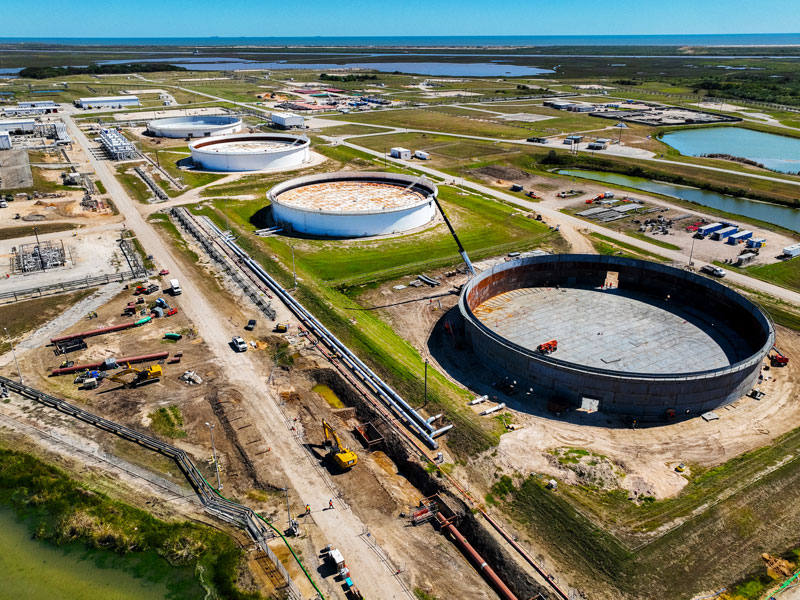
The history of SPRs dates back to the 1940s when the concept was first proposed. Following the end of the Second World War, a number of countries considered establishing strategic stocks owing to the critical role of oil in national security and military success. However, investments in tangible infrastructures to amass stocks started in the 1970s with the US being a case study. The harrowing experiences of 1973 prompted the country to invest in complex underground storage caverns that were created in salt domes along the Texas and Louisiana Gulf Coasts. The salt caverns, chosen on the basis of being inexpensive, secure and close to most refineries and distribution points, can hold up to 727 million barrels. Ahead of the March coordinated release, the SPR stocks had increased to more than 415 million barrels. The SPR has only managed to reach full authorised capacity once. In December 2009, the recorded inventory hit 726.6 million barrels.
Countries must put their minds and souls into accumulating emergency stocks
Going by President Ford’s declaration, the original objective and motivation was ‘energy independence.’ Today, however, and as evidenced by the Middle East conflict, the role of the emergency stocks has evolved. Governments across the globe are using SPRs to stabilise supply, avoid fuel shortage, rein in price hikes and even contain inflation. More brutally, countries are deploying inventories as ammunition for geopolitical influence and protecting themselves from external aggression. China is the archetypical example. The Asian giant is the world’s largest crude oil importer, with imports averaging 11.6 million barrels per day in 2025. During the year, Russia, Saudi Arabia, Malaysia, Iraq and Brazil were the country’s top suppliers, accounting for 62 percent of total imports. For Beijing, accumulating strategic stocks is, literally, a matter of life and death. Apart from the economy being deeply dependent on oil, its military machinery requires uninterrupted fuel supply in the event of war. Observers contend that a possible conflict with the US over Taiwan is among reasons China has been amassing inventories.
“While the release of reserves has helped avert dire impacts, they are not a panacea for long-term supply and price stability,” observes Medlock. There is no doubt the emergency stocks have offered relief to the world. Data show world crude oil consumption stands at 100 million barrels a day. For this reason, the release of 400 million barrels might pass as a drop in the ocean. Besides, going by the surging prices, it would be easy to conclude the impacts of the SPRs has been minimal. The reality, according to experts, is that price spikes could have been more severe without the emergency stocks. Evidently, crude prices declined by $18 soon after the IEA announcement of March 11. Another reprieve has been arresting the drastic surge in inflationary pressures, particularly among countries that are net importers of oil. India, which imports about 90 percent of its oil, is among countries that continue to project resilience. Despite the key inflation rate increasing from 2.75 percent in January to 3.4 percent in March, it has remained below the central bank’s four percent target.
Price spikes could have been more severe without the emergency stocks
Also critical is the fact that SPRs have helped prevent product shortages for many countries, more specifically across developing nations that lack the resources to build strategic reserves. Granted, amassing stockpiles is an expensive affair that often spans years. On this, the US lays bare the excruciating pain that comes with building stocks. To date, the country has invested a staggering $25.7bn in its SPR. Of this, $5bn has been spent on building facilities while $20.7bn has gone towards purchasing the crude oil. It goes without saying that as a major producer of oil, the US purchases the crude from its own companies. For net importers of crude, the pain is undoubtedly worse. The pain also comes in replenishing the stocks, more so when crude prices are high. For the world, there is no denying that emergency oil inventories have played a central role in neutralising the impacts of the Middle East conflict.
For this reason, and as global uncertainties become the norm rather than the exception, the race to accumulate stocks has the potential to become ever more urgent.

