



EBC director: How the future of trade may be less efficient but more resilient
Heightened geopolitical risk is transforming globalisation, says Christopher Stiegeler
 Safe haven gold: what are investors and central banks seeking protection from?
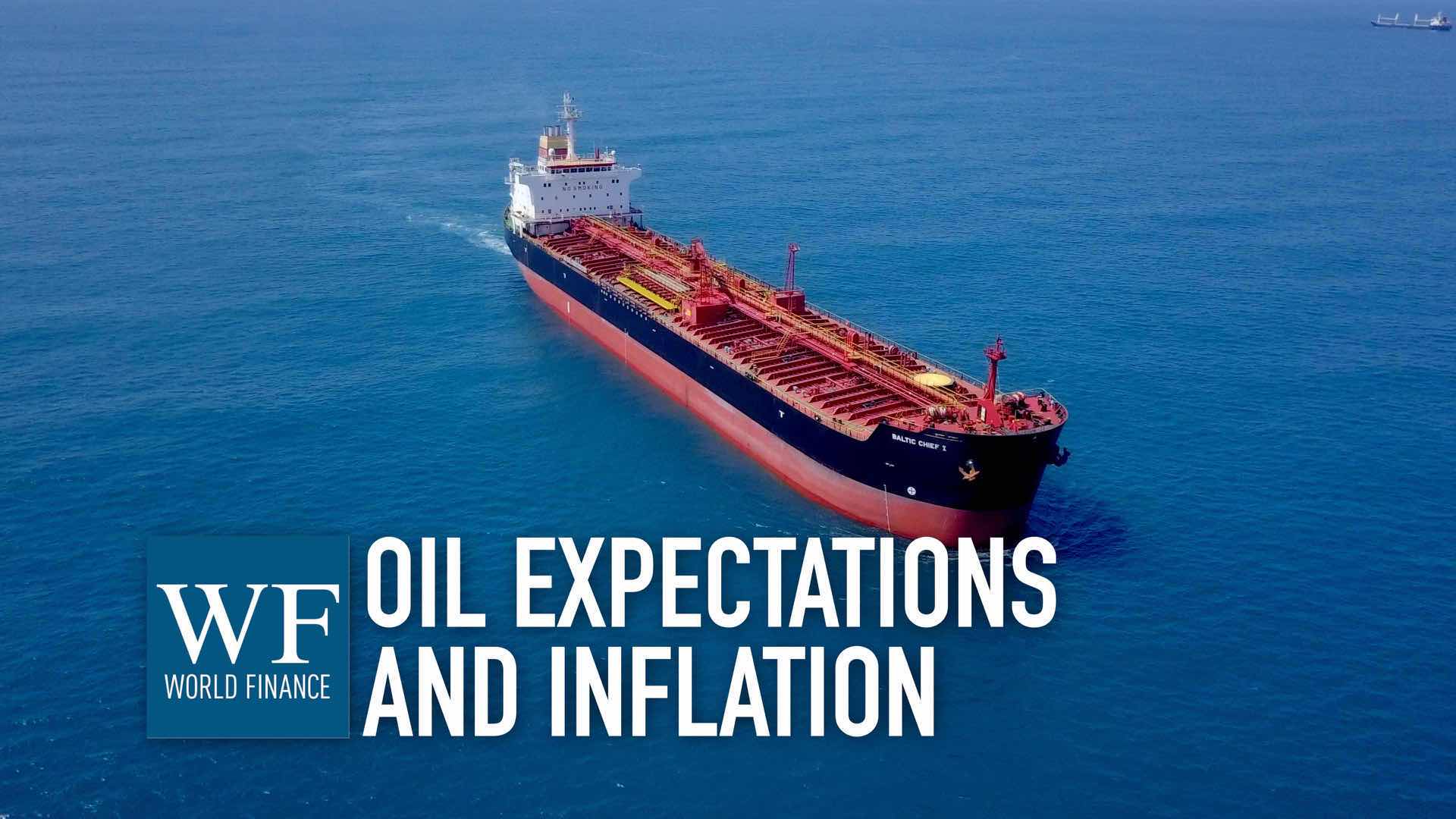 Could the oil shock bring back inflation? EBC director on trading peace vs disruption
Related:
Transcript
After discussing the recent movements in the oil markets and their ramifications in the broader economy, EBC Financial Group’s Christopher Stiegeler suggests that the ongoing and increasing geopolitical uncertainty may be causing a fundamental transformation in globalisation – and that the global economy may become less efficient, but more resilient.
World Finance: Christopher Stiegeler from brokerage EBC Financial Group is with me in the studio, and we’re talking about the geopolitical uncertainty that is right now best exemplified by the US and Iran, but before that it was Israel, tariffs, Ukraine… and, Chris, you think that this might represent a fundamental shift in the global economy.
Christopher Stiegeler: Potentially. I mean, for years, sort of, globalisation in its most basic form, means moving goods that are cheap in one part of the world, and moving them several thousand miles to another part of the world, and selling them more expensive. It’s the classic arbitrage, right?
We’re now looking at that not necessarily being the most commercially viable option, and now a supplier, when they’re looking at where to source goods from, they will start having to think about factoring in larger inventories, increased insurance costs, and those costs are ultimately going to get factored into the final price, which is again going to feed through to consumers.
So I think in terms of the global economy, what we could be potentially seeing is a global economy that becomes fundamentally less efficient, but potentially more resilient.
World Finance: Are we seeing companies respond in this, longer-term, systemic way yet? Accepting that this might be a real paradigm shift? Or does it seem like people are hoping that the next status quo is the same as the old status quo, just with a little less shipping traffic in the Middle East?
Christopher Stiegeler: I think the markets are actually already giving us evidence of that, Paul.
When we see – as we are seeing, and continue to see in the Middle East – a major shipping route come under threat. That’s almost immediately reflected in the markets in the form of currency volatility, increased insurance costs, increased freight costs and so on. So I think the market and suppliers are already pricing in that geopolitical risk in what they’re doing.
And I think that’s important. Because for a long time, the received wisdom on all of this was that geopolitical events were treated as sort of a temporary shock, and something that would sort of pass, and then we’d all get back to normal. But I’m not sure that we’re still in that space anymore.
Companies are increasingly having to ask themselves: ‘Do I want the cheapest supplier per se, or do I want a supplier or a route that I know I can rely on if something goes wrong?’ And I think that’s a really sort of fundamental way that companies and the economy is changing the way they think about efficiency, and indeed how they price it.
Watch more from this interview with Chris Stiegeler:
Iran, oil, and the world economy: are we seeing history repeat itself?
Could the oil shock bring back inflation? EBC director on trading peace vs disruption
Safe haven gold: what are investors and central banks seeking protection from?

