Sign In to continue reading the premium content or subscribe to one of our premium plans:
Already a member? Manage your profile here!!!



Sign In to continue reading the premium content or subscribe to one of our premium plans:
Already a member? Manage your profile here!!!
Sign In to continue reading the premium content or subscribe to one of our premium plans:
Already a member? Manage your profile here!!!
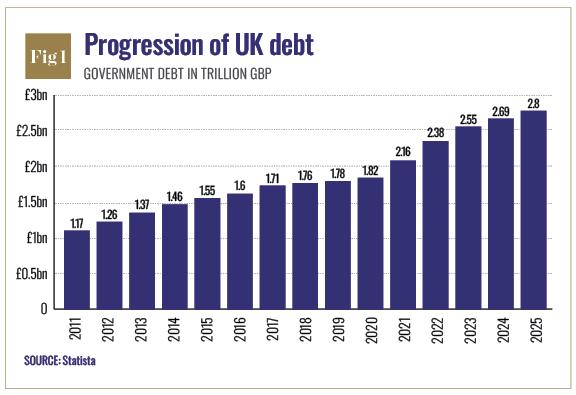
Norway and the UK struck oil in the North Sea at roughly the same time, extracting comparable riches over the ensuing decades. However, while Norway built a financial fortress, courtesy of its Government Pension Fund Global, which is currently worth over $2trn and continually compounding interest for future generations, the UK chose to spend, tax, and move on, and is consequently sitting with £2.8trn of national debt with the government borrowing just to cover day-to-day spending. But any honest answer as to what went wrong, and whether anything can be salvaged, runs straight into uncomfortable territory because the arithmetic only works one way: more drilling, not less. And with the Energy Profits Levy hitting 78 percent total effective tax on North Sea operators in 2026, that conversation has become urgent, taboo and long overdue.
How Norway built a $2trn fortress
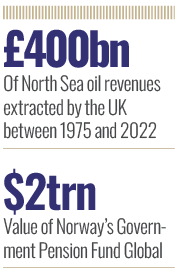
Norway’s oil story didn’t end with extraction; it began there. The idea for a Norwegian oil fund was first conceived in 1960, as the then Prime Minister, Einar Gerhardsen, and his government claimed sovereignty over the ‘Norwegian continental shelf.’ Oil was first struck in 1969, but it wasn’t until 1990 that the government passed a law to create the Government Petroleum Fund, with the simple principle: oil wealth is finite, but financial capital doesn’t have to be. The first deposit arrived in 1996, and today, the fund is approaching $2trn, owns roughly 1.5 percent of all listed companies worldwide, and gives each Norwegian a theoretical stake worth hundreds of thousands of dollars.
As soon as revenues flowed into general expenditure they flowed out almost as quickly
The Norwegian Fund doesn’t just have scale, but discipline. All oil and gas revenues flow directly into the fund, rather than being spent on day-to-day government needs. The money is then invested globally, in the same way as the Norwegian central bank’s foreign exchange reserves, across thousands of companies, including major stakes in US tech giants, turning North Sea oil into a diversified, income-generating portfolio.
Crucially though, Norway spends only the expected long-term return, around three percent annually, under its fiscal rule, preserving the core wealth for future generations. Managed independently by Norges Bank Investment Management, the system has largely remained insulated from political short-termism. There is no secret here, just a sustained national choice to save rather than spend.
The UK’s squandered opportunity
The UK, meanwhile, extracted approximately £400bn in North Sea oil revenues in today’s money between 1975 and 2022. But, unlike Norway, not a penny of it was saved in a long-term wealth vehicle. All of it went into the general spending pool, and most of it vanished without structural trace.
The critical fork came in the 1980s. While Norway was quietly establishing the architecture of what would become the world’s largest sovereign wealth fund, Margaret Thatcher’s government was using North Sea revenues for something more immediately pressing in the UK: managing the social cost of deindustrialisation such as unemployment benefits and redundancy payments. Oil money funded the transition of the politically necessary, and economically brutal, dismantling of British manufacturing, and then disappeared.
What followed was decades of spend-as-you-go, under successive governments. As soon as revenues flowed into general expenditure they flowed out almost as quickly. Nothing ring-fenced, invested or compounded. But the painful detail is that Britain was warned. Economist Wynne Godley and others argued explicitly for a Norwegian-style fund in the 1970s, before the money arrived in volume, but the proposal was roundly rejected by the then incumbent Labour government, led by James Callaghan. That wasn’t ignorance but a choice. The UK didn’t lack the resource, expertise, or the blueprint, it simply lacked, at the time, the political will to defer gratification, and chose, repeatedly and consciously, to spend tomorrow’s money today.
The Energy Profits Levy and what is left
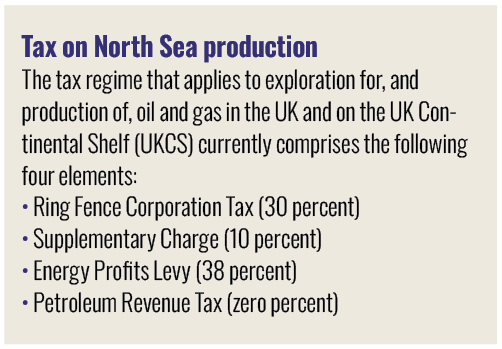
If the UK ever hopes to emulate Norway, it must start with what remains, but that picture is far less forgiving than it once was. The Energy Profits Levy (EPL) 2026, introduced in 2022 to capture energy company windfalls during a price spike, now sits at the centre of the debate. At its peak, the levy raised a few billion pounds annually, although it’s a fraction of what decades of disciplined saving might have produced.
Layered on top of existing North Sea taxes, the levy pushes the effective rate on oil and gas profits to 78 percent, and critically, it is being applied to a shrinking base. North Sea production has been in long-term decline since its late-1990s peak, with fewer new projects coming online and exploration activity slowing sharply. The result is that the levy has become something the industry plainly calls ‘a going-out-of-business tax’.
There is also a growing tension at the heart of policy that nobody in government seems too keen to resolve; the zealous commitment to net zero while relying on dwindling fossil fuel revenues, and taxing the sector heavily even though it discourages the investment needed to sustain it.
This raises an uncomfortable reality: even if Britain chose to ‘go Norwegian’ tomorrow, it would be doing so with a mature basin, reduced output, and far less time to act.
Could the UK actually do it?
If we strip away the nostalgia, the question becomes clinical: what could Britain realistically build if it started today? The North Sea still holds an estimated 2.9 billion barrels of oil equivalent (BOE) of proven and probable resources, with contingent resources standing at 6.2 billion BOE, and prospective resources estimated at 4.6 billion BOE. At current prices and under the existing EPL regime, that translates into meaningful revenue. But meaningful is not the same as transformative.
Norway’s Government Pension Fund Global didn’t just magically appear overnight; it took more than two decades of disciplined accumulation to reach its current scale. Starting now, even under optimistic assumptions with stable prices, restructured taxation, sustained investment, and a political commitment to ring-fence revenues, the UK could potentially build a reasonably sized fund over 20 to 30 years, but still a fraction of Norway’s position, and dwarfed by the UK’s £2.8trn debt pile. There are three problems in creating such a fund; scalability, governance, and politics, which compound each other.
While the scale problem is real, it is manageable. The governance problem, however, is harder. Norway’s fund works precisely because successive governments can’t easily raid it. Whereas British political culture, with five-year electoral cycles, structural short-termism, and chronic pressure to spend, has never successfully maintained a long-term fiscal vehicle. The Treasury would need ring-fencing robust enough to survive at least six or seven governments. That’s not a technical challenge, but a cultural one.
The political problem may also be the most difficult to overcome. Any serious attempt to build a sovereign wealth fund requires renewed North Sea investment, which, in turn, requires restructuring the EPL and a government to publicly argue that increased fossil fuel extraction serves the national long-term interest. But in 2026, that argument is considered politically radioactive, even where the economic logic is sound. So, while a British sovereign wealth fund is theoretically possible, it’s practically very difficult, and politically near toxic.
Killing Net Zero to save the economy
If a future government wanted to do this seriously, it would need honest policy design. The first step would be to restructure the EPL and replace it with a tiered system that still captures meaningful revenue from mature fields but actively rewards investment on new drilling. Norway’s own petroleum tax model does exactly this: high headline rates, but structured to make exploration viable rather than punitive. The goal isn’t a lower tax take per barrel, but more barrels over a longer period.
However, this requires reopening the North Sea to allow new licensing rounds and exploration, as well as an admission that prioritising domestic production means trading short-term net zero optics for long-term fiscal resilience, because continuing to import gas from Norway and Qatar while shutting down domestic supply is a contradiction, both economically and environmentally.
Crucially though, any revenues would need to be locked away. A UK version of the Norway model only works if it is genuinely ring-fenced, protected by legislation and insulated from political cycles, something closer to a constitutional lock than an OBR-style advisory body. Unfortunately, governance is where most long-term fiscal vehicles in Britain have historically collapsed. A cross-party board working to design the structure would help insulate it from five-year electoral cycles, but cross-party consensus notwithstanding, pretty much anything fiscally related is its own challenge.
Complementary revenue streams, from offshore wind lease revenues, spectrum licences, or future carbon credits, could also help supplement North Sea receipts and partially address the scale problem. However, the final requirement is the hardest: public expectation-setting. This is, by no means, a quick fix, but a 30–40-year project. No sitting politician will preside over its completion. So, the argument has to be intergenerational; the same argument Norway made in 1990 and has largely kept faith with ever since.
While the economics are challenging, they are workable. The limiting factors are whether the UK is willing to think that far ahead, and change a current political culture that has consistently chosen to make future generations slightly poorer in order to make the present slightly more comfortable.
For much of the post-Cold War period, the global financial system operated under the assumption that it was, if not entirely apolitical, then at least insulated from the harsher realities of geopolitical conflict. Capital flowed across borders with relative ease, reserve assets were treated as sacrosanct, and the infrastructure underpinning global finance, from correspondent banking to payments systems, was seen as broadly neutral.
That assumption is now under sustained pressure. What is emerging is not an economics politics substitutive, but a more complex intersection of both. Geopolitical factors, once peripheral, are increasingly impacting financial decision-making by central banks, sovereign wealth funds, institutional investors and multinational corporations. The implications are huge, not because the system has splintered, but because the perception of it being neutral is fraying. Its evolution of financial sanctions has been the most visible driver of that shift. Historically often symbolic, sanctions have become systemic in scope, capable of isolating entire economies from the global financial architecture.
The shuttering of Russian banks from parts of the SWIFT messaging infrastructure following the invasion of Ukraine and around $300bn of Russian central bank assets immobilised after that, in some cases, was a turning point. These were by no means modest moves; they were tests of the profound ways in which entrenched financial infrastructures can be weaponised as a tool of statecraft. Such actions always have the effect of spreading beyond their intended targets.
Contemporary supply chains, energy markets and cross-border flows of investment are tightly interconnected, meaning sanctions can reverberate through the global economy in non-structural and unpredictable ways. Currency fluctuations, commodity price shocks, and disruptions to trade financing are no longer secondary effects, they are factored into the calculus. This has raised concerns that are felt by legislators and investors, too. Desmond Lachman, a senior fellow at the American Enterprise Institute, said, “the US freezing of Iranian and Russian assets seems to be raising questions as to the reliability of the US as an economic partner.”
The undercurrent here is clear: financial access is no longer all rules-based, it is increasingly conditional upon political alignment. But what is more recent is how sanctions are now anticipated, priced and, in some cases, pre-empted. Banks are incorporating geopolitical risk scenarios into compliance frameworks more and more; asset managers are scrutinising portfolios for sanction exposure; and corporates are also adjusting their supply chains, so they don’t merely deliver efficiency but also are able to weather political disruption. The result is a financial system that is responding to geopolitical shocks before they happen, rather than just dealing with them.
The question of reserves
Nowhere is this more relevant than in the handling of foreign exchange reserves. Reserves stored in major financial centres have been regarded as the ultimate safe asset for many years: liquid, secure and free of political interference. But that assumption has been made murkier by the freezing of Russian sovereign assets. While such steps are not without precedent, their scale and visibility have challenged people to consider what if any geopolitically contested environment is considered ‘safe.’
Banks are incorporating geopolitical risk scenarios into compliance frameworks
Yet the response has been more nuanced than some early remarks implied: “It hasn’t reduced holdings of euro reserves – other factors, notably the yield increase, have mattered more,” says Brad Setser, a senior fellow at the Council on Foreign Relations. That underscores an important point: geopolitical risk is growing but not supplanting long-held financial considerations such as yield and liquidity. Instead, it has been put on top of them. But there are signs of a gradual recalibration.
Central banks are diversifying, especially in emerging markets, not just by currencies, but by jurisdiction and asset type. Gold accumulation has persisted, not as a reaction against the dollar system but as a hedge against potential limits on access to financial assets under political catastrophe.
This has been mirrored, of course, in central banking circles, where policymakers have been putting more value on ‘resilience’ and ‘optionality’ in the management of reserves, suggesting that reserves are now not only judged on factors such as their financial structure but also strategically on the ability through which they can be accessed.
While the idea that the global financial system is fragmenting along geopolitical lines has gained traction in recent years, the structural imbalances that feed global capital flows remain firmly in place. China still runs large current account surpluses that need to be recycled into deficit economies like those in the US and the UK.
These flows, by necessity, cross geopolitical fault lines. Such attempts to create alternative financial architectures through regional payment systems, or through bilateral currency exchanges, have yet to meaningfully displace the dollar-centric system.
Senior market players share this sentiment. Blackrock CEO Larry Fink, in his most recent annual letter, warned not of fragmentation per se, but of a ‘reordering’ of global capital flows, driven by industrial policy, supply chain realignment and national security concerns. The distinction matters. A reordered system may look different at the margins – more regional, more politically conditioned – but it is still deeply interconnected at its core.
Similarly, Christine Lagarde, President of the European Central Bank, has argued that while geopolitical tensions are reshaping trade and investment patterns, they are doing so within an existing framework rather than replacing it. Financial globalisation, in this reading, is evolving, not unwinding. This enduring interdependence places a natural constraint on how far financial decoupling can go. It also explains why, despite political tensions, global capital continues to flow in recognisably familiar patterns.
The changing nature of safe havens
Where geopolitics may be having a more subtle impact is in perceptions of risk, especially around so-called ‘safe haven’ assets. Lachman says that, “US Treasury bonds and the US dollar seem to be losing their safe haven status” amid heightened geopolitical and financial market volatility. Whether justified or not, this perception is of great import.
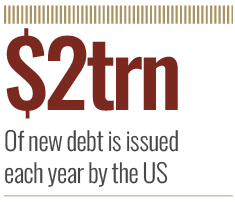
The US depends on foreign demand to fund its fiscal position, needing to issue around $2trn in new debt each year but refinancing a much larger stock of existing obligations. A sustained shift in investor sentiment would, theoretically, create more complexity here. Still, the counterargument remains compelling. The depth, liquidity and institutional credibility of US financial markets have largely helped anchor global portfolios. As Setser observes, “most flows are still driven by considerations of return.” It is the tension between perception and structure that will define the next phase of global finance. Safe havens may be questioned, but they are not easily replaced. Instead, investors will increasingly consider them conditionally safe, sound under most circumstances, yet not entirely immune to political risk.
If we are not dismantling the system, then geopolitics is sure reformulating how capital is allocated. This is most evident in cases like the return of industrial policy in industrialised economies. National security concerns are even further connected to macro-level fiscal programmes. That is influencing private capital flows, as investors align with policy priorities or react to incentives embedded in legislation.
The effect is subtle but significant: capital is no longer flowing solely to where returns are highest, but also to where political support and strategic importance are greatest. Asset managers are also tasked with navigating not just macroeconomic cycles, but also policy regimes that are potentially sensitive to geopolitical developments. Now, longer-term strategies are requiring greater consideration of regulation, political alignment and vulnerability to cross-border tensions.
A more complex calculus
Complexity is the defining feature of the current environment. Financial decisions once guided predominantly by growth differentials, interest rates and inflation expectations must now also account more explicitly for political risk. This is not entirely new. Capital flows have always been guided by influences beyond merely economic fundamentals, including regulatory arrangements, institutional credibility, and geopolitical alliances. What has changed is the salience of these considerations. The problem is especially acute in emerging markets. Many have developed deep reserve buffers in the past 20 years, which have protected them from external shocks. Yet exposure to major financial centres – especially the US – remains a defining feature of the global system.
This can cause unexpected vulnerabilities. Economies heavily invested in US assets may face greater risks from currency movements than from geopolitical fragmentation. The interplay between financial exposure and political alignment is, in other words, highly context-specific. However, smaller, more vulnerable economies have different risks. Limited access to global capital markets, in addition to their exposure to commodity price shocks and currency volatility, makes them especially vulnerable to disruptions caused by geopolitical developments elsewhere.
The financial system is neither collapsing nor being entirely remade by geopolitics. But its character is evolving. The notion of neutrality – the idea that financial infrastructure has an autonomous relation to political power – is beginning to dwindle. Instead, it is a more explicit acknowledgement that access to capital, payments systems, and reserve assets can be governed by strategic considerations. To investors and policymakers these new frameworks do not mean relinquishing the old ones. Yield, liquidity and risk-adjusted return remain central. But they must now be assessed alongside a more explicit evaluation of geopolitical exposure. The world may be entering a period defined less by global integration and more by competing systems of economic, political and financial influence. The result is a world in which financial strategy and political strategy are increasingly intertwined. Navigating it will require not just economic insight, but a sophisticated understanding of how power is exercised through markets. In that sense, the question is no longer whether finance is becoming geopolitical. It is how deeply that reality will be embedded and how adeptly global actors can adapt to it.
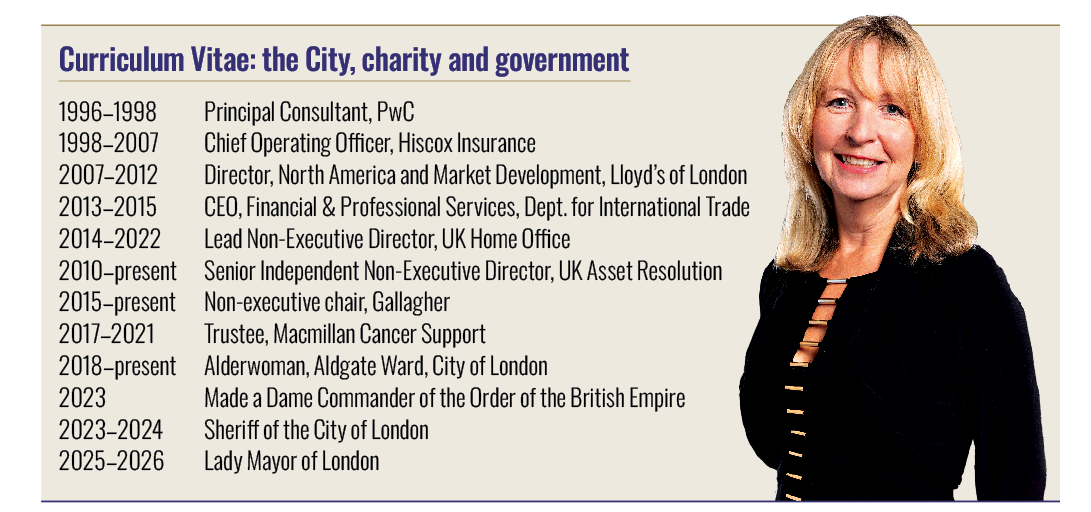
Changing perceptions of an 800-year-old institution steeped in tradition is no easy task, but that is what Dame Susan Langley is on course to achieve in her year as the first citizen of the City of London, usually known as the Lord Mayor. She is the 497th holder of that office since it was established in 1189 and only the third woman to hold the position, but the first to style herself Lady Mayor of London. That decision alone has made a huge impact, as well as raising the eyes of traditionalists, but it shouldn’t have come as a surprise.
When she was elected to the Court of Aldermen in 2018, part of the City’s governance structure, she quickly realised she wasn’t happy with a gender-specific title: “I was the first to take the title Alderwoman. I wasn’t trying to make a point but what triggered it was when someone said ‘Alderman Langley’ everyone shook my husband’s hand. I got fed up with that.
“Changing that was hard. There were papers written about whether it could be done but the nice thing is now that it is done all of the women who come after me have a choice.”
When it came to the Mayoralty, the potential legal obstacles were non-existent because all the relevant legislation just refers to the position as Mayor. Lord Mayor is the title that has been used by convention. This didn’t stop her having to work to justify the adoption of Lady Mayor as her title, but her approach was always gentle persuasion, as she recounts one encounter with someone reluctant to accept the change:
Challenging perceptions
“I get that view that since 1189, it has been the convention, I said, but that is because it has been men. Fine. That was the way it started. I said, well, let’s turn it round. Let’s say since 1189, it has been women, and the title is Lady Mayor, and there has always been Lady Mayor. How would you feel if I addressed you as my Right Honourable, the Lady Mayor? And he said, oh, I see what you mean.”
Now that it is done all of the women who come after me have a choice
From that decision flowed the re-titling of the annual parade through the City of London every November that marks the formal installation of the new Mayor from the Lord Mayor’s Show to the Lady Mayor’s Show. This made the world sit up and take notice as it was broadcast live on BBC and widely covered in the national press in the UK:“It made far more of an impact than I ever imagined. It made people feel they belonged because they could see themselves.”The changes she has pursued go far beyond the change of title.She has christened her year in office as the start of the ‘Modern Mayoralty,’ and plenty is happening to embed that in the way the office operates now and in the future.
A legacy that lasts
Traditionally, Lord Mayors have set a theme for their year in office, many very worthy but rarely enjoying a life beyond that Mayor’s year. Working with the City authorities, Dame Susan has already moved the dial on that front. Unusually, the powers that be have been willing to be clearer on who will succeed Dame Susan, with Timothy Hailes, a lawyer, lined up for 2026–27, and Bronek Masojada, former CEO of Hiscox Insurance, succeeding him.
This change has been backed by the creation of an Advisory Board that will ‘fill in gaps in the Mayor’s skillset’ and ‘ensure all three of us operate within set tramlines to give more consistency and impact.’ It is being chaired by former UK Cabinet Secretary Mark Sedwell, who has a clear brief to deliver continuity. And impact is what Dame Susan is focused on. She wants to get the message across to the wider world that the City of London is a place to do business, as well as ensuring the UK government focuses on policies that help the City thrive. Pushing for speedier delivery of the promised captive insurance regime for the City has been at the top of her agenda.
As with all holders of the office she has joined ministerial visits to China, India and America – to name just a few – and has been able to use her experience as a UK trade envoy to put the City’s case effectively.
Bridging markets
“For centuries, the City has been a place where deals are made and honoured, contracts enforced, disputes resolved. In other words, a place where trust thrives. Despite current headwinds, the UK remains the second most attractive destination for global investment. The City continues not only as a centre for capital, but as a gateway connecting investment to markets around the world.
“Our partnerships are thriving and that is something to celebrate and build upon.” When she recently welcomed the British Foreign Secretary and senior foreign diplomats to Mansion House – where the Mayor lives and works for their year in office – she took the opportunity to reinforce this message.
“This is an age defined by volatility, by insecurity, competition and, at times, fragmentation. But despair is not an option. Because, when the world feels most fragile, that is precisely when togetherness matters most. None of us can navigate this moment alone. Not one nation, not one economy, not one system, the future won’t be built in isolation. It will be built through partnerships grounded in shared values, interest and objectives.
“So, as this storm rages on, the question before us is whether we choose to strengthen these connections or allow them to be swept away. I believe we must strengthen them and the UK – and the City – must play its part.”
For those messages to land, however, she says there needs to be a significant change in perception of what the Lord or Lady Mayor does. For her, the day-to-day reality of the role is very clear: “It is probably 10 percent ceremonial, 20 percent philanthropic and then 70 percent business.”But this is not how the world traditionally sees the role.
The Lord or Lady Mayor of London is the first citizen of the City of London and heads up the City of London Corporation, which is the local authority for what is known as the Square Mile. Within the City, the Lord Mayor is accorded precedence over everyone except the King. It is one of the world’s oldest continuously elected civic offices. It was instituted in 1189, the first holder being Henry Fitz-Ailwin de Londonestone. The most famous holder of the office was Dick Whittington, who was Mayor three times between 1397 and 1420. It is entirely separate from the directly elected Mayor of London, a political office that covers the much larger area of Greater London and is currently held by Sir Sadiq Khan.
“I stand behind tourist groups outside Mansion House and hear them talking about the Mayoralty and the show and ceremony and I actually want to go: no, that is not it. But I don’t seize their flags from them. The aim, over time, is that when someone stops you in the street and asks what the Mayoralty does they will say they are an ambassador for the financial and professional services sectors and when they say, what does Mansion House do? I want them to say it is the FPS Embassy for the City of London.”
She has changed the signs on her office to say ‘Ambassador for Financial and Professional Services’ and one of the signs that greets visitors as they enter the splendour of Mansion House now says ‘Embassy for Financial and Professional Services.’
Changing signs is easy: changing perceptions is much harder, but the message is getting through. On a recent trip to Texas, Dame Susan asked if they would like her to explain what the Lady Mayor’s role is but her host turned round and said: “That’s OK we know you are the Ambassador for Financial and Professional Services in the City of London.”
While that must have given her a glow of pride, she was less prepared for some of the more general perceptions Americans and others seem to have of London. It started with an American firm saying a senior female colleague was coming to London but wouldn’t be wearing her watch and jewellery because of fear of crime. This she dismissed but realised there is a serious problem with misinformation when a senior American asked her what it was like living in an Islamic capital under Sharia Law. This must have made her despair, but she is too diplomatic to condemn those taken in by far-right conspiratorial misinformation, instead responding with a plea for London businesses and authorities to work together to counter such lies, putting the positive case forward for London.
London calling
She believes in London, having been born and brought up in London’s East End.She remembers watching the Lord Mayor’s Show on her father’s shoulders, never imagining she would one day be leading that historic parade. She says that began to change about 15 years ago when some of the more far-sighted City grandees said to her that they were concerned that too few women were in senior positions in the City of London’s governance structures.
When the world feels most fragile, that is precisely when togetherness matters most
“At the time I thought I didn’t have time to do it and, secondly, I had the wrong perceptions. I thought it was too ceremonial as that is the part that I saw. I didn’t think I could make a difference, and I am the kind of person who likes to make a difference. But as I became closer to the City, I saw the impact it could have and got to know some of the Lord Mayors, some of the business agenda, the philanthropic agenda and saw the impact you could have.”
The tipping point came in 2018 when she was persuaded at the very last minute to stand for a vacant Alderman’s seat. She won and the next few years saw her race through the preliminaries to becoming Mayor, including a year as a Sheriff of the City of London. Few Mayors are remembered for long after they have left office but perhaps like another outsider – Dick Whittington – who famously held this office three times from 1397, Dame Susan will have left a mark on the City that will be her legacy for years to come.
On June 6, 1972, just over a week after Richard Nixon’s visit to Moscow ended, the film Residence Permit premiered in the Soviet Union. On its surface, it was an ordinary drama. In reality, it was a finely engineered piece of state propaganda – a story about a doctor from Leningrad who chooses to remain in Western Europe in pursuit of freedom and professional success, only to discover that stories about Western prosperity are a myth. His decision to leave the Soviet Union, the film concludes, was the greatest mistake of his life.
To spread that message, Moscow needed an entire machinery: studios, censors, distribution networks, cultural institutions. The infrastructure for propaganda was vast, expensive, and slow. More than 50 years later, Russia’s goals remain largely unchanged. It still seeks to project similar messages both domestically and abroad. What has shifted, however, is the cost, speed and scale of pursuing those ambitions.
Today, the Kremlin can do in minutes what once took months, and it can do it across dozens of languages, on hundreds of platforms, at a scale no Soviet propagandist could have imagined. The reason is artificial intelligence. But not in the way the term is usually understood. When analysts speak of an AI race, they typically mean a contest over who builds the most powerful models, the fastest chips and the most capable systems. By that measure, Russia occupies a complicated position. It faces a significant structural constraint: hardware.
Samuel Bendett, an adviser to the Russia Studies Programme at CNA, a Washington, DC–area think tank, says that Russia has a strong pool of talent – STEM-educated specialists and mathematicians capable of developing advanced software. “But hardware has always been the weakness, and this goes back to the early days of the Cold War,” he adds.
That weakness matters enormously in the modern AI landscape. Cutting-edge machine learning systems depend on specialised chips – graphics processing units (GPUs) and AI accelerators – capable of performing vast numbers of mathematical operations simultaneously.
Currently, Russia cannot produce the advanced chips needed for frontier AI. Western sanctions following the invasion of Ukraine have created even more problems. As a result, Moscow relies on smuggled or Chinese-sourced components for more sophisticated systems. “Russia loves NVIDIA microchips and depends on them for military-related AI applications. The same can be said about hardware such as Raspberry Pi and Orange Pi. That hardware is not produced in Russia or, if its equivalents are actually manufactured domestically, they are already outdated compared to global standards,” Bendett says.
But hardware constraints have done little to curb the Kremlin’s broader ambitions. Instead, it has shifted focus to a different kind of battlefield – one where semiconductor shortages matter far less. In this space, the priority is not building the most advanced systems, but shaping the environment in which they operate: influencing what Western AI models retrieve, controlling what its own citizens see at home and dictating what people beyond the borders believe.
Influence abroad
Sopo Gelava has been researching disinformation for more than a decade and has worked with the Atlantic Council’s Digital Forensic Research Lab since 2020. She says that in recent years, the use of AI in the creation and dissemination of Russian disinformation campaigns has significantly intensified. “Actors who once created such content manually now show much less direct human involvement,” she notes.
Currently, Russia cannot produce the advanced chips needed for frontier AI
Gelava explains that even a single operation, originating, for example, from a Russian website and then spreading across platforms in multiple languages, can show clear signs of AI use throughout the process.
“Either automation is being used, or AI is involved in generating the content. This hasn’t caused a revolutionary shift in disinformation, but it has made it far more scalable. It gives creators much greater capacity to spread content at unprecedented speed and reach very large audiences. Overall, AI enables them to achieve significantly greater impact,” she argues. These campaigns are often most active in countries where Moscow has political interests. They tend to intensify before elections, but they do not stop once voting ends. The narratives continue, adapting to new events and audiences.
In one recent case, the Digital Forensic Research Lab identified a network of TikTok accounts. They appeared to coordinate the spread of AI-generated content targeting Moldova’s ruling Party of Action and Solidarity and President Maia Sandu, while also encouraging people to join protests.
Gelava adds that AI is deployed in multiple ways within these operations. It can automate the synchronised spread of narratives across platforms, or enhance visual content to heighten emotional impact and increase engagement. The objective, however, remains consistent: to reach as many people as possible, as efficiently as possible.
In Moldova’s case, at the time of writing, the analysed TikTok accounts had a combined following of 158,556 users, with total engagement exceeding 26.3 million across all interaction types. AI is making it easier not only to scale disinformation, but also to intensify cyberwarfare. In April, Dutch military intelligence warned that Russia is using AI to accelerate cyberattacks, with the threat expected to grow.
What is changing is not just the speed of these operations, but their structure. AI is shifting cyberattacks from labour-intensive efforts to highly automated processes. This allows multiple targets to be identified and hit simultaneously. Tasks that once required sustained human effort can now be executed in seconds, significantly expanding both the scale and reach of these operations.
Control at home
The same logic behind Russia’s use of AI abroad, based on automation, scale, and efficiency, is increasingly being applied at home. “Internal security has always been at the forefront of Russian high-tech development in general,” Bendett says. “A key priority has been how to insulate the country from external influence and limit its impact on the domestic population.”
AI is now making that approach dramatically more powerful. Where state propaganda once depended on extensive physical infrastructure – studios, printing presses, distribution networks – it can now be managed digitally. This allows the Kremlin to monitor, filter, and shape its information environment with far fewer people and at far greater scale.
In January, Forbes reported that Roskomnadzor – Russia’s federal body for regulating and censoring telecommunications – plans to deploy a machine learning-based system for filtering internet traffic within a year. According to the agency’s digitalisation plan submitted to the government, 2.27bn rubles ($30m) has been allocated to the initiative. According to media reports, the system aims to identify and block prohibited content more efficiently and restrict access to VPN services that Russian citizens use to circumvent censorship.
Bendett believes that what is happening in Russia now, with restrictions on Telegram, broader internet blocking, and limits on VPNs, runs counter to long-term logic. He argues that if most Russians are cut off from international IT applications and global messaging platforms, it will hinder development over time, because Russia’s IT and high-tech sector is small.
“Russia’s government policies, which are currently aimed at limiting the population’s access to some of these international components, are probably shooting themselves in the foot,” Bendett says. “This is delaying many projects and developments that would have unfolded if Russian developers and users had access to Western applications, databases and algorithms.”
The surveillance architecture extends into physical space as well. Across Russian cities, street cameras embedded with AI-powered recognition systems are being used to monitor public spaces and identify individuals in real time. In Yekaterinburg alone, around 1,000 additional cameras are expected to be installed by the end of June, covering streets and public areas. The systems analyse video feeds continuously, significantly expanding the state’s capacity to monitor its population without requiring a proportional expansion of human personnel.
Steering what AI systems learn
Russia’s operations, both abroad and domestically, are largely visible, if difficult to counter. But there is another dimension that is far harder to detect. Recent studies suggest that one of Russia’s most consequential AI strategies is aimed not directly at populations, but at the models they increasingly rely on to interpret and understand the world. This strategy targets Western AI models indirectly by shaping the data they are trained on and the sources they retrieve information from.
A network of pro-Kremlin websites has reportedly used AI tools to flood the internet with millions of pieces of Russian propaganda. Much of this content is designed to be picked up by search engines and scraped into large datasets used to train AI systems. Researchers describe this approach as a form of ‘data poisoning by scale,’ where the aim is not a single piece of misinformation, but a sustained saturation of the information ecosystem. The concern is that, over time, this could subtly shape how AI systems interpret, prioritise and reproduce information.
Sopo Gelava notes that Russia’s AI-driven tactics are becoming more sophisticated over time. AI-generated content used in disinformation campaigns was once relatively easy to spot. But that is changing quickly. “There used to be frequent grammatical errors, and in the past we could often tell from this that the operation had been created by AI. Today, however, it gives more opportunities to creators of disinformation because the translation is much more refined and significantly better adapted to the local context,” Gelava says.
Researchers studying Russia’s use of AI believe its parallel efforts in the global AI race are becoming harder to detect, more scalable and more targeted. They not only reach wider audiences but also risk shaping how information is interpreted and reproduced across digital systems.
When corporations announce policies, all stakeholders – from consumers to employees to shareholders – expect them to be upheld. But a dramatic reversal is taking place. If 2020 was the time for grand social and environmental pledges, 2026 is the year of the rollback. Target, Walmart, Meta, Amazon, McDonald’s, Warner Bros and Goldman Sachs are among the one in eight companies that have so far weakened diversity, equity and inclusion (DEI) policies. Meanwhile almost one in five (18 percent) completely or partially discarded their net-zero promises.
The policy U-turns first emerged when Trump re-entered the White House and started revoking guidelines himself. By 2025, the fires were roaring. In a striking moment, the Net-Zero Banking Alliance collapsed after Bank of America, JPMorgan Chase, Citigroup, Wells Fargo, Morgan Stanley and Goldman Sachs all withdrew. Today, politically motivated corporate rollbacks continue to compound at pace. The sudden drop in commitment reflects the aggressive ‘anti-woke’ philosophy of the Trump administration. For investors, it opens a Pandora’s box of new risks.
Boycotts spiral into falling valuations
One of the companies that has become synonymous with rollbacks, capitulating to Trump and the MAGA movement, is mega-retailer, Target. In November 2024, the brand bowed to pressure to remove Pride merchandising, leading to boycotts and a 20 percent drop in share prices. Just a few months later, Target went on to U-turn on its DEI initiatives, notably to end its Racial Equity Action and Change (REACH) strategy and abandon a $2bn pledge to support Black businesses.
This sparked one of the most devastating boycotts in US corporate history, with footfall dropping by nine percent and share prices losing 33 percent of value year-on-year. CEO Brian Cornell was forced to step down and shareholders have filed class-action lawsuits. Target is alleged in the courts to have engaged in the “misuse of investor funds to serve political and social goals.”
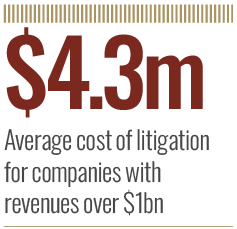
With boycott risk comes increased litigation risk. A survey by Norton Rose found twice as many companies were impacted by ESG-related (environmental social governance) class actions in 2025 (30 percent) compared to 2024 (16 percent). Political pressure is listed as a top trend contributing to the increased risk exposure. For shareholders, it is worrying. Companies with revenues exceeding $1bn spend an average of $4.3m on litigation, which eats into profitability.
What makes Target especially vulnerable to boycott risk is that the store had a significant African American customer base. By bowing to politics, it alienated its own customers. As one shopper commented, “We don’t buy where we are not respected.” Worryingly for Target, the brand continues to attract protests, even with a new CEO. The retailer is now at the centre of another boycott around its dealings with ICE.
It is unlikely Target’s share price will recover to the highs of 2020, which are currently less than half the value. In the words of Head of Behavioural Finance at Oxford Risk, Dr Greg Davies, “Investors do not only price cash flow,” he explains, “they also price trust.”
Shareholder revolt increases
More recently, oil giant BP felt the full force of rollback risks when it tried to reverse on its clean energy commitments in April 2026. For the newly minted CEO Meg O’Neill, the triple shareholder revolt was a disaster. More than one in two (53 percent) voted against unwinding climate disclosures. To rub salt in the wound, a shareholder resolution was filed to increase disclosure for oil and gas capital investments. Furthermore, in a strong show of disapproval, one in two (53 percent) voted against virtual-only AGMs, hinting at a growing mistrust. Cognitive Scientist Elin Helander points out how rollbacks “erode trust” for shareholders, and “particularly people who see sustainability as an important part of investing.” Alienating sustainable investors presents concentration risks in the future, as well as limiting the potential shareholder market and liquidity.
However, it’s not only sustainable investors who struggle to find confidence in leaders who U-turn. The process of launching an expensive initiative only to abandon it is uncomfortable for all investors to stomach. By contrast, companies such as Apple, Levi’s and Ikea that continue honouring their pledges benefit from improved trust over time. IKEA, for example, has enjoyed a boost in value over the past years, as it holds steadfast to its ongoing environmental strategy.
Ripples of risks
Not all U-turns are built the same. Davies highlights how investors distinguish “learning from flinching.” A flexible approach to new technologies and opportunities is welcome. For example, when CEO of Blackrock Larry Fink changed his stance on crypto, the markets broadly approved.
Transactional behaviour is closer to gangsterism than capitalism
However, since the Trump presidency, Blackrock has openly shredded many of its once-trailblazing environmental policies. Fink recently commented that the ESG and DEI “pendulum” swung “too far.” By contrast with the crypto U-turn, this created ripples of alarm and decreased confidence in Blackrock’s decision making. Two Dutch pension funds divested a combined €17bn from Blackrock in direct response to the rollback, with rumours swirling that more could follow. As institutional investors like pension funds are so large, market valuations can quickly slip when they start to pull funding. It is yet another risk for investors to price in.
Perhaps the most famous example of a leader who went from enlightened to erratic in the eyes of investors is Elon Musk. Musk rose to prominence as a figurehead for the clean energy transition and free speech. However, his willingness to bend values based on politics has ruptured the trust of his original supporters. Musk’s sharing of politically motivated disinformation on X (formerly Twitter) has been especially problematic.
Most investors are “unwilling to engage with leaders who have no respect for verification, checks and balances,” elaborates Regulatory Design Specialist, Dr Roger Miles. This in turn adds concentration risk, where the only stakeholders left are those who agree with Musk, creating groupthink and “contamination risk” if they are all accessing their information from the same dubious sources.
Markets and mafia techniques
Worryingly, 2026 feels like a year where the normal “verification, checks and balances” are pushed aside in favour of populist politics – even in the investment markets. When listed companies abandon policies because they want to appease a President, the market stops becoming reassuringly rules-based and starts to become mafia-style.
“Lets call it what it is, it is expediency,” elaborates Dr Miles. “I threaten you, you give me what I want.” Today’s commodification of values means that policies are bought, sold and amended like products, without meaning anything. As Dr Miles emphasises, “Transactional behaviour is closer to gangsterism than capitalism.” It is particularly pronounced in the cases of social media providers like Meta, where whistle-blowers allege that algorithms are skewed to promote content that the Trump administration aligns with, at the cost of values and ethics. Piecing together each little rollback creates a prickling feeling of discomfort among investors.
Earlier this year, the ‘Sell America’ trend took off. Investors have already started to mobilise against what they see as unacceptable corporate behaviour. In a sense, it is a wider response to the overall rollback of traditional Western values. “People are deeply pissed off about the loss of the social contract,” adds Dr Miles candidly. In this age of AI and climate uncertainty, consumers are anxious about the direction of their futures, and have even less tolerance for companies that appear to sell them out. However, we are also caught in a moment of misinformation, unsure of which sources to trust, adding yet more anxiety to the mix.
It has left the markets in what Dr Miles refers to as a “Wile E. Coyote moment,” or “hysteresis” to use the behavioural economics term. Characteristically, the cartoon runs off the edge of a cliff and continues to run in mid-air for a while. It is only when he looks down and acknowledges the mistake that he falls. This is what Dr Miles believes could be happening now. “These are strongly fragile conditions,” he explains. For a short period, the market is continuing to act as if nothing has changed and everything is fine. But as the realisation that we are moving from rules to mafia-techniques hit without checks and balances, the crash could be colossal.
From rollbacks to a roll of the dice
For investors, it is a tense time. Without a strong financial backhander, corporations may continue to U-turn for politics, against the shareholder interests.
This can cause sharp Target-style devaluations alongside irreparable confidence risks. On the other hand, the more insidious alternative would be that companies get away with their rollbacks, potentially contributing to a mass-selling of US assets and eventual market crash. After all, 41 percent of US investment is held abroad, where many Trumpian policies are deeply unpopular. Perhaps the best way to mitigate against rollback risks starts and ends with shareholders themselves.
Recently, as with BP, Mastercard was left red faced as shareholders overwhelmingly voted against DEI rollbacks. Preventing rollback risks means overcoming inertia and taking active supervisory roles in shareholder meetings. Could shareholders be the unlikely heroes, able to close this Pandora’s box?
When Donald Trump turned his fire on Jerome Powell last year, it barely registered as unusual. The President had criticised the Federal Reserve chair before. This time, however, the threat felt sharper. “If I want him out, he’ll be out of there real fast,” he said – sounding less like a head of state than the host of The Apprentice, casually dismissing a contestant.
At first, it seemed like another off-the-cuff remark. But what followed was something more sustained: a steady, public campaign against the Fed chair. Trump repeatedly attacked Powell for refusing to cut interest rates, even calling him a “moron,” despite having appointed him. The message was blunt. Monetary policy should align with political priorities. Relief, the US President suggested, would come soon enough: rates would fall “when Kevin gets in.”
We need to talk about Kevin
Kevin Warsh, now installed as Fed chair, arrives with the kind of CV that reassures markets. A former governor who served from 2006 to 2011, he is widely seen as a seasoned operator in financial circles. He is also the wealthiest Fed chair in history, with assets worth at least $130m, accumulated through his role at the Duquesne family office. His confirmation, however, was anything but routine. Senators pressed him hard over more than $100m in ‘undisclosed’ assets, turning hearings into a confrontation. Republican senator Thom Tillis lent his support only after the Department of Justice dropped a criminal probe into Powell, widely perceived as a strategy to nudge Powell to step down. For his part, Powell has pledged to stay on the Fed board as governor to provide continuity, even though he had previously considered stepping down.
Warsh’s proximity to the administration has become a focal point. Critics worry that his alignment with Trump could blur the line between political power and monetary policy. In the run-up to his appointment, he softened his hawkish stance on inflation, a shift some see as calculated. His ties run deep: his father-in-law, Ronald Lauder, is a long-time Trump ally and donor. Supporters counter that Fed chairs may be political appointees, but their professionalism prevails once in office. Warsh has sought to calm fears during his Senate hearing, dismissing speculation that he would overhaul regional Fed leadership with loyalists. And his term runs until 2030, long enough to outlast the current administration.
The Fed’s structure itself offers some protection. Policy is shaped collectively by the Federal Open Market Committee (FOMC). Decisions – especially the most consequential ones on interest rates – require consensus or at least a majority. As chair, Warsh still casts only one vote and will have to convince other committee members. Historically, governors have been cautious about open dissent, preferring to project unity. But if they perceive an encroachment on independence, they may assert themselves forcefully through votes or even public statements.
Yet leadership still matters. The chair sets the tone, shapes communication and influences the internal culture. A chair perceived as politically aligned could shift expectations about how decisions on monetary policy are made. Over time, that perception can become self-reinforcing, affecting everything from bond yields to currency valuations. “Once he is sitting in the Chair’s seat he will be beholden to his fellow FOMC participants and markets, who will be closely watching for signs about his vigilance in keeping inflation expectations well-anchored,” says Christopher Hodge, chief economist of the US at the investment bank Natixis CIB Americas, who formerly held senior roles at the Federal Reserve Bank of New York and the US Treasury.
Under pressure
For much of its history, the Fed has occupied a delicate space – created by politicians, yet expected to stand apart from them. Its independence has never been absolute. Congress created the institution, and elected politicians have always sought to influence it, particularly before elections. Yet over time, a norm has emerged: while politicians might criticise its decisions, they ultimately respect the Fed’s autonomy. Its institutional gravitas rests on the premise that monetary policy is insulated from day-to-day politics, a tradition based less on formal rules than on shared norms. Once that mutual restraint between governors and politicians erodes, rebuilding it can be difficult.
Warsh is widely seen as a seasoned operator in financial circles
That understanding is beginning to fray. Trump’s attempts to reshape the Fed – its leadership and direction – have raised concerns that go beyond personalities. Last August, he sought to ‘fire’ governor Lisa Cook, defying legal protections that shield board members from dismissal. The move failed, but the signal was clear. If politicians can dictate the board’s composition, the boundary between fiscal and monetary authority begins to blur. At the same time, the administration has moved to exert more formal control. An Executive Order signed by Trump asserted that “officials who wield vast executive power must be supervised and controlled by the people’s elected President,” requiring independent agencies to submit regulatory proposals for White House review. The Fed’s monetary policy was spared. Much else was not.
To some historians, the shift in public rhetoric is without precedent. “Trump’s assault on both Jay Powell and Fed independence is the strongest such assault in the Fed’s 112-year history,” says Richard Sylla, an expert on the history of US financial institutions who teaches at the NYU Stern School of Business. The closest parallel, he argues, dates back to the post-war clash between the Treasury and the Fed over the latter’s interest rate policy, aimed at reducing inflation, which ultimately led to an accord restoring its monetary independence. Ironically, current pressure may strengthen the institution, Sylla argues. “Trump’s pressure on Powell, and Powell’s successful resistance to that pressure will actually result in increasing the Fed’s reputation for policy independence and strengthening the overall case for central-bank independence.”
Regime change
Warsh has made it clear that he does not intend to preserve the status quo. He has described US monetary policy as “broken for quite a long time” and has promised a “policy regime change.” Part of that shift will be philosophical. Unlike Powell, Warsh favours a narrower interpretation of the Fed’s mandate. He has signalled a retreat from policies that blur the line between monetary and fiscal intervention, particularly large-scale purchases of mortgage-backed securities. Under his watch, monetary policy is expected to be depoliticised, steering clear of non-monetary issues like climate change and social justice.
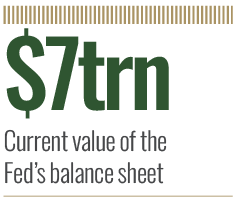
Above all, Warsh has his sights set on the Fed’s ballooning $7trn balance sheet. Immediately scaling it back would mark a decisive break from recent policy, reversing the Fed’s decision to halt quantitative tightening, under which its bond holdings were allowed to mature. Higher Treasury yields might force Fed interest rate policy into difficult trade-offs between supporting growth and containing inflation. And those trade-offs will not occur in a vacuum, given Donald Trump’s obsession with lower interest rates. “With what appears to be a persistent energy shock, there will be inflation and reason to raise interest rates,” says Barry Eichengreen, an economic historian at the University of California, Berkeley (the full interview with Professor Eichengreen is on pages 98–99 in this issue of World Finance). “But there will be political pressure from the White House to reduce interest rates. That will not be an easy circle to square.”
Calls for the Fed to keep interest rates low are not unprecedented. But the phenomenon is gradually evolving into a systemic feature of US politics due to the country’s precarious fiscal position. Higher debt levels increase pressure on the Fed to keep rates low and buy Treasurys, helping to erode the real value of US debt. The risks are obvious if recent economic history is a guideline. In the 1970s, government influence pushed the central bank to hold rates down, fuelling a surge in inflation. It took the shock therapy of aggressive rate hikes under Paul Volcker’s Fed leadership – and a deep recession – to restore confidence. Even then, it took years to fully re-anchor expectations. “That could happen again, undermining Fed independence, the value of the US dollar and confidence in US public debt management,” Sylla warns, pointing to the risks of sustained political interference that could undermine the Fed’s effort to anchor inflation expectations. “If political interference pushes inflation to sustained levels above two percent, the Fed would lose credibility. No matter what it does, it is likely to become a scapegoat for the likely negative results of fiscal irresponsibility.”
The Fed’s global reach under strain
What happens at the Fed rarely stays in Washington. As the anchor of the global financial system, the Fed’s credibility extends far beyond US borders. Its decisions shape capital flows, currency stability and the availability of dollar funding worldwide. For many countries, access to dollars is a cornerstone of financial stability. Foreign central banks are more comfortable with banks and firms under their jurisdiction using dollars if they can access them from the Fed through currency swaps in times of need, says Eichengreen. “If we have a nationalistic US President who insists on nationalistic behaviour by the central bank, things will be different.”
Warsh has made it clear that he does not intend to preserve the status quo
There are already signs of that shift in thinking. Stephen Moran, a temporary Trump appointee to the Fed board, has argued that the US should reconsider its role as a global lender of last resort, or demand compensation for it. Similar criticisms have surfaced before, including during congressional hearings after the 2008 financial crisis. A more inward-looking Fed aligned more closely with short-term domestic political objectives would reshape global finance, increasing global scepticism about its credibility.
“If financial markets and international partners perceive undue political interference in the central bank, we will see the ‘ABUSA’ – ‘Anywhere But The US’ – sentiment soar, and to the detriment of the US economy,” says Yerbol Orynbayev, a former World Bank governor and ex-deputy Prime Minister of Kazakhstan who played a key role in the country’s response to the 2008 financial crisis. “The US Treasury market is already on the verge of rioting – yields are fickle and are often rising. If the Fed is compromised, the US economy could face huge losses.”
Cryptocurrency, the champion’s champion of free market economists, has had a rollercoaster ride since Bitcoin’s inception in 2008. Its explosive growth in 2017 triggered a series of violent market cycles and drew intense regulatory scrutiny, including China’s blanket ban on all crypto-related transactions and mining. Based on a vision of an economic system beyond the reach of governments, immune to inflation, and frictionless across borders, Bitcoin promised to do what centuries of monetary experimentation had struggled to achieve: combine the scarcity of gold with the utility of the US dollar.
That moment seems to have passed. Crypto has not displaced the dollar, which remains embedded in global trade, finance and reserves. Nor has it meaningfully challenged gold, which continues to be a bellwether for perceptions of long-term value. Even in its most ambitious experiments, cryptocurrency has struggled to function as a stable medium of exchange. Volatility, regulatory resistance, and limited real-world adoption have all constrained its monetary ambitions.
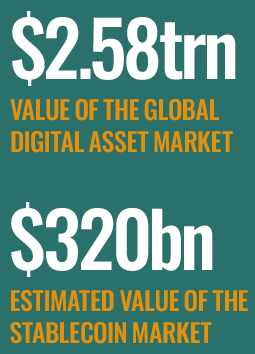
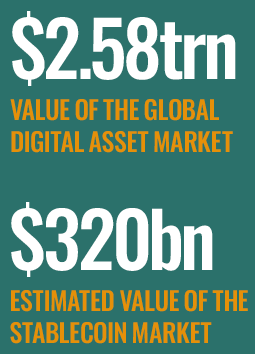
Yet to dismiss crypto as a failure would be to misunderstand what it has become. Far from disappearing, digital assets have evolved into a market worth roughly $2.58trn, increasingly functioning less as money and more as infrastructure. Cryptocurrency, rather than replacing the current system, has emerged as a form of financial infrastructure, most visible not at the centre of the global economy, but at its edges.
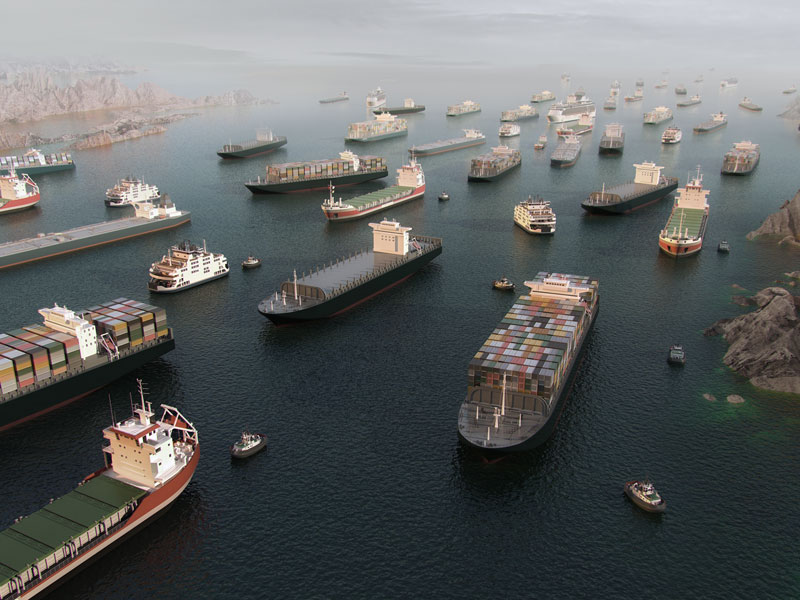
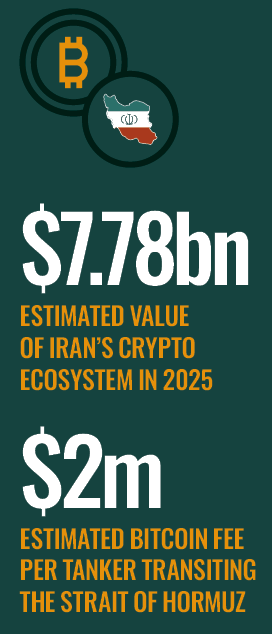
This has become particularly apparent in recent months with the evolving use of cryptocurrencies in geopolitically constrained environments. Amid the continuing fallout of the US–Israel ‘special operation,’ Iranian officials and state-linked industry representatives discussed proposals to collect a $1 per barrel tariff from tankers crossing the Strait of Hormuz, payable in bitcoin.
According to Hamid Hosseini, a spokesperson for Iran’s Oil, Gas and Petrochemical Products Exporters’ Union, “vessels are given a few seconds to pay in bitcoin, ensuring they can’t be traced or confiscated due to sanctions.”
This equates to a $2m fee per tanker transiting the strait and effectively embeds digital assets into one of the world’s most strategically important trade routes. This is not a move based on the adoption of a new financial doctrine. It is far more pragmatic than that. It is a method that serves to bypass the dollar-based system and creates a payment channel that is difficult to monitor or block.
The failure of the currency thesis
Following the global financial crash of 2008, the overall sentiment towards banks was one of deep mistrust. It is out of this mistrust that cryptocurrency emerged; it was “a backlash against the failings of the conventional financial system,” writes Hyun Song Shin, economic adviser and head of research at the BIS, in a 2022 op-ed for the Financial Times. Cryptocurrency promised a self-sustaining peer-to-peer system that bypassed banks altogether.
In practice, however, cryptocurrency does use intermediaries: crypto exchanges such as Binance, Coinbase and Kraken. Shin goes on to say that while the banks are regulated, it is often “the founder and a small number of venture capital backers that are in charge” when it comes to the protocols governing cryptocurrency.
If bitcoin were a country, it would rank 23rd in terms of energy use
The jailing of Sam Bankman-Fried and subsequent collapse of his cryptocurrency exchange FTX is perhaps the most high-profile example of what can happen when there is a lack of governance and risk management. After a liquidity crisis at the exchange, it emerged that Bankman-Fried had defrauded customers at FTX to the tune of $8bn, taking their deposits and funnelling them to his trading firm, Alameda Research, for use on investments, loans, political donations and real estate.
The scale of the fraud also highlights the growth of cryptocurrency, something that simply would not be possible without the symbiotic relationship that these centralised intermediaries provide. They are the growth engine for the entire industry, so while a return to the original decentralised vision might be the ideal, it is fraught with problems. As Shin argues, “crypto would not have grown to its current size without these entities channelling funds into the sector.”

On a basic level, our financial system relies on money being a medium of exchange, a store of value and a unit of account. There is little evidence that crypto reliably performs any of these functions. As a medium of exchange, transactions are inefficient. Some of these bottlenecks are technical, with bitcoin transactions slow to confirm and transactions sometimes failing during contract execution. Other constraints are economic, with large fluctuations in price affecting real-time payments. This is before accounting for the substantial energy use and transaction costs involved. A 2025 report by Digiconomist found that if bitcoin were a country, it would rank 23rd in terms of energy use, with 204.44TWh (terawatt hours) per year.
As a store of value, cryptocurrency fails because its extreme volatility makes setting price difficult, with bitcoin price exacerbated by its typical four-year boom and bust cycles. In an article for Empirical Economics, Baur and Dimpfl write that “the volatility of Bitcoin prices is extreme and almost 10 times higher than the volatility of major exchange rates.” Finally, as a unit of account cryptocurrency never really escaped the gravitational pull of the dollar. Markets are priced in USD, and there is almost no real-world pricing in cryptocurrency.
Crypto on the edge
If crypto has failed as a basic form of currency, then where does it actually work? The answer lies at the fringes of the financial system. First and foremost, cryptocurrency is a way of getting around sanctions. Iran’s Strait of Hormuz bitcoin toll is a prime example. According to Virginia Pietromarchi in an article for Al Jazeera, “Iran’s crypto ecosystem was valued at more than $7.78bn last year, growing at a faster pace compared with 2024.”
The global financial order is becoming less universal and more regionalised
Its rapid growth in the country among citizens in recent years is due to higher inflation and a fading currency, but as Pietromarchi goes onto say, the IRGC have been prominent users of the in-country chain as well. “Harder to trace and easier to transfer than traditional bank payments, crypto offers a way to sell oil, buy weapons and commodities, circumventing sanctions.”
That is not to say that circumventing sanctions is all plain sailing though. A May 7th press release from the US Department of the Treasury states that the “treasury is aggressively advancing ‘Economic Fury’ and has disrupted billions in projected oil revenue, taken actions that have led to the freezing of nearly $500m in regime-linked cryptocurrency, and cracked down on Tehran’s shadow banking networks.”
Following Russia’s invasion of Ukraine in early 2022, sanctions rained down upon the country from all quarters, leading to Russia’s exit from mainstream correspondent banking and exclusion from SWIFT, cutting off their ability to make international money and securities transfers. According to crypto journalist and editor Phil Haunhorst, “Russia will legalise crypto payments in foreign trade on July 1, 2026. Exporters will gain a legal path to accept Bitcoin (BTC) and stablecoins from buyers cut off from Western banking.”
Crypto-facilitated international trade has allowed Russian exporters to pay their bills, notably to their largest trading partners China and India for the export of oil. In 2025, these transactions were responsible for roughly 1trn rubles ($11bn). Russia’s approach illustrates how crypto has evolved from a speculative retail phenomenon into a state-enabled settlement layer. Rather than replacing banking infrastructure outright, it supplements sanctioned economies that have lost access to conventional payment channels.
According to Gonzalo Saiz Erausquin, Research Fellow at defence and security thinktank, RUSI (Royal United Services Institute), “Crypto-enabled settlement is now embedded in Russia’s procurement model, linking diverted CHPI supply chains with alternative payment mechanisms designed to blunt the disruptive effects of sanctions.” Cryptocurrency has now evolved from the purview of cybercriminals into “a systemic, state-tolerated and in some cases state-enabled payment rail for military procurement.”
The implications of such systems are deeply ambiguous. The same networks that allow citizens to protect savings from inflation and capital controls can also facilitate sanctions evasion, illicit procurement, and opaque cross-border transfers. One of the problems with a decentralised financial system, no matter if the transactions are viewable to all on the blockchain ledger, is a lack of accountability. Where the balance lies is arguably in its retail use. For citizens residing in unstable economies where one might want to place assets beyond the control of local authorities, cryptocurrency is a handy alternative to bypass traditional banking restrictions.
One could argue that capital flight in heavily indebted countries isn’t particularly healthy, but as a 1989 Bank of England note observed, capital flight is often better understood as a symptom of weak domestic policy than a cause of economic deterioration in itself: “inappropriate policies, for example price controls, may well drive a significant wedge between the private returns to the investor and the social returns to the country at large.”
Financial plumbing
Bitcoin’s most enduring role has arguably been as a speculative asset, held less for utility than conviction. As a unit of account, as a store of value, as a medium of exchange, this investing philosophy sits at odds with its self-proclaimed status as a currency. In this sense, it cannot become money. But it can become infrastructure.
Traditionally, SWIFT, banks and settlement systems provide the infrastructure for transfers. Naturally, these are appropriately regulated and therefore relatively secure, but comparatively slow. SWIFT transfers can take between one and five days to complete, whereas blockchain provides direct peer-to-peer transfers and settlements are completed in seconds or minutes at most.
Stablecoins sit at the intersection of these two systems. Worth roughly $320bn and accounting for around 11.5 percent of total crypto market capitalisation, they function as a bridge between conventional finance and decentralised settlement. As the name suggests, they offer a more stable alternative to the dramatic price swings of crypto assets such as Bitcoin. But how exactly do they differ from cryptocurrency? According to a 2025 IMF article authored by Adrian, Miccoli and Sugimoto, “the main difference is that stablecoins are centralised (meaning they are run by a specific company) and are mostly backed by conventional and liquid financial assets, like cash or government securities. Most stablecoins are denominated in US dollars and are typically backed by US Treasury bonds.”
A digital asset backed by the dollar is essentially backing up the dollar, rather than competing with it, which helps to mitigate (but not wholly address) the central concern of governments, banks and financial institutions everywhere: losing control over capital flows. A decentralised financial system bypasses them altogether.
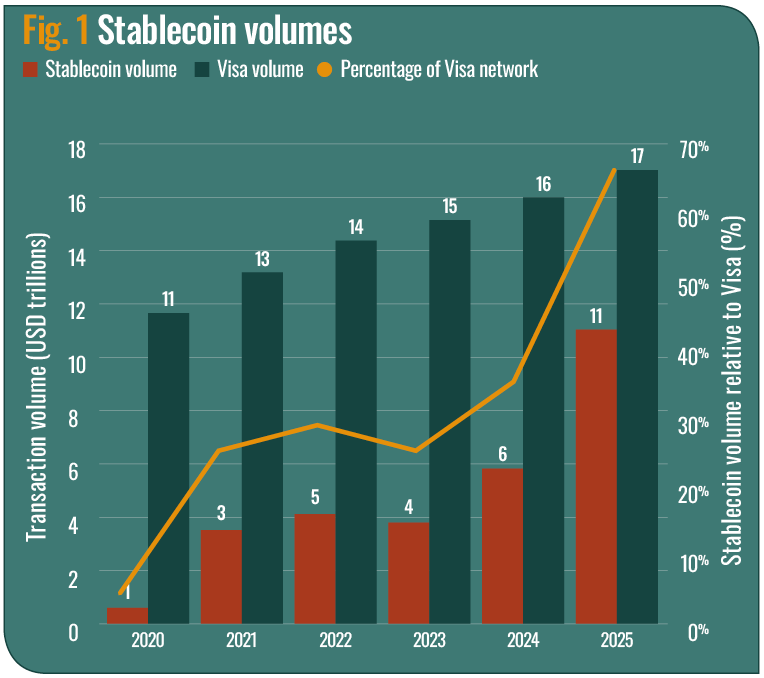
Stablecoins offer some management over this and their use has been steadily increasing in recent years (see Fig 1). According to the IMF, “the market capitalisation of the two largest stablecoins has tripled since 2023, reaching a combined $260bn. Trading volume has increased 90 percent, amounting to $23trn in 2024.”
The use of stablecoins has helped promote the idea of cryptocurrency as a sort of routing layer, where fiat is converted into crypto, transferred across borders and then converted back again. This is particularly evident in remittance markets and dollar-short economies. In countries where access to hard currency is limited or banking systems are unreliable, stablecoins increasingly function as synthetic digital dollars. In Argentina, businesses and households have used USDT to protect savings from peso devaluation. In parts of Africa and Southeast Asia, freelancers and exporters now receive payment in stablecoins to avoid correspondent banking delays and local currency volatility. Rather than replacing the dollar system, crypto in many cases extends it, allowing users to access dollar liquidity without touching the formal banking sector at all. Heavily at odds with the enduring Bitcoin whitepaper vision of eliminating trusted third parties such as banks in favour of direct online transfers, crypto is weaving itself into the gaps of the existing financial system, shoring up its weaker points.
What happens next?
The governmental response to crypto has been mixed at best. Initially, decentralised cryptocurrencies were dismissed by central banks as structurally disruptive, reducing the effectiveness of capital controls by allowing citizens to circumvent the system entirely. They have since been forced to walk back those statements, realising that cryptocurrency wasn’t going away and the technology behind it could be beneficial if adopted.
Central banks that initially dismissed crypto have increasingly moved toward experimentation themselves. Ecuador briefly trialled one of the earliest state-run digital currencies before shuttering it amid low adoption, while dozens of central banks are now exploring CBDCs of their own.
According to an article published by the IMF, “as of July 2022, there were nearly 100 CBDCs in research or development stages and two fully launched: the eNaira in Nigeria, unveiled in October 2021, and the Bahamian sand dollar, which made its debut in October 2020.” JAM-DEX (Jamaica Digital Exchange) became the third, launching in 2022.
There are currently 41 CBDC projects being piloted across global economies including Russia’s digital ruble, Brazil’s Drex, China’s e-CNY, India’s Digital Rupee and Europe’s Digital Euro. The defining mission behind each of the three operational CBDCs appears to primarily be a drive for financial inclusion, especially in the case of the sand dollar, where “the need to serve unbanked and under-banked populations across more than 30 of its inhabited islands” was a motivating factor, according to the IMF.
To put it kindly, the central banks have had to play catch-up. While there are several reasons behind the development of CBDCs, the most obvious one seems to be that it was necessary. The advent of cryptocurrency has forced them to upgrade their antiquated systems and bring them into a new technological era. Where crypto has its decentralised rails, governments are now building sovereign digital alternatives.
Stablecoins are also becoming more institutional; according to an LSE Business review article “the rapid growth of dollar-backed stablecoins is reshaping monetary dynamics,” expanding the reach of the dollar. While stablecoins do seem to reinforce dollar hegemony, increased stablecoin activity in any country that isn’t the US runs the risk of reducing its central bank’s control over domestic liquidity. It is not without a sense of irony that crypto’s greatest success may be extending the reach of the dollar rather than replacing it.
Global and central banks are also moving tokenisation projects from sandbox to pilot, with the BoE reporting that it is collaborating with private banks to explore DLT (digital ledger technology) to “facilitate faster, cheaper processes – with fewer intermediaries, shorter settlement windows and smart contracts automating routine processes.” In America, five US banks are moving onto an Ethereum-based tokenised deposit system in a shift towards a more modern payments industry. In Asia, the Hong Kong Monetary Authority (HKMA) has tier-one banks such as HSBC, Standard Chartered, and Bank of China piloting the execution of real-value, cross-bank transfers of tokenised deposits. Similarly, in Singapore, Standard Chartered is processing real-time global treasury operations on its blockchain.
An environment of global shocks
The timeline of recent years has been one of global shocks. These crises, whether they are health, geopolitical conflict or natural disaster-related, generally have a disastrous effect on supply chains, causing a knock-on effect in the price of essential commodities and a spike in inflation. As Forklog, a blockchain and digital currency magazine, points out; “in an environment of high inflation and strict capital movement controls, Bitcoin becomes a tool of financial freedom and a hedge against fiat devaluation, shedding its status as a purely speculative asset.”
In this sense then, cryptocurrency has been less of a revolutionary financial vehicle and more useful as a hedge against inflation and an enabler of capital mobility. It has acted as a pressure valve in unstable economies, perhaps most notably in Venezuela, where years of hyperinflation has resulted in citizens turning to bitcoin to protect their wealth, buy essential goods and receive money from relatives abroad. An article for Zenledger points out that “between August of 2014 and November of 2016, the amount of Bitcoin users in Venezuela skyrocketed from 450 to a staggering 85,000.”
The revolution promised by Bitcoin never fully arrived
Similar stories play out in other high-inflation countries, like Argentina, Turkey and Nigeria. Turkey boasts some of the highest crypto adoption rates in Europe and the Middle East, while Argentina and Nigeria have both turned to dollar-backed digital tokens for everyday transactions.
The future of crypto is now narrower than its past promises. As the IMF acknowledges, “Tokenisation and stablecoins are here to stay. But their future adoption and the outlook for this technology are still mostly unknown.” We must also acknowledge the continuing fragmentation of global finance into competing geopolitical blocs and take into account the volatile US tariff landscape, alongside a rising number of global sanctions – Russia and Iran topping the list, respectively.
Parallel systems
Crypto seems to be a good match for a fragmenting world, finding its place within blocs, where their underlying blockchain technology acts as a force for fragmentation in both the financial system and the technological landscape by creating siloed networks and encouraging divergent regulatory approaches.
The global financial order is becoming less universal and more regionalised. Sanctions, export controls, tariffs and technological decoupling have all increased the incentive to develop parallel systems for trade and settlement. Crypto is unlikely to become the foundation of a new monetary order, but it is increasingly useful within fractured ones. In that sense, digital assets resemble financial adaptation tools: not strong enough to replace sovereign currencies, but flexible enough to operate around the political constraints attached to them.
To be clear, crypto is not going to replace the dollar, it won’t dominate trade or become universal money, but it does have a place in the financial system. The revolution promised by Bitcoin never fully arrived. Yet in the spaces where traditional finance is weakest, slowest or politically constrained, crypto has quietly embedded itself into the machinery of global commerce.
The war in the Middle East has thrust war risk insurance into the spotlight with claims for damaged and trapped ships, property damage, aviation and cyber-attacks already mounting up. Further down the line there will be claims under business interruption policies as supply chains are impacted by the blockade of the Strait of Hormuz.
In mid-May reinsurance giant Munich Re said it was reserving €90m to meet anticipated claims, although CEO Andrew Buchanan said it was a very cautious figure at this stage: “It’s literally claims that we might end up paying if, for example, there are claims coming through the marine war markets or the political violence and terrorism market, that kind of thing.” He added that it was less than they paid out in the first year of the war in Ukraine.
The complex world of war risks cover, and the crucial role it plays in keeping commerce operating in war zones, surfaced very early in the conflict when President Trump announced on his Truth Social platform that the US government would put in place a back-stop reinsurance scheme to provide insurance cover to ship owners. The clear implication was that the mainstream insurance market might not be providing cover for ships seeking to travel through the Persian Gulf, including the Strait of Hormuz. This claim that lack of insurance cover was restricting shipping movements in the Gulf baffled the well-established war risks insurance market centred in London and Lloyd’s.
“Iran and the Persian Gulf is, of course, currently an area of maximum risk severity, but insurance is still available to operators in the area, including the Strait of Hormuz,” Chris Jones, CEO of the International Underwriting Association, a trade body representing non-Lloyd’s underwriters in the London market, said in a press statement issued shortly after Trump’s announcement in early March. The Lloyd’s Market Association was similarly emphatic: “Three weeks since the start of hostilities in the Middle East, we are still seeing reports that suggest insurance coverage is cancelled or unaffordable and that this is the reason that vessels are not transiting the Strait of Hormuz. This is not accurate.”
By the end of March, however, the US government, through its International Development Finance Corporation (DFC), had persuaded the leading US insurer Chubb to front a $20bn Maritime Reinsurance Plan “designed to resume commercial shipping in the Gulf.” DFC and Chubb said they had identified several other American insurance companies to provide reinsurance policies behind Chubb and alongside DFC to expand market capacity and were looking for additional reinsurance partners. Two months later none of the additional partners had been named.
The myth of an uninsured Gulf
The launch announcements focused on the role of the scheme in ensuring that trade through the Strait of Hormuz resumed, again suggesting that lack of affordable insurance might be part of the cause of the almost complete shutdown of shipping through the Strait. “DFC is pleased to partner with Chubb, one of the world’s leading insurance companies, to help get energy and trade flowing again through the Strait of Hormuz. DFC’s Maritime Reinsurance plan combines Chubb’s premier underwriting expertise with the financial commitment of the US Government. With this announcement, we are one step closer to restoring market confidence and resuming energy and commercial trade disrupted by the conflict with Iran,” said DFC CEO Ben Black.
Months later very little shipping was moving and lack of insurance was not the problem, as Andrew James, managing director, marine at London market broker Gallagher explained: “There has been a huge miscommunication. It has probably been misdirected by some people not inside the industry. Lloyd’s and the London market and other markets have always, always been open for war.
“The major change since any of the previous conflicts is that the captains and crew are far more aware of what is going on. Now the captain has the full command of the ship. If he doesn’t want to go through or his crew don’t want to go through, they just sit there and there is not much anyone can do about it.
“With the technology they now have available, they have all got very up-to-date information. So, when ships aren’t going through, it isn’t because there isn’t coverage available, it is because the captain and crew do not want to run the risk of going through.
“It was perceived that there wasn’t coverage available, which is why the US government put forward this facility, which is going to be led by Chubb and a number of other American insurers. It still isn’t actually up and running yet [in early May]. We are still trying to find out the details. But there is no real need for it. Coverage has always been available.”
Chubb failed to respond to requests for information on the current state of its scheme.
Lessons from the Black Sea
Meanwhile, in April, speciality Lloyd’s insurer Beazley announced a new consortium offering $1bn of capacity to complement the existing marine war risks cover available in the London Market. “This consortium demonstrates the agility of the market to respond to the needs of global supply chains,” said Beazley CEO Adrian Cox. In short, the traditional war-risks insurance market has risen to the challenge and is providing cover for ships and their cargoes.
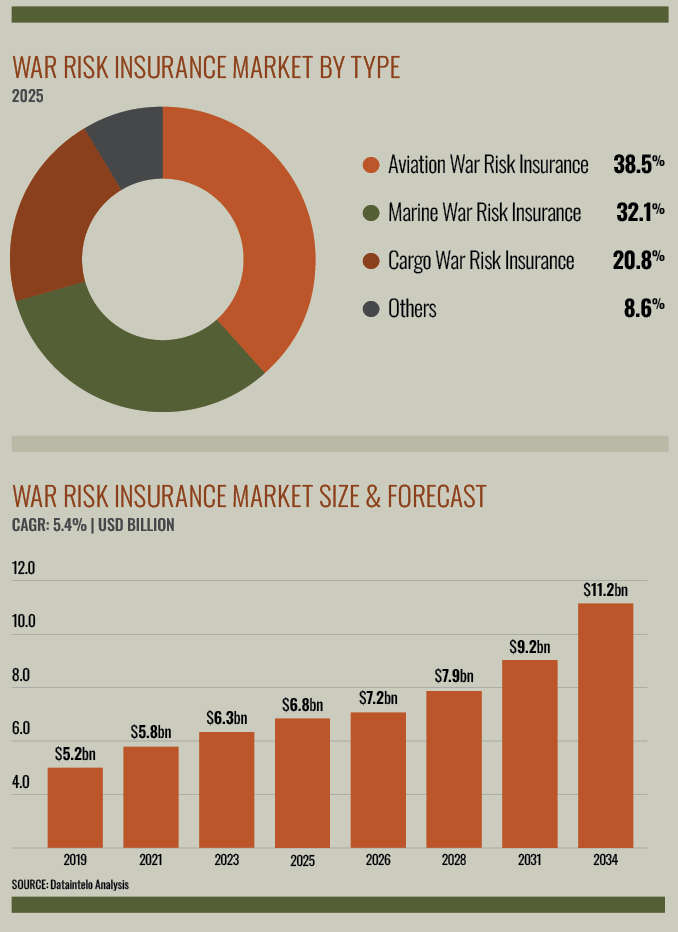
This is not surprising because it is an experienced market, well versed in meeting the challenges of international conflicts. It has demonstrated its adaptability many times in recent decades. The war in Ukraine posed challenges to the marine insurance market but gave it a chance to show how a collaborative approach can produce innovative solutions.
For the outside world, the sharpest focus was on facilitating grain and fertiliser exports from Ukraine, especially since the collapse of the Black Sea Grain Corridor deal that was negotiated between the United Nations, Ukraine, Russia and Turkey. This only lasted a year until Russia pulled the plug on it in July 2023. Since then, Ukraine has created its own corridor from its main Black Sea ports – principally Odesa, Chornomorsk and Pivdennyi – that hugs the western coast of the Black Sea until it enters the relative security of Romanian territorial waters.
Precise figures are hard to come by but, coupled with the transport of grain and other foodstuffs by road to ports on the River Danube and by road through Poland, it is estimated that Ukrainian exports are up to around 90 percent of pre-war levels, providing a substantial boost to the Ukrainian economy and the world’s food resources. Insurance has been at the heart of ensuring the return to these levels.
There was a short period after the initial Russian invasion in February 2022 when so many ships were trapped, Ukrainian ports were being heavily shelled and bombed and the Black Sea was being mined by both sides that insurers backed away from providing cover, said Rory Colacicchi, a partner in the marine and cargo team at brokers McGill & Partners.
“It was the first event for many years where multiple ships were trapped with the potential for significant losses. For a long time war risks rates had been at zero percent but we saw them jump to three percent and spike at five percent in a very short time after the invasion.”
Insuring the frontline economy
The rate settled down to three percent of a ship’s value for most voyages into and out of Odesa and through the western Black Sea as the new grain corridor became operational, but when a Liberian-flagged ship was hit in a Russian attack on Odesa the rates threatened to go up again. That is when a scheme backed by the Ukrainian and UK governments, brokered by Marsh and led in the London market by the Ascot syndicate at Lloyd’s, was unveiled. It has provided up to $50m of hull war risk and the same amount in protection & indemnity (P&I) cover for crews and third-party liabilities.
This flexibility is no surprise, says Oscar Seikaly, CEO of Miami-based NSI Insurance Group: “The key lesson is speed and adaptability. Initially, coverage disappears because of war exclusions. But it comes back once the market can quantify the risk. London has consistently led in structuring solutions, often through consortiums that allow multiple insurers to deploy capacity quickly. Technology has also played a role, particularly in monitoring corridors like the Black Sea and the Strait of Hormuz in real time. The takeaway is simple: once risk becomes measurable, capital returns.”
We are seeing physical threats to aircraft from areas we wouldn’t have seen before
The Ukraine conflict has also thrown a fresh focus on land-based war risks with constant Russian attacks on its cities and, in particular, its energy infrastructure. Ukrainian insurers were able to expand cover for businesses following the announcement of a €110m reinsurance facility, put together by Aon and the European Bank for Reconstruction and Development. This includes some basic war risks cover, according to Andrii Semchenko, who was appointed as CEO of INGO, one of the top three Ukrainian insurers, last July: “In 2023, we were able to provide some very limited war risks coverage on a first loss basis for our small to medium business clients. Initially, we offered a product with a limit of $250,000. We have been working to increase our offer to $500,000 per object,” Semchenko said. The new reinsurance backing enabled this to go forward. Semchenko said the firm had to be careful to manage its exposures. “We only introduced this cover when we had a clear understanding of where the fixed battlefield was. We do not insure any object closer than 100 kilometres to the battlefield because that is the range of most drone and rocket attacks and maybe some artillery. If the battlefield comes closer than 50 kilometres to our insured this coverage is suspended.” There is a Ukrainian government war risks scheme that picks up the larger risks, cover above the limits and those near the frontline.

Generally, land-based war risks are difficult to cover, especially for energy infrastructure, oil terminals and refineries, which are the most obvious targets, says Blaine Rogers, partner at US law firm Davis Levin Livingston: “These risks are largely written under political violence or terrorism policies rather than traditional property coverage with strict sub-limits and exclusions for acts of war. Insurers are also requiring extensive risk mitigation measures. Disputes frequently arise when insurers attempt to re-characterise an event in order to trigger exclusions.”
Turbulence in the skies
Disputes are almost inevitable, as the nature of modern warfare changes and the propensity of regimes to resort to force with little notice grows. Aviation war risk underwriters suffered a big shock in the wake of the Ukrainian conflict. When Russia invaded Ukraine in February 2022, Western sanctions required aircraft leasing companies to terminate leases with Russian airlines. Russia then seized the aircraft, leaving roughly 400 leased planes stranded in Russia and triggering one of the largest aviation insurance disputes ever litigated.
The core dispute was whether the losses should be covered under the standard all risks insurance, or war risks extensions. With the estimated total losses topping $10bn, both sets of underwriters were anxious to pass the claim to the other. A further complication was that the limits of payouts under the general all risks policies were lower than those on the war risks policies, meaning the leasing companies were understandably keen to claim under their war risks cover.
In June 2025, the English High Court largely ruled in favour of the lessors, including companies such as AerCap and Dubai Aerospace Enterprise. The court found that the aircraft were effectively lost on March 10, 2022, when Russian legislation prohibited their export. The judge concluded that the proximate cause of the loss was action by the Russian government, meaning the claims fell under the war risk cover rather than standard all risks policies. The claims went to the war risk insurers, including AIG, Lloyd’s of London syndicates, Chubb and Swiss Re.
Proceedings continue in some jurisdictions, particularly Ireland where the largest leasing companies are based, and some insurers were granted permission to appeal aspects of the English courts’ ruling, although these have been unsuccessful so far. This setback hasn’t stopped the aviation market responding calmly to the Middle East conflict, says Bill Smith, global executive for aerospace at Gallagher: “After the first few days it all calmed down. With the ceasefire, the aviation market has pretty much, to a man, suspended charging additional premiums.
“We have a standard clause giving us a seven days’ notice of cancellation or review in the event of hostilities, which means if something has occurred, then under it we have the right to amend their rates and conditions. And I have to say, I think the market has acted from our perspective very responsibly. So you have seen, very, very little of that. Some underwriters still have some additional premiums for people who are flying into Tel Aviv and Lebanon but there are no additional premiums being charged for aircraft flying into the wider Middle East.”
AI, drones and cyber escalation
The big fear for aviation underwriters and airlines, as well as the wider world, is escalation, especially involving even a modest tactical nuclear weapon, says Smith: “We are very familiar with the countries that have these weapons. If a small tactical nuclear weapon was deployed that would affect just a 20-mile radius, a 30-mile radius, it would still trigger the automatic cancellation of all airlines liability policies around the world.”
There are other concerns short of a nuclear attack that are worrying aviation war risks insurers. Ed Lluth, head of Liberty Specialty Markets, told an Aviation Summit in London organised by global broker Marsh in mid-April that the aviation industry and its insurers lack a coherent response plan to the deployment of AI-powered drones against commercial and civil aircraft: “We are seeing physical threats to aircraft from areas we wouldn’t have seen before. We have seen the elimination of the Russian strategic bomber fleet using drones which were piloted and driven by artificial intelligence from 4,000 miles away. If you unleash that kind of threat against a commercial asset, there is no defending that, there is no stopping that.”
He warned that insurers would struggle to price and cover such risks. Technology looms large in the roll call of new threats from global conflicts and this is where major businesses and financial institutions could find themselves in the firing line, as war expands beyond the physical dimension. “Cyber and physical war risks may arise in the same circumstances, as cyber has become one of the tools used by combatants or their proxies in the run-up to war or to increase disruption during a physical war,” says Neil Roberts, head of marine and aviation at the Lloyd’s Market Association. Cyber cover is an area fraught with hazard and where many major firms may find themselves badly exposed if they come under attack, a recent report from S&P Global Ratings warned.
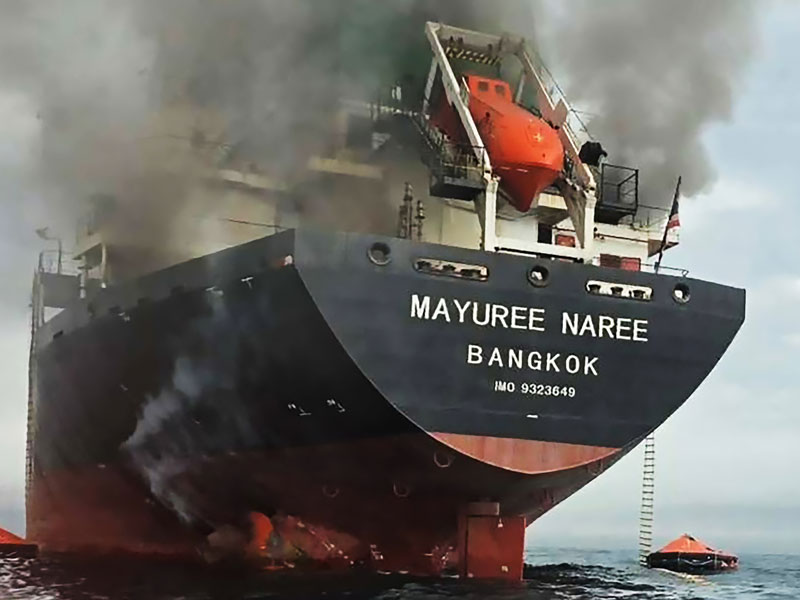
It highlighted the Ukraine war, the Middle East conflict and the potential for the dispute around the status of Taiwan escalating as all being potential triggers for intensifying cyber-attacks. It warned many firms were naïve as to how the ‘hostile cyber operation’ exclusions common in stand-alone cyber policies might operate and the difficulty of defining when such exclusions might apply. It is often impossible to identify the source of an attack with confidence: it could be a nation-state, but they frequently operate through proxies, including organised crime.
This is a real and growing threat, says Nick Robinson, a consultant in digital crisis and security strategy at Gallagher: “The cyber dimension of the conflict has started to materialise, marked most visibly by the disruptive cyber incident affecting US medical technology manufacturer Stryker on March 11, 2026. The attack, claimed by the Iran-linked hacktivist persona Handala, caused global disruption to Stryker’s Microsoft environment by wiping devices and disabling internal systems, resulting in a prolonged and uncertain recovery timeline.
“Pro-Iranian hacktivist groups are mobilising across Telegram, X and underground forums, with threats to Israeli, Bahraini, Qatari and Jordanian infrastructure all being monitored. While these groups have historically demonstrated limited sophistication, the Stryker incident underscores the growing potential for destructive state-aligned activity.”
Cyber insurance claims can be added to the list of potential legal disputes, says Blaine Rogers: “A lot of physical attacks now have a cyber component and insurers have responded with broad cyber war exclusions, but courts are starting to scrutinise those provisions. Overly broad or ambiguous cyber-war exclusions are becoming a litigation flashpoint.”
Chokepoints and future shocks
Inevitably, firms are reluctant to talk about the cover they have in place and their preparations for potential cyber-attacks, but one operations director for a major asset manager acknowledged they face a major challenge in keeping up with the latest threats, especially the potential for powerful AI-driven attacks: “We are constantly testing our defences but can never say with 100 percent confidence that we are totally protected. We have insurance and detailed response plans but they too are being tested to the limits.”
Overly broad or ambiguous cyber-war exclusions are becoming a litigation flashpoint
Another big unknown is the extent of the business interruption claims. Again, there is huge potential for disputes over what is covered as there are a plethora of exclusions for war, terrorism and hostile acts. With the impacts of the war on different business sectors – aviation, travel, hospitality, energy, food and a wide range of logistics businesses – growing longer everyday, claims are inevitable. The larger they are, the more likely insurers are to dispute them, as we have seen in the UK with the claims for business closures during the Covid-19 epidemic.
We are in an era of global geopolitical instability and eyes are already nervously turning to where the next flare-up could occur with the potential for conflict over China’s ambitions to end Taiwan’s independence top of the list. A conflict across the South China Sea and beyond has similar potential to cause global disruption to Trump’s ill-judged intervention in the Middle East. At the end of April, Singapore’s Foreign Minister Vivian Balakrishnan, speaking at a conference, highlighted the strategic importance of global maritime chokepoints, noting that recent tensions in the Middle East underscored their vulnerability.
“Chokepoints matter,” he said, pointing to Singapore’s position along the Strait of Malacca, one of the world’s busiest shipping lanes. At its narrowest, the Strait of Malacca is about two nautical miles wide, compared with 21 nautical miles for the Strait of Hormuz. Big questions would certainly be asked of the global insurance market if that was threatened with closure.
When the Italian bank UniCredit started building a significant stake in the German lender Commerzbank in 2024 as part of a takeover strategy, the German government strongly opposed the move, calling it ‘hostile,’ partly due to Commerzbank’s importance to German industry. Commerzbank rejected the offer, although officials at the European Central Bank (ECB) warned that such resistance undermined the single European banking market. The episode, however, served as a stark reminder of a contradiction in the EU’s financial architecture: although member states support deeper integration, they are often reluctant to surrender control. Yet further consolidation may still lie ahead, as calls for EU autonomy in finance continue to grow.
Pushing for autonomy
Ever since the EU single market emerged in the 1990s, experts have argued that the EU will never become a true superpower unless its financial services sector becomes both genuinely European and globally competitive. Yet it has been a recent confluence of internal and external pressures that has added urgency to these demands. Brexit marked a setback for the EU by depriving it of the City of London, its single globally significant financial centre; since then, the bloc has relied on a patchwork of hubs – including Frankfurt, Dublin, Paris, Milan and Amsterdam – none of which match the scale of New York or Hong Kong. Then came Russia’s invasion of Ukraine, which prompted financial sanctions against Russia, including the exclusion of Russian banks from the Brussels-based SWIFT system and the freezing of Russian assets in Europe, all stressing the EU’s alignment with US financial architecture.
Even more significant was Trump’s victory in the 2024 presidential election, which reminded Europeans that nationalism is a feature rather than a bug of 21st-century America. Since Trump returned to the presidency, US economic policy has been staunchly anti-European, with higher tariffs on EU products making the need for European sovereignty more pressing. A speech by Vice President JD Vance in Munich last year unsettled European policymakers, as did renewed pressure on Denmark over Greenland, including suggestions the territory could come under US control.
Fears that the invisible thread holding together the transatlantic alliance has frayed are now spilling over into the financial sector. European policymakers are openly questioning whether the Federal Reserve, under a nationalist US administration, would still fulfil its role as the global lender of last resort, as it did during the Great Recession.
A report led by Mario Draghi has injected fresh urgency into calls for European financial sovereignty, arguing that the EU risks falling behind competitors unless it accelerates financial integration. The former ECB president frames the challenge as a strategic imperative in an era of geopolitical fragmentation. A separate EU-commissioned report led by Enrico Letta reinforces the message from a single market perspective. Letta argues that Europe must complete its internal market to unlock scale. His proposals emphasise removing barriers to cross-border investment, harmonising rules and strengthening common institutions to mobilise private capital. Both reports highlight structural weaknesses – fragmented capital markets, limited risk-sharing and insufficient depth in financial services – and warn that without reform Europe will struggle to fund priorities such as the green transition, digital innovation and, crucially in a fraying geopolitical environment, defence. True to form, European policymakers have taken their time to absorb the lessons. “The Draghi report has been widely discussed by political leaders,” says Holger Schmieding, chief economist at Berenberg Bank, the world’s oldest merchant bank. “In that sense, it has shaped the debate. But so far, few of the steps Draghi has recommended have been taken.” Yet, taken together, the two reports have helped crystallise a consensus that financial integration is essential if Europe is to secure its strategic autonomy.
A question of capital
At the epicentre of the debate lies the consolidation of EU capital markets, a project the bloc has been pursuing for over a decade. One of the weaknesses in Europe’s economic model identified by the Draghi report is the underuse of the bloc’s accumulated capital. Compared with the US, Europe has struggled to channel savings into investment for companies, particularly in the technology sector. Approximately €14trn of retail capital in Europe is estimated to be sitting idle in deposits.
Another concern is that Europe’s investment landscape is gradually being dominated by US firms. American investment banks already play a leading role in Europe’s capital markets, accounting for roughly 40 percent of investment banking fees and an even larger share in key areas such as M&A and equity underwriting. Three US asset managers – BlackRock, Vanguard and State Street – have been steadily expanding their presence in Europe while often maintaining a home bias toward US investments. The sector remains underdeveloped in Europe, as governments discourage cross-border activity to retain domestic savings and sustain demand for public debt.
In a bid to deepen Europe’s capital markets, the European Commission has relaunched its plans for a capital markets union under the broader banner of a ‘Savings and Investment Union.’ Measures under consideration include tax incentives to encourage retail investment in European assets, changes in capital requirements for banks and insurers to support lending, and reforms to private pension and savings frameworks aimed at channelling household savings into capital markets.
Another goal is to build a unified regulatory regime for equities, bonds and other investment vehicles that could improve investor confidence and reduce regulatory arbitrage. By harmonising regulations and removing barriers to cross-border investments, the scheme aims at diversifying funding sources for businesses beyond the banking sector.
The reforms aim to indirectly tackle a long-standing problem in the European economy: overbanking – too many banks competing for a relatively fixed pool of capital. The large number of banks across Europe has limited economies of scale and weakened competition, while encouraging firms to rely more heavily on bank lending than on bonds or equity financing. This, in turn, has slowed the development of deeper capital markets. Sceptics warn that even if implemented, the plans do not go far in addressing structural problems. “The proposals so far will further harmonise capital markets but not complete it {the union},” says Carsten Brzeski, global head of macro research at ING Research, part of the Dutch bank ING, adding: “Another hampering issue will be tax issues and how to deal with different taxation of capital gains and asset wealth.”
What is fuelling optimism, though, is a gradual change in the political mood. The bloc’s largest economies have backed the Commission’s proposal to expand the supervisory role of the European Securities and Markets Authority (ESMA) in Paris, giving it direct oversight of major cross-border market infrastructures, including central counterparties, securities depositories, selected trading venues and crypto-asset service providers.
Currently supervision remains largely national, even for institutions whose activities span multiple jurisdictions, as member states resist EU-level oversight. “National regulators have and will continue to have for a long time a key role as components of the euro area-wide supervisory system,” argues the economist Ignazio Angeloni, senior policy fellow at the Leibniz Institute for Financial Research SAFE and former member of the ECB’s supervisory board. A mixed model, such as the one created for banking supervision within the ECB during the eurozone debt crisis, would be the best option, he suggests. “The structure of the Single Supervisory Mechanism (SSM), where the supervisory board, effectively its decision-making arm, includes national banking supervisors as voting members, has proved viable and can be extended to market supervision.”
Long-awaited banking union is closer
Reforming Europe’s financial architecture requires reviving the politically sensitive project of a fully fledged banking union. However, removing the national barriers that fragment European banking has long proved difficult. The plan was announced with great fanfare in 2012 during the Eurozone debt crisis, but the job remains unfinished. Eurozone banking remains a loosely connected collection of national banking markets, given that deposit and loan markets have stayed largely under national control. The crisis triggered a retrenchment in cross-border banking activity, with EU banks’ cross-border exposures and interbank lending falling by 25 percent and 40 percent respectively. Yet Angeloni argues that the banking union has achieved its original goal: making banks safer and preserving financial stability. “No significant banking crises have occurred since then, while there have been some elsewhere in the world, bank balance sheets have been cleaned and bank profitability restored,” he says.
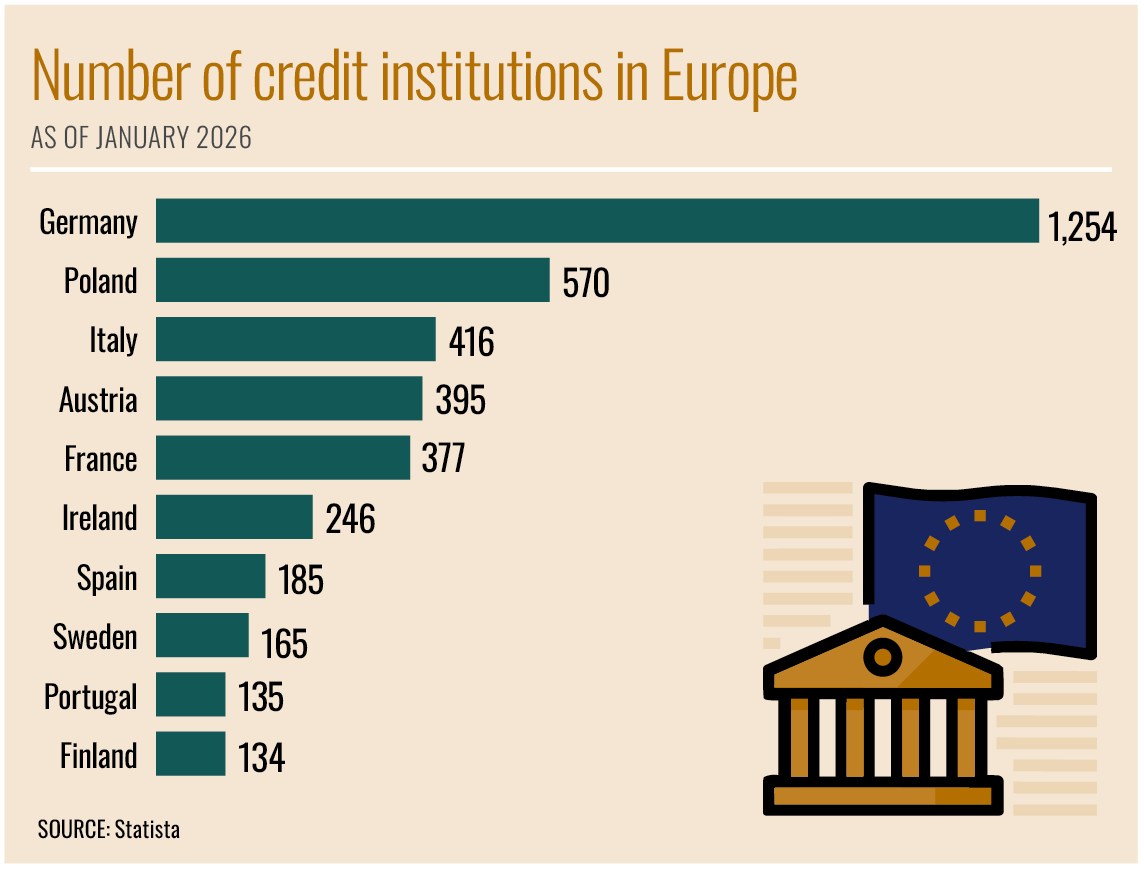
Most analysts agree that the missing piece is a shared deposit insurance scheme that would serve as a common safety net for depositors. Without it, national governments remain tied to their domestic banking systems. The Commission hopes that reviving plans for a European Deposit Insurance Scheme (EDIS) could unlock deeper integration by boosting cross-border banking groups and making it easier for lenders to operate across borders. “In an ideal world, it is critical,” Brzeski says about the plan. “In a more realistic world, a second-best capital markets union would not necessarily require a full EDIS but simply enough trust in the stability and solidity of harmonised national schemes.” The political obstacles that have stalled the project have not disappeared. Countries such as Germany and the Netherlands have long expressed concerns about risk-sharing, wary of underwriting banking systems in countries where non-performing loans have historically been higher. For their part, Southern member states argue that without shared protections, integration will remain incomplete.
Encouraging cross-border mergers and acquisitions is another key objective. Greater consolidation, Brussels argues, could strengthen profitability in a sector facing digital disruption and tighter margins. The Draghi report goes one step further, suggesting that cross-border banking activity should become fully equivalent to national activity through a ‘country-blind’ supervisory regime. Yet smaller countries fear that consolidation could mark the end of their national banking sectors and leave their financial systems dominated by larger economies. Many governments still provide direct or indirect guarantees to their domestic banks and seek to maintain a so-called ‘national champion’ that can compete internationally. Regional banks also continue to play a significant role in several countries, benefiting from less stringent supervision by national regulators than that applied to large banks under ECB oversight. Yet fostering a few large players that can compete with US and Asian banks is essential if the EU is to achieve financial sovereignty, Angeloni warns. “At present, even the largest EU banks have a largely national footprint. Because of lack of scale, they cannot compete with non-EU banking giants even in EU markets, particularly in investment banking and related areas, such as M&A and IPOs.”
Digital money
On the monetary front, the EU’s grant project is the ECB’s push for a digital euro, a central bank digital currency. A pilot phase is expected to be rolled out next year, with full issuance before the end of the decade. While still subject to political approval, the project has become a pillar of Europe’s ambition to reduce external dependencies, particularly from an increasingly hostile US and its dollar. “The aggressive stance adopted by the US over the past year toward the EU has certainly contributed to unblocking the legislative process related to the digital euro,” says Matteo Bursi, a researcher at the Italian think tank Istituto Affari Internazionali who specialises in the digital economy.
Europe’s investment landscape is gradually being dominated by US firms
At its core, the digital euro would offer European citizens and businesses a state-backed electronic means of payment, complementing cash. For policymakers, it addresses a strategic concern: Europe’s heavy reliance on foreign payment providers, including US card networks and fast-growing private platforms. With a digital currency, Europeans will have access to a secure public payment option in an era where private stablecoins and big tech payment systems expand. Such a development would also preserve the role of central bank money in the digital age, says Rebecca Christie, an expert on capital markets at the Brussels-based think tank Bruegel. “It is important that the ECB be the reference point for all things euro, not some kind of privately developed product that becomes the default because it found an unoccupied niche in the markets.”
Still, the initiative faces scrutiny. European banks have expressed concerns over potential deposit outflows, while privacy advocates question how user data will be protected. The ECB has sought to address these concerns by proposing holding limits and emphasising that transactions would be highly confidential. “The significant limitations currently being imposed on the digital euro, such as the absence of interest on deposits and the introduction of holding limits, substantially weaken the instrument, preventing it from serving monetary policy purposes and constraining its potential as an alternative to private bank deposits,” Bursi claims, adding that uptake could remain low, an outcome that would vindicate those who oppose the project, portraying it as a waste of public resources.
Ultimately, the digital euro is as much a political project as a technological and financial one. But expectations that it could reinforce the euro’s international role should be tempered, Bursi warns: “It would be misleading to expect a substantial impact, given that the use of the euro as a global reserve currency remains constrained by limited financial integration among European countries, in particular by the absence of a safe asset comparable to US Treasurys.”

Common debt, different priorities
This is one reason why calls for a deeper, more liquid EU-issued bond market are gaining traction in Brussels. Advocates argue that a larger pool of jointly issued debt as a European safe asset could attract long-term global capital and lower borrowing costs across the bloc.
Compared with the vast $40trn US Treasury market, Europe’s sovereign debt landscape remains fragmented. National bond markets dominate, limiting scale and reducing the euro’s appeal as a global reserve currency.
Momentum has been building since the pandemic-era launch of joint borrowing through a recovery fund, which demonstrated both investor appetite and the bloc’s capacity to issue large volumes of common debt. Supporters now see an opportunity to turn that temporary experiment into a more permanent feature of the EU’s financial architecture. Political resistance, however, has long been a barrier. Frugal northern countries where fiscal prudence is a deeply ingrained principle have been wary of mutualised debt, concerned it could amount to subsidising more indebted member states. “Jointly issued debt would enhance the international role of the euro and strengthen the financial sovereignty of the EU. But in the multi-national EU, joint bonds must be subject to strict conditions. They should only be issued to finance genuinely new common tasks, for instance as help for Ukraine or for common defence projects,” says Schmieding of Berenberg Bank. “They should not finance pre-existing EU tasks or national budgets. Otherwise, they would dilute the fiscal discipline that is required to keep borrowing costs low enough to be sustainable.”
The digital euro is as much a political project as a technological and financial one
Another concern is the EU’s lack of fiscal capacity to support debt issuance. “You need to embed Eurobonds in a political framework, which is essentially a fiscal union where you also have tax revenue at the European level to back those bonds,” says Nicolas Véron, a senior fellow at the US think tank Peterson Institute for International Economics and an expert on financial reform. “That requires treaty change, which is very difficult under the current circumstances.” Yet geopolitical tensions, the need for large-scale investment in defence and energy, and a growing recognition of Europe’s financing gaps are reshaping the debate. Fiscal conditions in southern Europe have also improved, with Spain, Italy, Portugal and Greece seeing debt levels stabilise or fall alongside upgrades in credit ratings. These trends are softening opposition and opening the door to incremental steps towards greater common debt issuance.
Together we stand
Optimists in Brussels hope that, although disparate in scope, these projects will reinforce one another, creating a virtuous cycle that will help Europe’s financial sector rediscover its mojo. A stronger banking union would support the savings and investments union by creating more stable cross-border banks able to channel savings into capital markets. In turn, robust capital markets would reduce overbanking and indirectly support banking consolidation. Eurobonds would provide the common safe asset needed to deepen those markets, while the digital euro would reinforce European payment infrastructure and reduce dependence on foreign providers.
“The banking union is a project of rationalising European banking into a single system instead of 27 national ones. That should in principle help to address the problem of overbanking, because this has partly to do with national fragmentation,” says Véron, adding: “Conversely, if you make capital markets more attractive and trustworthy, you could have rebalancing from banking intermediation to capital markets activity, which is needed to enhance the European economy’s growth potential.”
Yet, for all the momentum behind deeper integration, Europe’s path to financial sovereignty remains obstructed by a familiar set of barriers. Chief among them is the enduring power of national interests, expressed through lobbying by regulators, governments and banks that fear losing influence in a more centralised system. Control of finance can be a sensitive issue, given the role financial institutions play in funding domestic industries. Fragmentation limits cross-border consolidation, hinders the development of deep capital markets and complicates crisis management, yet national players remain loath to cede control to Brussels. Even if the Commission’s plans are up to the challenge, the question remains whether they will be diluted during implementation or delayed to the point of becoming untimely and ineffective, Angeloni warns. “This will largely depend on political cohesion among the member states. Lack of cohesion has repeatedly hampered EU reform in the past.”
Crises have historically been the catalyst for European integration, from the eurozone debt turmoil to the pandemic. External pressures, including geopolitical competition and the need to finance large-scale investments, may again push member states toward compromise. There is growing awareness that the bloc is losing ground. Crucially, the Commission proposals do not require unanimity but only qualified majority to move forward. Ultimately, says Brzeski, integration is a means to an end: closing the gap with US markets – though it will require difficult compromises. “If Europe really wants to become fully European, national preferences and partly national sovereignty would always have to take a step back.”
The single most important energy objective for the US today is to resolve our internal differences and put ourselves on the road toward energy independence.” These were the words of Gerald R. Ford, the 38th President of the US soon after he signed the Energy Policy and Conservation Act on December 22, 1975.
One of the key features of the Act was the establishment of the strategic petroleum reserve (SPR), a desperate measure by the US to stockpile emergency oil. This came after the 1973 oil crisis instigated by Arab members of the Organisation of Petroleum Exporting Countries (OPEC) imposing an embargo on crude exports in retaliation for Washington’s decision to support Israel during the fourth Arab–Israeli War. With the US having grown increasingly dependent on foreign oil, the cut in supplies wreaked havoc on the economy, the severity of which resulted in stagflation.
To President Ford, who rose to power at the peak of the crisis, never again would the US experience the magnitude of supply disruptions and skyrocketing prices ignited by the embargo, or whatever other form of unforeseen eventuality. The SPR, in essence, would be the line of defence in protecting the economy, and the American populace, from future shocks.
Today, half a century later, President Ford’s words and actions are echoing across the globe. The Middle East conflict, which broke in late February and whose end remains foggy, is yet again exposing the soft underbelly of the global crude oil supplies, with unprecedented disruptions causing political and socio-economic mayhem, including threatening stability in some countries. In the current uncertain environment, a new reality is dawning – stockpiling of emergency oil reserves is perhaps the most pressing need facing nations in modern times. This reality is given credence by the frequency in which the world is experiencing crude supply disruptions. In the past six years alone, disruptions have occurred three times, first occasioned by Covid-19, then the Russia–Ukraine war and now the Middle East conflict. “Strategic stocks are held to buffer supply shocks,” says Kenneth Medlock, Senior Director, Centre for Energy Studies at the Baker Institute for Public Policy. He adds that with energy security being the primary motivator for holding strategic stocks, the Middle East conflict is a stark reminder that countries must put their minds and souls into accumulating emergency stocks. “The entire policy push behind strategic stocks is precisely for times like these.”
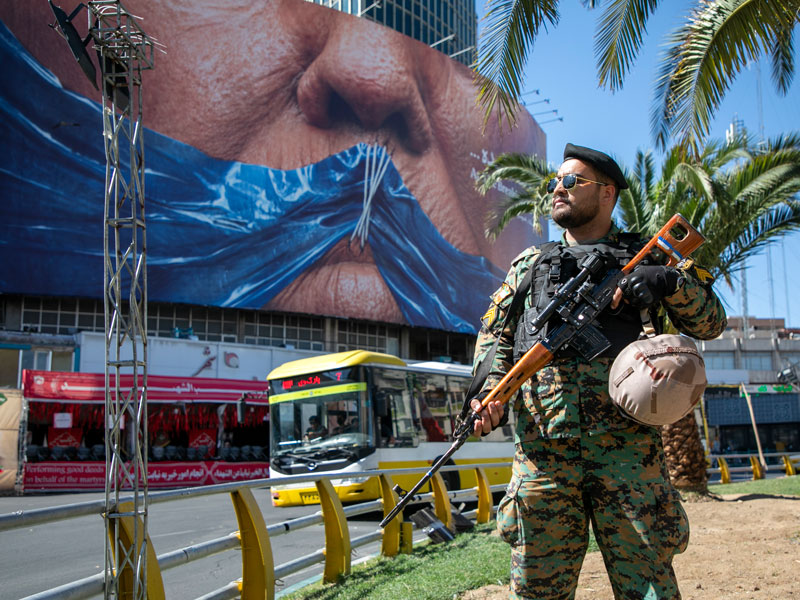
Energy crisis from the Blue Moons
On February 28, most of the world was caught flatfooted when the US launched Operation Epic Fury, a code-name for military action against Iran. For Washington, in collaboration with Israel, the objectives of the operation were clear, “obliterating” Iran’s missiles, production facilities, navy and other security infrastructure. Of high importance though, was ensuring that Iran never gets to have nuclear weapons.
In launching the operation, the Trump administration had hoped for a quick and swift military action that would ostensibly have minimal global ripple effects. Experts, however, reckon that the US did not envisage Iran’s guerrilla-like responses. By triggering a torrent of hundreds of retaliatory missiles and thousands of drones across the Middle East, Tehran has sparked anarchy across the whole region, an epicentre of crude oil production. Data by the International Energy Agency (IEA) show the region accounts for roughly 30 percent of global oil production and 17 percent of natural gas production. Considering that most of the countries in the region are US allies and some host military bases and troops, Iran has been calculative even in targeting crude facilities and refineries in countries like Saudi Arabia and Kuwait with missiles and drone attacks.
For Tehran, however, one critical aspect of its fightback has been instigating the closure of the Strait of Hormuz, ultimately sending shockwaves of the conflict to every corner of the globe. “President Trump seems to have started this conflict with limited knowledge of the Iranian regime or the critical geography of the Strait of Hormuz,” explains Sarah Emerson, President of Boston-based consulting firm ESAI Energy. She adds that owing to the disjointed handling of the war on the part of Washington, the world should brace for a conflict that could run for months.
Crude prices hitting $150 is anguish the global economy cannot endure
In normal times, the Strait of Hormuz is just another waterway connecting the Persian Gulf with the Gulf of Oman and the Arabian Sea. Stretching some 168 kilometres in length and 34 kilometres in width, the sea passage separates the Arabian Peninsula and Iran. In times of war, the dynamics of Hormuz assume totally different configurations, with its critical importance explicitly amplified. The waterway is one of the busiest shipping chokepoints in the world, facilitating the transportation of around 20 percent of global oil consumption.
According to IEA data, some 20 million barrels per day of crude oil and oil products were shipped through the strait in 2025. During the year, nearly 15 million barrels per day of crude oil, some 34 percent of global crude oil trade, passed through the passageway destined for markets in Asia, mainly China and India. The two countries consume 44 percent of crude passing through Hormuz. For Saudi Arabia, the United Arab Emirates (UAE), Kuwait, Qatar, Iraq, Bahrain and Iran, the strait is the primary export route for crude oil. UAE and Qatar also near-entirely rely on the waterway for liquefied natural gas (LNG) exports, which represents 19 percent of global LNG trade.
Global shockwaves
Owing to the sheer volume of oil and gas that is exported via the strait, and the limited options to bypass it, its closure has instigated the largest supply shock in history. Put in context, the shock is 18 times larger than what was witnessed during the initial weeks of the Russian–Ukraine conflict in 2022. At some point, during the first weeks of the Middle East conflict, oil flows through the Strait of Hormuz plunged by as much as 97 percent with about 2,000 tankers affected.
The disruption of crude flows has come with catastrophic consequences for the global oil markets, with the ripple effects being devastation to the global economy. Before the onset of the conflict, crude oil prices averaged $65 per barrel but spiked to around $115 in April. So far, there are no signs of prices stabilising, with the current gloomy environment further clouded by UAE’s decision to quit OPEC in order to focus on ‘national interests’ and forge its own path in terms of crude production. UAE, which has been OPEC’s member for six decades, accounts for about 15 percent of the Vienna-based oil cartel’s production capacity.
Compounding the situation is the continued US blockade of Iranian ports, a standoff that could last for months unless Washington reaches a deal with Tehran in ongoing peace talks. By the end of April, crude oil prices had crossed the $120 per barrel mark, a rate last recorded in 2022. “If shipping through Hormuz is not allowed for another four to six months, we can expect oil prices to rise over $150 a barrel,” reckons Adi Imsirovic, a guest lecturer at UK’s University of Oxford.
Crude prices hitting $150 is anguish the global economy cannot endure. Already, the International Monetary Fund (IMF) and the World Bank are warning the conflict has halted momentum that would have seen global growth expand by 3.4 percent this year. With the conflict reaching 60 days in late April and crude prices rising, the IMF forecast is gravitating towards an adverse scenario in which growth is expected to decline to 2.5 percent this year with inflation rising to 5.4 percent. In a severe scenario where energy supply dislocations extend into next year, growth would plummet to two percent this year and next year, while inflation would exceed six percent.
Indermit Gill, World Bank Chief Economist, reckons that the war is hitting the global economy in cumulative waves: first through higher energy prices, then higher food prices, and finally, higher inflation. Extreme waves, including interest rate spikes and debt becoming even more expensive, are also bound to strike as the conflict prolongs. “The poorest people, who spend the highest share of their income on food and fuels, will be hit the hardest, as will developing economies already struggling under heavy debt burdens. All of this is a reminder of a stark truth: war is development in reverse,” said Gill.
SPRs to the rescue
The unprecedented disruption of crude supplies due to the Middle East conflict has seen countries across the globe resort to desperate coping mechanisms, some geared at forestalling civil strife and unrest not only because of high prices but also due to biting shortages. The mechanisms have ranged from tax cuts, declaring states of national emergency, encouraging people to work from home, limiting travel by government officials, and closing schools and universities to avoid unnecessary lighting. In terms of taxes, about 40 countries had effected some form of tax cuts be it slashing of value added tax (VAT), excise duties and even abolishing levies on petroleum and petroleum products by the end of April. “Most economies have used tax abatements to control price volatilities,” notes Medlock, adding that the cuts are classical cases of desperate times calling for desperate measures.
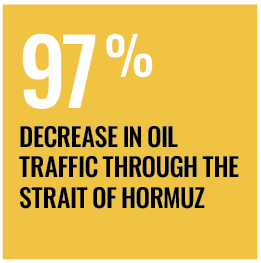
The stopgap measures have come in handy and eased the pains, particularly for the least developed and frontier economies. Kenya is an example. Due to the global shocks, the East Africa nation saw domestic prices for super petrol hit an all-time high of KSh206.97 ($1.59) in April, up from KSh178.28 ($1.37) in March. With the opposition calling for demonstrations, the government slashed VAT from 16 percent to eight percent, effectively bringing down prices to KSh197.60 ($1.52). The action, however, was costly for the government, which is set to lose KSh12.9bn ($100m) in revenues in three months.
For large and emerging economies, however, the more proactive action has been releasing emergency strategic stocks into the market. Historically, the release of SPRs has been rare. Often, it happens during extreme circumstances like war, pandemic outbreaks, adverse weather and natural disasters, and severe economic crises among others. The emergency stocks are controlled by governments with some inventories accumulated by private entities through government-mandated agreements and oversights.
Data by the US Energy Information Administration (EIA), the statistical agency of the Department of Energy (DOE), shows that by the end of last year, the world boasted some 2.5 billion barrels of emergency oil inventory. China, the US and Japan held the three largest inventories. Though Beijing has often remained secretive about its inventory by opting not to officially publish data, estimates indicate the country’s stockpile was in the region of 1.4 billion barrels. EIA used imports, exports, refining and oil inventory data from third-party and official sources to estimate China’s stocks. The US, on its part, held 413 million barrels, with Japan’s inventories estimated at 263 million barrels.
The data shows that, cumulatively, Europe boasted some 179 million barrels, while Saudi Arabia with 82 million barrels, South Korea with 97 million barrels, Iran with 71 million barrels, UAE with 34 million barrels and India with 21 million barrels were the other countries that have managed to amass massive stocks.
Releasing emergency stockpiles
The IEA, a club of 32 that requires members to maintain specific oil stocks and that coordinates release of emergency stocks, gives a clear pointer of the global stockpiles. Cumulatively, its members hold over 1.2 billion barrels. A further 600 million barrels of industry stocks are held under government obligation. Since its establishment in 1974, IEA has coordinated the release of emergency stocks by its members six times. A case in point was in 2011 when members collectively released 60 million barrels in response to shortages instigated by the Libyan war. In 2022, members undertook two releases amounting to 180 million barrels in efforts to contain supply disruptions and high prices caused by Russia’s invasion of Ukraine.
All the previous six interventions, however, cannot equate to the release of emergency stocks that has been necessitated by the ongoing Middle East conflict. A fortnight after the war erupted, and with the world engulfed in the worst crude supply disruption in decades, it was clear the only option to buffer the global economy from a thorough beating was the strategic reserves. In effect, IEA members unanimously agreed to make 400 million barrels available to the market, the largest ever oil stock release in history and one that IEA termed as decisive and unprecedented.
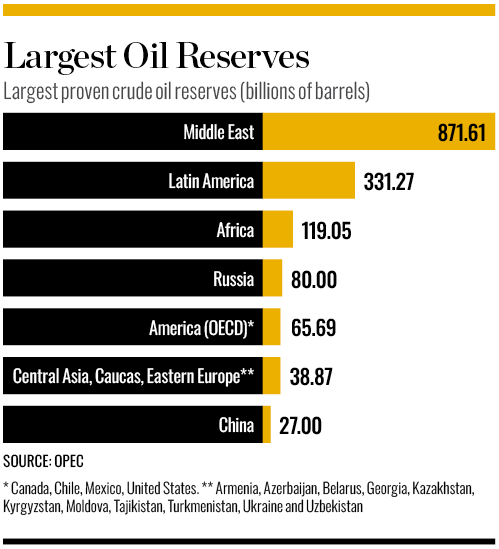
“Oil markets are global so the response to major disruptions needs to be global too,” noted Fatih Birol, IEA Executive Director following the action on March 11. Birol has gone on to add that depending on how the situation continues to unfold, the agency stands ready to act with more releases. The hope, however, is that the world will not require another intervention. “I very much hope we don’t need to do it, but if it is – if it is needed, we are ready to act immediately,” said Birol during an Atlantic Council forum.
The US has been among the major responders to the IEA clarion call, agreeing to contribute 172 million barrels of the total from its SPR. By end of April, the country had managed to release about 80 million barrels, with Europe being the key destination market. Notably, the oil is being sold on an exchange basis with oil majors and traders buying the stocks expected to return the supplies at a later date. In one of the contracts awarded at the initial phases in March, DOE made some 45 million barrels available to the market and expected to receive 55 million barrels in return. Apart from the US, Japan and the UK have also been proactive in releasing stocks, contributing 36 million barrels and 13 million barrels respectively.
“Making the strategic stocks available to the market has been the right move,” avers Emerson. She adds that unlike other previous crises that the globe has faced, the Middle East conflict has some distinct characteristics. Key of which is that for the first time, and due to the closure of the Strait of Hormuz, Saudi Arabia has been crippled in its erstwhile role of always increasing production in order to offset global shortages. “In most of the other past crises, we often saw Saudi crude oil production increase. It has not been the case in the current crisis.”
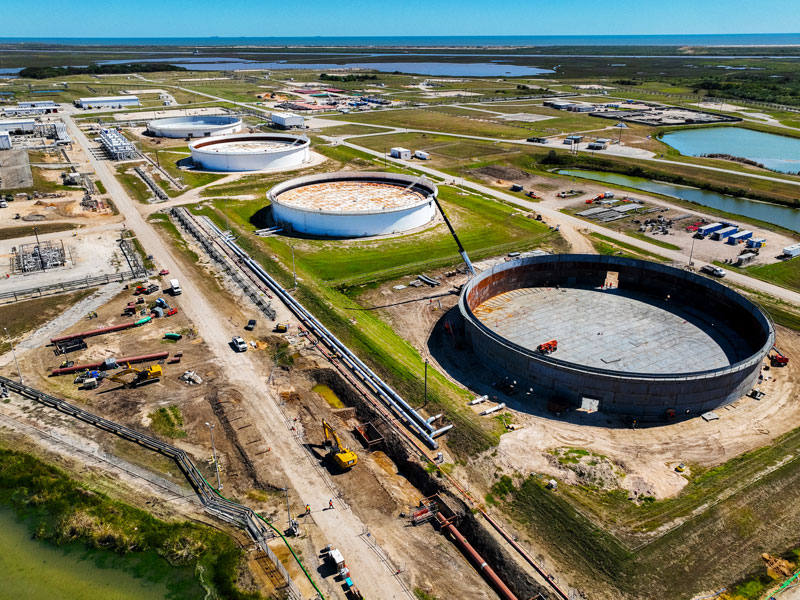
Relief, yes…cure, no
The history of SPRs dates back to the 1940s when the concept was first proposed. Following the end of the Second World War, a number of countries considered establishing strategic stocks owing to the critical role of oil in national security and military success. However, investments in tangible infrastructures to amass stocks started in the 1970s with the US being a case study. The harrowing experiences of 1973 prompted the country to invest in complex underground storage caverns that were created in salt domes along the Texas and Louisiana Gulf Coasts. The salt caverns, chosen on the basis of being inexpensive, secure and close to most refineries and distribution points, can hold up to 727 million barrels. Ahead of the March coordinated release, the SPR stocks had increased to more than 415 million barrels. The SPR has only managed to reach full authorised capacity once. In December 2009, the recorded inventory hit 726.6 million barrels.
Countries must put their minds and souls into accumulating emergency stocks
Going by President Ford’s declaration, the original objective and motivation was ‘energy independence.’ Today, however, and as evidenced by the Middle East conflict, the role of the emergency stocks has evolved. Governments across the globe are using SPRs to stabilise supply, avoid fuel shortage, rein in price hikes and even contain inflation. More brutally, countries are deploying inventories as ammunition for geopolitical influence and protecting themselves from external aggression. China is the archetypical example. The Asian giant is the world’s largest crude oil importer, with imports averaging 11.6 million barrels per day in 2025. During the year, Russia, Saudi Arabia, Malaysia, Iraq and Brazil were the country’s top suppliers, accounting for 62 percent of total imports. For Beijing, accumulating strategic stocks is, literally, a matter of life and death. Apart from the economy being deeply dependent on oil, its military machinery requires uninterrupted fuel supply in the event of war. Observers contend that a possible conflict with the US over Taiwan is among reasons China has been amassing inventories.
“While the release of reserves has helped avert dire impacts, they are not a panacea for long-term supply and price stability,” observes Medlock. There is no doubt the emergency stocks have offered relief to the world. Data show world crude oil consumption stands at 100 million barrels a day. For this reason, the release of 400 million barrels might pass as a drop in the ocean. Besides, going by the surging prices, it would be easy to conclude the impacts of the SPRs has been minimal. The reality, according to experts, is that price spikes could have been more severe without the emergency stocks. Evidently, crude prices declined by $18 soon after the IEA announcement of March 11. Another reprieve has been arresting the drastic surge in inflationary pressures, particularly among countries that are net importers of oil. India, which imports about 90 percent of its oil, is among countries that continue to project resilience. Despite the key inflation rate increasing from 2.75 percent in January to 3.4 percent in March, it has remained below the central bank’s four percent target.
Price spikes could have been more severe without the emergency stocks
Also critical is the fact that SPRs have helped prevent product shortages for many countries, more specifically across developing nations that lack the resources to build strategic reserves. Granted, amassing stockpiles is an expensive affair that often spans years. On this, the US lays bare the excruciating pain that comes with building stocks. To date, the country has invested a staggering $25.7bn in its SPR. Of this, $5bn has been spent on building facilities while $20.7bn has gone towards purchasing the crude oil. It goes without saying that as a major producer of oil, the US purchases the crude from its own companies. For net importers of crude, the pain is undoubtedly worse. The pain also comes in replenishing the stocks, more so when crude prices are high. For the world, there is no denying that emergency oil inventories have played a central role in neutralising the impacts of the Middle East conflict.
For this reason, and as global uncertainties become the norm rather than the exception, the race to accumulate stocks has the potential to become ever more urgent.
When a container is hoisted ashore at Jawaharlal Nehru Port in India, it is placed aboard a high-capacity freight train running from Mumbai to the industrial cities of Dadri and Khurja in Uttar Pradesh 1,500 kilometres away. The container is lifted off a day later, much faster than in many other countries, including America.
Even more impressive, the entire high-speed route is now electrified, with the final sections hooked up in January 2026 in a pivotal moment for India. Before electrification, the container would have taken three to four days. Not only did this last connection complete the country’s longest rail freight link, known as the Western Dedicated Freight Corridor, it gave India one of the longest electrified rail systems in the world. India has electrified 100 percent of its network, which is right up there with Switzerland, one of the jewels of railroads.
By comparison, the UK can claim 37 percent rail electrification and America just one percent. The rapidity of electrification is astonishing – during the last six years Indian Railways was adding over 15 kilometres every single day. The result is that today India boasts no less than 70,000 kilometres of electrified broad-gauge rail that is part of a grand plan to modernise all its vital systems – transport, energy and shipping – under the government of Prime Minister Narendra Modi. This remarkable achievement symbolises a continuing economic rejuvenation that has largely escaped the world’s attention.
Modinomics
Since Modi won power in 2014 after decades of socialist governments, these policies were dubbed ‘Modinomics,’ mostly by critics who said they weren’t working – or at least not as well as was promised. Supporters however said reform was long overdue in a country notoriously difficult to govern.
Demonetisation gave a massive boost to cashless payments
With 28 sprawling states and eight territories spread over a vast area, India is the seventh biggest country in the world in terms of geography and one of the most culturally diverse. And with a population of 1.47 billion, it is the most populous. “Significant hurdles persist, including entrenched bureaucracy, social fragmentation, and deep-seated political divisions,” notes an article in Springer Nature that summarises the challenges of reform.
One of those significant hurdles was the labour market. When Modi introduced radical changes to employment laws in 2014 that were designed to weaken obstructive union power and boost the creation of jobs, nearly 150 million workers in banking, manufacturing and construction immediately went on strike for 24 hours at a cost of $3.5bn to the economy. Even rickshaw drivers stayed at home in sympathy. Yet the reforms are seeing results. According to Australia’s Treasury, the economy forged ahead at an annual rate of between 6.5 and seven percent during Modi’s first 10 years in power – that is, to 2024 – and “maintained its position among the world’s fastest-growing major economies despite a significant contraction in 2020 due to the pandemic.” Most analysts including the International Monetary Fund predict a rosy longer-term outlook with a similar growth rate persisting all the way through to 2035.
However, in a nation of volatile politics, Modi continues to attract his fair share of criticism for making changes, however overdue they may have been. And one of the most overdue was what is known as ‘the demonetisation of the currency.’ With just a few hours’ notice, on November 8, 2016, the 500 and 1,000-rupee bank notes were replaced in a move to put a stop to the long-running practice of ‘black money’ – cash used for illicit activities that had escaped the tax net and was being used to fuel terrorism, among other purposes. The demonetisation was comprehensive, covering 86 percent of the currency.
But did it work? Some economists say it didn’t because the action caused serious economic disruption for a few months, but others point to the long-running damage caused by the existence of this parallel economy. As Bhaskar Chakravorti, Dean of Global Business at The Fletcher School at Tufts University wrote for the Brooking Institute a year later, only one percent of Indians had been declaring their earnings for tax purposes.
But suddenly, the money ended up back in the system: “When the policy change was announced, people were given until December 30, 2016, to return 500 and 1,000 rupee notes to banks, or else risk losing the value of them. Banks were estimated to have received 14.97 trillion rupees ($220bn) by the deadline, or 97 percent of the 15.4 trillion rupees’ worth of currency demonetised.
Also, as other economists explain, demonetisation gave a massive boost to cashless payments such as Paytm’s mobile wallet business and, more importantly for the long run, in the intervening years the tax base has widened. The government followed up by overhauling a confusing system of local consumption taxes with the introduction of a centralised goods and services tax.
Grandiose goals
The Modi government sometimes shoots itself in the foot by setting sky-high goals and making what the critics describe as ‘grandiose claims.’ For instance, a key reform is ‘Make in India,’ a strategy intended to turn the country into a manufacturing powerhouse by, among other measures, encouraging foreign investment and technology. Unveiled in 2014, the targets were unrealistically high – a doubling of manufacturing’s growth rate, the addition of 100 million jobs in the sector by 2022, and a 25 percent share for manufacturing in gross domestic product by the same year. As it happens, there has been a decline in the sector’s share of GDP and only a small growth in employment.
Battery swapping technology is a growing trend that could potentially turbo-charge EV sales
Part of the blame can be attached to India’s outdated manufacturing structure. Nearly three quarters of manufacturers employ less than five paid staff. And they are historically highly unproductive. It is widely accepted that these small enterprises put out less than 20 percent of the volume of products of larger Indian manufacturers and way less than similarly sized factories in western nations, especially the US.
Red tape is a big part of a historic productivity problem. With regards to India’s economic bottenecks the IMF states, “Many of these enterprises remain small for decades due to complex compliance requirements, rigid labour regulations and product market rules that discourage growth. Easing these constraints would help businesses expand and, in turn, dramatically lift productivity.”
However, there is no magic wand and Modinomics constantly runs into impasses. “While employment in the manufacturing sector has grown, the ‘Make in India’ push has not resulted in manufacturing outpacing other sectors of the economy in employment generation,” notes an article in The Print, an independent news platform. “Another priority area for the initiative was to boost exports and cut down on imports. The data over the last 10 years revealed the programme has failed to do the former but has been marginally successful in achieving the latter, although even this improvement has recently been reversing,” the article continued.
Yet under Modinomics manufacturing has been reconfigured away from heavy industry towards high-margin and higher-potential sectors such as electronics, defence and electric vehicles. Without ‘Make in India’ it is unlikely that the production of mobile phones, for instance, would have quadrupled in value between 2016 and 2024, or that India would become one of the world’s biggest manufacturers of solar panels. The Modi government also set an audacious target for an all-electric transport sector by 2030, a deadline that outdoes even China’s ambitions. When this was announced in 2015, it certainly looked like a grandiose goal.
At that time just one percent of the country’s 200 million vehicles were electrically powered and only one domestic automotive group could put a battery-powered car in the showroom. Called FAME (Faster Adoption and Manufacturing of Electric Vehicles in India), the programme was designed to start with rickshaws and move on to commercial vehicles, most of which are little two and three-wheelers, and then buses. Cars would come last.
To help along the transition, manufacturers were awarded tax breaks to build cars without batteries; these would be available in battery-exchange stations where the swap would take about two and a half minutes. The idea was that the subsidised battery-free vehicles would cost up to 70 percent cheaper than with batteries. A lot of automotive companies could see the potential, including Honda and Piaggio. In fact, the Italian scooter manufacturer quickly established a 100 percent-owned subsidiary in India. Both companies have adopted battery-swapping strategies. Shell could also see the potential of the strategy.
As Kasturi Gomatham, the energy giant’s global head of battery swapping, told a conference around that time, “Battery swapping decouples certain critical links that inherently create bottlenecks for EV adoption. For instance, the concept decouples grid from that of the dynamic EV-charging needs and decouples battery from the vehicle itself. This enables users to not feel the brunt of the battery upfront cost and extend vehicle life beyond that of the battery packs.”
And how did this work? According to an article by the World Economic Forum, “battery swapping technology is a growing trend that could potentially turbo-charge EV sales.”
One company, SUN Mobility, certainly thought so. The Bengaluru-based start-up began by exchanging shoe box-sized batteries at 50 stations spread over 14 cities under a pay-as-you-go subscription service run on Microsoft’s Cloud. Simultaneously with FAME, the Modi government ordered the nation’s refineries to embark on a $46bn conversion to lower-emission fuels, a decision upheld by the Supreme Court.
Modi’s biggest goal is a zero-emission nation by 2070
But let’s look at what has happened since. A recent review by the International Society of Markets and Development (ISMD) sees significant developments in the EV market that was mainly driven by highly systematic government policies to reduce urban emissions and promote sustainable mobility. But while noting how FAME has fallen short of expectations, it also says that “both stages of FAME have been pivotal in shaping the EV ecosystem in India, addressing the challenges of affordability, infrastructure and market growth.”
But where would India’s road transport be without FAME? So far it has increased EV adoption nationwide by about 50 percent, “but primarily in the two-wheel market,” notes ISMD. Buses and cars are lagging behind, but the latter are less important in the race to electric transport because only 7.5 percent of Indians own four-wheeled cars. As for SUN Mobility, the latest data showed over 1.4 million swaps a month at nearly 650 stations across over 20 cities. Battery-swapping has been a roaring success.
Energy revolution
The birth of the e-rickshaw is a portent of India’s energy future. At the start of 2026 there were about 270 million two-wheelers in India and about 10 million three-wheelers, the vehicle of choice for transport in teeming cities, for deliveries and taxis. “As India’s pivot from fossil fuels to clean energy accelerates, these vehicles are helping drive the switch,” explains one motoring expert.
Half of India’s imports of oil are burned by vehicles, but that is expected to fall as more e-rickshaws hit the road; this would enable Modi’s biggest goal – a zero-emission nation by 2070. The Colorado-based Rocky Mountain Institute calculates that as early as 2030 about 80 percent of two and three-wheelers sold in India could be electric and make a substantial contribution to the zero-emission goal that gets closer almost by the day. The volume of sales certainly looks promising, having jumped from just over 95,000 EVs in 2017 to 1.6 million in 2024.
The Atlas think tank summarises, “EV sales in India have seen a remarkable upward trajectory in recent years, largely driven by growth in the two- and three-wheeler segments,” citing a compound annual growth rate of 61 percent. In the salt deserts bordering Pakistan, the world’s biggest renewable energy project is under development.

The Khavda renewable energy park, covering an area five times the size of Paris, will produce 30 gigawatts of green energy from high-efficiency solar modules and hybrid solar-wind systems. Run by Indian group Adani Green Energy, it is due for completion as early as 2029, when it will power over 16 million homes.
Currently about half of India’s installed power capacity comes from non-fossil sources such as solar, wind and hydroelectric. Once again, the government is nothing if not ambitious, with a target of providing 500 gigawatts of non-fossil capacity and five million tonnes of green hydrogen that will be used to clean up the steel and other heavy industries. All this is due to happen by 2030 in what some saw as yet another grandiose scheme, but so was the electrification of the railways and it was done four years early. Although India still uses a lot of coal – “a critical source for grid stability,” according to energy experts, the direction of travel is clear. Forests are being planted to create a gigantic carbon sink of 2.5 to 3.0 billion tonnes of CO2 equivalent. Water is being managed more scientifically. Attention is being paid to the Himalayan ecosystem. The critics can’t complain that India has fallen short in its clean energy ambitions. Between 2005 and 2023, its emissions intensity was slashed by 39 percent, which is ahead of target. It is the world’s third-largest producer of solar energy and could overtake China in the number of solar-powered homes. And production of renewable energy is also beating official goals.
Maritime India
True to form, when the government launched a revival of India’s neglected maritime industry, it immediately ran into a disjointed federal system of governance with powerful political cliques running rival states that almost routinely refused to cooperate with each other – or just couldn’t be bothered. Yet this equally ambitious programme is happening. The country was once a maritime power based on natural credentials. It has an 11,000-kilometre coastline. The Indian Ocean, the third largest in the world, links the country to the Middle East, Africa, South Asia and Southeast Asia. India is near four maritime chokepoints – the currently beleaguered Strait of Hormuz, Bab-el-Mandeb, Malacca Strait and Lombok Strait. And there are the military implications – Modi is concerned about an aggressive China, which is busily establishing ports and infrastructure in the Indian Ocean.
“Militarisation of the Indian Ocean region is not desirable,” the government has warned.
Despite a sluggish bureaucracy, India’s got off to a good start in its maritime ambitions. In early 2026 the container shipping giant, CMA CGM, placed a landmark order for six LNG-fuelled vessels to be built at India’s Cochin Shipyard. They aren’t huge ships, with a capacity of just 1,700 containers each, but they will advance the expansion and renewal of the country’s ports, shipping industry and coastal trade.
In another boost CMA CGM will recruit 1,500 Indian seafarers, establish an R&D hub, register some of its vessels under the Indian flag, which helps build local trade, and support sustainable ship-recycling, a growth industry where India aims to be the world leader. Other container giants look like they will follow suit.
About half of India’s installed power capacity comes from non-fossil sources
Simultaneously, India is building deep-draught mega-ports like Vadhaven 150 kilometres from Mumbai that is due for completion in 2034. When it opens, Vadhaven will rank among the 10 biggest ports in the world and it is strategically placed in a key trading corridor that links India with the Middle East and Europe. Already trade deals are being signed along this valuable supply line. Construction is finally due to start in another mega-port in the Bay of Bengal after years of legal challenges, red tape and the local opposition that have historically blighted important economic projects in India and, in the case of shipping, prevented modernisation. Impatient with such delays, in 2025 the government passed laws that simplify paperwork and improve cross-port cooperation. The Ministry of Ports, Shipping and Waterways is in a hurry, acknowledging “the capacity of the ports in terms of their berths and cargo-handling equipment needs to be vastly improved to cater to the growing requirements of overseas trade.”
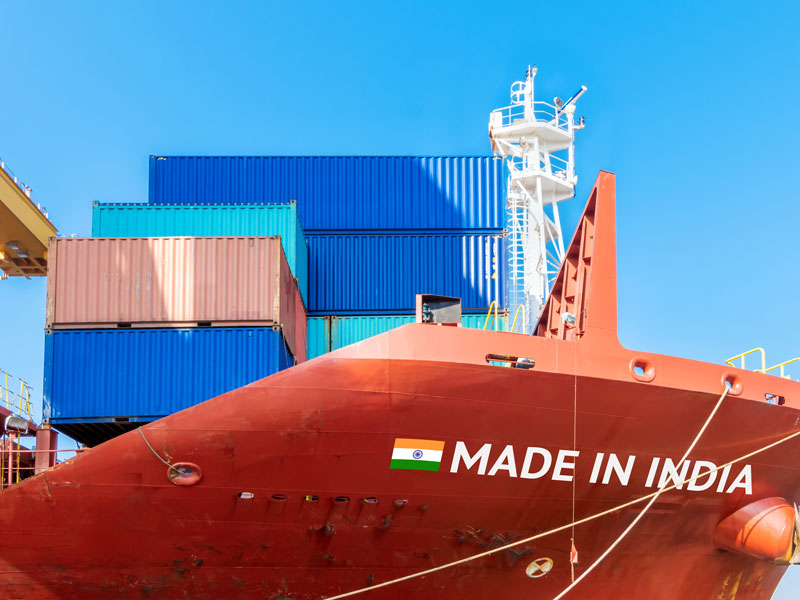
India may soon also have its very own state-backed container line. In early 2026, the government approved a $1.66bn kick-start for an all-Indian shipping company that may also exploit the country’s 14,500 kilometres of largely neglected inland waterways. According to a study by the Observer Research Foundation, a not-for-profit Indian think tank, “it is only now that they are beginning to be used for commerce.” Current ambitions intend that this vast interconnected natural network will soon carry four times its current capacity in what would be a massive boost to trade along its banks. In maritime matters India has a long way to go – its merchant fleet ranks just 18th in the world – but the government has earmarked $7.7bn that will be dedicated to this economically vital project over the next decade.
Mafia Raj
The government is tackling corruption, albeit slowly. Only a few short years ago India was infamous for dirty dealing. In the first decade of the millennium the World Bank cited the ‘Mafia Raj’ among other miscreants who got their hands on development funds intended for roads, bridges and other much-needed infrastructure. At the time India was the World Bank’s single biggest borrower and the institution was trying to place people of integrity along the funding pipeline to make sure the money ended up in the right hands, such as a billion-dollar, interest-free loan to clean up the Ganges River.
The situation was so serious that India’s then chief justice, K.G.Balakrishnan, bemoaned at an anti-corruption conference how “the quality of governance suffers when decisions are made on account of extraneous considerations related to political patronage, kinship or caste and linguistic identity among other factors.” Back then Transparency International ranked India at 84th on its Corruption Perception Index, right up (or down there) with Guatemala and Panama. India’s Central Bureau of Investigation (CBI) was burdened at that time by well over 9,000 pending cases, 2,000 of which had been pending for a decade or longer.
But endemic corruption is hard to root out and despite the best efforts of the Modi government, in 2026 India ranked 91st in the index, roughly halfway. However, it appears the CBI is making some progress. In late 2025 it reported just over 7,000 pending cases, of which 2,660 were 10 years old and 380 a full 20 years old. Petty corruption is down, for instance small bribes to various government agencies, while senior tax and customs officials have been kicked out for high-level fraud. Meanwhile, one of India’s most successful innovations is in sport, although the Modi government can’t take the credit here.

Every year the world’s best cricketers flock to the India Premier League, a sporting spectacle founded in 2008 by the Indian Board of Cricket Control. Judged by revenue, it is among the top 10 most valuable sports league in the world. It is based on an original franchise model in which the teams are owned by rich corporations and celebrities. As one fan, a rich businessman, explained, this 20-over format is “a high-action alternative to the five-day game” that is seen as a symbol of the country’s commercial as well as sporting creativity. “It is not just replicating something else; it is creating a new business model,” he summarised. Indians are extremely proud of the league because it is home-grown, just as they are of their rail system.
Just to recap, it was in 2014 that the Modi government began to pour funds into a fully electrified railway. The results were off the scale. While Britain, for example, as a rail enthusiast points out, is electrifying its railways at a speed of two kilometres a year and while the US isn’t even matching that, Indian Railways was quadrupling its electrification programme. In the 2022–23 financial year, for example, no less than 6,565 kilometres of track was hooked up.
“India’s rail crews got more done by their mid-morning tea-break on January first than Britain got done all year,” wrote the rail expert. And nor would that have happened without Modinomics.
Investors are seeking solutions that combine quality, yield and high liquidity. UOBAM Thailand (UOBAMTH) therefore aims to achieve this by expanding the USD fund shelf across asset classes to preserve and grow assets under management (AUM). This should help the company to offer their clients a diversified portfolio of USD-denominated funds across various investment policies. This expansion is designed to serve the needs of both retail and institutional clients, providing them with a broader suite of investment solutions and greater flexibility in portfolio construction.
A key driver of the UOBAMTH’s success has been emphasis on USD-denominated products, giving Thai investors access to global markets while enhancing currency diversification. In response to the increasing appetite for international exposure, the firm has continued to prioritise innovation and global connectivity as core pillars of its product strategy.
USD fund leadership
Starting in March 2025, UOBAMTH introduced its USD funds to the market with an initial AUM of $23.77m, rapidly rising to become the market leader by July 2025 with AUM reaching $251m. The firm continued to demonstrate enduring leadership throughout the year, expanding AUM to $418m by December 2025 and capturing a dominant 53 percent market share. This reflects UOBAMTH’s disciplined execution, client-centric design and timely expansion of USD solutions that effectively met rising investor demand for global exposure.
UOBAMTH’s USD position has remained firmly intact into 2026, maintaining its number one position since the beginning of the year. As of April 2026, the firm reinforced its dominance, as USD AUM reached $436m and market share expanded to approximately 72 percent, underscoring the firm’s continued dominance in the USD fund market.
Strong growth momentum
UOBAMTH has demonstrated strong growth momentum and market leadership through innovative product development and precise strategic execution. The company has identified a significant opportunity from the sizable pool of USD held in clients’ Foreign Currency Deposit (FCD) accounts and has responded by developing tailored investment products to better meet client needs. In addition, as investors increasingly seek returns above FCD rates, the strategic expansion of its USD-denominated product suite, which proactively addresses the growing demand for global investment opportunities among Thai investors, continues to strengthen its market leadership.
Expanding the USD fund shelf
UOBAMTH has built a comprehensive suite of USD-denominated funds across all asset classes. The firm pioneered USD Term Funds with short tenors of three and six months, offering a simple and easy-to-understand solution for investors seeking attractive USD returns. This approach enables clients to build familiarity and confidence before progressing to more sophisticated investment options.
The firm continued to demonstrate enduring leadership throughout the year
Following the successful launch of its USD Term Funds, UOBAMTH further strengthened its product suite with the United USD Daily Fund (USDAILY), a short-term fixed income fund. As Thailand’s first USD-denominated daily fixed income fund, USDAILY offers a flexible and highly liquid USD investment solution with daily subscriptions and redemptions, while enhancing portfolio diversification.
Building on this momentum, UOBAMTH broadened its USD offering into a global fixed income fund with the launch of the United USD Global Income Strategic Bond Fund (UGIS-USD) and the United USD Ready Fund (USDREADY), offering investors broader diversification across income strategies. UGIS-USD invests in global fixed income instruments to generate returns in US dollars. Meanwhile, USDREADY invests in short-duration USD-denominated assets or instruments, aiming to generate returns in line with money market performance.
To better address the diverse needs of investors, UOBAMTH has extended its capabilities into global equities funds with the launch of the United USD Global Dividend Plus Fund (UGDIVP-USD) and the United USD Global Founders and Owners Fund (UGFO-USD). UGDIVP-USD focuses on investing in equities of companies worldwide, including emerging markets, providing broad exposure to global growth opportunities, while employing a covered call strategy to generate additional income for the fund. Meanwhile, UGFO-USD focuses on investing in companies led by founder-management teams with significant ownership stakes.
In the technology segment, UOBAMTH has entered global technology with the launch of the United USD Global Technology Fund (UGTECH-USD) and United USD US Technology Equity Fund (UUSTECH-USD). UGTECH-USD focuses on investing in a diversified portfolio of global technology equities. UUSTECH focuses on investing in equities of US-based technology companies, providing investors with access to investment opportunities in the technology theme.
UOBAMTH says that on the back of the strong success of its USD fund launches and growing investor confidence, it has firmly established itself as the number one USD fund provider in Thailand. This achievement underscores the strength of its product innovation and strategic execution. With strong momentum going forward, UOBAMTH remains highly committed to continuously identifying new investment opportunities and accelerating the launch of innovative solutions, reinforcing its leadership position while meeting the evolving and increasingly sophisticated needs of investors.
Saudi Arabia is undertaking one of the most ambitious aviation expansions in the world. As the Kingdom advances Vision 2030 and prepares to host events that will attract millions of additional visitors, the airspace above it is becoming more strategically important. Saudi Air Navigation Services (SANS), a leading air navigation service provider in the MENA region, sits at the centre of that growth, and the standard to which we hold ourselves extends well beyond keeping flights moving safely. Our remit is to help the wider aviation ecosystem become cleaner, more efficient and more resilient.
For an air navigation services provider, sustainability extends far beyond environmental disclosure. It runs through every part of how the company is led, how decisions are made, how resources are deployed and how value is created over time. Across each of these dimensions, our objective is consistent: to deliver long-term value, responsibly.
Governance built on transparency
Sustainability at SANS is embedded within corporate strategy. In 2024, sustainability was formally adopted as the company’s sixth strategic pillar, reinforcing its standing as a board-level priority. Our sustainability governance model is structured across three tiers – the Sustainability Steering Committee for strategic direction, the ESG Committee for cross-functional execution, and the Sustainability Community for organisation-wide engagement.
Our governance approach is reinforced by internationally recognised frameworks. Our Enterprise Risk Management framework is aligned with ISO 31000 and the COSO Internal Control. Financial reporting is prepared in accordance with IFRS. This year, we extended the same discipline to our sustainability disclosure with the publication of our first ESG report developed with reference to the Global Reporting Initiative (GRI) Standards, giving investors, regulators and partners internationally comparable visibility of our ESG performance.
Capital allocation that funds the future
Long-term financial planning and disciplined capital allocation are key enablers of strategic and sustainable growth. At SANS, financial planning provides the structure to assess priorities, manage risks, and direct resources toward areas that strengthen long-term resilience and sector readiness. Through a multi-year financial view, investment decisions are aligned with operational priorities, national development objectives and ESG considerations. This approach has already led directly to action, most clearly in the creation of two SANS subsidiaries: NERA, which channels SANS’s air navigation expertise into innovative technology and services for aviation clients across MENA and beyond, and the Saudi Academy of Civil Aviation (SACA), which builds the specialised national talent that the sector will need to grow.
Sustainability was formally adopted as the company’s sixth strategic pillar
Capital allocation decisions are assessed against a broader set of criteria than financial return alone. We evaluate each investment for its contribution to safety, operational efficiency and environmental performance. Our Comprehensive Cash Investment initiative will introduce a structured policy framework for treasury and investment decisions, protecting risk-adjusted returns while preserving the liquidity required to fund strategic priorities and ensure operational continuity over time. Early results show strong progress, with investment returns performing significantly above target. This has strengthened SANS’s ability to fund long-term sustainability initiatives internally, while avoiding the need for external debt.
Operations engineered for efficiency
Sustainable finance is also a matter of operational excellence. Over the past year, we have strengthened our operational performance through continued improvements in the invoicing cycle, timely supplier payment practices and supplier satisfaction. These efforts were supported by disciplined collection management, healthy cash flow performance and close monitoring of overdue balances. Together, they have improved working capital management, strengthened financial reliability, and reinforced the operational discipline needed to support long-term sustainable growth.
Behind these results sits a strengthened credit risk management framework, supported by enhanced service level agreements with key counterparties, digital automation across billing and customer engagement, and continuous improvement in receivables management. Together these initiatives strengthen cash flow and reduce credit risk. The same discipline is visible in our compliance, control and quality outcomes. Most notably, SANS was honoured with the Silver King Abdulaziz Quality Award, independent confirmation of the financial discipline and operational quality that credible sustainability disclosure ultimately rests on. The result is a finance function that stays ahead of regulation rather than reacting to it.
Digital transformation
Reliable sustainability outcomes depend on reliable data. This principle guides our digital agenda within finance, where we have developed a connected technology environment to strengthen accuracy, control, and decision-making. At the foundation, our core ERP and broader data management framework provide a trusted source of financial information across the organisation.
Building on this foundation, our Enterprise Performance Management (EPM) platform for planning and budgeting went live this year, replacing fragmented spreadsheets with a more controlled and consistent planning environment. In parallel, our customer relationship management platform applies the same digital discipline to billing and customer engagement.
In addition, Power BI dashboards covering financial performance, divisional KPIs, and revenue insights give management timely and consistent visibility across the business, supporting faster and more informed decision-making. We are also supporting the implementation of the Financial Governance App, which provides structured oversight of financial governance practices across the company. Together, these advancements do more than improve efficiency. By reducing manual effort, eliminating duplicated reporting and improving data accuracy across the board, they lower the operational footprint of our finance activities while equipping us to track sustainability KPIs with accuracy, trace ESG data back to its source and disclose it with confidence.
Procurement that delivers value
At SANS, local content is central to our procurement approach. Through our procurement decisions, we aim to support local manufacturers, develop national capabilities, increase participation from Saudi manufacturers, and retain more economic value within the Kingdom. SANS has made strong progress in this area through its Local Content Programme, which has supported supplier engagement, internal awareness, enhanced visibility across mandatory list categories and the development of a qualified list of local manufacturers for mandatory categories. Beyond local content, supplier satisfaction is treated as a key outcome. We operate a supplier classification framework integrated into our ERP, supported by a formal supplier feedback survey that captures supplier needs, improvement opportunities and challenges.
These foundations have translated into strong procurement performance. In 2025, our Supply Chain team was awarded the globally recognised CIPS Procurement Excellence Award. Structured negotiations delivered savings comfortably ahead of target, while the registered supplier base expanded competition, strengthening supply chain resilience and creating wider opportunities for Saudi SMEs.
Where strategy meets the sky
For an air navigation services provider, one of the most important sustainability levers is airspace design itself. In 2025, SANS managed more than one million air traffic movements safely across an area exceeding two million square kilometres. Growth and reliability progressed together, supported by continued capital investment in airspace modernisation, technology and infrastructure. Finance plays an important role in this process by evaluating major CAPEX decisions, supporting prioritisation, and helping to ensure that investment is directed toward initiatives that create long-term operational and environmental value.
The wider impact is reflected in how the airspace is being reshaped to reduce emissions. Through the Saudi Future Airspace Concept, Free Route Airspace, Performance-Based Navigation, continuous climb and descent operations, and reduced separation at major airports, SANS is helping reduce fuel burn, flight inefficiencies, and holding times. These operational improvements directly support the Civil Aviation Environmental Sustainability Program (CAESP) – the Kingdom’s national environmental roadmap for aviation, cascading directly from Vision 2030, for which SANS serves as a primary execution arm across the programme’s seven environmental pillars. Under this framework, the national commitment is to reduce flight emissions by 30 percent by 2032, supported by SANS’s target to achieve ISO 14001 certification in 2026.
Growth, safety, regulation and ESG are supporting one another. Strong governance protects safety. Efficient operations help reduce emissions. Disciplined financial management funds the technology and infrastructure that enable both.

