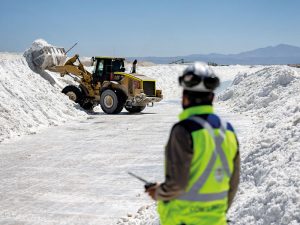
The commodity’s severe drop has made for serious repercussions to those heavily invested both on a personal and industrial basis, as such leading to many offloading what analysts deem a dangerous bet
After having experienced a fall of 13 percent since April 11, the worst two-session decline since 1980, gold futures look decidedly sour for both miners and investors. Gold futures for June delivery closed on April 15, having fallen 9.3 percent on that da...
Negative fiscal outlooks and the threat of a coup made for a difficult sale in the bond offering
Underwriters Barclays dropped out of Honduras’ first ever bond offering at the last minute because of disclosure concerns, but the sale still went ahead. Because of the last minute disclosure of Honduras’ potential exposure to a $200m judgement, th...
Global gold price drops by 7.1 percent as demand for jewellery in Asia plummets
For the last five years, India and China have been going through a consumption boom that has resulted in demand for jewellery and therefore the price of gold to be propped up. However, as economic forecasts in both of Asia’s major economies show sign...
Carbon trading can be a useful tool in reducing dangerous emissions. But voluntary emission reduction credits are unregulated and pose a threat to the entire system. World Finance investigates how rogue traders are taking advantage of investors
The FSA has been passively monitoring the situation for some time. An unregulated section of the carbon credit trading market has been raising red flags all over the country. The watchdog says it has received an abnormal number of carbon trading schemes t...
Many private equity firms are coming to the end of a five-year cycle, which began with the recession in 2008, and will be looking to release their assets
“I don’t really see anything surprising about the current boom in the US private equity industry,” says Kirk Radke, a New York-based partner of century-old global law firm Kirkland & Ellis, one of the world’s largest firms of attorneys special...
Finding the right assets to invest in can be a minefield for even the most scrupulous investor. Fortunately, BOCI-Prudential Asset Management has a firm grasp of the Chinese economy
BOCI-Prudential Asset Management Limited (BOCI-Pru), jointly established by BOCI Asset Management Limited – a subsidiary of BOC International Holdings Limited – and Prudential Corporation Holdings Limited, has found a formula that utilises both econom...
A privatisation programme is expected to act as a catalyst for the regeneration of capital markets and M&A activity in Portugal, restoring confidence in the country’s financial stability
Portugal is currently facing a challenging economic context, as long-standing structural weaknesses and macro-economic imbalances crossed paths with the global financial crisis. The country has found itself with a chronic government deficit and a growi...
The proposed merger between Xstrata and Glencore is the largest of all time in the mining industry. But not everyone is happy. One side’s shareholders feel short-changed, the deal poses repercussions for the free market and it will surely make magnates of a select few
The world’s giant mining companies ignore Evy Hambro at their peril when contemplating a game-changing merger or acquisition. That’s because the 40-year-old is the co-manager of BlackRock’s powerful world mining fund, an organisation that holds si...
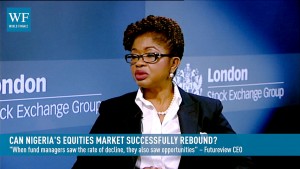
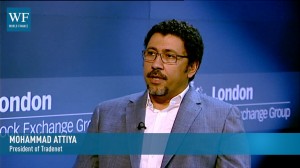
As Nigeria’s equity dip continues, domestic officials have blamed the wider world, as well as the nationalisation of three of the country’s banks
The Nigerian stock exchange has experienced further difficulties as equity value continues to fall. The value of equities has seen a reduction of 22 percent between February 2011 and February 2012 - which is well over 1.8 trillion Naira. However, while...
As the Carlyle Group looks to expand, two new directors have been recruited to make specific moves into the Middle East and North Africa region
The Carlyle Group, has been steadily increasing its presence in both the Middle East and North Africa over the last few years. In a recent corporate shift, the company announced that its head of MENA operations, Walid Musallam, was stepping down and that ...
Dr Robert Easton of the Carlyle Group has taken up the seat of chairman at the BVCA. It could mean great changes for the industry
Dr Robert Easton, who is managing director of the Carlyle Group, has recently been appointed chairman of the British Private Equity and Venture Capital Association. Dr Easton has worked for the Carlyle Group for some 11 years, since 2000, mainly operating...
A drought in share sale activity could leave around a quarter of bankers working in the sector looking for new jobs by 2013 as investment banks are forced to cut costs, with some expecting smaller players could even exit the market completely
A handful of bumper deals in the first half of 2011, such as the $10bn flotation of commodities firm Glencore and a $13bn fundraising by Commerzbank, has helped cushion the impact of a slow second half for many but with just $17.6bn raised in Europe since...
AS economies throughout the world remain in murky territory, stocks and shares have had a bumpy year
A year ago, most people thought that the UK economy was well on its way to recovery following one of the most severe economic downturns in decades. At the end of 2010 the key FTSE UK 100 share index, which lists the 100 biggest companies in the UK, was at...
Traders turn their attention to commodities, a safe and profitable area of investment
With both individual and institutional investors still working to restore their portfolios and get back on track after recent market difficulties, it should not come as a surprise that commodities have captured a lot of attention. The fact is that investi...
BP’s $7.1bn agreement to sell its 60 percent stake in South American crude oil producer Pan American Energy to Bridas failed on Monday due to …
BP’s $7.1bn agreement to sell its 60 percent stake in South American crude oil producer Pan American Energy to Bridas failed on Monday due to legal concerns.Argentine –based oil and gas conglomerate Bridas, which is jointly owned by Chinese co...
European countries are scrambling to raise every last penny of funds through taxes. But some countries may have gone too far...
Though all business taxes in Belgium can be paid online with little effort and preparation, the rates are still sky-high at 57.7 percent, including a staggering 50.8 percent total rate on profits only in social security contributions.
In Belarus, a company spends up to 338 hours annually preparing for and paying ten different taxes and duties. The total tax rate has incredibly been lowered to 60.7 percent, from 117.5 percent in 2008.
A company in France pays seven different taxes and duties, the sum of which can amount to 65.7 percent of profits; though President François Hollande has announced a wave of business tax rate cuts coming up.
A business in Estonia pays 67.3 percent of profits in tax, 37.2 percent exclusively in social security contributions. The country has gone against the grain in Europe by raising businesses taxes from 48.6 percent in 2008 to the current rates.
While corporate income tax (IRES) in Italy is limited to 38 percent of taxable profit, a company operating in Italy can expect to pay 14 other taxes and duties, including social security contributions, bringing their total payable tax to 68.7 percent of profits, according to the World Bank.
Norway taxes motor fuels twice, with a road use tax and a CO2 emissions tax. Combined with strikes in the energy sector that have curbed output, the price of gas at a local pump has soared to $10.12 per gallon.
Though Turkey sits on the Suez Canal and neighbours many oil rich countries, the price of a gallon of average gas clocks in at $9.41 in Turkish pumps, because of a 60 percent share of taxes.
Like Turkey, Israel is surrounded by oil-rich neighbours, but drills very little itself. Gas prices are controlled by the government, so about half of the $9.28 per gallon goes to taxes.
There are few gas stations in Hong Kong, but the ones available charge up to 76 percent more per gallon than mainland China, where the government caps the cost of fuel. A gallon at the pumps will cost around $8.61 on the island.
Expensive labour costs make the Dutch petrol prices the dearest in Europe, at $8.26 per gallon; though the 57 percent tax add-ons don’t help.
8 February 2007
HSBC warns of subprime mortgage losses
2 April 2007
New Century goes bus
14 September 2007
Wholesale markets have dried up
17 March 2008
Rescue of Bear Stearns
7 September 2008
Rescue of Fannie Mae
15 September 2008
Lehman Brothers file for bankruptcy
3 October 2008
US congress approves $700bn bailout
14 February 2009
$787bn stimulus approved by congress
The effects of the current financial crisis are global and irrefutable. With the collapse of Lehman Brothers, the domino effect of irresponsible public monetary policies, huge levels of unsustainable debt, and a deregulated financial sector, has escalated to the point where no corner of the globe has been left untouched.
October 1973
Syria and Egypt launch an attack on Israel on Yom Kippur and set off a twenty day war;
1977
US President Carter creates Department of Energy, which develops the US strategic petroleum reserve
The Organisation of Petroleum Exporting Countries (OPEC) used their oil reserves as a weapon with the Arab Oil Embargo against those who supported Israel. By January 1974, world oil prices were four times higher than they were at the start of the crisis, especially in the US, and the shock led to a huge drop in the stock market with NYSE losing $97bn in just six weeks. The embargo lasted five months, and the effects are still seen today.
1922-1923
Hyperinflation
1923 – 1924
Stabilisation
The trouble began when Germany missed a repatriation payment, worth about one third of the German deficit in this period. Inflation was already high but by 1923 it was raging. Prices doubled within hours, and by late 1923, it cost 200bn marks to buy a single loaf of bread. People burned money as it was cheaper than buying firewood. Germany eventually regained control of its economy when it introduced the Rentenmark into circulation in 1923, and then the Reichmark in 1924.
1929-1933
The Great Crash
1934-1939
Recovery and Recession
After the decadence of the Roaring Twenties, the 1930s saw the biggest economic slump of all time. The stock market crashed on 29 October 1929, and optimism and decadent living tumbled along with the figures. The GDP fell from $103.6bn in 1929, to $66bn in 1934 and the subsequent years of recovery were the most dramatic in US history.
1907
Otto Heinze and his brother Augustus Heinze bought shares of United Copper.
The stock market was already cautious over the tight money supply, but the US was thrown into a depression after the stock market fell nearly 50 percent from its peak in 1906. The Heinze brothers thought they could influence market shares but ended up bankrupting lenders that provided the financing to buy the stock. A chain reaction left nine institutions bankrupt. By February 1908, the panic was over and the government created the Federal Reserve system, to prevent banks from exercising too much control over the economy.