


The financial services industry has entered a new phase of technological change. Artificial intelligence is moving rapidly from experimentation towards implementation, expectations are becoming more sophisticated, and consolidation is reshaping the operating landscape. Yet the central question for financial institutions is no longer whether they should innovate. It is whether they can turn innovation into sustainable, scalable business value.
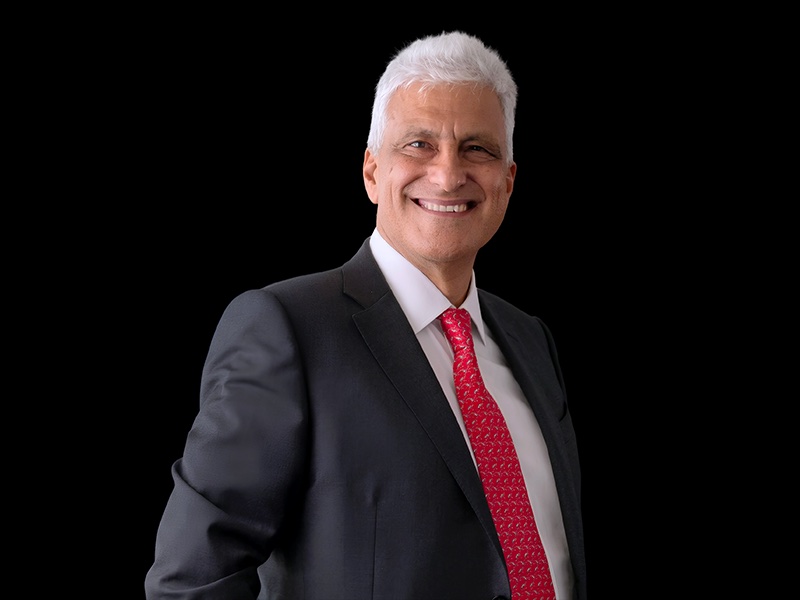
For Luigi Marciano, Founder and Group CEO of Objectway and recipient of the European CEO Award for CEO of the Year in Wealth Technology, this distinction is critical. Having spent more than three decades building Objectway as a WealthTech partner for the financial services industry, he has seen successive waves of transformation change what institutions expect from their technology partners. The latest, driven by AI, may be one of the most significant yet, but only if firms approach it as part of a broader transformation.
“AI should not be treated as a standalone technology,” Marciano argues. “Its greatest potential lies in acting as an amplification layer on top of a trusted operational foundation: validated data, secure and orchestrated processes and governed workflows. In an industry where decisions are closely tied to trust, regulation and long-term client relationships, this foundation is particularly important.”The challenge is therefore less about simply introducing AI than creating the conditions in which innovation can scale.
For years, financial institutions have had to bridge ambition with execution: building for the future while continuing to perform today. That tension surely remains, but the stakes have changed. Innovation that cannot scale leaves potential stranded; performance that cannot evolve eventually reaches its limits. Scalability has become as important as the innovation itself: the ability to make new capabilities work consistently across the organisation and turn them into lasting value.
That means addressing a problem that has been building beneath the surface of digital transformation for years: operational complexity. The convergence of fragmented systems, manual processes, regulatory demands and increasingly personalised client expectations makes profitable growth harder rather than easier. Technology that simply adds another layer of functionality risks amplifying that complexity. Technology that standardises, connects and simplifies it can do the opposite.
This is where the next competitive distinction is likely to emerge, among those that have tackled the harder, less visible foundational work first, leveraging operating models capable of combining automation and efficiency with the flexibility to adapt as markets, regulations and client expectations evolve. Strong data foundations, modular architectures and embedded governance are becoming less of a technology choice and more of a prerequisite for sustainable growth.
This is reshaping the role of technology partnerships. Financial institutions increasingly have to distinguish between capabilities that truly differentiate their business and those that can be delivered more effectively through specialised partners. The emerging model is not about outsourcing innovation, but about externalising complexity while preserving differentiation: using as-a-service capabilities where scale and continuous evolution are difficult to achieve internally, while keeping focus on the areas that create distinctive value.
“The strategy is in the sequence”, highlights Marciano, “Foundations first. Externalisation as accelerator. AI as amplifier. Firms do not all need to start from the same place, but they do need clarity about what enables their desired outcomes: knowing what has to happen before the next layer of innovation can deliver value at scale.”
For Marciano, that sequence is ultimately part of a much longer lesson about building a business in an industry defined by change. A vision may provide the direction, but scalable growth depends on the ability to keep evolving the path towards it, without losing sight of the foundations that make growth possible. The strongest institutions will not be those that simply move fastest towards the next technology, but those that build the resilience, adaptability and partnerships needed to turn each new wave of change into lasting progress.
That is Innovation Built to Scale.

