


Top 5
In today’s world, where social, environmental and economic challenges are increasingly complex, sustainability has moved from being a trend to an urgent necessity. Within this context, Banco Popular Dominicano has assumed a leading role in promoting a business model grounded in sustainability, integrating this vision across all levels of its institutional structure. This article explores in depth the strategic management behind the bank’s sustainable vision, highlighting its pillars, achievements, challenges, and the key role of corporate communication.
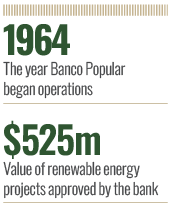
Since its opening in 1964, Banco Popular has been guided by a philosophy centred on the economic, social and environmental development of the Dominican Republic. Over time, this philosophy has evolved into a comprehensive approach called ‘Responsible Banking.’ Under the leadership of Don Alejandro Grullón E., followed by Don Manuel A. Grullón and myself, the bank has consolidated an organisational culture that aligns with its founding principles, now focused on sustainable development. The shift in mindset towards sustainability came from the understanding that economic growth cannot come at the expense of collective wellbeing or environmental preservation. Sustainability is not just a strategy – it is a conviction that guides business decisions to ensure progress does not compromise future generations.
Sustainability strategy
Banco Popular has developed an institutional action model based on eight fundamental elements that collectively build its sustainable vision. The first is addressing societal expectations and demands. By actively listening to society, the bank delivers inclusive and equitable solutions. Second, its management philosophy is based on ethical principles, transparency, and responsibility, guided by a long-term vision.
The third element is alignment with the Sustainable Development Goals (SDGs), which serve as a decision-making framework. Fourth is the adherence to the 2019 Principles for Responsible Banking, committing the bank to finance sustainable development, reduce social and environmental risks and promote inclusion.
Sustainability is not just a strategy – it is a conviction that guides business decisions
The fifth element considers business needs, recognising that sustainability enhances competitiveness, efficiency and the creation of shared value. Sixth is the diversity of initiatives that include actions in energy efficiency, financial inclusion, community development and socially impactful products.
The seventh element is institutional positioning, which strengthens the bank’s leadership in sustainability as a differentiating factor in the market.
Finally, the eighth element is leadership in the transformation agenda, with Banco Popular taking a leading role in transitioning to a more just and low-carbon economy. The sustainability model at Banco Popular is strengthened by the Sustainability and Reputation Committee, which ensures that all actions align with stakeholder interests and are measured by impact indicators.
Strategic use of communications
Corporate communication is key to building Banco Popular’s credibility and reputation. It goes beyond informing – it creates meaning, mobilises allies and fosters internal education. Transparent communication strengthens institutional reputation, reduces risks, helps all stakeholders understand the purpose behind sustainable decisions, facilitates and promotes strategic partnerships with NGOs, government and businesses, fosters a culture aligned with sustainable values and ensures the organisation’s social legitimacy – an essential element for operating with societal support. In this way, communication becomes a tool for transformation and leadership.
Banco Popular was the first bank in the insular Caribbean to adhere to the UNEP-FI Principles for Responsible Banking. This involves concrete commitments such as aligning with the SDGs and the Paris Agreement, maximising positive impacts, working responsibly with clients, collaborating with stakeholders, implementing effective governance with measurable goals and ensuring transparency and accountability. These principles strengthen reputation, improve risk management, attract international financing and foster innovation.
Banco Popular has proven that it is possible to generate economic profitability while promoting social and environmental development. Investments in renewable energy, financial education, and green products have not only strengthened client relationships but also opened up new business opportunities.
Key projects and achievements
In the field of renewable energy, the bank has approved over $525m in projects with 780MW of installed capacity. Its portfolio of green products has disbursed more than RD$3,000 million ($47m), benefiting over 800 individuals.
Through its Environmental and Social Risk Management System (SARAS), the bank identifies and mitigates risks in financed operations, aligning with international frameworks. Since 2019, Banco Popular has published annual sustainability reports following Global Reporting Initiative (GRI) standards. Since 2022, these reports have been independently verified by KPMG, ensuring transparency and traceability.
Effective communication fosters a culture aligned with sustainable values
Initiatives such as ‘Emprende Mujer,’ ‘Finanzas con Propósito,’ and ‘Excelencia Popular’ promote education, entrepreneurship and women’s inclusion. In 2024, more than 1,200 women were impacted and 650 scholarships were awarded. Over 75,000 small and medium-sized enterprises have received financial support, boosting local development.
Since 2014, Fundación Popular has led health, education, and environmental projects such as the Yuna Centre, watershed reforestation, and community aqueduct construction. It has also supported postgraduate programmes in CSR and sustainability, benefiting more than 500 professionals.
More than 3,000 Banco Popular volunteers participate in initiatives spanning health, the environment, education, and community development.
This volunteerism reflects a corporate culture aligned with institutional purpose. Leading the shift toward sustainability within a large financial institution has involved overcoming resistance, promoting ongoing education, and exercising empathetic leadership. Sustainability has moved beyond being the task of one department – it is now a shared responsibility across the organisation.
The next generation
The future of sustainability needs ethical, creative, and committed communicators – individuals capable of creating meaning, mobilising people, and driving real transformation through both words and actions. Banco Popular has demonstrated that sustainability can be the central pillar of a corporate strategy without compromising profitability.
With a clear vision, solid governance, high-impact projects, and effective communication, it positions itself as a leader in sustainable banking in the Caribbean. For future generations – especially women – there is both the challenge and an opportunity to lead with ethics, purpose, and the conviction that every action matters.

