


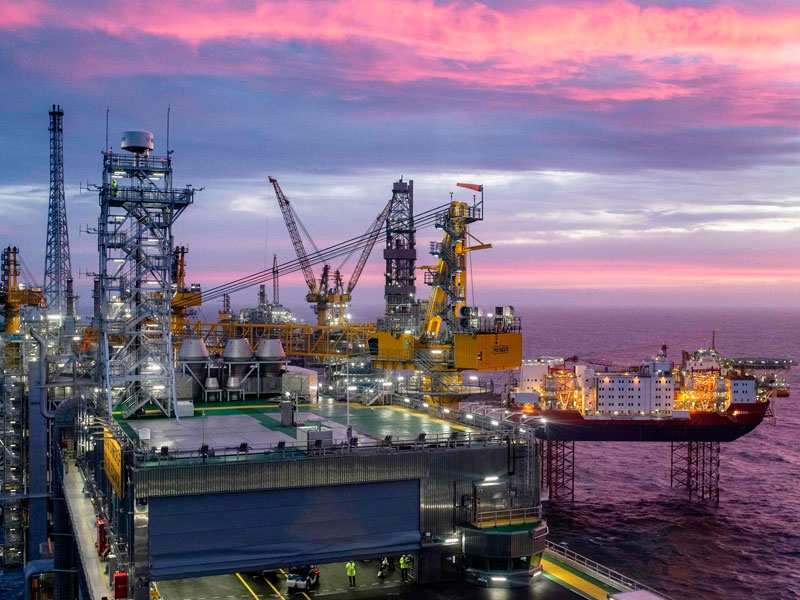
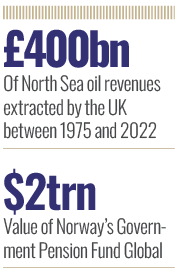
Norway and the UK struck oil in the North Sea at roughly the same time, extracting comparable riches over the ensuing decades. However, while Norway built a financial fortress, courtesy of its Government Pension Fund Global, which is currently worth over $2trn and continually compounding interest for future generations, the UK chose to spend, tax, and move on, and is consequently sitting with £2.8trn of national debt with the government borrowing just to cover day-to-day spending. But any honest answer as to what went wrong, and whether anything can be salvaged, runs straight into uncomfortable territory because the arithmetic only works one way: more drilling, not less. And with the Energy Profits Levy hitting 78 percent total effective tax on North Sea operators in 2026, that conversation has become urgent, taboo and long overdue.
How Norway built a $2trn fortress
Norway’s oil story didn’t end with extraction; it began there. The idea for a Norwegian oil fund was first conceived in 1960, as the then Prime Minister, Einar Gerhardsen, and his government claimed sovereignty over the ‘Norwegian continental shelf.’ Oil was first struck in 1969, but it wasn’t until 1990 that the government passed a law to create the Government Petroleum Fund, with the simple principle: oil wealth is finite, but financial capital doesn’t have to be. The first deposit arrived in 1996, and today, the fund is approaching $2trn, owns roughly 1.5 percent of all listed companies worldwide, and gives each Norwegian a theoretical stake worth hundreds of thousands of dollars.
As soon as revenues flowed into general expenditure they flowed out almost as quickly
The Norwegian Fund doesn’t just have scale, but discipline. All oil and gas revenues flow directly into the fund, rather than being spent on day-to-day government needs. The money is then invested globally, in the same way as the Norwegian central bank’s foreign exchange reserves, across thousands of companies, including major stakes in US tech giants, turning North Sea oil into a diversified, income-generating portfolio.
Crucially though, Norway spends only the expected long-term return, around three percent annually, under its fiscal rule, preserving the core wealth for future generations. Managed independently by Norges Bank Investment Management, the system has largely remained insulated from political short-termism. There is no secret here, just a sustained national choice to save rather than spend.
The UK’s squandered opportunity
The UK, meanwhile, extracted approximately £400bn in North Sea oil revenues in today’s money between 1975 and 2022. But, unlike Norway, not a penny of it was saved in a long-term wealth vehicle. All of it went into the general spending pool, and most of it vanished without structural trace.
The critical fork came in the 1980s. While Norway was quietly establishing the architecture of what would become the world’s largest sovereign wealth fund, Margaret Thatcher’s government was using North Sea revenues for something more immediately pressing in the UK: managing the social cost of deindustrialisation such as unemployment benefits and redundancy payments. Oil money funded the transition of the politically necessary, and economically brutal, dismantling of British manufacturing, and then disappeared.
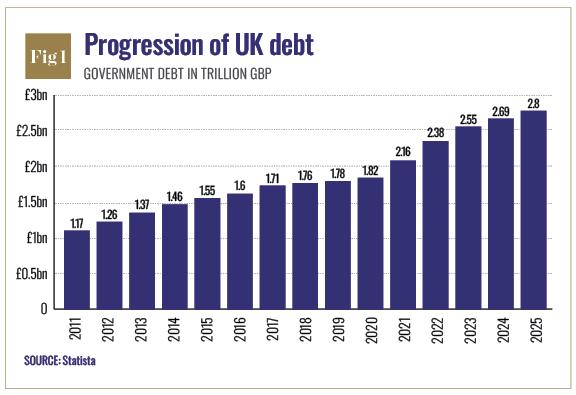
What followed was decades of spend-as-you-go, under successive governments. As soon as revenues flowed into general expenditure they flowed out almost as quickly. Nothing ring-fenced, invested or compounded. But the painful detail is that Britain was warned. Economist Wynne Godley and others argued explicitly for a Norwegian-style fund in the 1970s, before the money arrived in volume, but the proposal was roundly rejected by the then incumbent Labour government, led by James Callaghan. That wasn’t ignorance but a choice. The UK didn’t lack the resource, expertise, or the blueprint, it simply lacked, at the time, the political will to defer gratification, and chose, repeatedly and consciously, to spend tomorrow’s money today.
The Energy Profits Levy and what is left
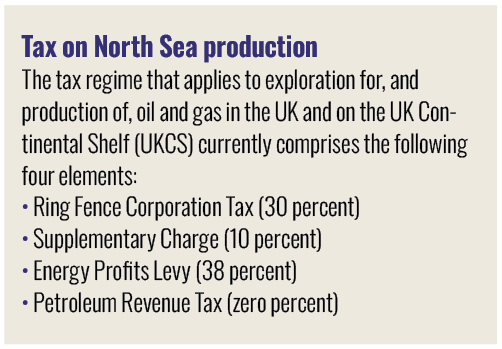
If the UK ever hopes to emulate Norway, it must start with what remains, but that picture is far less forgiving than it once was. The Energy Profits Levy (EPL) 2026, introduced in 2022 to capture energy company windfalls during a price spike, now sits at the centre of the debate. At its peak, the levy raised a few billion pounds annually, although it’s a fraction of what decades of disciplined saving might have produced.
Layered on top of existing North Sea taxes, the levy pushes the effective rate on oil and gas profits to 78 percent, and critically, it is being applied to a shrinking base. North Sea production has been in long-term decline since its late-1990s peak, with fewer new projects coming online and exploration activity slowing sharply. The result is that the levy has become something the industry plainly calls ‘a going-out-of-business tax’.
There is also a growing tension at the heart of policy that nobody in government seems too keen to resolve; the zealous commitment to net zero while relying on dwindling fossil fuel revenues, and taxing the sector heavily even though it discourages the investment needed to sustain it.
This raises an uncomfortable reality: even if Britain chose to ‘go Norwegian’ tomorrow, it would be doing so with a mature basin, reduced output, and far less time to act.
Could the UK actually do it?
If we strip away the nostalgia, the question becomes clinical: what could Britain realistically build if it started today? The North Sea still holds an estimated 2.9 billion barrels of oil equivalent (BOE) of proven and probable resources, with contingent resources standing at 6.2 billion BOE, and prospective resources estimated at 4.6 billion BOE. At current prices and under the existing EPL regime, that translates into meaningful revenue. But meaningful is not the same as transformative.
Norway’s Government Pension Fund Global didn’t just magically appear overnight; it took more than two decades of disciplined accumulation to reach its current scale. Starting now, even under optimistic assumptions with stable prices, restructured taxation, sustained investment, and a political commitment to ring-fence revenues, the UK could potentially build a reasonably sized fund over 20 to 30 years, but still a fraction of Norway’s position, and dwarfed by the UK’s £2.8trn debt pile. There are three problems in creating such a fund; scalability, governance, and politics, which compound each other.
While the scale problem is real, it is manageable. The governance problem, however, is harder. Norway’s fund works precisely because successive governments can’t easily raid it. Whereas British political culture, with five-year electoral cycles, structural short-termism, and chronic pressure to spend, has never successfully maintained a long-term fiscal vehicle. The Treasury would need ring-fencing robust enough to survive at least six or seven governments. That’s not a technical challenge, but a cultural one.
The political problem may also be the most difficult to overcome. Any serious attempt to build a sovereign wealth fund requires renewed North Sea investment, which, in turn, requires restructuring the EPL and a government to publicly argue that increased fossil fuel extraction serves the national long-term interest. But in 2026, that argument is considered politically radioactive, even where the economic logic is sound. So, while a British sovereign wealth fund is theoretically possible, it’s practically very difficult, and politically near toxic.
Killing Net Zero to save the economy
If a future government wanted to do this seriously, it would need honest policy design. The first step would be to restructure the EPL and replace it with a tiered system that still captures meaningful revenue from mature fields but actively rewards investment on new drilling. Norway’s own petroleum tax model does exactly this: high headline rates, but structured to make exploration viable rather than punitive. The goal isn’t a lower tax take per barrel, but more barrels over a longer period.
However, this requires reopening the North Sea to allow new licensing rounds and exploration, as well as an admission that prioritising domestic production means trading short-term net zero optics for long-term fiscal resilience, because continuing to import gas from Norway and Qatar while shutting down domestic supply is a contradiction, both economically and environmentally.
Crucially though, any revenues would need to be locked away. A UK version of the Norway model only works if it is genuinely ring-fenced, protected by legislation and insulated from political cycles, something closer to a constitutional lock than an OBR-style advisory body. Unfortunately, governance is where most long-term fiscal vehicles in Britain have historically collapsed. A cross-party board working to design the structure would help insulate it from five-year electoral cycles, but cross-party consensus notwithstanding, pretty much anything fiscally related is its own challenge.
Complementary revenue streams, from offshore wind lease revenues, spectrum licences, or future carbon credits, could also help supplement North Sea receipts and partially address the scale problem. However, the final requirement is the hardest: public expectation-setting. This is, by no means, a quick fix, but a 30–40-year project. No sitting politician will preside over its completion. So, the argument has to be intergenerational; the same argument Norway made in 1990 and has largely kept faith with ever since.
While the economics are challenging, they are workable. The limiting factors are whether the UK is willing to think that far ahead, and change a current political culture that has consistently chosen to make future generations slightly poorer in order to make the present slightly more comfortable.

