


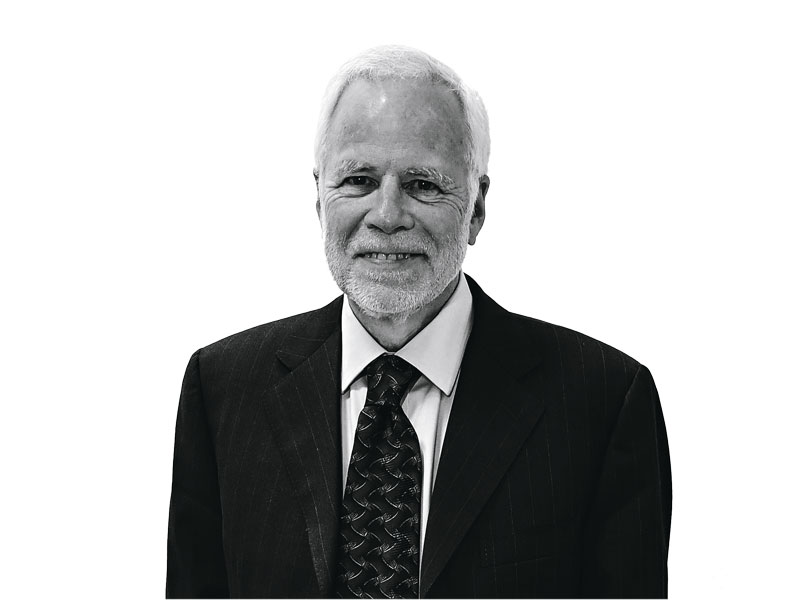
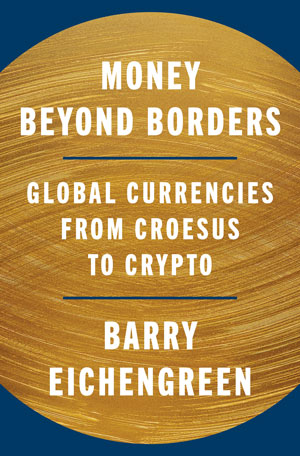
Economic historian Barry Eichengreen has long been one of the most insightful guides to the global monetary system. In his recent book Money Beyond Borders: Global Currencies from Croesus to Crypto, the George C. Pardee and Helen N. Pardee Professor of Economics and Political Science at the University of California, Berkeley, turns his attention to how money is evolving in a world of rapid technological and geopolitical change. From the rise of stablecoins to shifting power between the dollar and emerging challengers, Eichengreen explores what it means for global currencies to move ever more freely across borders while governments try to retain control. The book blends economic history – from ancient Greece to medieval Florence, Amsterdam and then Britain’s handover of global financial leadership to the US – with sharp analysis of today’s monetary debates. In this exclusive interview with World Finance’s correspondent Alex Katsomitros, Eichengreen reflects on how domestic political challenges affect the dollar’s global status, the risks and opportunities posed by innovation, and whether dollar dominance can endure in a fragmented world economy.
What is the biggest threat to the dollar’s dominance right now?
The US itself. Not the economy, but rather US politics. Global currency status has political as well as economic and financial preconditions. These domestic political preconditions are at risk at the moment. Global investors have to be confident that the rule of law, separation of powers, control of corruption and respect for Fed independence are intact. They have to be confident about the country’s foreign policy, whether its alliance policies are sound and stable, whether the US is still regarded as a reliable alliance partner because central banks, governments, firms and commercial banks use the currency of partners who are viewed as reliable stewards of their holdings. There are questions about that.
Would a more isolationist Fed undermine the dollar’s global status, given its role as a global lender of last resort?
The Fed has played an important role by extending dollar swap lines to foreign central banks, which is a foundation stone of the global dollar. Foreign central banks will only be comfortable about seeing banks and firms under their jurisdiction holding dollars if those central banks can act as dollar lenders of last resort because they can swap their currencies for dollars with the Fed. If we have a nationalistic US president who insists on nationalistic behaviour by the central bank, things will be different. Take President Trump’s supposed temporary appointee to the Fed Board, Stephen Miran, who thinks the US should not provide global public goods by acting as a global lender of last resort and that we should demand recompense prior to doing that. Kevin Warsh wants to shrink the Fed’s balance sheet. Will a central bank with a smaller balance sheet that focuses narrowly on its domestic responsibilities still act as a global provider of dollar liquidity? I have my doubts, and this makes me even more worried about the prospects of the dollar as a dominant global currency.
Are there any parallels between what the Nixon administration was doing in the 1970s to deal with the balance-of-payments deficit and what the Trump administration is doing now with tariffs?
There are two parallels. One, both administrations wanted a weaker dollar to boost export competitiveness and address that balance of payments weakness. The reason Nixon imposed a 10 percent import surcharge in August 1971 was to allow the dollar to depreciate without other governments depreciating their currencies. Only after that currency alignment was he prepared to remove the import surcharge. That is similar to the Mar-a-Lago Accord. We hear today that the dollar should be devalued, and tariffs are used to induce foreign governments to go along. The second parallel is that it didn’t work then, and it’s not working now. The dollar is item number 10 down the list of determinants of US competitiveness. That competitiveness depends on our productivity growth; investment in the skills and training of our workers; entrepreneurship; capital investment; tax system efficiency. Further down on the list comes whether the dollar is 10 percent higher or lower.
Most economists consider the dollar an exorbitant privilege for the US. Some, however, even in President Trump’s circle, suggest that it is a burden. What do you think?
I see both sides of the coin. There have been dominant currencies in the past that faced problems of international competitiveness or overvaluation because of the large global demand to hold them as reserves. That was the case of Florence in the 15th century, Amsterdam in the 18th century, and the UK in the late 19th century and early 20th century. My evaluation is that the benefits outweigh the costs. The benefits are convenience, being able to do cross-border business in your own currency, which aids competitiveness; funding the Treasury’s debt at lower cost because there’s demand for Treasurys; an automatic form of insurance that you are the safe haven currency and funds flow into your markets when volatility spikes, rather than experiencing capital flight and financial market collapse. Finally, your financial sanctions are more effective than they would be otherwise.
When the euro was created many people expected it to compete with the dollar. Why hasn’t this happened?
The euro has gained zero ground on the dollar as a global currency since 2001. The reason is resistance from special interests and lack of political will at the national level. There are three prerequisites for a larger global role.
One, a capital markets union, which would create a more liquid market in euro-denominated government securities. But the banks don’t like this idea; they want to hold on to their part of financial business for investment funds in Luxembourg and Ireland. They want to keep regulation at home rather than allowing it to migrate to Brussels or Paris, where it would foster a capital market union.
Two, there is a shortage of safe euro-denominated assets. There are only three European governments with triple-A ratings from all rating agencies. They have around €3trn worth of government securities between them, compared to $30trn to $40trn worth of US Treasurys. The EU could issue more bonds of its own. There are schemes where the EU would buy up national government bonds, and use the interest paid to it by national governments to issue and service its own bonds. But national governments are reluctant to see those schemes implemented.
Three, there is no common EU defence and security policy. Leading global currencies are the currencies of political entities that can secure their borders and build strong alliances with foreign partners. The EU and its citizens are beginning to think about the importance of not relying on the US for security and building that common EU policy. But there is this famous observation that 13 different EU countries are producing 13 different tanks. How can you have an effective tank battalion on the battlefield, absent greater integration?
Do you consider the renminbi a stronger rival to the dollar?
The playbook the Chinese authorities are following is taken directly from what the Fed did, starting in 1914, to promote use of the renminbi for cross-border trade settlements with China itself, and once that process is underway, to promote purely financial transactions. They are building the relevant infrastructure, the Chinese cross-border interbank payments system with close to 200 direct participants and 1,600 indirect participants. They have an electronic platform, mBridge, built with four other monetary authorities and central banks. They are moving as fast as they can. The People’s Bank of China has extended more currency swap agreements to foreign central banks than the Fed or the ECB. But they are starting out way behind.
They have been internationalising their currency for a little more than a decade. The US has been doing so for more than a century. The US accounts for nearly 60 percent of global foreign exchange reserves. China accounts for two percent. China’s cross-border renminbi transactions have been growing at double-digit rates, whereas their growth has slowed down. Nothing in China is growing at double-digit rates anymore. And then there are the political obstacles. I described my doubts about US politics and how that can negatively affect the dollar. Checks and balances, rule of law, regulatory transparency – these are not characteristics of the Chinese political system. Will they grant independence to their central bank? Will they allow competing political parties? Obviously not in my lifetime.
Are stablecoins a threat to the dollar’s dominance – or a digital tool to preserve it?
I would distinguish the token from the payments rails, which are blockchain or distributed ledger technology. One of my book’s themes is that financial and payments technology is always changing. Blockchain and distributed ledger technology is here to stay and will provide another vehicle through which cross-border transactions are completed. We don’t know what kind of units will run on those rails. Will they be privately issued stablecoins? 99 percent of them are linked to the dollar. Or will they be a combination of tokenised commercial bank deposits and central bank digital currency (CBDC) to create finality? Those units can also run on a permissioned blockchain. Both the ECB and the People’s Bank of China are betting on tokenised commercial bank deposits and a CBDC. In the US, Congress has prohibited the Fed from issuing a CBDC. My view is that we are betting on the wrong horse and that privately issued stablecoins may turn out not to be stable and fungible. If Amazon and Walmart issue stablecoins, will we be able to use Walmart Coin at Amazon and Amazon Coin at Walmart? Tokenised bank deposits take advantage of an already existing banking system inside the regulatory perimeter that is important for stability. Commercial banks have already made progress in figuring out how to issue and manage a CBDC. Time will tell which horse ends up winning the race.
What would a world without dollar dominance look like?
It would make for a more fragmented global monetary and financial system. If you imagine a dollar area, a euro area and a renminbi area, it’s important to design these areas to overlap with one another and maintain a semblance of transactions between them. Imagine a scenario where China and the countries around it do business only in renminbi and the US is on such bad terms with China that we do no business using the renminbi. We know from the 1930s that is disastrous. So we have to design monetary systems where the blocs can do business with one another.

