



When corporations announce policies, all stakeholders – from consumers to employees to shareholders – expect them to be upheld. But a dramatic reversal is taking place. If 2020 was the time for grand social and environmental pledges, 2026 is the year of the rollback. Target, Walmart, Meta, Amazon, McDonald’s, Warner Bros and Goldman Sachs are among the one in eight companies that have so far weakened diversity, equity and inclusion (DEI) policies. Meanwhile almost one in five (18 percent) completely or partially discarded their net-zero promises.
The policy U-turns first emerged when Trump re-entered the White House and started revoking guidelines himself. By 2025, the fires were roaring. In a striking moment, the Net-Zero Banking Alliance collapsed after Bank of America, JPMorgan Chase, Citigroup, Wells Fargo, Morgan Stanley and Goldman Sachs all withdrew. Today, politically motivated corporate rollbacks continue to compound at pace. The sudden drop in commitment reflects the aggressive ‘anti-woke’ philosophy of the Trump administration. For investors, it opens a Pandora’s box of new risks.
Boycotts spiral into falling valuations
One of the companies that has become synonymous with rollbacks, capitulating to Trump and the MAGA movement, is mega-retailer, Target. In November 2024, the brand bowed to pressure to remove Pride merchandising, leading to boycotts and a 20 percent drop in share prices. Just a few months later, Target went on to U-turn on its DEI initiatives, notably to end its Racial Equity Action and Change (REACH) strategy and abandon a $2bn pledge to support Black businesses.
This sparked one of the most devastating boycotts in US corporate history, with footfall dropping by nine percent and share prices losing 33 percent of value year-on-year. CEO Brian Cornell was forced to step down and shareholders have filed class-action lawsuits. Target is alleged in the courts to have engaged in the “misuse of investor funds to serve political and social goals.”
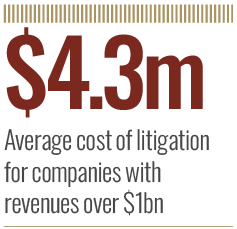
With boycott risk comes increased litigation risk. A survey by Norton Rose found twice as many companies were impacted by ESG-related (environmental social governance) class actions in 2025 (30 percent) compared to 2024 (16 percent). Political pressure is listed as a top trend contributing to the increased risk exposure. For shareholders, it is worrying. Companies with revenues exceeding $1bn spend an average of $4.3m on litigation, which eats into profitability.
What makes Target especially vulnerable to boycott risk is that the store had a significant African American customer base. By bowing to politics, it alienated its own customers. As one shopper commented, “We don’t buy where we are not respected.” Worryingly for Target, the brand continues to attract protests, even with a new CEO. The retailer is now at the centre of another boycott around its dealings with ICE.
It is unlikely Target’s share price will recover to the highs of 2020, which are currently less than half the value. In the words of Head of Behavioural Finance at Oxford Risk, Dr Greg Davies, “Investors do not only price cash flow,” he explains, “they also price trust.”
Shareholder revolt increases
More recently, oil giant BP felt the full force of rollback risks when it tried to reverse on its clean energy commitments in April 2026. For the newly minted CEO Meg O’Neill, the triple shareholder revolt was a disaster. More than one in two (53 percent) voted against unwinding climate disclosures. To rub salt in the wound, a shareholder resolution was filed to increase disclosure for oil and gas capital investments. Furthermore, in a strong show of disapproval, one in two (53 percent) voted against virtual-only AGMs, hinting at a growing mistrust. Cognitive Scientist Elin Helander points out how rollbacks “erode trust” for shareholders, and “particularly people who see sustainability as an important part of investing.” Alienating sustainable investors presents concentration risks in the future, as well as limiting the potential shareholder market and liquidity.
However, it’s not only sustainable investors who struggle to find confidence in leaders who U-turn. The process of launching an expensive initiative only to abandon it is uncomfortable for all investors to stomach. By contrast, companies such as Apple, Levi’s and Ikea that continue honouring their pledges benefit from improved trust over time. IKEA, for example, has enjoyed a boost in value over the past years, as it holds steadfast to its ongoing environmental strategy.
Ripples of risks
Not all U-turns are built the same. Davies highlights how investors distinguish “learning from flinching.” A flexible approach to new technologies and opportunities is welcome. For example, when CEO of Blackrock Larry Fink changed his stance on crypto, the markets broadly approved.
Transactional behaviour is closer to gangsterism than capitalism
However, since the Trump presidency, Blackrock has openly shredded many of its once-trailblazing environmental policies. Fink recently commented that the ESG and DEI “pendulum” swung “too far.” By contrast with the crypto U-turn, this created ripples of alarm and decreased confidence in Blackrock’s decision making. Two Dutch pension funds divested a combined €17bn from Blackrock in direct response to the rollback, with rumours swirling that more could follow. As institutional investors like pension funds are so large, market valuations can quickly slip when they start to pull funding. It is yet another risk for investors to price in.
Perhaps the most famous example of a leader who went from enlightened to erratic in the eyes of investors is Elon Musk. Musk rose to prominence as a figurehead for the clean energy transition and free speech. However, his willingness to bend values based on politics has ruptured the trust of his original supporters. Musk’s sharing of politically motivated disinformation on X (formerly Twitter) has been especially problematic.
Most investors are “unwilling to engage with leaders who have no respect for verification, checks and balances,” elaborates Regulatory Design Specialist, Dr Roger Miles. This in turn adds concentration risk, where the only stakeholders left are those who agree with Musk, creating groupthink and “contamination risk” if they are all accessing their information from the same dubious sources.
Markets and mafia techniques
Worryingly, 2026 feels like a year where the normal “verification, checks and balances” are pushed aside in favour of populist politics – even in the investment markets. When listed companies abandon policies because they want to appease a President, the market stops becoming reassuringly rules-based and starts to become mafia-style.
“Lets call it what it is, it is expediency,” elaborates Dr Miles. “I threaten you, you give me what I want.” Today’s commodification of values means that policies are bought, sold and amended like products, without meaning anything. As Dr Miles emphasises, “Transactional behaviour is closer to gangsterism than capitalism.” It is particularly pronounced in the cases of social media providers like Meta, where whistle-blowers allege that algorithms are skewed to promote content that the Trump administration aligns with, at the cost of values and ethics. Piecing together each little rollback creates a prickling feeling of discomfort among investors.
Earlier this year, the ‘Sell America’ trend took off. Investors have already started to mobilise against what they see as unacceptable corporate behaviour. In a sense, it is a wider response to the overall rollback of traditional Western values. “People are deeply pissed off about the loss of the social contract,” adds Dr Miles candidly. In this age of AI and climate uncertainty, consumers are anxious about the direction of their futures, and have even less tolerance for companies that appear to sell them out. However, we are also caught in a moment of misinformation, unsure of which sources to trust, adding yet more anxiety to the mix.
It has left the markets in what Dr Miles refers to as a “Wile E. Coyote moment,” or “hysteresis” to use the behavioural economics term. Characteristically, the cartoon runs off the edge of a cliff and continues to run in mid-air for a while. It is only when he looks down and acknowledges the mistake that he falls. This is what Dr Miles believes could be happening now. “These are strongly fragile conditions,” he explains. For a short period, the market is continuing to act as if nothing has changed and everything is fine. But as the realisation that we are moving from rules to mafia-techniques hit without checks and balances, the crash could be colossal.
From rollbacks to a roll of the dice
For investors, it is a tense time. Without a strong financial backhander, corporations may continue to U-turn for politics, against the shareholder interests.
This can cause sharp Target-style devaluations alongside irreparable confidence risks. On the other hand, the more insidious alternative would be that companies get away with their rollbacks, potentially contributing to a mass-selling of US assets and eventual market crash. After all, 41 percent of US investment is held abroad, where many Trumpian policies are deeply unpopular. Perhaps the best way to mitigate against rollback risks starts and ends with shareholders themselves.
Recently, as with BP, Mastercard was left red faced as shareholders overwhelmingly voted against DEI rollbacks. Preventing rollback risks means overcoming inertia and taking active supervisory roles in shareholder meetings. Could shareholders be the unlikely heroes, able to close this Pandora’s box?

