


Top 5
What does it take for an idea to change an industry forever? In finance, a handful of academics daring to think differently and make some money by putting their ideas into practice, a university willing to nurture unorthodox ideas, a new technology – and a good dose of luck. That argument lies at the heart of Tune Out the Noise, Errol Morris’s latest documentary, which premiered in New York last March. The film revisits the birth of modern investing at the University of Chicago in the 1960s and early 1970s, when a group of researchers didn’t just develop another theory – they changed the very fabric of financial markets. Their ideas reshaped how ordinary Americans thought about their future, while revolutionising the global investment industry.
Efficient markets
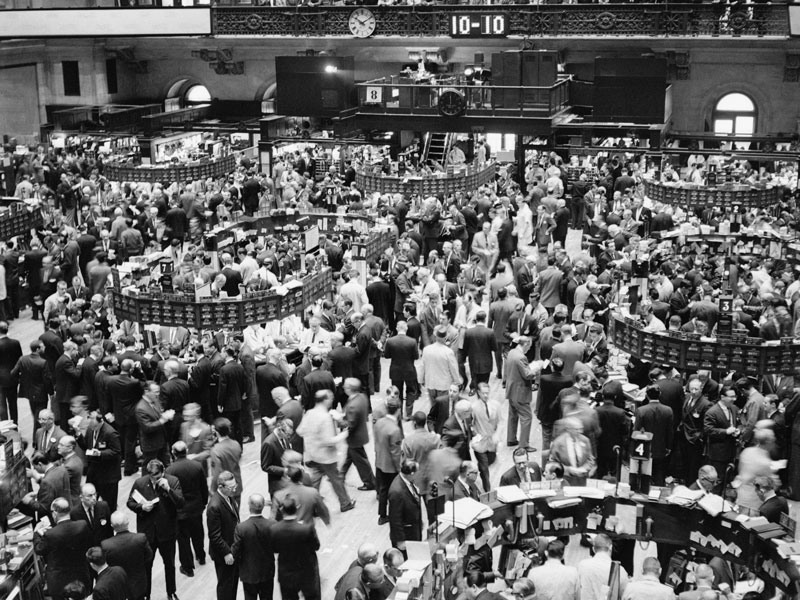
It is difficult to imagine in an era when algorithms make split-second trading decisions, but more than half a century ago the markets ran on intuition. Investing was more of an art than a science, dominated by professionals trying to outsmart the market by spotting opportunities others had missed. As Eugene Fama – one of several Nobel Prize winners featured in the documentary – recalls in the film, the conventional wisdom at the time was to trust a person with special stock-picking skills who could “beat the market.” That mindset began to crumble with the rise of the efficient-market hypothesis (EMH), a theory Fama helped pioneer. The idea upended conventional investing. What if asset prices already reflect all available information, and everything else is just noise? If markets are efficient, then consistently beating them is impossible – prices move only when new information emerges. The logical conclusion was that success depends not on instinct, but on diversification and disciplined risk management.
The film presents a vision of America and its ability to question itself that is fading away
The timing was perfect. The 1960s brought a computational revolution that gave investors access to stock prices and company data. Markets could finally be analysed with scientific precision. Out went hunches; in came data-driven strategies that laid the groundwork for passive investing. As Fama says in the film, “Markets work; prices are right.” In other words, you can’t beat the averages, but you can outperform the professionals by embracing the market itself. If that was the case half a century ago, it is even more true today, says Aaron Brask, a Wall Street veteran who teaches finance at the University of Florida. “Markets were not that efficient when Eugene Fama wrote his dissertation on the topic in the 1960s. If they were, it would imply that Warren Buffett, Charlie Munger, Walter Schloss, Philip Fisher and Seth Klarman were all lucky. Fast forward 60 years, and we now have an incredible amount of money, brains and computing power devoted to sniffing out investment opportunities. This makes it significantly more challenging to beat the market. There is less dumb money, and markets are more efficient.”
Fama’s ideas sparked a financial revolution, making passive investment the go-to option for millions of investors. Thus the index fund was born, powered by data and algorithms rather than intuition and luck. Wells Fargo launched the first index fund in 1971, while John Bogle, the legendary financier whose name would become synonymous with low-cost investing, created the first index mutual fund available to individual investors in 1976. Although the case against active investing remains strong for most investors, there are some, albeit fewer, active managers who can still beat the market, says Brask: “Buffett and other active value investors come up with an idea of how much a stock should be worth based on its fundamentals. This figure is often referred to as a stock’s intrinsic value. Then they compare that value to its market price. In the end, their value investing equates to buying stocks for significantly less than they think they are worth. In some cases, higher quality or growing fundamentals might warrant higher valuations.”
The power of diversification
One of the theory’s most enduring insights was the importance of diversification. Where old-school investors sought a single big win, Chicago’s researchers promoted the opposite: spread your bets. They found that mixing the stocks of established firms with smaller, high-potential firms, could reduce volatility without sacrificing returns.

of Tune Out the Noise
This gave rise to modern portfolio theory, now a bedrock of contemporary finance. Among its early advocates were David Booth and Rex Sinquefield who went on to found Dimensional Fund Advisors, the Austin-based investment firm that turned the EMH into a money-making machine.
Booth features prominently in the documentary, which at times borders on a promotional piece for Dimensional, one of its backers. Yet Errol Morris, an Oscar-winning filmmaker, handles the material with his trademark subtlety. His conversational style – punctuated by deceptively simple questions like “Why did you get sick of French?, Why would you do that?, You failed in air-conditioning?” – allows the story to unfold naturally. The result is a thoughtful exploration of how finance evolved from intuition to evidence. “The film emphasised the human element. The academics interviewed were humble and relatable. It was good to see some of the giants of finance talk about their work in their own words,” says Matthew Garrott, Director of Investment Research at Fairway Wealth Management, a US wealth management firm.
Shaped by randomness
One of the film’s most striking messages is the importance of chance. Financial markets are chaotic systems shaped by randomness rather than rational decisions. Sheer luck also brought together the brilliant minds who pioneered passive investment at the University of Chicago, although its reputation for rigorous economics likely helped. The creation of the Centre for Research in Security Prices by the economist James Lorie in 1960 was a turning point that brought together two revolutions, a financial and a technological one, offering investors a trove of long-term stock and bond data.
Luck shaped the individuals too. Eugene Fama almost missed his chance to go to the University of Chicago, receiving a last-minute scholarship that changed his life. Myron Scholes, another Chicago veteran, Nobel laureate and early champion of computerised trading, stumbled into the art of deciphering financial data by accident: in 1963 he took a programming job despite having little experience. When the six other programmers failed to show up, Scholes found himself assisting academics with financial research – a twist of fate that set his career in motion.
Then there was David Booth and Rex Sinquefield, the pair who turned academic theory into practice by founding Dimensional Fund Advisors. In 1969, Booth narrowly avoided the Vietnam draft when a sympathetic officer deferred his conscription so he could pursue a PhD at the University of Chicago. Sinquefield did serve in the army, but his poor eyesight spared him from partaking in possibly lethal combat in Vietnam. Today the firm manages nearly $800bn in assets, and the University of Chicago’s prestigious business school is named after Booth.
Still not perfect
The documentary touches only lightly on the unintended consequences of this intellectual revolution. Critics argue that the very theories that democratised investing also sowed the seeds of excess. Researchers who pioneered the EMH have been accused of creating a monster: an elegant idea that encouraged blind faith in the infallibility of markets, pushing investors and regulators to underestimate the dangers of asset bubbles and the need for oversight. Some critics claim that the efficient market hypothesis has been so successful that too much passive investing has undermined market efficiency, leaving a shrinking minority of investors to feed new information into prices.
For its proponents though, the theory still holds water. “Many smart traders exist, and behavioural biases are not more or less than in the past. Hence, the impact of irrational traders on efficiency is unchanged.
It can also be shown that bubbles are consistent with an efficient market,” says Robert Jarrow, advisor at the data and AI provider SAS and Professor of Investment Management at Cornell University. “There is a continuum of less efficient to more efficient. Markets with more pricing events like US large cap stocks are more efficient. The market for selling your house is much less efficient. The US stock market is not perfectly efficient, but it is efficient enough that active managers are at a significant disadvantage,” says Garrott from Fairway Wealth Management.
Even the most rational systems are built on human assumptions
Even the equations used to justify investment strategies have faced fierce criticism. Take the Black-Scholes model, Scholes’s great contribution to financial economics, with its recipe for sophisticated risk management and portfolio diversification. A mathematical triumph in theory, it also became the justification for an explosion in speculative trading in derivatives. Designed to hedge risk, derivatives have turned into highly leveraged bets stacked upon other bets. The financial alchemy enriched traders but also destabilised markets, culminating in the credit crunch and the near collapse of global banking in 2008. As one commentator would put it at the time, the model became “an ingredient in a rich stew of financial irresponsibility, political ineptitude, perverse incentives, and lax regulation.”
A different America
Ultimately, Tune Out the Noise is not just about finance. The film presents a vision of America and its ability to question itself that is fading away. Passive investing, after all, means accepting average returns – a notion that, as Sinquefield wryly notes in the film, was not regarded at the time as “the American way,” but eventually came to be. David Booth’s own story underscores that tension. A former shoe salesman, he recalls in the film: “When I went home at night, I wanted to feel good about myself.” His words evoke an older America, one that prized diligence, honesty and modest success, now eclipsed by the speculative frenzy of crypto trading and the pursuit of quick profits.
At its core, the film is also about information: the flood of data, the promise of efficiency, and the human struggle to separate signal from noise. The EMH rests on the belief that data doesn’t lie. Yet in an age of algorithmic trading, that certainty feels less solid. Markets move at machine speed, and active management faces extinction as AI systems take over. Tune Out the Noise leaves viewers with a quiet unease – that even the most rational systems are built on human assumptions, and that the next investment revolution may be about rediscovering human judgment.

