Investment Banking

Redefining Russian expectations

Sourcing funds for investment in Russia remains a challenge even with positive underlying economic fundamentals. A disciplined approach could, however, provide potential for solid returns

Emerging markets are commonly perceived as extremely risky – and Russia is frequently seen as one of the least attractive markets for private equity. While Russia ranks at the bottom of the global corruption index, the perception of the presence of cErr...

Alpen capital continues expansion into GCC area

Alpen Capital now works in a number of countries in an attempt to act as a local institution to clients in all its areas of operation

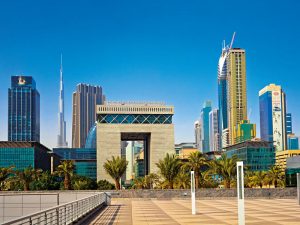
Alpen Capital is an investment bank headquartered in Dubai, UAE. It was set up back in 2005 in the Dubai International Financial Centre. In the early years, the organisation grew and evolved in line with GCC growth and went on to close some impressivviagr...

Vikram Pandit’s shock resignation as Citigroup CEO shook the industry. Now, an investigation will look into the departure. Did a boardroom coup force Pandit out of one of Wall Street’s top jobs?

Did he fall, or was he pushed?

Vikram Pandit’s shock resignation as Citigroup CEO shook the industry. Now, an investigation will look into the departure. Did a boardroom coup force Pandit out of one of Wall Street’s top jobs?

Ever since Citigroup made the shock announcement that CEO Vikram Pandit would be stepping down, speculation on the underlying reasons behind his departure spread across Wall Street. Pandit and John Havens, who simultaneously stepped down as president, had...

Morgan Stanley fined $5m for Facebook IPO

Underwriter of Facebook’s IPO has been fined for improprieties before the sale

The Massachusetts securities regulator has fined Morgan Stanley $5m for “improperly influencing” analysts in the lead up to Facebook’s IPO. The regulator cites a conflict of interest when a Facebook official was coached by a banker in what to tell a...

Expert solutions for Middle Eastern investments

Since its launch in 2004, Alkhabeer has successfully made the jump from small financial advisory firm to Saudi Arabia’s leading boutique investment firm. But it might be facing its most trying times yet, explains its CEO

When a committed group of banking professionals joined forces to create a small but influential financial advisory company, they did not expect their little venture to develop so quickly into a successful and exclusive investment enterprise in Saudi Arabi...

Direct foreign investment builds in Uruguay

Uruguay’s political and economic model, as well as its role in the Mercosur, has made it one of the preferred destinations for international investors

Strategically located in the heart of the Mercosur, Uruguay is the largest common market in Latin America. Increasing flows of Foreign Direct Investment (FDI) have arrived in Uruguay year after year over the course of the last decade. In 2011, this small ...

CorpBanca sees investment opportunities in Colombia

Chile’s oldest private bank is expanding its business into Colombia, highlighting a growing trend of increased confidence in the country

When Chile’s oldest private bank decided to expand into the Colombian market last year, it was seen as a sign of the growing confidence in Latin American banks. It also reflected the emergence of Colombia as a country that was ready to build upon the pr...

Panama’s golden touch

With no central bank and the dollar as one of two national currencies, the Panamanian economy is certainly unique, and it has allowed local financial institutions like Credicorp Bank to thrive when the rest of the world is sinking

Since the National Banking Act was passed in 1970, Panama has been receiving foreign banks with open arms. The aim of the act was to establish a worldwide banking community within the Panama free zone. Today Panama, a small but geographically pivotal Cent...

Scouting for growth in East Africa

Kenya Commercial Bank’s CEO, Dr Martin Oduor-Otieno, explains how his bank supports continental business and provides a wide range of financial services to its two million customers

“We are committed to making a difference in the lives of all our stakeholders,” says Oduor-Otieno, CEO of Kenya Commercial Bank (KCB). “Once we have confirmed expansion outside East Africa, we will be formally communicated here. Our plan is to posit...

Ukrainian firm plans retail banking expansion

In spite of the economic downturn, First Ukrainian International Bank continues to grow. Concentrating primarily on domestic endeavours, the bank is aiming to help build its mother country’s economy

Since 1992, First Ukrainian International Bank (FUIB) has grown from a small corporate financial service provider to a real force to be reckoned with in the Ukrainian banking sector. Over the past 20 years the bank has specialised in the large and medium ...

Fransa Invest Bank has experience with a broad range of banking facilities, and relies on that wealth of knowledge when advising its clients in Lebanon

Managing risk for capital gain

Fransa Invest Bank has experience with a broad range of banking facilities, and relies on that wealth of knowledge when advising its clients in Lebanon

Capital, risk and return. The ability to create a reciprocal and profitable relationship between these three factors is the key to good private and investment banking. By sticking to this principle, and maintaining a commitment to its clientele, Fransa In...

World Finance talks to Nick Jue, CEO of ING Netherlands, about safely navigating a merger during the credit crunch, becoming more transparent for customers, and embracing mobile banking

Dutch banks join forces to meet demands

World Finance talks to Nick Jue, CEO of ING Netherlands, about safely navigating a merger during the credit crunch, becoming more transparent for customers, and embracing mobile banking

ING Netherlands was created via a merger. How has that process worked out? When the credit crisis hit in 2008 we had just started merging two large Dutch banks (Postbank and ING Bank) into one new bank: ING. Of course we wondered if it was wise to procee...

With massive government infrastructure projects in the pipeline for Qatar, Ahli Bank is well positioned to contribute to the country’s economic success

Ahli Bank on course to boost Qatar economy

With massive government infrastructure projects in the pipeline for Qatar, Ahli Bank is well positioned to contribute to the country’s economic success

Founded in 1983, Ahli Bank has seen a rapid growth in the Qatari market over the last 30 years, with an ever-widening client base and consistent market performance. It is part of the Ahli United Banking Group, which has a presence in eight countries, name...

Austria advances in CEE

Austria’s leading universal bank has coped well with the ongoing crisis in central and Eastern Europe, and sees potential for growth in the region. World Finance spoke to Willibald Cernko, CEO, Bank Austria

What does it mean to you to be named Best Banking Group – Austria 2012? For me, the fact that we received this award for the second year in a row is very special. It’s an impressive testament to the successful work of my team and an incentive for the...

Banco Inbursa declared “Mexico’s rising star”

In 2009 Mexico faced its worse recession since 1932. Mexico is intrinsically linked to the US – when the US stumbles, so does Mexico. Solid financial institutions, like Grupo Inbursa, have helped bring about a speedy and solid recovery

When recession hit the US in 2008, there was nowhere for neighbouring Mexico to go but down. But Mexico, like many other emerging economies, has proved itself rather better at handling the global economic downturn than some of its affluent neighbours. Aft...

<< Older posts

Delve into the archive...

Explore the 2012 list here >>

Highest corporate tax
rates in Europe

European countries are scrambling to raise every last penny of funds through taxes. But some countries may have gone too far...

Belgium

Though all business taxes in Belgium can be paid online with little effort and preparation, the rates are still sky-high at 57.7 percent, including a staggering 50.8 percent total rate on profits only in social security contributions.

Belarus

In Belarus, a company spends up to 338 hours annually preparing for and paying ten different taxes and duties. The total tax rate has incredibly been lowered to 60.7 percent, from 117.5 percent in 2008.

France

A company in France pays seven different taxes and duties, the sum of which can amount to 65.7 percent of profits; though President François Hollande has announced a wave of business tax rate cuts coming up.

Estonia

A business in Estonia pays 67.3 percent of profits in tax, 37.2 percent exclusively in social security contributions. The country has gone against the grain in Europe by raising businesses taxes from 48.6 percent in 2008 to the current rates.

Italy

While corporate income tax (IRES) in Italy is limited to 38 percent of taxable profit, a company operating in Italy can expect to pay 14 other taxes and duties, including social security contributions, bringing their total payable tax to 68.7 percent of profits, according to the World Bank.

Norway

Norway taxes motor fuels twice, with a road use tax and a CO2 emissions tax. Combined with strikes in the energy sector that have curbed output, the price of gas at a local pump has soared to $10.12 per gallon.

Turkey

Though Turkey sits on the Suez Canal and neighbours many oil rich countries, the price of a gallon of average gas clocks in at $9.41 in Turkish pumps, because of a 60 percent share of taxes. 

Israel

Like Turkey, Israel is surrounded by oil-rich neighbours, but drills very little itself. Gas prices are controlled by the government, so about half of the $9.28 per gallon goes to taxes.

Hong Kong

There are few gas stations in Hong Kong, but the ones available charge up to 76 percent more per gallon than mainland China, where the government caps the cost of fuel. A gallon at the pumps will cost around $8.61 on the island.

Netherlands

Expensive labour costs make the Dutch petrol prices the dearest in Europe, at $8.26 per gallon; though the 57 percent tax add-ons don’t help.

The credit crisis

8 February 2007
HSBC warns of subprime mortgage losses

2 April 2007
New Century goes bus

14 September 2007
Wholesale markets have dried up

17 March 2008
Rescue of Bear Stearns

7 September 2008
Rescue of Fannie Mae

15 September 2008
Lehman Brothers file for bankruptcy

3 October 2008
US congress approves $700bn bailout

14 February 2009
$787bn stimulus approved by congress


The effects of the current financial crisis are global and irrefutable. With the collapse of Lehman Brothers, the domino effect of irresponsible public monetary policies, huge levels of unsustainable debt, and a deregulated financial sector, has escalated to the point where no corner of the globe has been left untouched.

1973 oil crisis

October 1973
Syria and Egypt launch an attack on Israel on Yom Kippur and set off a twenty day war;

1977
US President Carter creates Department of Energy, which develops the US strategic petroleum reserve


The Organisation of Petroleum Exporting Countries (OPEC) used their oil reserves as a weapon with the Arab Oil Embargo against those who supported Israel. By January 1974, world oil prices were four times higher than they were at the start of the crisis, especially in the US, and the shock led to a huge drop in the stock market with NYSE losing $97bn in just six weeks.  The embargo lasted five months, and the effects are still seen today.

German hyperinflation

1922-1923

Hyperinflation
1923 – 1924
Stabilisation


The trouble began when Germany missed a repatriation payment, worth about one third of the German deficit in this period. Inflation was already high but by 1923 it was raging. Prices doubled within hours, and by late 1923, it cost 200bn marks to buy a single loaf of bread. People burned money as it was cheaper than buying firewood. Germany eventually regained control of its economy when it introduced the Rentenmark into circulation in 1923, and then the Reichmark in 1924.

The Great Depression

1929-1933
The Great Crash
1934-1939
Recovery and Recession


After the decadence of the Roaring Twenties, the 1930s saw the biggest economic slump of all time. The stock market crashed on 29 October 1929, and optimism and decadent living tumbled along with the figures. The GDP fell from $103.6bn in 1929, to $66bn in 1934 and the subsequent years of recovery were the most dramatic in US history.

1907 bankers’ panic

1907
Otto Heinze and his brother Augustus Heinze bought shares of United Copper.


The stock market was already cautious over the tight money supply, but the US was thrown into a depression after the stock market fell nearly 50 percent from its peak in 1906. The Heinze brothers thought they could influence market shares but ended up bankrupting lenders that provided the financing to buy the stock. A chain reaction left nine institutions bankrupt. By February 1908, the panic was over and the government created the Federal Reserve system, to prevent banks from exercising too much control over the economy.