Americas

The Hugo Chávez legacy in Venezuela could last generations, with the Commandante’s career forging a strong impact on the nation’s economy and culture

The televised revolution

The Hugo Chávez legacy in Venezuela could last generations, with the Commandante’s career forging a strong impact on the nation’s economy and culture

February 1999: Chávez, a former paratrooper, is inaugurated as president of Venezuela for a six-year term after castigating the “rotten elite” that plundered much of the country’s natural wealth. Venezuela remains resource-rich, however, mainly fro...

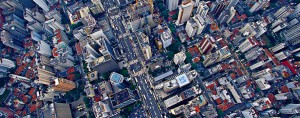
As the world’s most costly office building, One World Trade Centre is one of the most ambitious real estate projects in development today. Rita Lobo finds out how, plagued by delays and disputes, the multi-billion dollar complex is slowly emerging to transform Manhattan’s skyline

One World Trade Centre: phoenix rising from the ashes

As the world’s most costly office building, One World Trade Centre is one of the most ambitious real estate projects in development today. Rita Lobo finds out how, plagued by delays and disputes, the multi-billion dollar complex is slowly emerging to transform Manhattan’s skyline

One WTC’s key players Larry Silverstein A top New York City real estate investor, Brooklyn-born Silverstein won the lease for the World Trade Centre with a $3.2bn bid. Weeks later, the terrorist attacks of 9/11 razed the building to the ground. A...

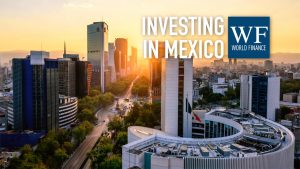
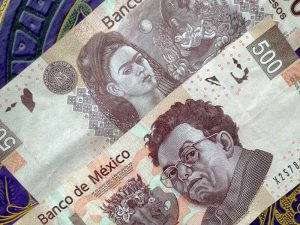
Banobras, as trustee of the government-owned infrastructue fund ‘Fonadin’, has invested billions in improving Mexico’s infrastructure. As the new government settles in, support for new development projects in the sector looks set to continue

Private investment in Mexico

Banobras, as trustee of the government-owned infrastructue fund ‘Fonadin’, has invested billions in improving Mexico’s infrastructure. As the new government settles in, support for new development projects in the sector looks set to continue

Mexico has a commitment to infrastructure investment. It recognises infrastructure as one of the main drivers for economic growth. To make the development of infrastructure possible, the government has several mechanisms in place to channel financial reso...

Building for a sustainable future

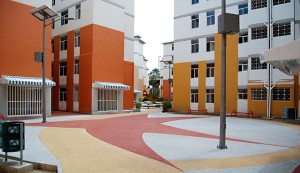
Investment in Bermuda’s healthcare has not always been at the forefront of government priorities. Currently under construction, the island is now financially able to broaden its primary infrastructure

Bermuda is an idyllic, 21 square mile island located on the Atlantic Ocean, 700 miles east of the US, with a population of about 65,000. Famous for its pink sandy beaches and turquoise waters, Bermuda has more golf courses per square mile than any otFibro...

A public-private partnership can be beneficial to all parties, provided there is a mutual understanding and commitment to the community being served

Public-private alliances support US communities

A public-private partnership can be beneficial to all parties, provided there is a mutual understanding and commitment to the community being served

With local governments struggling to fund infrastructure projects and meet increasingly difficult regulatory challenges, different solution mechanisms are being sought. One such method is public-private partnerships (PPP), which bring private investment a...

British Virgin Islands inspire confidence

The International Finance Centre for the British Virgin Islands has steadfastly overseen the country’s emergence from the financial crisis

The British Virgin Islands (BVI) has a longstanding reputation as a reliable and efficient offshore financial centre, but the territory is still investing in finding ways to evolve as a global leader in the financial management sector. With a populatio...

A new wave of Brazilian infrastructure investment

Revised regulations, and a focus on privatisation, has helped Brazil keep its national and local economies booming

In recent years, Brazil has experienced a new wave of privatisations. The need for significant investments in infrastructure comes as an inevitable requisite for the economic and social development of the country, and forthcoming international events such...

The Brazilian state of Minas Gerais is known locally for the easy-going and tranquil disposition of its inhabitants, but behind this peaceful nature is an entrepreneurial spirit unrivalled in any other part of the country

New partnerships energise Minas Gerais

The Brazilian state of Minas Gerais is known locally for the easy-going and tranquil disposition of its inhabitants, but behind this peaceful nature is an entrepreneurial spirit unrivalled in any other part of the country

Minas Gerais is a state of rolling hills and baroque citadels. Translated literally from Portuguese, the name means ‘general mines’, because of the abundance of gold and precious stones found buried under its hills, which have been steadily excavated ...

Mexican innovation for higher education

With unemployment rates steadily falling in Mexico since 2009, further education institutions are looking to prepare students for an adaptable future

The Universidad Politécnica de San Luis Potosí (UPSLP) was founded in 2001, and built to establish the growing demand for higher education in Mexico. By focusing on the current economic climate, the university has developed core subjects to develop busi...

China and Europe to continue Latin American investments

Many of the countries sprinkled across south America are enjoying periods of growth, as natural resources and higher standards of education than before present the region as a fantastic place to invest

Chinese investment in Latin America has increased dramatically over the last decade. An article in Latin Finance points out that bilateral investment between the two areas has grown by 1,400 percent, which equals about $140bn. The Chinese investment co...

Latin America creates rival to Silicon Valley

Silicon Valley should watch its back. Latin American countries are creating well-funded, technologically adept competition who are seeking success instantly

Chinese takeaways, famously beloved of Silicon Valley computer wizards, may soon need to add nachos and burritos to the menu. Latin America’s high-tech industries are starting to come of age, and seriously talented, digitally educated Latin Americans ar...

Booming Brazil overtakes Britain

The Latin American powerhouse’s recent growth has continued ahead of the curve, pointing to a prosperous future

Following the recent release of the county's 2011 growth figures, Brazilian finance minister Guido Mantega has proclaimed that Brazil has become the world’s sixth largest economy according to GDP, relegating Britain to seventh in the global economic ran...

Funds attracted by BVI’s robust regulation

The British Virgin Islands has established itself as a viable financial hub, and the International Finance Centre has played its part in promoting the incentives

As a financial centre of major importance to the global financial system, the British Virgin Islands (BVI) have always set the highest standards of transparency, regulation, collaboration, enforcement and cooperation. As an International Finance Centre (I...

US states buck trend; hint of recovery

Small US states – such as Wyoming – have reinvented themselves as, and look set to establish a growth trend

When most people think of Wyoming, they think of beef, making it clear why Wyoming is known as the Cowboy State; its official sport is rodeo. Historically, the state has long depended on cattle, sheep, pig and chicken livestock farming for its livelihood....

Brazil's economy has grown and receded in recent years. Adjustments in economic and social policies are now needed to make the country more competitive and increase its growth potential, writes Inês Filipa

Brazil: country of the future, or has its time come?

Brazil’s economy has grown and receded in recent years. Adjustments in economic and social policies are now needed to make the country more competitive and increase its growth potential, writes Inês Filipa

Brazil has always been considered the country of the future. With a large, low-income consumer market, and a wide variety of industrial and natural resources, Brazil’s promise lies in the ability of its government to control inflation and strengthen the...

<< Older posts

Delve into the archive...

Explore the 2012 list here >>

Highest corporate tax
rates in Europe

European countries are scrambling to raise every last penny of funds through taxes. But some countries may have gone too far...

Belgium

Though all business taxes in Belgium can be paid online with little effort and preparation, the rates are still sky-high at 57.7 percent, including a staggering 50.8 percent total rate on profits only in social security contributions.

Belarus

In Belarus, a company spends up to 338 hours annually preparing for and paying ten different taxes and duties. The total tax rate has incredibly been lowered to 60.7 percent, from 117.5 percent in 2008.

France

A company in France pays seven different taxes and duties, the sum of which can amount to 65.7 percent of profits; though President François Hollande has announced a wave of business tax rate cuts coming up.

Estonia

A business in Estonia pays 67.3 percent of profits in tax, 37.2 percent exclusively in social security contributions. The country has gone against the grain in Europe by raising businesses taxes from 48.6 percent in 2008 to the current rates.

Italy

While corporate income tax (IRES) in Italy is limited to 38 percent of taxable profit, a company operating in Italy can expect to pay 14 other taxes and duties, including social security contributions, bringing their total payable tax to 68.7 percent of profits, according to the World Bank.

Norway

Norway taxes motor fuels twice, with a road use tax and a CO2 emissions tax. Combined with strikes in the energy sector that have curbed output, the price of gas at a local pump has soared to $10.12 per gallon.

Turkey

Though Turkey sits on the Suez Canal and neighbours many oil rich countries, the price of a gallon of average gas clocks in at $9.41 in Turkish pumps, because of a 60 percent share of taxes. 

Israel

Like Turkey, Israel is surrounded by oil-rich neighbours, but drills very little itself. Gas prices are controlled by the government, so about half of the $9.28 per gallon goes to taxes.

Hong Kong

There are few gas stations in Hong Kong, but the ones available charge up to 76 percent more per gallon than mainland China, where the government caps the cost of fuel. A gallon at the pumps will cost around $8.61 on the island.

Netherlands

Expensive labour costs make the Dutch petrol prices the dearest in Europe, at $8.26 per gallon; though the 57 percent tax add-ons don’t help.

The credit crisis

8 February 2007
HSBC warns of subprime mortgage losses

2 April 2007
New Century goes bus

14 September 2007
Wholesale markets have dried up

17 March 2008
Rescue of Bear Stearns

7 September 2008
Rescue of Fannie Mae

15 September 2008
Lehman Brothers file for bankruptcy

3 October 2008
US congress approves $700bn bailout

14 February 2009
$787bn stimulus approved by congress


The effects of the current financial crisis are global and irrefutable. With the collapse of Lehman Brothers, the domino effect of irresponsible public monetary policies, huge levels of unsustainable debt, and a deregulated financial sector, has escalated to the point where no corner of the globe has been left untouched.

1973 oil crisis

October 1973
Syria and Egypt launch an attack on Israel on Yom Kippur and set off a twenty day war;

1977
US President Carter creates Department of Energy, which develops the US strategic petroleum reserve


The Organisation of Petroleum Exporting Countries (OPEC) used their oil reserves as a weapon with the Arab Oil Embargo against those who supported Israel. By January 1974, world oil prices were four times higher than they were at the start of the crisis, especially in the US, and the shock led to a huge drop in the stock market with NYSE losing $97bn in just six weeks.  The embargo lasted five months, and the effects are still seen today.

German hyperinflation

1922-1923

Hyperinflation
1923 – 1924
Stabilisation


The trouble began when Germany missed a repatriation payment, worth about one third of the German deficit in this period. Inflation was already high but by 1923 it was raging. Prices doubled within hours, and by late 1923, it cost 200bn marks to buy a single loaf of bread. People burned money as it was cheaper than buying firewood. Germany eventually regained control of its economy when it introduced the Rentenmark into circulation in 1923, and then the Reichmark in 1924.

The Great Depression

1929-1933
The Great Crash
1934-1939
Recovery and Recession


After the decadence of the Roaring Twenties, the 1930s saw the biggest economic slump of all time. The stock market crashed on 29 October 1929, and optimism and decadent living tumbled along with the figures. The GDP fell from $103.6bn in 1929, to $66bn in 1934 and the subsequent years of recovery were the most dramatic in US history.

1907 bankers’ panic

1907
Otto Heinze and his brother Augustus Heinze bought shares of United Copper.


The stock market was already cautious over the tight money supply, but the US was thrown into a depression after the stock market fell nearly 50 percent from its peak in 1906. The Heinze brothers thought they could influence market shares but ended up bankrupting lenders that provided the financing to buy the stock. A chain reaction left nine institutions bankrupt. By February 1908, the panic was over and the government created the Federal Reserve system, to prevent banks from exercising too much control over the economy.