


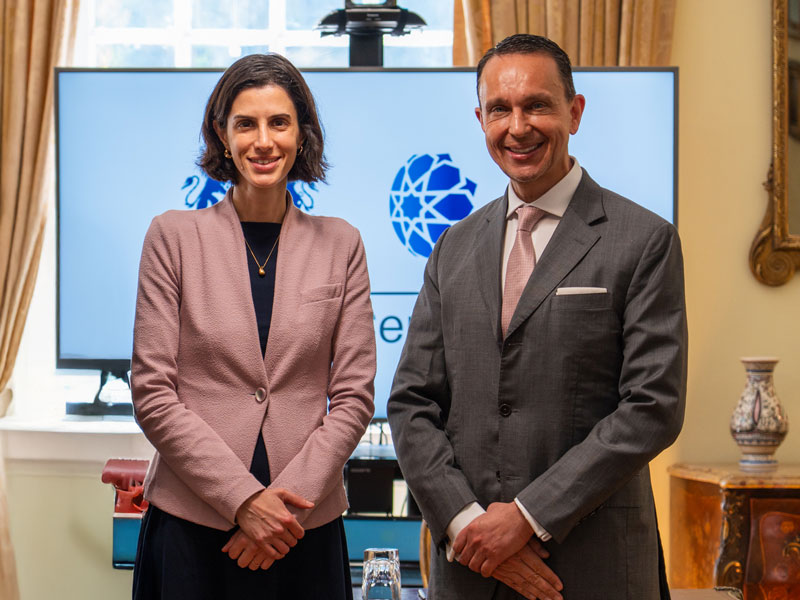
You have led iib through a significant global expansion. How do you define the institution’s core identity in today’s banking landscape?
iib isn’t just another commercial bank – we see ourselves as an intermediator between financial flows from developed markets to developing markets and frontier markets. We saw higher regulation and operating costs for western financial institutions post 9/11 and this accelerated post the Global Financial Crisis (GFC). We observed a mass exodus of western institutions facilitating banking in the emerging markets space. We look to fill that gap.
Our mission is to unlock the potential of regions often overlooked by mainstream banking. We believe in a value-led financial infrastructure: one that drives responsible growth, fosters inclusion and respects local dynamics. We are not just intermediating capital flows; we are reallocating confidence to the economies that would otherwise remain underserved.
You have expanded into regions like Cape Verde and are reportedly exploring further opportunities in Africa and the Caribbean. What is the logic behind that strategy?
The strategy is not Cape Verde, Djibouti, Bahrain, Dubai, or the Bahamas per se. What these specific geographies allow us is to build regional franchises. Economic and political stability, rule of law, and forcibility of contract and stable financial currencies allow us to rebuild a regulated banking footprint on a regional basis. Cape Verde allows us to build a regional banking franchise in Lusophone Africa, Djibouti allows us in turn to build a franchise to facilitate Ethiopian and regional trade and transaction flows, Bahrain and Dubai allow us to support clients regionally in the GCC and South Asia. The smaller markets where we have invested regulated capital allow us to build and leverage larger regional markets.
We are reallocating confidence to the economies that would otherwise remain underserved
We enter markets with patience, not as extractive institutions. We seek to build deep, permanent relationships. That is why we localise leadership, invest in financial education, and support ESG initiatives on the ground. For us, success isn’t just about financial return – it is about social and systemic return.
With rising digitisation in banking, how does iib position itself in terms of innovation and fintech integration?
Digital transformation is core to our strategy. For us as a bank that intermediates capital flows, transactionality and functionality are critical to our business model. Digitisation helps us achieve this better at a lower cost, enabling us to solve real problems. We prioritise digitisation in ways that lower transaction costs, increase access to capital, and improve transparency.
In many of our markets, traditional banks impose friction: high fees, rigid processes and limited reach. Our digital products, whether through mobile platforms or cross-border settlement tools, are designed to democratise finance. But we never automate empathy. We blend technology with human insight.
What is your perspective on the geopolitical role of banks today? Can banks remain neutral?
Banks are no longer neutral vessels. We live in a world where capital flows are political, data is currency, and trust is a geopolitical asset. Our role is to ensure that financial infrastructure remains resilient and independent of noise, yet conscious of context. At iib, we operate with the understanding that neutrality is not silence. We take principled positions: we stand for financial dignity, transparency, and long-term vision and growth. These are not political stances, they are human ones.
Some may see small international banks as too niche or fragmented to compete. What makes iib different?
Scale matters, as does clarity of vision. We may not be the largest bank in terms of balance sheet; however, our international reach allows us to do what we do in intermediating capital flows whether in commercial banking, transactional banking or trade finance, better than our peer group. Our structure allows us to be agile without compromising governance. We are backed by serious leadership, a prudent risk culture, and a long-term strategy that does not change with market winds.
Where others see complexity and risk in emerging markets, we have the ability to navigate the local operating environment, build banking infrastructure and systems and provide services and solutions at a cost at which others may struggle.
What is next for iib in the coming decade?
Our next chapter is about resilience and responsibility. We are investing in green financing, sustainable trade corridors, and building a decentralised ecosystem that empowers local institutions.
We are also exploring how AI and digital identity can reshape credit models for the underserved. But the compass remains the same: inclusion, transparency, and trust. Our ambition is to further enhance our position as a respected cross-regional bank operating with a relentless focus on customer relationships, financial inclusion and tailored solutions to shape the communities we serve.

