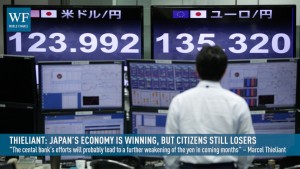
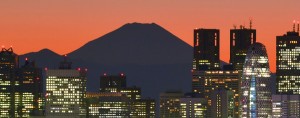
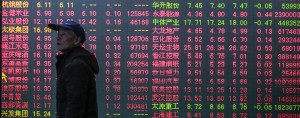
Japan’s economy experienced more growth in the first quarter of 2013 than originally anticipated, according to a report by the Cabinet Office
The fresh data indicated the Japanese economy grew by 4.1 percent in the first three months of the year – well ahead of its 3.5 percent preliminary forecast. The country’s real GDP also grew by one percent, and the IMF is now predicting Japan’s econ...
Supreme Court lifts ban on mining for iron, but bauxite is still a no-go
Mining for bauxite remains banned in Orissa, eastern India, in hills considered sacred by the local population. But the Indian Supreme Court has lifted the ban on mining for iron ore in the region after a public consultation on whether the mining was impa...
The Indian economy has faltered in recent years, as international investors remain sceptical of the country’s potential. Can a series of reforms jump-start growth and entice much-needed capital into the country?
Generally considered second only to China as the economy to watch going into the 21st century, India has long offered huge potential but little tangible evidence of becoming an economic powerhouse. Since government policies during the 1990s liberalised th...
The international community should focus on balance and sustainability. That’s the message we can expect from the World Expo 2020, if it is staged in Ayutthaya
Ayutthaya, the chosen site for Thailand’s bid for World Expo 2020, is a city of balance. For over 400 years, Ayutthaya, the capital city of Thailand at the time, was a thriving commercial port and a diplomatic crossroad, where Thailand first welcomed vi...
With rapid growth in India over the last decade, building the infrastructure is seen as vital in order to cement the country’s place as a …
With rapid growth in India over the last decade, building the infrastructure is seen as vital in order to cement the country’s place as a thriving destination for global business. Although much of India’s financial business is done in Mumbai, Delhi an...
Malaysia is fast becoming a gateway for investors in southeast Asia thanks to its strategic geographic location and sound financial institutions, propelling fund management houses like the Funds Management Division, a member of the AmBank Group, into the spotlight
Nestled inbetween the Gulf of Thailand and the South China Sea, Malaysia is surrounded by the fast-growing economies of Indonesia and Thailand, and within easy reach of China and India. It is a hugely diverse country with a young and thriving population. ...
India’s Prime Minister outlines the country’s growth plans – could Coca Cola help mitigate the effects of a poor monsoon?
Dramatic intervention has been proposed after India experienced first quarter growth of 5.3 percent, its slowest pace in nine years. The twelfth five-year plan aims to increase growth to 8.5 - 9 percent. Prime Minister Manmohan Singh's speech on Indiaâ...
As Myanmar makes plans for a new stock exchange, the intent is seen as a welcome change to a country that oppressively kept its economy within its own borders. Katie Richardson explores the potential outcomes of its move onto the international landscape
It was one of the most secretive countries on earth, gripped for decades by the iron fist of military rule for almost 50 years. Now, since the historic by-elections on April 1, 2012 were won almost entirely by Aung San Suu Kyi’s opposition National Leag...
Situated between Europe and Asia, Turkey is in the perfect position to be the partner of choice for both regions
Turkey has recently been at the forefront of international economic and political debates. On the one hand, Turkey remains the world’s second-fastest growing economy, after China. On the other hand, there is almost no issue on the global agenda on which...
With more than a few common enemies, it seems China and Pakistan have formed a strong economic bond, allowing both nations to flourish
Pakistan has long been closely aligned with China. The Islamic Republic was one of the first nations to recognise the People's Republic. They also share geopolitical interests, principally a suspicion of India, whom they have both gone to war with: Pakist...
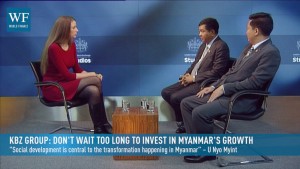
Foreign investors currently require a local partner to delve into Myanmar’s potentially lucrative market, but that may be about to change
The revised investment regulations have been long awaited by the international community. It comes after the country’s decision to float the kyat next month, one of the bravest economic changes in this resource-rich country after emerging from years of ...
Australia’s new prime minister Julia Gillard has set out to attract international investment and stimulating growth at home, whilst cleaning up the country’s energy output
Australia’s Reserve Bank has the highest benchmark interest rate among major developed nations, though small reductions have been periodically enacted. Paul Bloxham, chief economist for HSBC, in Sydney, predicts that will accelerate if the central bank ...
The worldwide economic recession of 2008 largely spared Australia, thanks to the country’s commodities, and government intervention. Since that time, Australia’s economy has continued to …
The worldwide economic recession of 2008 largely spared Australia, thanks to the country’s commodities, and government intervention. Since that time, Australia’s economy has continued to grow steadily. However, some industry analysts are concerned tha...
Growth in real income has not been matched by genuine advances in living standards. This must change
Will 2012 prove to be a year of renewal for India, or another annus horribilis? No country progresses unerringly, but India cannot afford another politically and economically torpid year like 2011. For India, last year is a year best forgotten. India h...
Indonesia’s economy is developing, says Martin Morris, but that doesn’t mean the old issues of corruption and poor infrastructure have been solved yet
While Europe’s very own Greek tragedy (or Franco-German banking crisis, as some would argue) has continued to play out over the last few months, the Indonesian economy, like others in the Far East, has so far escaped relatively unscathed. Economic gr...
European countries are scrambling to raise every last penny of funds through taxes. But some countries may have gone too far...
Though all business taxes in Belgium can be paid online with little effort and preparation, the rates are still sky-high at 57.7 percent, including a staggering 50.8 percent total rate on profits only in social security contributions.
In Belarus, a company spends up to 338 hours annually preparing for and paying ten different taxes and duties. The total tax rate has incredibly been lowered to 60.7 percent, from 117.5 percent in 2008.
A company in France pays seven different taxes and duties, the sum of which can amount to 65.7 percent of profits; though President François Hollande has announced a wave of business tax rate cuts coming up.
A business in Estonia pays 67.3 percent of profits in tax, 37.2 percent exclusively in social security contributions. The country has gone against the grain in Europe by raising businesses taxes from 48.6 percent in 2008 to the current rates.
While corporate income tax (IRES) in Italy is limited to 38 percent of taxable profit, a company operating in Italy can expect to pay 14 other taxes and duties, including social security contributions, bringing their total payable tax to 68.7 percent of profits, according to the World Bank.
Norway taxes motor fuels twice, with a road use tax and a CO2 emissions tax. Combined with strikes in the energy sector that have curbed output, the price of gas at a local pump has soared to $10.12 per gallon.
Though Turkey sits on the Suez Canal and neighbours many oil rich countries, the price of a gallon of average gas clocks in at $9.41 in Turkish pumps, because of a 60 percent share of taxes.Â
Like Turkey, Israel is surrounded by oil-rich neighbours, but drills very little itself. Gas prices are controlled by the government, so about half of the $9.28 per gallon goes to taxes.
There are few gas stations in Hong Kong, but the ones available charge up to 76 percent more per gallon than mainland China, where the government caps the cost of fuel. A gallon at the pumps will cost around $8.61 on the island.
Expensive labour costs make the Dutch petrol prices the dearest in Europe, at $8.26 per gallon; though the 57 percent tax add-ons don’t help.
8 February 2007
HSBC warns of subprime mortgage losses
2 April 2007
New Century goes bus
14 September 2007
Wholesale markets have dried up
17 March 2008
Rescue of Bear Stearns
7 September 2008
Rescue of Fannie Mae
15 September 2008
Lehman Brothers file for bankruptcy
3 October 2008
US congress approves $700bn bailout
14 February 2009
$787bn stimulus approved by congress
The effects of the current financial crisis are global and irrefutable. With the collapse of Lehman Brothers, the domino effect of irresponsible public monetary policies, huge levels of unsustainable debt, and a deregulated financial sector, has escalated to the point where no corner of the globe has been left untouched.
October 1973
Syria and Egypt launch an attack on Israel on Yom Kippur and set off a twenty day war;
1977
US President Carter creates Department of Energy, which develops the US strategic petroleum reserve
The Organisation of Petroleum Exporting Countries (OPEC) used their oil reserves as a weapon with the Arab Oil Embargo against those who supported Israel. By January 1974, world oil prices were four times higher than they were at the start of the crisis, especially in the US, and the shock led to a huge drop in the stock market with NYSE losing $97bn in just six weeks. The embargo lasted five months, and the effects are still seen today.
1922-1923
Hyperinflation
1923 – 1924
Stabilisation
The trouble began when Germany missed a repatriation payment, worth about one third of the German deficit in this period. Inflation was already high but by 1923 it was raging. Prices doubled within hours, and by late 1923, it cost 200bn marks to buy a single loaf of bread. People burned money as it was cheaper than buying firewood. Germany eventually regained control of its economy when it introduced the Rentenmark into circulation in 1923, and then the Reichmark in 1924.
1929-1933
The Great Crash
1934-1939
Recovery and Recession
After the decadence of the Roaring Twenties, the 1930s saw the biggest economic slump of all time. The stock market crashed on 29 October 1929, and optimism and decadent living tumbled along with the figures. The GDP fell from $103.6bn in 1929, to $66bn in 1934 and the subsequent years of recovery were the most dramatic in US history.
1907
Otto Heinze and his brother Augustus Heinze bought shares of United Copper.
The stock market was already cautious over the tight money supply, but the US was thrown into a depression after the stock market fell nearly 50 percent from its peak in 1906. The Heinze brothers thought they could influence market shares but ended up bankrupting lenders that provided the financing to buy the stock. A chain reaction left nine institutions bankrupt. By February 1908, the panic was over and the government created the Federal Reserve system, to prevent banks from exercising too much control over the economy.