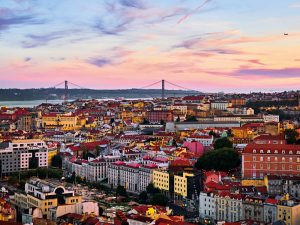
Debilitated financial sector and a severe lack of prospects has led Moody’s to strip Slovenia’s credit rating
Moody’s Investors Service has, as of April 30, lowered Slovenia’s credit rating to junk, pertaining to a determined slump in the nation’s financial sector. The nation’s government herein being forced into delaying the sale of its first foreign bon...
EBRD’s work helping to develop public-private partnerships is bringing crucial change to countries throughout Europe, ensuring stability and minimisation of risk
As an institution set up to support the transition towards a market economy in the countries of Central and Eastern Europe, and now in the Southern and Eastern Mediterranean region, EBRD (European Bank for Reconstruction and Development) has been actively...
The European Bank for Reconstruction and Development is working to harness growth in the world’s largest country
The Western High-Speed Diameter – Central Section (WHSD) is EBRD’s first road public-private partnership (PPP) project in Russia. It demonstrates how a large transport PPP can achieve compliance with the best intern cialis ational environmental stan...
Cyprus’ first major public-private partnership deal is focused on developing the country’s airports – a significant source of income for a popular island destination
The project for which Cyprus’s Ministry of Communications and Works won World Finance’s award for Best Transport Project in Europe, 2013, was originally signed on May 12, 2006, and is a 25-year build-operate-transfer (BOT) concession for the operatioc...
Russia’s growing economy has not always been matched by the state of its infrastructure. With new regulation and initiatives, including a host of new public-private partnerships, that is beginning to change
Across the globe, national governments are facing the challenge of deteriorating infrastructure in conjunction with rising state budget deficits. This issue encourages them to seek assistance in the form of direct financial investment and expertise from t...
With a 3.5 million TEU container handling capacity and business volume of over €149m, award-winning logistics operator Duisport has placed itself firmly on the map
An estimated 146 million shipping containers were transported globally in 2011, and merchant ships contribute more than $380bn in freight rates annually to the world economy. With so much at stake, and as the world’s largest inland port, Duisport natura...
Izmir, candidate city for EXPO 2020, has a rich history of providing forward-thinking luminaries in healthcare. Keeping with that theme, Izmir’s message for 2020 is better health for all
EXPO 2020 Izmir will be a major step forward in solving the health challenges the world faces today. EXPO 2020 Izmir aims to increase awareness of health among individuals and signpost healthy living habits in different countries. It will demonstrate best...
The ECB’s decision to cut interest rates in July meant that private-sector credit grew for the first time in three months. Yet the companies attracting investment invariably have some strategic edge over their competitors. Who in Europe is still winning?
Although the €8bn increase in loans extended to non-financial firms is a move in the right direction, it still only represents a 0.1 percent increase on the year. Analysts are speculating that the ECB may cut interest rates again in September to prevent...
The Turkish asset management sector is still young and relatively untapped, but is growing thanks to increased demand and first-rate service providers
There is huge potential for growth in Turkey’s asset management sector, but up until recently, due to a period of high inflation and high real interest rates, the growth was weak. But as real and nominal interest rates decline because of increasing stab...
Cyprus’ position as a viable maritime centre is solid. But what sets it apart from other established maritime hubs and how do these aspects benefit shipping companies?
Cyprus has joined the EU with a strong fleet, a well-founded and efficient maritime infrastructure and a flag that is included in the white list of the Paris Memorandum of Understanding. Such undertakings demonstrate the government’s commitment to safet...
As the nation watches on while the eurozone falls apart, Cypriot finance ministers might find themselves in hot water before long
Cyprus is set to experience a shrinking economy in 2012 as a result of the Greek recession and debt crisis. Low levels of consumer confidence and a seemingly unstoppable economic recession support European Commission forecasts of negative economic growth ...
EU aims to develop scheme encouraging “better opportunities for older workers” with tax incentives for those involved
This year, the EU is observing the European Year for Active Ageing and Solidarity between Generations. In recognition of this, the organisation recently released a White Paper detailing the proposed measures the EU intends to take to protect and maintain ...
Danish powerhouse outlines intent to compete by announcing plans to develop new European ports and further connect Europe with a range of Asian outlets
Danish shipping giant Maersk has increased its visibility in Europe with the recent announcement to open three new ports. Now that competitors CMA CGM and Mediterranean Shipping have announced a new partnership, Maersk is countering by increasing its “c...
Since the initial proposal of the Financial Transaction Tax (FTT) it has faced stiff opposition from several corners of the EU
In order for the FTT proposal to be approved, all 27-member nations in the European Commission would have to agree to adopt the tax. This unanimity appears to be a long way off, though, since several countries have been vocal about their opposition to the...
In 2011 Georgia was ranked 12th among 175 countries in the World Bank’s “Ease of Doing Business” report
Georgia, a small country in the Caucasus region, is situated at the strategically important crossroads where Europe meets Asia. Following the collapse of communism in the USSR in 1991, Georgians voted overwhelmingly for the restoration of independence and...
European countries are scrambling to raise every last penny of funds through taxes. But some countries may have gone too far...
Though all business taxes in Belgium can be paid online with little effort and preparation, the rates are still sky-high at 57.7 percent, including a staggering 50.8 percent total rate on profits only in social security contributions.
In Belarus, a company spends up to 338 hours annually preparing for and paying ten different taxes and duties. The total tax rate has incredibly been lowered to 60.7 percent, from 117.5 percent in 2008.
A company in France pays seven different taxes and duties, the sum of which can amount to 65.7 percent of profits; though President François Hollande has announced a wave of business tax rate cuts coming up.
A business in Estonia pays 67.3 percent of profits in tax, 37.2 percent exclusively in social security contributions. The country has gone against the grain in Europe by raising businesses taxes from 48.6 percent in 2008 to the current rates.
While corporate income tax (IRES) in Italy is limited to 38 percent of taxable profit, a company operating in Italy can expect to pay 14 other taxes and duties, including social security contributions, bringing their total payable tax to 68.7 percent of profits, according to the World Bank.
Norway taxes motor fuels twice, with a road use tax and a CO2 emissions tax. Combined with strikes in the energy sector that have curbed output, the price of gas at a local pump has soared to $10.12 per gallon.
Though Turkey sits on the Suez Canal and neighbours many oil rich countries, the price of a gallon of average gas clocks in at $9.41 in Turkish pumps, because of a 60 percent share of taxes.
Like Turkey, Israel is surrounded by oil-rich neighbours, but drills very little itself. Gas prices are controlled by the government, so about half of the $9.28 per gallon goes to taxes.
There are few gas stations in Hong Kong, but the ones available charge up to 76 percent more per gallon than mainland China, where the government caps the cost of fuel. A gallon at the pumps will cost around $8.61 on the island.
Expensive labour costs make the Dutch petrol prices the dearest in Europe, at $8.26 per gallon; though the 57 percent tax add-ons don’t help.
8 February 2007
HSBC warns of subprime mortgage losses
2 April 2007
New Century goes bus
14 September 2007
Wholesale markets have dried up
17 March 2008
Rescue of Bear Stearns
7 September 2008
Rescue of Fannie Mae
15 September 2008
Lehman Brothers file for bankruptcy
3 October 2008
US congress approves $700bn bailout
14 February 2009
$787bn stimulus approved by congress
The effects of the current financial crisis are global and irrefutable. With the collapse of Lehman Brothers, the domino effect of irresponsible public monetary policies, huge levels of unsustainable debt, and a deregulated financial sector, has escalated to the point where no corner of the globe has been left untouched.
October 1973
Syria and Egypt launch an attack on Israel on Yom Kippur and set off a twenty day war;
1977
US President Carter creates Department of Energy, which develops the US strategic petroleum reserve
The Organisation of Petroleum Exporting Countries (OPEC) used their oil reserves as a weapon with the Arab Oil Embargo against those who supported Israel. By January 1974, world oil prices were four times higher than they were at the start of the crisis, especially in the US, and the shock led to a huge drop in the stock market with NYSE losing $97bn in just six weeks. The embargo lasted five months, and the effects are still seen today.
1922-1923
Hyperinflation
1923 – 1924
Stabilisation
The trouble began when Germany missed a repatriation payment, worth about one third of the German deficit in this period. Inflation was already high but by 1923 it was raging. Prices doubled within hours, and by late 1923, it cost 200bn marks to buy a single loaf of bread. People burned money as it was cheaper than buying firewood. Germany eventually regained control of its economy when it introduced the Rentenmark into circulation in 1923, and then the Reichmark in 1924.
1929-1933
The Great Crash
1934-1939
Recovery and Recession
After the decadence of the Roaring Twenties, the 1930s saw the biggest economic slump of all time. The stock market crashed on 29 October 1929, and optimism and decadent living tumbled along with the figures. The GDP fell from $103.6bn in 1929, to $66bn in 1934 and the subsequent years of recovery were the most dramatic in US history.
1907
Otto Heinze and his brother Augustus Heinze bought shares of United Copper.
The stock market was already cautious over the tight money supply, but the US was thrown into a depression after the stock market fell nearly 50 percent from its peak in 1906. The Heinze brothers thought they could influence market shares but ended up bankrupting lenders that provided the financing to buy the stock. A chain reaction left nine institutions bankrupt. By February 1908, the panic was over and the government created the Federal Reserve system, to prevent banks from exercising too much control over the economy.