


Top 5
Every 10 seconds, human activity emits over 4,000 metric tonnes of greenhouse gases (GHGs) into the atmosphere. While carbon dioxide (CO₂) remains the most abundant of these gases, methane (CH₄) is far more dangerous in the short term. Despite accounting for only about 20 percent of total GHG emissions, methane is over 80 times more potent than CO₂ over 20 years when it comes to trapping heat in the atmosphere.
Methane’s short atmospheric lifetime – approximately 12 years compared to CO₂’s centuries – means that cutting methane now can deliver significant near-term climate benefits. According to the Intergovernmental Panel on Climate Change (IPCC), methane mitigation is one of the most powerful levers we have to slow global warming over the next two decades. Among methane sources, agriculture is one of the most significant contributors globally, and within agriculture, livestock – especially ruminants like cattle – are primarily responsible. Methane is emitted mainly from the digestive processes of ruminants, a phenomenon known as enteric fermentation. In cattle, this methane is released mostly through belching and accounts for a significant proportion of agricultural emissions.
Our mission is not only to reduce emissions but to empower farmers as key contributors to climate solutions
As the global population continues to rise and demand for meat and dairy products increases, this problem is expected to intensify. The world’s cattle population currently stands at around 1.5 billion and is expected to grow significantly by 2050, especially in developing regions with rising incomes and food consumption. Without effective mitigation, livestock methane could jeopardise global climate goals, including those set by the Paris Agreement.
While various technologies have been proposed to reduce methane emissions from livestock, demonstrating both a measurable impact and scalability in real-world conditions remains a challenge. The need for a solution that is effective, scalable, economically viable, environmentally friendly and scientifically sound has never been more urgent. This is the problem our solution was built to solve.
A game-changing innovation: ANAVRIN
We have developed ANAVRIN, a blend of essential oils, tannins and bioflavonoids carefully selected to support and improve ruminal functions while counteracting methane production. Essential oils play a crucial role in the growth kinetics of certain bacteria. Tannins have positive effects on protein metabolism and possess anti-inflammatory properties, while bioflavonoids act as powerful antioxidants.
By maintaining a stable ruminal environment, enhancing the functionality of beneficial bacteria while controlling the growth of methanogenic ones, ANAVRIN helps improve ruminants’ zootechnical performance and simultaneously reduces methane emissions. ANAVRIN not only cuts emissions but also enhances animal productivity, creating a powerful incentive for adoption and enabling rapid, global-scale impact. This unique combination of climate benefits and productivity improvements sets ANAVRIN apart, aligning environmental goals with agricultural sustainability.*
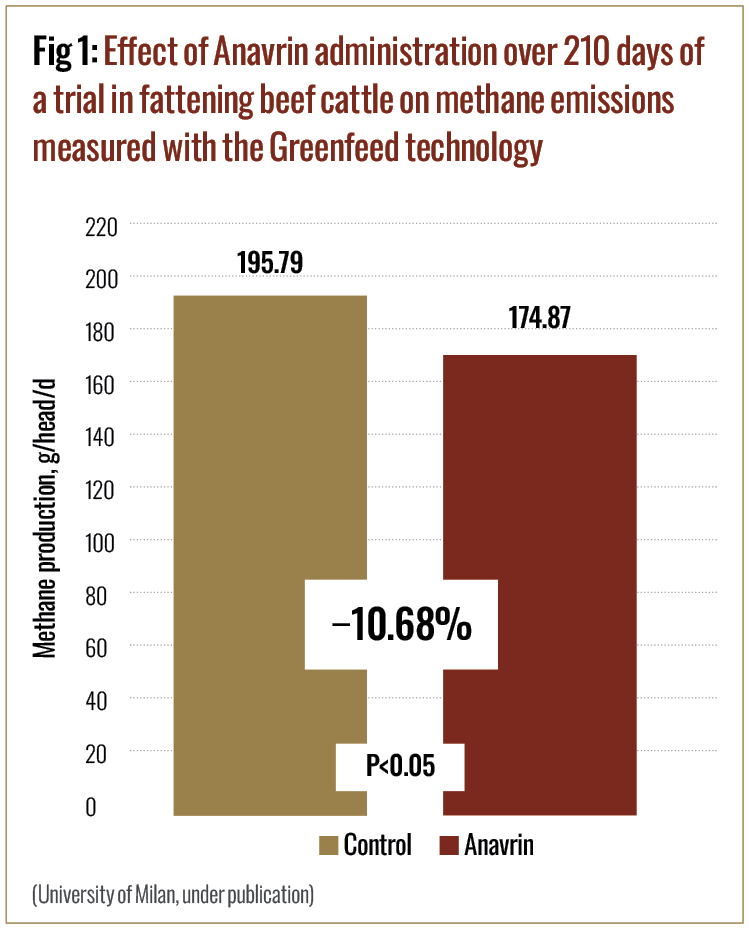
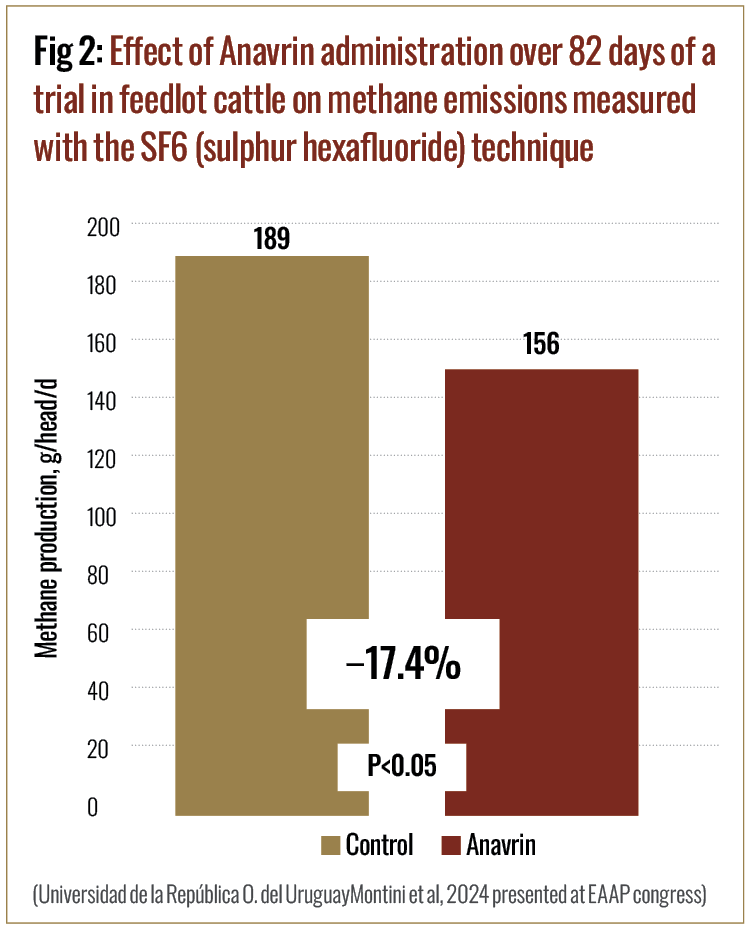
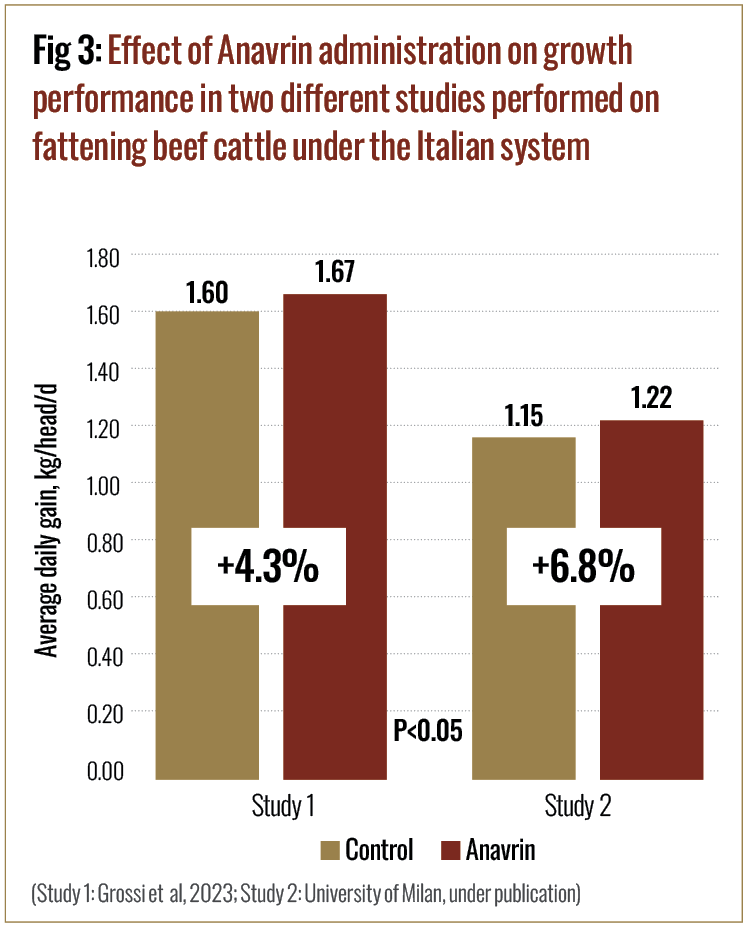
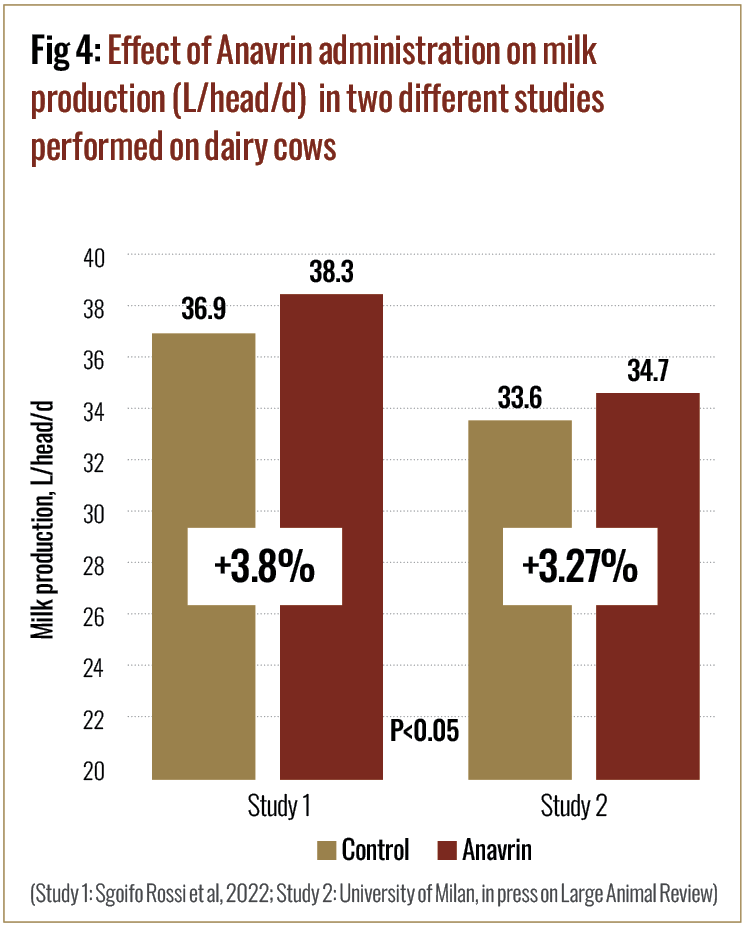
Our technology is grounded in rigorous scientific validation. Over the past several years, we have partnered with leading research institutions and universities to conduct a series of in vivo and in vitro studies across diverse regions and cattle breeds. The findings, published in peer-reviewed scientific journals, consistently confirm that ANAVRIN reduces methane emissions from enteric fermentation by an average of 10–16 percent in terms of methane production grams per head per day (g/head/d). It also improves milk production in dairy cattle and weight gain in beef cattle, with milk yields increasing by 3.2–3.8 percent in energy- and protein-corrected milk, and average daily weight gain rising by 5.5–6 percent (kg/head/day). Furthermore, it improves feed conversion ratio efficiency in both beef and dairy cattle by 6–8 percent, meaning animals require less feed to achieve the same or better growth or milk output. Importantly, studies show no adverse effects on animal welfare or product quality, with some reporting improvements. These results have been consistently replicated in various climates, production systems, and animal types, demonstrating that ANAVRIN is ready for global deployment.
Comprehensive decarbonisation project
Recognising the broader potential of our technology, we initiated a comprehensive decarbonisation project in 2020, beginning in Uruguay, a country renowned for its progressive approach to sustainable agriculture. In collaboration with Verra, the world’s leading standard for carbon credit certification, we launched the first carbon credit project in the livestock sector in South America, specifically targeting methane reduction.
The project’s objectives are to quantify and verify methane reductions in real farm settings using ANAVRIN, translate these emission reductions into verified carbon credits under an internationally recognised framework, and establish a standardised implementation model that includes a regulatory approval pathway, farmer training protocols, methane measurement procedures, and a carbon credit certification process.
The Uruguay project, which has already received initial approval from an independent verification body approved by Verra, has paved the way for global expansion. This model has since been implemented in Italy and Spain, with preparations underway for launches in Brazil, Costa Rica, Argentina, Chile and Australia. This growing momentum reflects the increasing interest from farmers, governments, and sustainability leaders who seek practical solutions for reducing methane emissions.
We are also working closely with two globally recognised climate and carbon advisory organisations whose expertise is guiding us toward global Verra protocol validation for our method. Climit, an experienced consulting firm with a track record in developing and implementing carbon projects worldwide, coordinates initiatives in South America. Rete Clima, a specialist in helping companies develop mitigation strategies to reduce their greenhouse gas footprint and achieve a long-term competitive advantage, serves as the focal point for the project in Europe.
Unlocking new revenue: carbon credits
One of the most innovative aspects of our project is the ability to monetise methane reductions through carbon credits. Under the Verified Carbon Standard (VCS) from Verra, emission reductions generated by farmers using ANAVRIN can be converted into tradeable carbon credits. This opens an entirely new revenue stream for livestock producers, one that is independent of market prices for meat or milk and instead tied to the global demand for emissions reductions. Farmers become part of a new class of environmental stewards, compensated for their role in helping the planet. This approach can be especially transformative for small and medium-sized farms, which often operate with narrow profit margins and face increasing pressure to adopt sustainable practices without sufficient financial support. Our mission is not only to reduce emissions but to empower farmers as key contributors to climate solutions.
The path forward involves scaling our technology and carbon credit framework across regions and livestock production systems. Over the next five years, we aim to secure global Verra protocol validation for methane reduction via ANAVRIN, expand our carbon credit projects to at least 10 more countries, collaborate with governments, cooperatives, and NGOs to encourage adoption, invest in farmer training and support services, and build robust measurement, reporting and verification (MRV) infrastructure.
We are committed to maintaining scientific integrity, transparency and inclusivity throughout this process. Farmers, researchers, policymakers, and sustainability leaders all play a crucial role, and we welcome collaboration at every level. Our work has already been recognised with the award for ‘Best Innovation in Livestock Decarbonisation,’ a testament to the technology’s potential and the measurable impact it is delivering. This recognition is more than a milestone – it is a driving force behind our continued growth, innovation and expansion into new regions and projects. We are only at the beginning and remain committed to bringing our proven solution to a global scale.
*Results may vary based on farm conditions. ANAVRIN’s regulatory status varies by jurisdiction. Carbon credits are subject to final Verra protocol validation.

