
The economic impact of de-globalisation

It was in 2014 that many were introduced to the term ‘conscious uncoupling,’ a term originally coined by sociologist Diane Vaughan, when Gwyneth Paltrow announced her separation from Coldplay frontman Chris Martin. For those emotionally invested in the love lives of celebrities, I imagine such events induce a lot of hand-wringing (and a collective shrugging of shoulders from everyone else).

In recent years, however, economic commentators the world over have made hand-wringing an internationally recognised sport. More surprising still, it is over the quarrelsome decoupling and occasional bitter divorce settlement of economies (see Brexit).

Inarguably, the two ‘A-list celebrity’ economies most talked about in recent years have been the US and China. Over the last 20 years, China has become a production powerhouse, attracting upstream players – those focused on components and raw materials – and handling their needs.

A 2021 Harvard Business Review article indicated that in 2010 China “overtook the US to become the largest value-added manufacturer in the world, accounting for 28 percent of all global production by 2018.” The article goes on to say that in order to achieve this dominant position, China had not only leveraged its size and low-skilled labour workforce, but also invested heavily in education and infrastructure to achieve its aims.

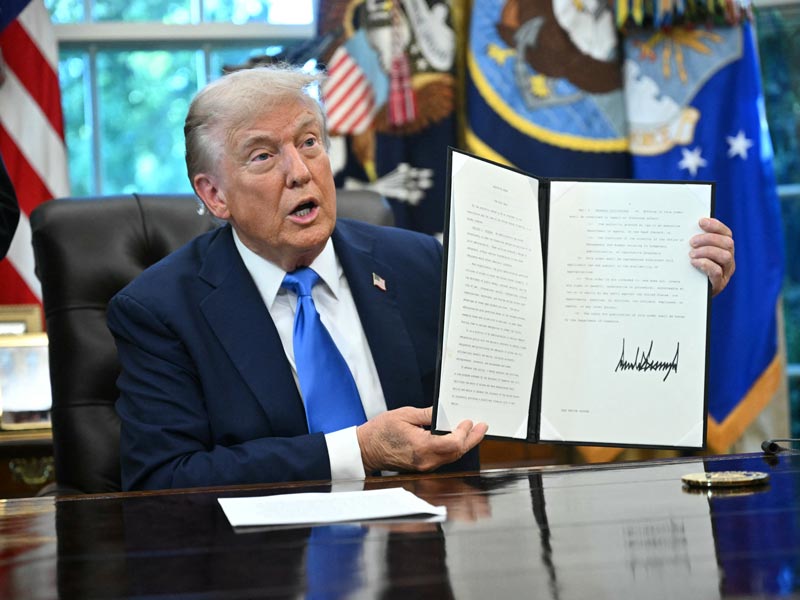
It was during 2018 that Trump began his trade war with China, with the US placing “25 percent duties on around $34bn of imports from China, including cars, hard disks and aircraft parts,” according to an article in the South China Morning Post.

China did not come close to meeting the purchasing targets of the phase one trade agreement in the first year

It set off a long retaliatory back and forth involving tariffs, duties and taxes. With over a million foreign companies operating in China, the implications of moving production anywhere else is seriously complicated – not to mention costly. Many of these companies, having invested significant time developing a fruitful relationship with China, were now weighing up the tearful possibility of packing up and moving out.

US over-reliance on Chinese labour (see Fig 1) is at least partly to blame for the scaling back of imports. From a US perspective, decoupling was about preserving or repatriating American jobs, to paraphrase the Harvard Business Review, but as the world’s largest trading partners, this has to be delicately navigated. What strikes me as remarkable is how clumsy and indelicate both sides so often appear to be.

Speaking about his opposite number in China at Davos in January 2020, mere months before the pandemic hit (another curveball for US-Sino relations), Trump said: “our relationship with China has now probably never, ever been better,” adding “He is for China, I am for the US, but other than that, we love each other.”

This seemingly rosy assessment of the relationship followed the signing of a phase one trade deal, not quite putting an end to the past two years of tariff brinkmanship, but easing some of the tension. In a Rose Garden speech four months later, the rekindled spirit of healthy relations seemed to have evaporated, with Trump stating “China’s pattern of misconduct is well known. For decades, they have ripped off the US like no one has ever done before.”

Undoubtedly the arrival of the pandemic played its part, but despite Trump’s boasts that the deal “could be closer to $300bn when it finishes,” China did not come close to meeting the purchasing targets of the phase one trade agreement in the first year. According to the Peterson Institute, they were “never on track to meet any of the additional commitments” and “ended up buying none of that extra $200bn of US exports it had promised to purchase.”

We need to talk
Reflecting on her marriage in a 2022 article for Vogue, Paltrow writes that the beginning of the end was something more unconscious than conscious, like “the inadvertent release of a helium balloon into the sky.” Not more than a couple of months after the publication of that article, a literal helium balloon was released by China, flying across Alaska and western Canada before appearing in the sky over Montana, home to some of the US’s nuclear missile silos. China maintained it was a meteorological balloon that had been blown off course, while US defense officials claimed it to be a “high-altitude surveillance device.”

If there were not already enough signs that relations between the two countries were strained, this was the clincher. Many had expected a Biden administration to take a tamer stance on the trade war with China, but on the back of his election win in 2020 were numerous pledges: investing in infrastructure, clean energy and manufacturing, and the promise to “create millions of good paying American jobs,” as well as overseeing America’s recovery from Covid-19. In his first speech to Congress, Biden said “there is simply no reason the blades for wind turbines can’t be built in Pittsburgh instead of Beijing.”

Following the alleged spy balloon incident he appeared to step up the rhetoric against China, saying “China is real – has real economic difficulties. And the reason why Xi Jinping got very upset in terms of when I shot that balloon down with two boxcars full of spy equipment in it is he did not know it was there. No, I am serious. That is a great embarrassment for dictators, when they do not even know what happened.”

In light of this statement, it is worth bearing in mind that in 2022 “goods worth $576bn were imported by the US from China and $179bn by China from the US” according to UNCTAD (UN Trade and Development). It can only have been an expression of frustration over China’s antics.

Friends with benefits?
For China, there has been a decoupling strategy in place since 2005, when it introduced its medium- and long-term plan for science and technology development (MLP) with goals to increase domestic content by 30 percent in several sectors by 2020. It then revisited these targets a decade later with the introduction of Made in China 2025 (MIC 2025), aiming for 70 percent by 2025. At the same time, China has turned its trade to developing economies, including Latin America and the ASEAN member states.

Similarly for the US, it has shifted its trade away from China to countries like Mexico, Vietnam and other ASEAN member states. McKinsey recently reported that “in 2023, Mexico became America’s largest goods trade partner” and “between 2017 and 2023, US imports of laptops from Vietnam more than doubled, rising by about $800m.” It might interest you to know that Vietnam sourced its parts for those laptops with another trading partner: China.

From a US perspective, decoupling was about preserving or repatriating American jobs

While this diversification is perhaps the trade equivalent of ‘I think we should see other people,’ for some time now, both the US and China’s strategy has been rooted in the notion of lying back and thinking of economic nationalism. With both of these large economies aiming at trade sovereignty, what has happened seems a logical outcome.

Both countries have taken action to disentangle their economic systems to a degree, but it is still a stretch to start ringing de-globalisation alarm bells.

McKinsey concludes that a deglobalised fragmentation of global trade would be significant, and could see drops of up to 90 percent in trade of critical goods and services between Eastern and Western group economies. If the future of trade is diversification, however, the “global trade map is largely preserved.”

In an article for JP Morgan, Zidong Gao and Joe Seydl posit that the world’s economies are not rapidly deglobalising. Instead they say “supply chains are mostly diversifying – what might be called a slow-moving maturation away from excessive concentration in China.”

And I think this assessment does go some way to ease the anxieties of those monitoring the love lives of global economies.

While I have already seen the light and now take all of my advice concerning matters of the heart from Paltrow, I can’t help but feel that the US and China could take heed of it too. Conscious uncoupling, or an amicable break-up, is the way to go.

The colour of money

Housing markets in a number of countries have in recent years shown a puzzling kind of behaviour, where an apparent shortage of homes is accompanied by an unusually low transaction rate. People need houses, but they aren’t buying them. A good example is Canada. In 2023 it saw a population increase of 3.2 percent, the highest in decades. Politicians are trying to ramp up the supply of new homes to match this influx. But at the same time, metropolitan areas such as Toronto also experienced one of the slowest housing markets on record. There are more unsold condominiums in Toronto than at any time in history.

According to classical economics, the law of supply and demand states that the price for any commodity including a roof over your head will adjust so that the market clears. However, instead of clearing, housing markets are going dark. So what is going on? To understand this conundrum, a useful analogy can be found in an even more vexing phenomenon, which troubled physicists at the turn of the previous century: the photoelectric effect.

Making a spark
The photoelectric effect refers to the tendency of some materials to emit electrons when light is shone on them. In the late 19th century, physicists demonstrated it by experiments in which they placed two metal plates close together in an evacuated jar, connected the plates to the opposite poles of a battery, and shone a light on the negatively charged plate. If conditions were right, then the light would dislodge electrons, which raced across to the other, positively charged plate, in the form of a sudden spark. According to classical physics, the energy of the emitted electrons should depend only on the intensity (brightness) of the light source. Shine a bright light, get a bigger spark. But in practice, it turned out that what really mattered was the colour: blue light created a bigger spark than red light. And depending on the material, for some colours no amount of light would work.

What counts is not the total number of buyers (the brightness) but how much each buyer can actually spend (the colour)

In a 1905 paper – one of a stream of results including his famous formula E=mc2, which would define the new physics – Albert Einstein showed that the photoelectric effect could be explained by the idea, recently proposed by Max Planck, that energy is transmitted only in discrete chunks known as quanta, from the Latin for ‘how much.’ According to this theory, electrons were emitted when individual quanta of light struck individual atoms – which meant what counted was not the total energy, but the energy of each quantum of light. And this was measured by colour.

Think of the metal plate as a marketplace of atoms, each selling electrons at a particular price. The quanta of light represent the spending power of individual shoppers. Shining red light onto the plate is like sending a lot of low-budget shoppers into a high-end store. No matter how many there are, the expensive electrons stay firmly locked inside their cases. High-frequency blue light, on the other hand, is like a cruise ship full of high-spenders ripping the electrons off the shelves.

Down payment blues
Einstein of course did not use a shopping metaphor – he gave his paper the cautious title ‘On an heuristic viewpoint concerning the nature of light’ – but it was clear that, unlike most of his contemporaries, he saw these light quanta (now known as photons) not as mathematical abstractions, but as real things. As he wrote, “Energy, during the propagation of a ray of light, is not continuously distributed over steadily increasing spaces, but it consists of a finite number of energy quanta localised at points in space, moving without dividing and capable of being absorbed or generated only as entities.”

This sounds mysterious when applied to light, but again is similar to the way that we make financial transactions. When you pay at a store, there isn’t a little needle which shows the money draining from your account – instead it goes as a single discrete lump. When you buy a house, you need a quantum of cash for a down payment – and you can’t usually band together with other people, at least if you expect them to not live there with you.

In fact the comparison with photons is more than an analogy, because as shown by quantum economics it turns out that you can model transactions using the same kind of mathematics as is used to model particles of light. So for a model of the housing market, again what counts is not the total number of buyers (the brightness) but how much each buyer can actually spend (the colour).

Central banks will no doubt try to jump-start the markets by further lowering interest rates, in the hope of generating a spark. In the meantime, if you want to buy a house in a country like Canada, then what counts is the colour of your money.

Eurozone shares wobble while investment banking sees boost

Despite concerns about a tougher outlook, many of the Eurozone’s biggest banks beat second quarter earnings expectations. Reuters says they have benefited from high interest rates and “bumper investment bank business,” even though their shares were held back. Shares may be lower than anticipated because of business performance – financial results, “where the market suspects the organisation is taking more risk than might be appropriate,” says Chris Burt, Director of the Risk Coalition Research Company. He adds: “Think Titanic powering full speed across the Atlantic making excellent progress…”

Mathieu Rosemain, Tom Sims and Valentina Za write in their article, ‘Eurozone banks see investment banking boost but outlook stalls shares,’ that while European banking shares rose 20 percent between January and July 2024 – reaching near nine-year highs – “the STOXX Europe 600 Banks index was down 0.5 percent after a raft of bank earnings fed into analyst and investor concerns about the sustainability of the sector’s profit growth.”

Deutsche Bank saw a quarterly loss, sending its stock down seven percent – not helped by a lawsuit provision linked to its troubled Postbank Unit. It also axed plans for a buyback and a rise in bad loan loss charges. BNP Paribas expects to exceed its €11.2bn net profit target, but there are concerns at its retail unit because of an 11 percent fall in net interest income (NII).

Moody’s Ratings also believes that Santander’s and UniCredit’s NII have mostly peaked. Risk charges are therefore likely to increase – despite rising profits, which have bolstered investor sentiment. Lenders have nevertheless traded below their tangible book value, raising concerns about whether their profitability is sustainable.

Despite this, BNPP and Deutsche’s investment banking divisions offset any weaknesses, helping to diversify revenue streams in recent quarters. Rosemain, Sims and Za add: “At BNPP, revenue from equities trading and prime brokerage services jumped 58 percent.”

Mixed outlook
Olivier Panis, Associate Managing Director of Financial Institutions Group, Moody’s Ratings, points out that Eurozone bank profits’ outlook was quite stable. The zone’s banks had managed to boost their net interest margins (NIMs) in 2023. He says that “in countries where variable-rate lending predominates, we expected profitability to stabilise.”

Italian and Nordic banks, as well as HSBC, outperformed their peers in the first half of 2024

Moody’s expects banks’ profitability in the Eurozone in 2025 to decline, “but remain strong.” Panis explains that policy rates have started to move down this year, and so Moody’s thinks that most of the margins have peaked. Yet there will be a slowdown in the shift from current accounts to more expensive term accounts.

Panis adds: “Steady economic growth and inflation close to central bank targets will offer the opportunity for stronger lending volumes, after two years of modest lending activity, while also supporting asset quality and risk charges.” He nevertheless sees operating costs continuing to rise, though. This is put down to technology and higher compensation costs. Despite this, Moody’s thinks there might be some diverging profitability trends between banking systems with a higher proportion of assets at variable rates – helped by increased interest rates in countries such as Spain, Portugal and Italy.

Fitch Ratings believes that Europe’s largest banks are likely to achieve 2024 profitability in line with the strong levels of 2023. In its ‘Large European Banks Quarterly Credit Tracker’ for September 2024, Fitch found that most of the 20 large banks performed well in the first six months. They achieved “better than expected earnings,” which led it to push its full year forecasts upwards for some banks. For example, in a press release it says Italian and Nordic banks, as well as HSBC, outperformed their peers in the first half of 2024. They were expected to continue to perform strongly from July to December. However, French banks are lagging behind their peers, and are only expected to achieve moderate profitability improvements.

Hugh Morris, Senior Research Partner at Z/Yen, concurs that the outlook is generally positive. He says the growth rate in the Eurozone is probably in the realm of three to four percent, and that should feed through to bank profits across the banking sector because half of Eurozone bank lending is mortgages, which have been generally experiencing low levels of demand over the last couple of years. The ECB, he explains: “thinks the banks will be able to improve with a forecast of global GDP growth of 3.4 percent for the next two years. The ECB believes that the Eurozone will not be too far off that. One of the drivers is that mortgages are expected to see long-term growth, whereas previously they weren’t growing at all in the Eurozone.”

Net interest income
To Morris, one of the most interesting things is presented by the banks’ net interest incomes (NIIs). They are at the core of banking medium-term profits. Factors that drive short-term growth include cost management, which he says has been a real driver of BNP Paribas. He explains that NII is the bedrock measure because other factors can come and go. Morris adds: “BNP had record profits, for example, partly driven by cost management. Over a 40–50-year cycle, when banks must manage costs, they do so, and when they don’t have to, they don’t. The market is sceptical about whether BNP can sustain aggressive cost management, and it therefore looks at NII. That’s at the heart of the dilemma. Why is the market sceptical about BNP? NII is a big piece of the answer.”

Continuing, Morris said: “There could also be a full-scale war in the Middle East. If that part of the globe sneezes, the whole world will catch a cold. There has been an increase, caused by more than Ukraine, to Brent Crude Oil prices. These types of price shocks will hit investment decisions and bank lending. Nobody knows what is going to happen, but these are the major factors.” Morris also sees the Eurozone being on a slow growth path, and predicts that a lack of latent productivity in the West will put a cap on banks’ growth.

Banks held back
As to why some banks have been held back, it is possible that they were undervalued and that they are not getting the full reflection of profitability. Morris believes this could be due to concerns over NII and the sustainability of headline profits. “Much depends on how each bank is made up, and there is cyclical falling in love and out of love with investment banking as a way of kick starting growth,” he remarks before adding: “Deutsche Bank paid a huge penalty for getting that wrong. They set out to be a global investment bank to compete with the Americans 20 years ago, but five to 10 years ago the wheels fell off it. It is the 22nd largest bank in the world, and by assets it is smaller than Santander. It is only just bigger than the Toronto Dominion Bank by assets. Stock markets are trying to price in the value of future performance, and the markets see NII as a key indicator of medium-term performance, and if they see its performance diverging from short-term profits, they will focus more on that.”

Panis explains that interest rate challenges have held some banks back. “The benefits of higher rates to banks’ net interest margins have also started to fade, and this could potentially impact the sustainability of their profit growth,” he says. He suggests that borrowing costs will remain higher than before 2022 – despite central banks’ rate cuts. This will weigh in on borrowers’ ability to repay loans and to refinance themselves.

Making matters worse is the higher cost of living, and the fact that asset values have not materially adjusted since 2022 in Europe. He therefore thinks this could impact asset quality and moderate lending volumes, and adds: “Also, the cost of funding has materially increased, as a result of the monetary tightening, with the end of targeted longer-term refinancing operations (TLTROs), and a material shift in the deposit mix towards more expensive term deposits.” While this shift may have stabilised, the central banks have begun to cut rates again, and the deposit mix remains different to what it was before 2022.

Adding to these challenges are capital market income and costs. He explains that capital markets income supports revenue, salary inflation and one-off items are raising costs, which could negatively impact the sustainability of profit growth. He concurs with Morris, too, that there are multiple sources of uncertainties related to “geoeconomic fragmentation, which could increase volatility, impact banks’ operating environments, their asset risk and profitability.” Prime examples of this are the war in Ukraine and the widening conflict in the Middle East.

The NII impact
Morris nevertheless thinks that the concerns about the sustainability of profit growth are chiefly to do with NII. “It is the bread and butter business and it is not looking so rosy,” he says before commenting that the market has seen the focus on cost control and the fascination with volatile sectors, such as investment banking, come and go.

Europe’s largest banks are likely to achieve 2024 profitability in line with the strong levels of 2023

Despite this, NII is here to stay, even though the market is trying to price its likely performance into the current stock value. To Morris, it is Economics 101 because the share price should be the current value of projected medium-term profit streams. This means “the markets’ perception of forward value will outweigh one set of half-year results,” he explains.

Although he doesn’t know Unicredit well, he considers the company’s CEO Andrea Orcel’s decision to return nearly all profits to shareholders in buybacks and dividends as being an interesting tactic. As to whether it led to a three percent fall in shares, and whether the decision to buy a Belgian digital bank led to a drop in quarterly revenues, he suggests it is an open question – particularly about the latter.

While buying a digital bank will cost cash in the short-term, it could be a good thing long-term for Unicredit. Meanwhile, in the medium-term it is not going to be noticeably clear for at least a little while. “It is this uncertainty that would lead to a fall in its shares, and while the markets like to see innovation, they are wary of money pits and white elephants,” Morris remarks.

Panis reveals that investment banking is creating a boost in business because of higher market volatility, and client transactions are boosting capital markets income. He says this is supporting revenue growth in 2024. This is particularly so for banks that “could be negatively impacted by low commercial banking lending activity, which is the case for instance for French banks.”

Despite that, there is a capital markets business expansion, which he explains “drove a six percent rise in adjusted revenue to $65bn for European global investment banks in Q2 2024, with a significant boost from equity and investment banking income.” Then you have underwriting and advisory fees, which are from underwriting and advising on equity, debt issuances, and M&A deals. He says they are all contributing to overall revenue. Yet Morris also claims that there are fewer deals around, but “when a deal is there to be done, the fees and margins are probably better than they have been.”

There is a need to leverage against the cost-base, and he finds that if you need three people to deliver a $50m deal, you may need them all to do a $500m deal. This means that the cost-base remains relatively fixed, and he advises that this is good while you can “find deals to be done, but when the tide goes out you can be left with an uncovered cost-base.” Profitability tends to be very volume-dependent because of increasing economies of scale.

Capital market diversification
Investment banking has nevertheless profited from a diversification of capital markets activities in Europe – partly due to events such as the Covid-19 pandemic, which led to some banks experiencing material losses. Panis says some banks also decided to reduce their risk appetite limits to certain exotically structured equity derivatives.

Geopolitical crises, such as the Russia-Ukraine war that caused price instability, also led banks to develop more balanced global market divisions with a more diversified product mix. Yet while he says European banks do not all have an equal access to the depth of the US capital market, “this diversification is rather credit positive, when implemented successfully, because it exposes less the overall business model of those banks to market turbulences and makes capital market revenues relatively less volatile.”

Morris nevertheless feels that some banks are papering over the cracks, and that banks should return to their core purpose – acting as a store of value. To him banking ought to be a medium-margin, dull business. However, he thinks that “human ingenuity has added multiple layers of risk and complexity to that, to the point that banks’ report and accounts” make balance sheets extremely difficult to interpret accurately. This causes a misinterpretation of share value and causes a wobble.

Yet to banking futurist and author Brett King, there is a need for philosophical change and a need to rethink how performance is measured to align investments with “broader social initiatives and shifts in value creation.” Despite their gains, he says investment banking is simply not fit for purpose for the world we are moving towards today. To continue to prosper, he believes investment banks, and banks more generally, need to have fundamentally different thinking. In his view, this requires more diverse income streams that are aligned with emerging value systems.

The yo-yoing yen

It may be overshadowed by the US dollar or euro, but the yen is the world’s third most traded currency, accounting for 13 percent of global foreign exchange transactions in 2022. Confidence is returning: the yen saw hedge funds inject nearly $5bn into bullish positions, the largest net long stance in almost eight years. The Bank of Japan’s (BoJ) decision to raise interest rates for the first time in 17 years has finally broken its longstanding ultra-loose monetary policies and opened the door to further reform.

Expectations for a yen recovery are growing. As of May 2024, scheduled earnings in Japan increased by 4.7 percent year on year – the fastest wage growth since 1992. Will this strengthening labour market be enough to support the yen’s recovery?

Its recent movements have been heavily influenced by geopolitical events like the Russia-Ukraine war and tensions in the Asia-Pacific region. Wealth management strategies have to change in line with the economic climate and central bank decisions, just as our collective investment choices affect not only world economies but the stability of societies as a whole. So how does Japan’s ability to adapt to movements in the yen affect global investment opportunities as well as domestic economic growth?

Understanding the yen’s legacy
The yen was born back in 1872, when Japan was brimming with optimism after the Meiji Restoration, abandoning centuries of isolation and encouraging modernisation. It was a currency that symbolised the identity of a newly self-confident nation embracing the wider world. Originally bound to the gold standard, it underwent major changes after 1945. With the world in chaos, the 1949 Bretton Woods system provided a lifeline for shattered economies desperate for stability. Under this new regime, the yen was fixed at 360 yen to the dollar, offering Japan security even if it constrained flexibility. In retrospect, this balancing act reflected the nation’s resilience.

By the early 1970s, Bretton Woods collapsed as the US abandoned the gold standard, and Japan let the yen float freely in 1973. The resulting combination of uncertainty and potential generated substantial movements in its value.

Geopolitical tensions, economic shifts and unexpected global events can all trigger tremors in currency values

The 1980s were turbulent for the yen, not least because of international agreements. The 1985 Plaza Accord intended to weaken the dollar, although this triggered a chain reaction that severely buffeted the yen. Although underpinned by Japan’s economic prowess, trade tensions with the US saw its value tumble to a low of 79.75 against the dollar by 1995. Unsurprisingly, Japan’s Ministry of Finance soon began directly buying and selling yen to stabilise its value and protect exporters from economic downturns.

More recently, the yen’s movements have been impacted by global financial crises and shifts in monetary policy, creating a challenging environment for managing future risk. As the Japanese proverb ‘fall seven times, stand up eight’ implies, responding with resilience is what counts.

Over the years, the yen has exemplified this resilience, especially in uncertain times. From the fallout of the 2008 financial crisis, when it surged to around 90.87 against the dollar as investors ran for safety, to its role as a haven during the Covid-19 pandemic, the yen has proved itself. However, its apparent stability remains vulnerable to external pressures, particularly when other nations grapple with inflation: the 2022 uplift in US interest rates battered the yen and widened the yield gap between Japanese and US government bonds. This growing divergence in monetary policies has made the yen more volatile and more subject to investor sentiment.

As of September 2024, inflation in Tokyo met the BOJ’s two percent target, signalling a return to growth and the promise of further rate hikes. However, the yen today is trading at about 147.83 to the dollar – the weakest rate in decades. This is no blip, but part of a bigger struggle for Japan, with geopolitical tensions, especially in the Asia-Pacific region, supply chain problems and the decision to keep interest rates near zero, all contributing factors.

A fragile position against inflation
Speculation about changes in Japan’s monetary policy suggests that the yen might bounce back, but with inflation creeping upwards and mounting global uncertainty, the situation is more precarious for consumers and policymakers alike, leaving the currency exposed. The defining moment came in July 2024 when the BoJ raised its short-term policy range from zero percent to a tentative 0.1 percent. While a stronger yen may temper inflation, it may also dampen Japan’s export-driven economy.

Dominic Schnider, Head of Global FX & Commodities at UBS Global Wealth Management’s Chief Investment Office, spoke with World Finance about how UBS adjusts its strategies to manage risk in terms of the yen. Schnider stressed that the UBS approach to currency management has not changed: investors are advised to hedge their exposure to G10 foreign exchange as a starting point in strategic asset allocation. He explained that wherever they foresee long-term appreciation, such as in Japan, UBS opts for unhedged positions, while constantly hedging their fixed income exposure to limit risk.

According to the Economic Complexity Index, Japan is the world’s most complex economy, due to its sophisticated infrastructure, diverse export base, advanced industrial sector and leadership in technologies like electronics, robotics and automotive manufacturing. Nevertheless, Japan’s low interest rates, domestic inflation challenges and total reliance on energy imports in a highly volatile global energy market all continue to influence the yen’s value. The widening gap between Japanese rates and those of other major economies has prompted the yen’s slide to a 24-year low: 132 against the dollar. According to JP Morgan’s 2024 forecast, the USD/JPY differential will continue to be influenced by market expectations of US Federal Reserve policy, rather than by the actions of the BoJ. While BoJ interventions could create short-term risks, they are unlikely to affect the main factors driving the yen’s depreciation. Despite the bank’s recent departure from negative interest rates, the yen remains tied to the US economy, as shown by a strong rally after a US CPI report in March.

In this environment, wealth management strategies need to stay flexible. In Schnider’s view, “The move in the yen and broader market implications was the result of several factors converging. First, we had a double surprise from the BoJ, and slowing US economic data. Second, investors were heavily chasing Japanese equities and were materially JPY short. Lastly, the valuation of the JPY stood at extremes, being out of balance with relative rates or from a PPP perspective. Current USD/JPY levels are more aligned with relative interest rate differentials.”

Schnider’s observations underline how quickly the market can be rattled when unexpected economic developments coincide with investor positioning, and while the yen’s recent correction could restore some balance, the situation remains fluid. Investors and wealth managers therefore need to monitor central bank actions in line with economic conditions, as developments could once again disrupt the currency’s stability at any time.

During a discussion about the recent foreign exchange market environment with the investment banking firm, Schnider explained how CHF and JPY tend to benefit from falling rates, particularly since these currencies are among the most reactive to US rate changes. For UBS, the Swiss franc has been their primary focus. In light of the current market conditions Schnider stated, “we played the unwinding of carry trade positions via our most preferred guidance in the CHF. From a positioning perspective, speculative accounts in the futures market have room to cut more CHF short positions compared to the JPY. We are therefore positioning the CHF in our mandates at present, both versus the USD and the CNY.”

Long-term investment strategies
The current challenge arising from currency volatility has to be addressed correctly for investors to protect their portfolios while seizing opportunities in an uncertain market. UBS recommended three essential strategies: “First, hold a diversified portfolio, so swings in one currency don’t alter overall investment performance. In that context, a global USD-based investor should not hold more than eight percent exposure to Japanese equities (eight percent high depending on the risk profile). A good equity and bond mix does help, as we have seen in 3Q. Second, have a strategic approach as to how to deal with FX exposure. This can go from fully hedged to hedged, depending on preference. And third, have a tactical investment framework, so you can take controlled exposure when FX dislocations emerge. Also make use of the option market to take asymmetric risk-reward playoffs (on both sides). Even if you are a long-term investor, considering extreme positions in the currency market requires investors’ attention.”

The yen’s movements have been impacted by global financial crises and shifts in monetary policy

Although spreading investment across a variety of different assets can mitigate sudden currency swings by allowing some areas to absorb the effect of shifting rates while others thrive, Schnider views managing FX exposure as critical to maintaining predictable returns and making sure investors are not caught out.

The real win, though, comes from finding opportunity in market instability. A flexible, tactical investment strategy allows investors to profit from changing conditions, turning uncertainty to their advantage.
After all, uncertainty is the name of the game. Geopolitical tensions, economic shifts and unexpected global events can all trigger tremors in currency values. It’s about remaining vigilant and proactive. Those who embrace change are better positioned to protect their assets. It is the ability to adapt proactively that makes the difference.

The great big tech break-up

or Apple and Google, September 10, 2024 was a judicial bloodbath. For the EU’s regulatory apparatus, a rare victory in its war against big tech. The European Court of Justice ruled that Apple should pay €13bn in back taxes to the Irish tax authorities, while Google failed to overturn a €2.4bn fine over abuse of its online search dominance. For the EU’s previous competition commissioner Margrethe Vestager, an anti-big tech crusader to her enemies and a defender of fair competition to her friends, this was not a temporary triumph, but an omen for the future, with more similar cases in the pipeline.“I am afraid we are only at the beginning,” Vestager told the media a few hours after the decisions were announced, adding: “Or, rather, the end of the beginning.”

A global crackdown
The EU is not alone in its quest to rein in technology powerhouses, which dominate smartphones (Apple), digital search and advertising (Google), e-commerce (Amazon) and social networks (Meta). From California to India, a global wave of regulatory crackdowns on the digital powers that be is raging on. Governments deploy an old tool against this new enemy: antitrust law, with the prospect of break-ups looming large as the ultimate penalty to bring offenders into line.

The rise of AI has also convinced regulators that they must act now before it is too late

There are four reasons why big tech faces such a fierce backlash. One is a chronic concern among regulators and antitrust academics that competition in the tech industry is diminishing because tech companies exploit their dominance to stifle new entrants, which harms innovation and economic growth. Regulators like Vestager and her US counterpart, Lina Khan, see themselves as modern versions of Theodore Roosevelt, the first US President who dared to assail monopolies. Big tech gets more attention because of rapid technological transformation, says Christopher Sagers, an expert on antitrust law at Cleveland State University, pointing to antitrust activity in the early 20th century as a precedent. Although concentration was a problem across the US economy back then, the railroads became the main target of regulators due to the changes they had brought in people’s lifestyles. “It is easier to get average consumers and voters to care about market power in a sexy, highly visible, exciting business like e-commerce or social media than it is in most other business sectors,” he says.

Politics plays a role too. Populism left and right bases its allure on scepticism towards elites, big corporations and mainstream media, exemplified by tech companies and their leaders, such as Facebook’s founder Mark Zuckerberg. Deglobalisation due to rising geopolitical tensions is also pushing policymakers to rein in multinational corporations, with antitrust law effectively becoming a protectionist tool. In the EU, concerns over the bloc’s loss of competitiveness, expressed in a recent report authored by former ECB head Mario Draghi, may be linked to measures against US tech companies.

Finally, platform economies have reached a tipping point. With the increasing convergence of digital technologies, the level of horizontal and vertical integration these companies have achieved is unprecedented. Take Google for example. More than a simple firm, it is an ecosystem that has expanded its tentacles from online search to mobile operation systems and email, all under the same entity. That is reflected in the valuation of its mother company, Alphabet, which accounts for over four percent of the S&P 500 stock market index. Facebook and Apple are not very different in their sprawling operations, while Amazon has built its own e-commerce empire. From Amazon’s suppliers to software developers, governments face pressure to level the playing field. The rise of AI has also convinced regulators that they must act now before it is too late. But it is exactly this complexity that makes antitrust action against tech giants tricky, as the repercussions are unknown and the measures taken possibly counterproductive.

Court of Justice of the European Union, Luxembourg

Breaking up is hard to do
As big tech’s homeland, the US is the jurisdiction where the industry’s future will be decided. After decades of unfettered growth, big tech now faces regulators with a strong antitrust agenda. The head of the Department of Justice (DoJ) antitrust unit, Jonathan Kanter, has made his mission to tighten the screws on digital oligopolies, while Lina Khan, chair of the competition regulator Federal Trade Commission (FTC), made her name as an academic with an influential paper on Amazon’s monopolistic practices. “For a long time, antitrust has been percolating various theories of harm that regulators feel have been underused, particularly about potential nascent competition. There is this view that conglomerates are increasingly important in terms of the scrutiny they deserve and that mergers are too permissive,” says John Yun, an expert on antitrust law and former FTC executive who teaches at George Mason University.

For the EU, reining in big tech is as much about competition as competitiveness

Currently, Google is the major target of this regulatory crackdown. Last October the DoJ proposed that breaking the firm up may be one option to end its online search monopoly. In a landmark case, judge Amit Mehta ruled that the firm had violated antitrust rules and operated as a ‘monopolist’ in its pursuit of search dominance. Google may have to offer remedies such as sharing with competitors search data or even divesting its Chrome browser and Android smartphone operating system, which it is accused of using to promote its search engine. Crucially, it may be forced to ditch a $20bn exclusivity contract with Apple that makes Google the preselected search engine on Safari, Apple’s browser. A decision is expected by August, although Google is expected to take the case up to the Supreme Court.

Alphabet’s antitrust troubles don’t end there. The firm is also the target of a different DoJ lawsuit over anti-competitive practices in its digital advertising business. Although less well known than its search engine dominance, advertising is the real golden goose for the company, which effectively controls supply, demand, measurement and auctions of online ads. What’s more, last October a San Francisco court ordered Alphabet to open Android to rivals, permitting Android apps to be listed on alternative app stores other than Google Play and be paid for via alternative payment systems.

Although break-up orders are rare, given that courts disfavour them and governments use them mainly as a negotiating tactic to scare companies into compromises, Google may be an exception, according to Sagers from Cleveland State University, as the firm has been accused of a range of anticompetitive conduct and has established power in various sectors: “The situation that Google currently finds itself in may be uncommonly favourable to break-up remedy,” he says. Separation of its ad tech business is the most likely scenario, he argues: “The government’s whole theory is that Google uses its ownership of different parts of the ‘ad stack’ to squeeze out competitors and raise prices. If you break up the different pieces and give them to separate owners, they might have less incentive to behave anti-competitively.”

One reason why there have been few tech break-ups is that digital platforms have developed network effects, meaning that they provide a service whose appeal is based on the power of the crowds: the more people use it, the better it is. Breaking them up is impractical and expensive because the resulting firms may not be able to match previous efficiencies or may even try to consolidate again. However, in Google’s case, a structural remedy for its search dominance would make sense, says Sagers: “The government might argue that if Chrome and Android were broken off into separate firms, which don’t directly profit from search engine ad revenues, they will no longer have the incentive to give preference to Google search over competing search engines.”

China was the first superpower to employ antitrust law to curb the power of its tech companies

For its part, Apple faces a DoJ antitrust lawsuit for making it harder for consumers to switch to third-party software and hardware by exploiting its dominant position in the US smartphone market; iPhones account for roughly two out of three smartphones sold in the country. The FTC is also pursuing antitrust cases against Meta and Amazon, accusing the former of monopolising social media through its acquisitions of Instagram and WhatsApp and the latter of favouring its own products and services and stifling competition from other retailers on its e-commerce platform. More ominously, the regulator has launched an investigation into digital price discrimination that could disrupt one of the pillars of the digital economy: how firms tap into users’ data to set individualised prices online.

Part of the regulatory conundrum is that few relevant precedents exist. Since the US telecoms powerhouse AT&T was broken up four decades ago, no tech company has faced a similar fate. Although some believe that the separation boosted competition in parts of the market that drove the internet explosion of the 1990s, others point to the decline of the research centre Bell Labs as one reason the US was left with no major player in telecommunications technology, allowing foreign competitors to emerge. Another danger is that oligopolies can slowly reform, as in AT&T’s case, says Sagers: “Lax merger enforcement allowed the companies that had been broken up to slowly knit themselves back together into larger and larger companies, until once again just a handful of firms controlled all of communications.” Alternative antitrust tools could be compulsory licensing of key technologies, which was used in the case of AT&T, or mandating interoperability and data portability, according to Luise Eisfeld, an expert on digital platforms who teaches finance at HEC Lausanne: “Both might effectively break the impact of network effects that is cementing the market power of large companies.”

Margrethe Vestager, European Commissioner for Competition

Europe’s dilemma
For the EU, reining in big tech is as much about competition as competitiveness, leading many critics to accuse the bloc of deploying antitrust law as a protectionist tool. “Competitiveness is a very dangerous term used to say that we should fight non-EU big corporations to allow EU corporations to merge and concentrate. That would create so-called ‘EU champions’ but in reality, it would enable EU oligopolies or monopolies to rise to the detriment of consumers and businesses,” says Claire Lavin, a researcher at the antitrust think tank Open Markets Institute.

By splitting big tech you generate incremental changes, but another giant will take over

Last spring the Commission launched an investigation against Apple, Meta and Alphabet for potential violations of the EU’s Digital Markets Act (DMA), which aims to prevent tech powerhouses from abusing their dominant position and facilitate the emergence of new firms. It singles out platforms with at least 45 million EU-based users and a turnover of at least €7.5bn, dubbed ‘gatekeepers,’ as potential offenders. The Commission is investigating whether the companies allow app developers to provide users with alternative options outside their stores. Google, which has paid €8.25bn in EU fines in the last decade, is also under scrutiny for giving preference to its own services over rivals in its search results.

In a separate case, the Commission has accused the firm of using anti-competitive practices to protect its adtech business, suggesting that its ownership of various tools such as the ad management platform Google Ad Manager, the exchange AdX and buying platforms Google Ads and DV360 creates a conflict of interest that could be resolved only through divestment. A final decision is expected by the end of the year, but a potential break-up order involving Google would face fierce opposition and long battles in court. “Although it seems feasible on paper, the Commission is wary of judicial review, essentially intervening too much and then having the decision appealed and subsequently annulled by EU courts,” says Lavin. Tech break-ups may also disrupt a rising EU tech ecosystem, which the Draghi report highlights as a source of future growth. “It could backfire, generating criticism and even cancellation of so many new ideas that get developed on the basis of traditional competition law,” says Oles Andriychuk, an academic who specialises in competition law and digital markets at the University of Exeter.

Facebook’s parent company Meta may also face a fine over alleged efforts to dominate classified advertising. EU regulators are expected to claim that the firm links Marketplace, an e-commerce platform, with Facebook to undercut competition. The firm has also come under scrutiny for using data collected from third parties to sell ads to users and for offering users ad-free versions of its social networks for a fee. As for Apple, beyond its tax troubles in Ireland, last March it received its first antitrust fine of nearly €1.8bn for favouring its own music streaming service over competitors.

As the EU’s antitrust chief for a decade, Vestager presided over a trust-busting crusade, fighting against tech companies, lobbyists, politicians and even Eurocrats. “The European Court of Justice in its current composition increased the evidentiary standards, making them harder and harder for the European Commission, and yet the Commission won several cases,” says Andriychuk. Her successor, Teresa Ribera, has joined a new Commission focused on helping create EU-based big tech companies, a priority set out in the Draghi report. “The vocabulary of industrial policy had a bad reputation in competition cycles for many decades. Now it has been partially rehabilitated and people have started rediscovering the correlation between competition and industrial policies,” says Andriychuk. However, Ribera will also have to balance conflicting priorities. “She will likely face pressure to apply competition differently and to lessen competition when applied to EU companies, driving from the Draghi report. But she also has a vigorous agenda to update EU merger rules to address the risks posed by killer acquisitions,” says Lavin.

Shou Zi Chew, CEO of TikTok, Linda Yaccarino, CEO of X, and Mark Zuckerberg, CEO of Meta testify before the Senate Judiciary Committee

The first big tech killer: China
China was the first superpower to employ antitrust law to curb the power of its tech companies. It all started in late 2020 with an anti-government statement by Jack Ma, co-founder of the e-commerce platform Alibaba. Ma’s defiant attitude angered the authorities so much that he had to disappear from the public eye, while the IPO of Alibaba’s sister company Ant Group was suspended and China’s financial regulator forced the firm to restructure to comply with financial regulations. What may have triggered the fierce reaction, argues Wendy Chang, an expert on Chinese digital policy at the think tank Mercator Institute for China Studies (MERICS), was the group’s aggressive expansion into finance, which defied the government’s intention to keep control of the industry.

China’s competition watchdog also launched an investigation into Alibaba, fining it a record ¥18.2bn (£1.96bn) for abusing its e-commerce dominance. This was just the beginning of a broader crackdown. Chinese authorities released a guideline to curb digital monopolies and pushed the country’s biggest tech firms, including Tencent Holdings, food delivery giant Meituan, and TikTok owner ByteDance, to change their monopolistic practices. One reason for the crackdown was the government’s preference for investment in manufacturing rather than services, says Chang. “It wanted to signal to the market a pullback from software industries, and to focus on areas it considers critical, such as electric vehicles.” Regulators also investigated older merger cases, fining Alibaba, Tencent and ride-hailing giant Didi Global for failing to report deals for antitrust reviews, resulting in a significant drop in tech mergers and acquisitions.

The clampdown officially ended with another regulatory guideline promoting a healthier model of development for the digital economy. Although authorities maintained the pledge to battle monopolies, they also recognised the importance of tech platforms for economic growth.

One lasting result is that the Chinese government now has seats on the boards of major digital platforms, influencing their strategy and potentially getting hold of their data. However, significant damage has already been done, with massive loss of stock market valuation; most affected companies have yet to recover, which restricts their ability to innovate and grow in sectors that the government disfavours, including gaming, virtual currencies and financial services, according to Chang. “The chilling effect was also to a certain extent transferred to the AI industry – a sector struggling with geopolitical headwinds already,” says Xiaomeng Lu, a Chinese digital policy expert at the consultancy Eurasia Group. Although it is difficult to measure the crackdown’s impact on the economy, it is widely accepted that it contributed to the drop in China’s growth rate. “The government might have had second thoughts in driving foreign capital away with its aggressive measures, had it foreseen the financial troubles it finds itself in now,” says Chang. Ironically, however, antitrust activity in advanced economies may have offered a post-hoc justification. “I don’t think the Chinese government regretted that decision, since more governments worldwide began to put pressure on big tech,” says Lu.

Should the rising AI powerhouses be broken up?

Since ChatGPT’s launch in 2022, artificial intelligence (AI) has become more than the subject of science fiction novels. Generative AI, which involves the creation of images, texts and videos, is already used by billions worldwide. Google, Amazon and Microsoft have taken notice, acquiring hundreds of AI start-ups and offering AI developers cloud services and funding in exchange for equity and licences.

Developing advanced AI models involves costly computing hardware, energy and data, which gives an advantage to established tech firms over smaller competitors, raising concerns that they will dominate this market too. A case in point is ChatGPT creator OpenAI, which is backed by Microsoft. However, AI is also expected to disrupt markets where big tech currently reigns supreme, such as search; OpenAI is developing SearchGPT, an AI-based search tool that could potentially undercut Google’s dominance. In its case against Google, the US DoJ expressed concerns that the firm may tap into its unique dominance in crucial markets to build an AI empire, with suggested remedies against potential monopolistic practices including restrictions to its use of third-party data to train its AI models.

Should the rising AI giants face antitrust action before it’s too late? Some think that is necessary, given the significant barriers for new entrants. “The current dynamics of the AI ecosystem give incumbent tech giants like Alphabet, Amazon and Microsoft the ability and incentive to entrench their power in AI markets and suppress meaningful competition,” says Jack Corrigan, a researcher at Georgetown University’s Center for Security and Emerging Technology, adding: “Competition authorities seem to be aware of these dynamics, and by closely monitoring these firms’ behaviour and intervening as necessary, they can prevent the market for AI products from becoming as stagnant as those of other digital technologies.” Some suggest that governments should step in to provide public resources that would reduce the reliance of AI developers on big tech. Another way of preventing oligopolies from controlling AI is more vigorous enforcement of rules on merger control and anti-competitive practices, including considering break-ups, says Lavin from the Open Markets Institute, adding: “The EU Digital Markets Act should also be updated as it suffers from certain gaps. For instance, AI foundation models are not considered a core platform service.”

The end of an era
Beyond the world’s biggest economies, regulators in several jurisdictions including Brazil, Australia, South Africa and India have taken similar measures. “Authorities have realised that the current application of antitrust laws did not work for big tech and failed to stop oligopolies and big tech companies from expanding,” Lavin says. From policymakers to smaller tech firms and consumers, big tech has made some powerful enemies with its rule-breaking streak. Leftwing economists accuse digital platforms of indulging in a form of ‘techno-feudalism’ that undermines the basic tenets of capitalism; rightwing politicians castigate it for its ‘woke’ political correctness. All agree that its power should be curbed, its edgiest pieces taken apart. And yet, few know how to do this. Most of these digital powerhouses are not ordinary companies – they have created new markets whose unravelling might be too expensive, temporary, or even have unintended consequences. “By splitting big tech you generate incremental changes, but another giant will take over, maybe from an authoritarian jurisdiction,” says Andriychuk, adding: “I don’t expect that the law of gravitation will change and digital markets will stop being monopolistic.”

The future of green banking

As the world confronts the escalating impacts of climate change, the financial sector has become a pivotal force in driving sustainability. Banks, in particular, are aligning their lending, investment strategies, and product offerings with environmental, social and governance (ESG) objectives. This transformation is integral to achieving global net-zero carbon emissions, ensuring that green banking is no longer a niche concept but a central strategy for financial institutions aiming to support the green transition and safeguard the planet.

However, this shift is not without its challenges. From mitigating greenwashing risks to navigating increasingly complex regulatory frameworks, banks face significant hurdles in balancing profitability with sustainability commitments. To navigate this multifaceted landscape, financial institutions are developing new financial products, leveraging innovative technologies, and investing in transparency and data verification to meet both their financial and sustainability goals.

The financial imperative
The role of banks in the green transition is no longer optional; it has become a business imperative. Leading financial institutions like HSBC have made bold commitments to align their portfolios with the Paris Agreement’s goal of net-zero financed emissions by 2050. These ambitious targets reflect a growing recognition that integrating sustainability into core operations is not just about fulfilling social responsibility but is also critical to long-term business viability.

The rapid growth of sustainable finance presents a wealth of opportunities for banks

Yet, these commitments come with significant risks, particularly for banks with substantial exposure to high-emission sectors like energy and mining. Reducing exposure to carbon-intensive industries can weigh on short-term profitability, but financing the shift to a low-carbon economy presents enormous long-term opportunities. Peter Panayi, Head of Global Go-To-Market at BuildingMinds, explains, “Banks are finding that while reducing exposure to carbon-intensive sectors may affect short-term profits, financing green transitions opens new growth avenues and positions them as leaders in the future of green finance.”

For banks, this transition requires a fundamental rethinking of traditional business models, where profitability and sustainability are no longer mutually exclusive. Instead, they are interdependent. As demand grows for sustainable products and investments, financial institutions that successfully integrate ESG factors into their business strategies are poised to outperform their competitors, both in terms of market share and profitability.

The rise of green financial products
One of the key strategies banks are employing in their transition to sustainability is the development of green financial products. Green bonds, sustainability-linked loans (SLLs), and ESG-focused instruments are at the forefront of this financial innovation. These products enable banks to fund projects that support sustainability objectives while maintaining strong financial performance.

The global green bond market, for example, has seen exponential growth in recent years, reaching hundreds of billions of dollars in annual issuances. Richard Bartlett, co-founder and CEO of GreenHearth, a fintech focused on financing renewable energy projects, notes the increasing importance of such products: “Green bonds and sustainability-linked loans are essential in meeting the growing demand for sustainable investments. They offer performance-based financing that encourages companies to meet their ESG targets while maintaining financial viability.”

However, despite the rapid growth of green financial products, challenges remain. Banks must manage the reputational risks associated with accusations of greenwashing – where companies falsely claim to meet ESG standards – and navigate an evolving regulatory environment. Frameworks like the EU Green Taxonomy and the UK’s Sustainability Disclosure Requirements (SDR) demand that banks provide detailed ESG data and ensure that their products align with sustainable finance principles.

For banks to meet these requirements, they need robust systems for collecting and verifying ESG data. Without transparent and measurable outcomes, banks risk losing credibility and investor confidence. Rajul Sood, Managing Director and Head of Banking at Acuity Knowledge Partners, underscores the importance of data in this process: “Banks monitor green loans through impact reports and key metrics, such as renewable energy projects financed, energy efficiency improvements, and carbon emissions reductions. This data is essential for ensuring that investments are both financially sound and aligned with sustainability goals.”

The issue of greenwashing is a significant concern for banks and their stakeholders. Greenwashing occurs when companies or financial institutions exaggerate or falsely claim their environmental credentials to attract capital. In response, regulatory bodies are tightening the rules around sustainable finance to ensure transparency and prevent misleading claims. The EU’s Green Taxonomy, for instance, provides a clear framework for what constitutes a ‘green’ investment, making it more difficult for institutions to claim green credentials without substantiating them.

Panayi points out the growing regulatory scrutiny in this area: “Banks assess and mitigate greenwashing risks by auditing climate disclosure reports and working with external rating agencies to ensure ESG compliance. Regulatory penalties for greenwashing encourage banks to prioritise transparency and authenticity in their sustainability initiatives.” The risks of failing to comply with these new standards are high, as banks could face hefty fines, reputational damage, and loss of investor trust.

In the UK, the Sustainability Disclosure Requirements (SDR) aim to increase transparency around ESG reporting. However, Bartlett notes that the UK lags behind the EU in implementing comprehensive regulatory frameworks. “The UK’s regulatory framework is still under consultation, which creates a window of opportunity to develop a more practical and user-friendly regime,” he says. Nevertheless, once these rules are fully in place, banks operating across both the UK and EU markets may face additional compliance challenges.

The role of technology
Technology is playing a crucial role in overcoming the challenges associated with ESG data collection and verification. Fintech solutions, such as digital twin software, are enabling banks to monitor the financial and environmental performance of green projects in real time. These technologies allow banks to provide stakeholders with clear, measurable outcomes, enhancing both transparency and accountability.

In addition to improving data accuracy, technology is also helping banks streamline compliance with regulatory frameworks. By automating the reporting process, banks can ensure that they meet regulatory requirements efficiently, reducing the risk of non-compliance and the associated penalties. The rapid growth of sustainable finance presents a wealth of opportunities for banks, particularly in the development of innovative financial products. Sustainability-linked loans and green bonds are among the most promising tools for banks looking to support the green transition while maintaining profitability.

Sustainability-linked loans provide companies with financial incentives to meet specific ESG targets, such as reducing carbon emissions or improving energy efficiency. If the company meets these targets, it benefits from lower interest rates, making the loan more affordable. This type of performance-based financing is becoming increasingly popular as companies strive to align their operations with global sustainability goals.

Green bonds are another powerful tool, allowing banks to raise capital for projects that have a positive environmental impact, such as renewable energy or sustainable infrastructure. The success of these products demonstrates the strong demand for ESG-aligned investments, which not only deliver financial returns but also contribute to a more sustainable future.

As Panayi explains, “Banks are seizing the opportunity to develop new financial products that align with the growing demand for sustainable investments. These products help diversify funding sources and improve access to capital for companies committed to sustainability.”

Authenticity in ESG investments
While financial metrics are essential for evaluating the success of ESG investments, authenticity is equally important. Stakeholders are increasingly demanding that banks not only talk about sustainability but also demonstrate genuine commitments to ESG principles through their actions.

Sustainability-linked loans and green bonds are among the most promising tools for Banks

Dre Villeroy, CEO of Beyorch, a wealth management firm specialising in ESG investments, stresses the importance of authenticity in green finance. “You can talk about improving society or the environment, but unless you make a real difference, it’s just talk,” Villeroy says. He emphasises that at Beyorch, investments are evaluated not only on their financial returns but also on their impact on society and the environment. “We prioritise investments that contribute to a better future. If there are no positive outcomes, the investment is not worth it.”

This emphasis on authenticity reflects a broader shift in the financial industry, where ESG investments are increasingly judged by their real-world impact, rather than just their financial performance. Banks that can balance profitability with meaningful sustainability contributions will be well-positioned to thrive in the green finance landscape.

A delicate balance
As green banking continues to evolve, financial institutions must strike a delicate balance between profitability and sustainability. While the road ahead is fraught with challenges – from regulatory compliance to greenwashing risks – the opportunities for those who can successfully navigate this landscape are immense.

Innovation, technology, and transparency will be key to driving this transformation. By embracing new financial products, leveraging cutting-edge fintech solutions, and committing to authentic ESG practices, banks are well-positioned to lead the global shift towards a low-carbon economy. For those willing to invest in a sustainable future, the rewards – both financial and environmental – are vast. Green banking is not just a passing trend; it is the future of finance. The integration of sustainability into core banking strategies will not only reshape the finance industry but also play a pivotal role in protecting the planet for future generations. For banks that successfully balance these priorities, the potential to drive both profits and positive global change is enormous.

Sanctions: the financial front line

The tidal wave of geo-political volatility that has surged around the world in the last decade has propelled financial institutions into the frontline. Many were unprepared and have paid a heavy price in terms of fines and reputational damage. This has forced the sector onto a war footing, with armies of new experts recruited to help guide them through the increasingly complex battlefield of international sanctions.

Some of the fines are eye-watering (see chart) and all the signs are that they will be getting larger and strike deeper into the complex worlds of insurance, banking, trade financing and investment. The number, scale and breadth of sanctions make this a fraught area, says Oliver Brifman of Miami-based card payments business eMerchant Authority: “The key risks for financial institutions regarding sanctions include regulatory complexity, third-party risks, geopolitical uncertainty, indirect exposure, and reputational risk. With over 11,632 sanctioned individuals and 5,935 entities across the US, EU, Canada and Australia, the regulatory environment is complex, and institutions must navigate it carefully to avoid penalties.”

There may be thousands of sanctions in place but regulators around the world have been stung by criticism of the ineffectiveness of some of their sanctions, especially the numerous ways in which Russia evades the oil price cap, although this new determination to tighten the sanctions noose around Russia extends beyond Russian oil. Serious questions are being asked about how so many western manufactured goods are finding their way into Russia through countries friendly to the Putin regime. Trade finance, insurance, foreign exchange management and banking are all in the firing line.

With the focus moving from following the oil to following the money, financial institutions can expect some tough questioning from regulators. The recent criticism of the UK Treasury and its Office of Trade Sanctions Implementation (OTSI) for its poor record in prosecuting sanctions breaches by Sir William Browder, who heads the Global Magnitsky Justice Campaign and is a longstanding critic of Putin’s Russia, is likely to push the UK to take tougher action: “There seems to be both a resource problem and a culture problem when it comes to prosecuting people for economic crimes or sanctions evasion here,” he told the BBC, adding that the UK “was one of the most lax enforcers of these types of laws.”

This situation is not likely to last much longer, as the UK government injected £50m into the OTSI budget earlier this year. Watch this space, says US lawyer John Smith from Morrison Foerster: “The UK government has indicated it expects to catch up rapidly and that we should stay tuned for some bigger enforcement cases coming there but we have not seen them yet. I think it is not a lack of will when it comes to the UK, it is a lack of the experience getting them through the government channels.”

World police
While negotiating sanctions against Russia has forced its way into the day-to-day monitoring of transactions in a wide range of financial institutions since Russia launched its invasion of Ukraine in February 2022, it is by no means the only part of the world that presents a complex sanctions challenge.

The complexity of sanctions lies in their rapid evolution and the extra-territorial nature of US policies

The Middle East has long been a part of the world where sanctions have been used to isolate regimes such as Iran, and the rapidly escalating conflict between Israel and Hamas, Hezbollah and Iran is set to trigger a new round of sanctions. Israel’s attacks on branches of Al-Qard Al-Hassan, a financial institution sanctioned by the US since 2007 because of its links to Iran and Hezbollah, in Beirut on October 20 are an example of how the sanctions war can meet the brutal reality of military conflict. It might be an extreme example but nevertheless it is a reminder of how complex and intertwined geo-political risks are.

The US has had tough sanctions against Cuba in place for decades and periodically imposes – and relaxes – sanctions against some of its Latin American neighbours as friendly and unfriendly regimes come and go. The US is also very hot on clamping down on organised crime, especially the international drugs trade. HSBC found out how serious they are about this in 2013 when it had to pay $1.3bn for conducting transactions on behalf of customers in Cuba, Iran, Libya, Sudan and Burma, all of which were on the sanctions list. Federal authorities also alleged that HSBC helped to launder around $881m in drug proceeds through the US financial system.

And then there is China. There are already several sets of sanctions against China, mainly imposed by the US but some by the EU, but they are nothing compared to what could come hurtling towards financial institutions facilitating trade with China if the aggression towards Taiwan escalates, or the numerous territorial disputes in the South China Sea get out of hand. The determination of the Chinese government under Xi Jinping to make this the Chinese century has meant that China has embedded itself deeply into the world economy. Contemplating the rapid imposition of the sort of sanctions that came in the wake of Russia’s invasion of Ukraine sends shivers down the spines of global businesses and their financial backers. It would be brutal, disruptive and almost as damaging to those countries that might impose sanctions as it would be to China.

Fear of the potentially catastrophic consequences of escalating sanctions wars does not mean governments are going to stop reaching for them anytime soon, says David Chmiel, managing director of Global Torchlight, a geopolitical analysis and advisory firm: “I think it is important to understand why sanctions are now in many ways the largest arrow in the quiver. The first is purely geopolitical, which is if you look at polling data, populations around the world are still hugely reluctant to see military responses to foreign policy crises. Just look at polling around getting involved directly with Russia over Ukraine, as an example, in the US and Europe, UK and elsewhere.”

Chmiel continued: “That is combined with the fact that for all that we can talk about how much globalisation is being unwound, there are all of these economic and financial links that are in place that give governments the tools to leverage them when there is pressure to respond, but when there is a reluctance to go with the kinetic military response. So that is why sanctions have just come front and centre.”

Currency of trust
“There is also a third element that we should take into account in all of this and that is the colossal trust deficit that currently exists. The public are still hugely distrustful of institutions, be it business, be it government. There is very little political capital to be lost in imposing sanctions on business because the public do not trust financial institutions in the wake of the global financial crisis. Sanctions are a way for governments to shift cost and risk in foreign policy crises to the private sector,” Chmiel told World Finance.

A key risk for financial institutions is inadvertently facilitating transactions that violate sanctions

The message is simple: financial institutions are in the firing line and likely to remain so. The key player is the US Treasury Department’s Office of Foreign Assets Control (OFAC) which has long lists of companies and individuals that are subject to sanctions and, crucially, extends its reach beyond US businesses, known as extra-territoriality.

This has caught out many institutions over the last decade, according to Dennis Shirshikov, head of growth at Gosummer.com, a US property management business. “The complexity of sanctions lies in their rapid evolution and the extra-territorial nature of US policies, which can impact non-US institutions. Banks and asset managers, in particular, face heightened exposure due to the sheer volume of cross-border transactions. A key risk for financial institutions is inadvertently facilitating transactions that violate sanctions, which can result in fines reaching billions of dollars, as we have seen with major banks in recent years. For insurers, the challenge is equally significant – insuring assets linked to sanctioned entities can lead to retroactive penalties,” said Shirshikov. “One example is the case of BNP Paribas, which was fined $9bn for violating US sanctions by processing transactions for Sudan, Cuba and Iran. This demonstrates how banks, even when attempting to work within third-party countries, are vulnerable to severe enforcement actions,” Shirshikov continued.

This extended reach of the US sanctions can sometimes cause confusion with locally imposed sanctions and even conflict with local laws, a potential minefield for firms, but the watchword is now one of huge caution, says Michael Feller, a former Australian diplomat now advising global businesses on geo-political risks: “All those banks in Europe and the UK who are providing trade finance to Turkish exporters selling into Kazakhstan are on notice and so they will be having serious talks about de-risking from that exposure.”

Risking reprimand
The International Underwriting Association of London (IUA), an insurance market trade body, provides regular updates to its members to help them identify and avoid such hazards. These updates have changed dramatically over the last decade, highlighting the growing exposures insurers face, says Helen Dalziel, director of public policy: “I have been working at the IUA for 12 years. We do a sanctions spreadsheet for our members, with a monthly update of all the new sanctions. So we keep a close eye on what is going on and during that period we have never known as much activity on sanctions as there is now.”

The biggest challenge, Dalziel says, is getting insurers to look beyond the immediate entities they are insuring, because that is what the regulators are now doing. “You have all these facilitators with the money that are not necessarily sanctioned entities. The enforcement authorities in the US and UK realise they really need to go after the money to try and prevent profit from circumventing sanctions. How does that impact insurance? Because obviously insurance is multi-layered and you have got complex reinsurance arrangements so following the money is not always easy,” explained Dalziel.

This risk is acknowledged by many firms, according to David Langran, a specialist aviation underwriter at Hive Underwriting in London, and is made more complicated by the lack of detail when so many new sanctions are imposed in rapid succession, such as after the Russian invasion of Ukraine: “You know there is a real risk there that we might inadvertently breach sanctions and then find ourselves, as a relatively small insurer, with an existential sort of sum of money that we have got to hand over. Secondly, there is also the political risk that you know sanctions pose a risk to our clients that they may also end up on the wrong side of them,” said Langran.

“With Russia, sanctions were rushed out and they were quite generic. They were not specific and certainly not specific to aviation insurance, so you are left trying to interpret them how they impact us and our clients. And so you end up going back and forth with US, UK Treasury or the EU, asking, what does this mean? And what does that mean? And can you clarify this and clarify that? Particularly when you have got multiple jurisdictions involved and they are not all applying the same sanctions to the same people, the same entities, so you get a mismatch,” Langran told World Finance.

Political risk underwriter Finn McGuirk at Mosaic Syndicate Services in London had a perfect example of this complexity: “We had a claim for a trading client in Switzerland, who, when Belarus was not sanctioned, was doing some metals trades there but when it came to responding to a claim after Putin’s camping exercise turned into something more serious and sanctions were imposed we hit problems. We were paying a Swiss client who had lost money because they had prepaid for steel coming out of Belarus. There should not have been any issue in terms of paying that Swiss client for that loss. But it was just an absolute nightmare to get a clear enough answer out of the UK authorities that was sufficiently helpful to convince the various banks involved in movement of funds and so forth that this was all above board,” McGuirk said.

Sanctions fall under two broad headings

Financial sanctions: Asset-freezing measures affecting the provision of funds and economic resources to certain entities or individuals (designated persons). They may include restrictions on the use of assets by designated persons, receipt and transfers of funds to particular types of persons and prohibitions on the provision of financing or financial assistance connected to designated persons and prohibited transactions. The current list maintained by the UK Treasury alone contains over 4,800 individuals and corporate entities.

Trade sanctions: These can be more sweeping and prohibit trade in certain goods from affected countries, usually arms and commodities such as oil, timber, gold and diamonds; and equipment for use in the nuclear, oil and gas or petrochemical sector. Many activities related to such trade may be prohibited, such as shipping and construction.

The sanctions slalom
Keeping track of sanctions is a major challenge for every financial institution. Many have expanded their own internal compliance teams, while others rely on external consultancies to keep them up-to-date and raise the red flags when they might be in danger of breaching sanctions. Often the tools used are rather blunt, throwing up the sort of challenges Mosaic had to deal with: “For banks, insurers and asset managers, keeping up with frequent changes to sanctions lists and regulations across multiple jurisdictions can overwhelm compliance teams. A notable issue is the high rate of false positives in sanctions screening which results in wasted time, resources and added operational costs. This is particularly problematic in cross-border payments, where each institution in the chain might repeat the same screening processes, causing delays and inefficiencies,” according to Austin Rulfs, a director of Australian investment and property advisory firm Zanda Wealth.

The reach of sanctions across the financial sector is constantly expanding and is impacting every element of the global financial infrastructure. Clearstream, an international central securities depository based in Luxembourg and part of the Deutsche Börse Group, was fined €9m by the European Central Bank in 2021 for processing payments related to sanctioned Russian entities. The major targets of sanctions such as Iran and Russia have been gradually eased out of SWIFT, the world’s international payments system. This has led to the setting up of parallel payments systems, one of the examples of the perverse way sanctions can work, says Feller, who highlights how some of the BRICS economies have worked together to protect themselves against the impact of sanctions: “Although some of these countries do not have much affinity with Russia they looked at what was happening in the wake of the war in Ukraine and said, I do not want that to happen to me next time I do something bad in my neighbourhood. So let’s buddy up and create an alternative payments architecture. So the answer to being sanctioned off SWIFT is you just invent a new SWIFT and bring the world’s most dynamic emerging markets on board. And the scary thing we are seeing now is that potentially the Saudis are going to be joining this group,” Feller noted.

Crypto crackdown
Cryptocurrencies are also firmly on the regulatory radar screens. “There have been efforts to start targeting cryptocurrency organisations that were allowing the financing of weapons procurement and terrorist financing that were seen as a way of avoiding the US dollar,” says Chmiel.

The US authorities have already targeted one firm, Tornado Cash, which anonymises cryptocurrency transactions which are otherwise recorded. The US alleged these so-called ‘mixers’ were being used to launder stolen cryptocurrency and illicit funds to send to places like North Korea and, hence, imposed sanctions in 2022.

What was innovative about this was that Tornado Cash effectively produced code that was hosted on several cryptocurrency platforms and it was the use of the code itself that was sanctioned. This was the first time that software code had been sanctioned rather than simply putting individuals or entities on the sanctions list. It created the risk that if you were using the code you would be violating sanctions, even if it was not obvious.

These service providers are on a steep learning curve, says Maximillian Hess, principal of Enmetena Advisory and author of Economic War: Ukraine & the Global Conflict Between Russia and the West.

“One of the things that is happening right now in sanctions is we are trying to upskill and institute policies that mean, for example, technology owners and IP owners have to bring in the same kind of compliance departments as banks do,” says Hess.

He points out that other participants in the financial system, such as Euroclear, feel they are caught in the middle as they are forced to freeze Russian and Belarussian assets but fear they could face counter-action by Russia. This issue becomes particularly sensitive when politicians start talking about using frozen Russian assets to rebuild Ukraine.

Hess explains: “Euroclear is really the main story here because it holds $200bn, roughly, of the $300bn frozen. I have some criticisms of how they have retained some of the earlier money although I would not say that they have been directly opposed to releasing it. I think they are taking these Russian counter lawsuits too seriously. I think that the West should do more to make clear that it will defang those counter lawsuits.” If the present looks complex and threatening, the future could be even worse.

Decoding China
The big unknown is China. Nobody knows how Xi Jinping’s pursuit of his dream of this being the Chinese century and his determination to reclaim Taiwan will play out. Nobody really knows how the West will react. The US will undoubtedly lead the way but even it will have to think long and hard about how drastic sanctions action – let alone a military response – will impact its own economy and the economies of its allies.

The cardinal rule of sanctions is that you want to harm the target more than you harm yourself or your allies

“A lot of global institutions, not just financial institutions, and businesses have so much trade, so much business with China it would be so massively dislocating. It is almost too hard to contemplate, isn’t it?” says Smith.

“In many ways it is so hard to contemplate that the US and other countries could take the sort of action we have seen with other countries because any kind of large-scale sanctions on China would boomerang against our own economies and the cardinal rule of sanctions is that you want to harm the target more than you harm yourself or your allies. It is hard to find ways to do that to a jurisdiction like China if the need would ever arise in a way that would not harm US and allied economies as much as China could be hurt,” Smith added.

Does that mean the potential risk of drastic sanctions being imposed on China is only minimal? Ask that question of the experts quoted in this article and you will get many variations of the same answer. Any financial institution that is not assessing its exposure to China and that of its clients would be foolish because the West will not sit back and let China continuously flout the international rule of law: somewhere it will draw a line. When it does it will be equally as disruptive and as rapid as when the West threw a barrage of sanctions at Russia and Belarus in February 2022.

ISDA close-outs: counter-hedges and free bets

We wish to highlight an important point for any party unfortunate enough to face a close-out in an ISDA (International Swaps and Derivatives Association) transaction. In the course of acting for parties in that position as their banking litigators, we have identified an apparently common practice among investment banks, by which they obtain a short-term directional bet on the market at the potential expense of the defaulting counterparty. This leads to inflation of the amounts demanded in the close-out if the bank loses money on those trades.

Picture the fictional scene. You are counterparty to a derivatives contract with ‘bank A.’ The market has gone against you and the trade is under water. Perhaps you were sent margin calls you could not meet. Whatever the reason, ‘bank A’ has issued a notice of event of default in which it notifies you of the early termination date. As non-defaulting party, ‘bank A’ will be determining the close-out amount due on termination on that future date. Close-out protocols vary a little between the 1992 and 2002 master agreements, but for present purposes they can be treated as identical. Under either, the early termination date has to be at least 20 days after service of the notice of event of default.

Ordinarily, ‘bank A’ will have hedged the risk of your transaction when it entered into it with you. ‘Bank A’ should largely be protected by that hedge against market risk in the period between declaring default and closing out. Indeed, the master agreements provide that the non-defaulting party may include hedging costs in the close-out valuation. Nothing controversial there.

Now, imagine you are a little fortunate as your market position improves somewhat in the period before termination (but not enough to cure the position). When the early termination date arrives, that is reflected in a better close-out valuation for your trade than would have been the case on the date when notice of default was served. However, ‘bank A’ includes larger than expected claims for hedging costs in its valuation. It is, as ever, unrealistic to expect great transparency. Details of trades and pricing may be absent or thin, and supporting materials are unlikely to be volunteered.

Close-out chicanery
But, with the fortitude of a sensible defaulting party (and tenacious advisors), you probe ‘bank A’ about the valuation. You press for the detailed calculations behind the headline figures, and for evidence supporting them. Skill and persistence eventually uncovers that large sums are demanded for the losses incurred on new ‘hedging’ transactions entered into around the date of service of notice of default (so three weeks or so before the valuation).

There is an expectation that any losses can be claimed as hedging costs

What are these transactions? Well, these turn out to be new trades ‘bank A’ entered into in the same direction as it sees your trade, so in the opposite direction to its original hedge. Just as you have made some relative gains since the default notice was served, so these trades lost money for ‘bank A.’ Therefore ‘bank A’ says that it is entitled to claim the losses on the new trades as costs of adjusting its hedging.

There are two questions which arise. The first is a legal one – are the costs of such ‘counterhedges’ entered into around service of the notice of event of default costs which can be lawfully claimed from the defaulting party in the close-out amount due under the ISDA framework? After considered legal analysis, my view is that they are not.

The second question is practical. Why would ‘bank A’ enter into these new ‘counterhedges,’ especially when they cancelled out the prior hedge which was its protection against market risk? One reason might be it perceives credit risk on your leg of the trade, although in our view that does not provide the basis for a lawful claim under the ISDA valuation mechanism.

The more cynical view is that if there is an expectation that any losses can be claimed as hedging costs, there is no reason not to place a directional bet. In our experience of how close-outs work, ‘bank A’ is unlikely to be economically irrational enough to volunteer to give credit for any such trade which made money – they would simply become unconnected rewarding trades.

In reality, this is not a fictional scenario. I have witnessed a number of investment banks executing this strategy in close-outs where they have attempted to demand very significant losses on such ‘counterhedges’ under the cloak of generalised ‘hedging costs.’

The economics of sleep

In 2014, the American Centers for Disease Control and Prevention (CDC) declared sleep disorders a “public health epidemic”; two years later, the World Health Organisation released a study, Sleep Problems: An Emerging Global Epidemic?

Roll on a decade, and the world is finally starting to take note. Sleep trackers, wearable devices, digitised mattresses and sleep supplements – from CBD oil to herbal remedies – are everywhere. Hotels are putting the focus on sleep tourism, while corporate sleep programmes are being introduced to help employees get a better night’s kip.

Sleep has become big business – so much so that consulting firm Frost & Sullivan predicted the global sleep economy could be worth $585bn this year. That’s opening up a whole new raft of opportunities for start-ups and investors, as well as targeting an issue at the core of society. But how pervasive is the sleep ‘epidemic,’ and are we doing enough to tackle it?

A global health crisis
Experts agree with the CDC’s analysis; we aren’t getting enough sleep. “It is 100 percent on point to say lack of quality sleep is a health crisis,” says John Lopos, Chief Executive of the National Sleep Foundation (NSF), an American non-profit founded to improve public health and wellbeing by educating the public on sleep issues.

Long-term sleep loss is also linked to a higher risk of depression, anxiety disorders and burnout

Research by the organisation found that nearly six in 10 adults in the US are not getting the recommended seven to nine hours of sleep a night. “Our results tell us that if a letter grade were given to US adults and teens for sleep satisfaction and practice of healthy sleep behaviours, we would get between a D and an F,” he says.

“NSF data from the US and some other global markets make it clear too many of us are not getting the recommended amount of sleep, we are not satisfied with the sleep we are getting, and there are strong associations between our sleep and priorities like mental health, public safety and performance,” he says. It isn’t unique to the US; a 2023 survey by Nuffield Health found that in the UK, the average sleep time was just under six hours, with 11 percent of those asked getting just two to four hours a night. A 2021 study by the OECD meanwhile found that Japan ranked the lowest of all 33 countries surveyed for average hours of sleep – with 71 percent of men in the country regularly getting less than seven hours a night, according to the Japanese Society of Sleep Research – prompting widespread concern from health officials.

The health impacts of insufficient sleep have been researched far and wide – and experts are concerned. “Sleep duration of less than seven hours is associated with increased risks for cardiovascular disease, obesity, diabetes, hypertension, depression, and all-cause mortality,” wrote researchers in a paper, Workplace Interventions to Promote Sleep Health and an Alert, Healthy Workforce.

A study by academics in the UK and Italy meanwhile found that sleeping less than six hours per night raised mortality risk by 12 percent compared to those getting six to eight hours.

“Sleep is vital in cleaning the brain,” sleep neuroscientist and adjunct Professor at IE Business School, Els Van der Helm, told World Finance. “During wakefulness, the brain builds up waste products; sleep clears these toxins, helping prevent cognitive decline associated with neurodegenerative diseases such as Alzheimer’s disease,” she says.

“Alongside physical health risks, long-term sleep loss is also linked to a higher risk of depression, anxiety disorders and burnout,” she says. “It’s also important for immunity; just one night of poor sleep weakens the body’s ability to fight infections.”

In 2017, acclaimed book Why We Sleep: The New Science of Sleep and Dreams, by British neuroscientist Matthew Walker, put a further spotlight on the health impact of insufficient sleep, getting the public talking about a “low level exhaustion” that has for many become an accepted norm. “Individuals fail to recognise how their perennial state of sleep deficiency has come to compromise their mental aptitude and physical vitality, including the slow accumulation of ill health,” he wrote.

The bottom line
It is not just our minds and bodies bearing the brunt of sleep deprivation, though; widespread lack of sleep is impacting businesses’ bottom lines, too. “Lack of sleep has a measurable impact on business performance,” says Van der Helm, who helps leaders and organisations address sleep issues. “It affects memory, focus and problem-solving and impairs creativity and logical reasoning. Sleep-deprived employees make more errors, have slower reaction times, and are more likely to make poor decisions. Research shows that two nights of restricted sleep can lead to a 300 percent increase in errors,” she says.

Just one night of poor sleep weakens the body’s ability to fight infections

“Research also shows that sleep-deprived workers are 50 percent less productive than well-rested colleagues,” she continues. “Sleep-deprived employees are also more likely to experience burnout, leading to higher turnover rates and hiring costs. In addition, employees who sleep poorly are more likely to take sick days and require costly medical interventions. On a leadership level, sleep deprivation impairs emotional regulation, leading to increased stress and strained workplace relationships,” she says.

A large-scale survey by the CDC found that more than 23 percent of those asked (almost 50 million people) reported problems concentrating during the day due to lack of sleep, while 8.6 percent (18 million people) said sleep deficiency was directly interfering with their job performance.

That is taking its toll economically, according to statistics; a study by research organisation Rand Health (Why Sleep Matters – The Economic Costs of Insufficient Sleep) estimated that up to $680bn was being lost every year across five OECD countries as a result of insufficient sleep, owing to factors including absenteeism, reduced performance and mortality. $411bn of that was in the US, while Japan ranked second with an estimated annual loss of $138bn. In the UK, losses amount to up to £50bn – or 1.86 percent of national GDP – according to research, resulting from decreased productivity, healthcare costs and accidents and errors linked to sleep deprivation.

It isn’t just on an economy-wide level, either; a study by LSE professors found that a one-hour increase in weekly sleep boosted an individual’s earnings by five percent in the long term. “These results are economically relevant,” wrote researchers in the report, Sleeping our way to being productive. “They suggest that an extra hour of sleep per week raises earnings by roughly half as much as an additional year of formal education.”

The ‘sleep economy’
The world is waking up to all this – and both consumers and employers are starting to take heed. “The general public started turning a corner on this about 10 years ago,” says Lopos. “Now the importance is even better understood by regular consumers who are willing to spend on things that can help them get enough of the quality sleep they want and need,” he says. According to research by the foundation, 93 percent of adults asked were willing to use a ‘sleep promoting environment’ to improve their sleep health.

That is taking shape in various ways – not least in the rapid rise of sleep tech. Wearable devices, timed lights, weighted blankets, smart thermostats and even smart mattresses that can detect sleeping conditions – and adjust firmness and temperature accordingly – are among the products being promoted, and consumers are making the most of them; in the US, more than a third of people have used a sleep-tracking device, according to a survey by the American Academy of Sleep Medicine.

That is not only going some way in addressing the sleep ‘epidemic’ – it’s also creating a whole new industry for investors and entrepreneurs. Venture capital funding for sleep tech rose from just under $400m in 2017 to nearly $800m in 2021, according to Crunchbase. Venture capital firms dedicated to sleep have also started to crop up; among them San Francisco-based Supermoon Capital, which launched in 2021 with a $36m fund for sleep-focused start-ups.

“There are real opportunities for products and services to help sleep health everywhere we have a lived experience,” says Lopos. “That could be in our residential spaces, in our work and social places, or on our bodies,” he says. “The list is hard to cap, limited only by the bounds of our entrepreneurial creativity.”

Slumber-focused holidays
Sub-sectors are opening up within the market, too. ‘Sleep tourism’ is being widely touted in the travel industry as hotels, airlines and others cater to consumers’ growing demand for a good night’s rest. Analysis by research firm HTF Market Intelligence estimated the sleep tourism market alone could grow by $400bn globally from 2023 to 2028.

“High-net-worth travellers are now seeking treatments for issues like insomnia, cognitive decline and disease prevention,” says Misty Belles, Vice President of Global Public Relations at Virtuoso, a leading global network of travel advisors. “These initiatives include bespoke spa treatments, sleep-optimised retreats, customised in-room amenities and cutting-edge technologies, such as smart lighting systems,” she says.

All of this is leading analysts to believe the ‘sleep economy’ to be a major area for growth. “The global sleep economy has been estimated at nearly $600bn,” says Lopos. “But I think that is potentially underestimated when we consider the full range of daytime and night-time actions we understand can contribute to healthy sleep,” he says. “The global value starts expanding beyond the hundreds of billions of dollars and closer to estimates like McKinsey recently suggested for the wellness market – in the realm of trillions.”

The silver bullet?
These new revenue streams are good news for entrepreneurs and VC firms working in the sleep space; but are sleep-enhancing environments, sleep supplements and digital gadgets enough to fix deep-rooted issues?

Some experts are sceptical – among them Van der Helm, who points out that not all of these products are scientifically backed, for starters. “Wearables and smart products can help raise awareness around sleep by giving consumers day-to-day insights,” she says. “But many products on the market make unsubstantiated claims about improving sleep, and this is where I remain sceptical.

“Consumers are becoming more informed, and they will begin to reward products that are backed by solid science,” she says. “There is a growing need for companies to work with sleep scientists to validate their products and make real, measurable improvements in sleep quality.”

It isn’t just about the efficacy of the products, of course. While sleep-boosting products and sleep-focused holidays can go some way in raising awareness around sleep as an issue, we need to look beyond them. Corporate interventions are one potential solution.

Experts at Rand Health believe organisations have a role to play. “Employers should recognise the importance of sleep and the employer’s role in its promotion,” they wrote in the Why Sleep Matters paper. “They should design and build brighter workspaces; combat workplace psychosocial risks; and discourage the extended use of electronic devices.”

In recognition of the impact sleep can have on the bottom line, some companies have already taken action; back in 2014, American private health insurance company Aetna even began offering financial incentives for employees sleeping at least seven hours per night (monitored by sleep trackers). A few years later, Japanese wedding company Crazy Inc took a similar approach, awarding points to employees clocking up at least six hours a night, as measured by high-tech mattresses.

Specialist companies such as Circadian and the Sleep Works are meanwhile offering corporate sleep programmes to help employees get the rest they need.

While monitoring employees’ sleep might seem a step too far, employer interventions could certainly have their place; in the Workplace Interventions paper, researchers found that educational sleep programmes resulted in “self-reported improvements in sleep-related outcomes, and may be associated with reduced absenteeism and better overall quality of life,” suggesting clear value for organisations making sleep a focus.

But there is still some way to go; the majority of businesses still aren’t prioritising sleep, “despite compelling evidence of the negative impact,” according to the researchers.

Damaging work culture
And in any case, while these initiatives can go some way in addressing sleep-related issues, they can only go so far; a plaster does not heal the wound. For that, we need to dig deeper and get to the root of the issue; and that starts with fundamental working models. It’s no surprise that long working hours in industrialised nations correlate to poorer sleep; an oft-cited study by economists Jeff Biddle and Daniel Hamermesh estimated that for every extra hour of work, sleep was reduced by 13 minutes. A recent survey by the Sleep Charity meanwhile found that three-quarters of respondents had experienced sleep problems due to work-related stresses in the previous six months.

“Access to screens and the 24/7 economy is a clear sleep disrupter,” says Joan Costa-Font, Professor of Health Economics at the London School of Economics (LSE), whose research found that people sleep better during economic slow-downs, and worse when economic activity bounces back.

Lack of sleep has a measurable impact on business performance

That is backed by recent experience; Americans surveyed by the National Sleep Foundation during the pandemic said they were getting more sleep than before, attributed to the extra flexibility working from home gave them.

Continued hybrid working models have gone some way in maintaining that flexibility, but some experts believe it isn’t enough. “We are seeing shifts in work models, particularly with the rise of flexible and hybrid working,” says Van der Helm. “This allows people to align their work schedules with their natural sleep patterns, improving wellbeing and productivity – but there is still more work to be done.
“Many businesses still equate long hours with high productivity, which is a damaging mindset,” she says. “From my experience working with companies, those who prioritise sleep see significant improvements in both employee wellbeing and business performance.”

Higher powers
But while individual companies can do their bit in changing corporate culture and working hours, it is perhaps policymakers that hold the greatest powers. In 2021, the Japanese government recommended companies allow staff the option to work four-day weeks as part of a wider plan to create a better work-life balance across the country, amid growing health concerns. Trade unions across Europe have also called for shorter working weeks, and some have bitten; in 2022, Belgium gave workers the legal right to request a four-day week, becoming the first European country to do so. Several other countries in Europe have also trialled shorter working weeks. Reducing working hours or providing increased flexibility could go some way in addressing sleep issues, but it is not just the workplace affecting our sleeping patterns.

Constant screen use, blue light exposure, late-night TV and round-the-clock connectivity are all interfering with our sleep, too.

The impact of all of this is well-documented. “Playing video games, using PCs or smartphones and watching TV or movies are correlated with shorter sleep duration,” wrote researchers in a study, Broadband internet, digital temptations, and sleep. “The ubiquity of media devices and the ‘digitalisation of the bedroom’ before sleep can interfere with human circadian rhythms, the physiological processes that respond to the dark-light daily cycle.”

In his book, Why We Sleep, Walker meanwhile highlighted how modern societies have diverged from more traditional – and arguably evolutionary – sleep schedules. “Midnight is no longer ‘mid night’,” he wrote. “For many of us, midnight is usually the time when we consider checking our email one last time. Compounding the problem, we do not then sleep any longer into the morning hours to accommodate these later sleep-onset times. We cannot. Our circadian biology, and the insatiable early-morning demands of a post-industrial way of life, denies us the sleep we vitally need.”

Calling for change
In light of all this, many are advocating for higher-level change, and for sleep to be prioritised as a global health issue. Last year, experts from the World Sleep Society’s Global Sleep Health Taskforce (established in 2022) published a paper in The Lancet calling for sleep to be “promoted as an essential pillar of health, equivalent to nutrition and physical activity,” and for the World Health Organisation (WHO) to take action.

A one-hour increase in weekly sleep boosted an individual’s earnings by five percent

“We recommend developing sleep health educational programmes and awareness campaigns,” they wrote. “We also recommend increasing, standardising and centralising data on sleep quantity and quality in every country across the globe; and developing and implementing sleep health policies across sectors of society. Until sleep is recognised as a health priority by WHO, countries are less likely to include sleep in their national health agenda,” they wrote. Experts behind start-up Sleep Sanity agree more needs to be done. “Policymakers must start taking sleep deprivation seriously, incorporating public health campaigns and potentially even regulatory changes to encourage better sleep health,” they wrote in a recent article. “As a society, we must push for structural changes that not only acknowledge the importance of sleep but actively promote it. The sleep loss epidemic is not just a personal issue; it is a societal one that needs urgent attention.”

Curbing an ‘epidemic’
They might well have a point. If the reams of research are anything to go by, this is a serious issue that needs attention on both an individual, corporate and societal level. And while entirely transforming the way we live our lives from the inside out might be a tall order, implementing feasible changes to our daily lives and work schedules might be a good first step.

If the right steps are taken, in time we might lessen the need for sleep trackers, digitised mattresses and other gadgets. In a perfect world, we might not need them at all (dark and light sufficed for our ancestors).

For now, it looks like we do – and that at least has some benefit. If nothing else, this flurry of new products is putting the spotlight on an issue that has long pervaded society, and acting as a literal wake-up call for us to all make sleep a priority.

If we heed the alarm and start to address the root causes, we might just be able to start curbing what some scholars have termed “the most prevalent risky behaviour in our society.” If we don’t, only time will tell of the impact – but it’s clearly not just businesses’ bottom lines that stand to lose from this ‘epidemic.’

Georgia rises as a tech hotspot – but for how long?

Just four years ago, in 2020, there were only 1,971 IT companies operating in the small Caucasian country of Georgia, with 79 percent of them being locally owned. Fast forward to 2024, and the landscape has shifted dramatically. Official data reveals that the number of IT companies has surged to 24,117, with 84 percent now being international.

A recent study by Galt & Taggart, Georgia’s leading investment banking and management firm, highlights the information and communication technology (ICT) sector as the country’s fastest-growing industry since 2022. This growth has been driven largely by the IT sub-sector, which recorded a turnover of GEL 2.4bn ($816m) in 2023 – a significant boost to Georgia’s economic landscape.

International companies are increasingly relocating to Georgia, with many moving their entire operations. Currently, 72 companies are classified as large or medium-sized, while the majority of the remaining businesses are foreign sole proprietors. The sector’s growth was initially spurred by tax incentives introduced in 2020. To strengthen Georgia’s appeal as a regional hub and attract multinational firms, the government lowered income tax rates to five percent for companies with international status.

However, it wasn’t just fiscal policy driving this growth. According to Kakha Samkurashvili, head of sector research at Galt & Taggart, while tax incentives were vital, the war in Ukraine reshaped the global IT landscape, creating unforeseen opportunities for Georgia. “Following the war in Ukraine, many IT companies and developers relocated to Georgia, primarily from Belarus and Russia. The surge in code production and the number of developers in the country directly aligned with the peak influx of migrants,” Samkurashvili says. According to various studies, the peak of emigration to Georgia – totalling approximately 100,000 people – was recorded in the first and second quarters of 2023. Samkurashvili notes that it was during this period that the IT sector experienced its highest growth rate.

A new strategic location amid the war
Russia’s full-scale invasion of Ukraine impacted one of the leading international companies, Exadel. The war transformed the company’s newly opened Georgian office into one of its major strategic locations.

“We had our offices in Belarus and Ukraine, but the war has brought significant changes and challenges. While we have managed to keep our offices open, the situation for developers working in Ukraine is far from easy; periodical power outages and other disruptions make the work difficult. Additionally, there is an emotional impact on everyone,” said George Khoshtaria, a marketer at Exadel.

The arrival of international companies has played a crucial role in the country’s economy

Exadel, an international technology company with over 25 years of experience in the digital market, entered Georgia in 2021. According to Khoshtaria, there were a few reasons why Exadel initially decided to enter the Georgian market.

“One of the main reasons is the tax incentives offered to international companies. The second is the high proficiency in English among developers, who are generally considered some of the strongest,” Khoshtaria says. “Our clients are American and European companies that require highly qualified developers for international projects, and we can find such talent in Georgia. This is why Exadel operates in the country,” he adds.

However, the war in Ukraine soon underscored the strategic importance of the Georgian office, as it became essential to relocate some operations from Ukraine and Belarus. Georgia, beyond being a base for companies like Exadel, has also become a new home for thousands of foreign developers from Belarus. Once a thriving centre for IT, Belarus saw its tech industry crippled by a crackdown on protests following rigged elections and the government’s complicity in Russia’s aggression against Ukraine, leading to an exodus of talent.

A similar pattern emerged in Russia, where President Putin’s mobilisation order led thousands of developers to flee to neighbouring Georgia, reshaping the local IT landscape.

Looking ahead, Khoshtaria believes Georgia has significant potential to grow its IT industry, and become an even more attractive location for international companies and foreign developers.

“This is just the beginning, and further development is essential. We aim to contribute by offering free training and mentorship programmes, with our developers providing free instruction for beginners. Additionally, we collaborate with universities and participate in their projects,” Khoshtaria said.

Emerging opportunities for locals
International companies have created numerous opportunities in a developing country like Georgia, where the average nominal annual salary is GEL 24,000 ($8,750) and the unemployment rate stands at 13.7 percent.

By 2023, the number of employees in Georgia’s IT sector reached 30,200, a sharp increase from just 5,000 in 2021. Meanwhile, the average annual salary in the industry has doubled, now standing at GEL 83,280 ($30,400). Nika Kapanadze, an economist at the Policy and Management Consulting Group (PMCG), states that the arrival of international companies has played a crucial role in the country’s economy.

“International IT companies serving clients across different continents hire Georgian personnel and conduct operations locally. This effectively acts as an export of labour, and it is crucial that these individuals are physically present in Georgia. The money generated stays within the country’s economy, contributing significantly to its growth,” Kapanadze said.

Samkurashvili believes that highly paid developers created a ripple effect across various sectors such as retail and real estate, where they have become key consumers. “Additionally, the IT sector, which employs most of these high earners, has boosted the economy by exporting services and bringing in foreign currency. This inflow of dollars has strengthened the GEL, contributing to its appreciation,” he notes. Lineate is another international software development company that entered the Georgian market in 2022, establishing a regional hub to expand its business across Europe. With an investment of $14m, the company has contributed to the country’s technological development by creating 200 new jobs. Beyond job creation, Lineate has also launched the Lineate Dev School programme to support aspiring developers. The company collaborates with schools and leading Georgian universities to promote education in the field. Giorgi Tsikolia, Vice President at Lineate, outlines several reasons the company established its regional office in Georgia.

“The company found hiring qualified staff in Georgia highly attractive. Additionally, the tax system is quite flexible, especially regarding technology. Furthermore, Georgia’s geography provides the opportunity to access both European and Asian markets,” Tsikolia said.

However, Tsikolia also notes the importance of monitoring geopolitical risks. “We, like all international businesses engaged in the region, are concerned about the escalation of hostilities across the wider geography. Similarly, the company is actively monitoring political developments in Georgia,” Tsikolia says.

Political turbulence threatens industry
In March 2024, the ruling Georgian Dream party reintroduced a Russian style draft law on transparency of foreign influence. This law requires non-governmental organisations receiving over 20 percent of their funding from foreign sources to register with the Ministry of Justice as organisations serving the interests of a foreign power.

Following the war in Ukraine, many IT companies and developers relocated to Georgia

Although President Salome Zourabichvili vetoed the law, Parliament overruled her decision. Despite widespread protests and international condemnation, the Speaker of Parliament signed the law on June 3, 2024.
The protests, which saw tens of thousands of demonstrators, lasted nearly two months and were frequently met with excessive force by Georgian security forces. The crackdown, combined with the passage of the law, has severely strained Georgia’s relations with the West. The country’s EU accession process has stalled, and the EU has frozen €30m in financial assistance.

Meanwhile, the US has imposed sanctions on two high-ranking Georgian officials – Ministry of Internal Affairs Special Task Department Chief Zviad ‘Khareba’ Kharazishvili and his deputy, Mileri Lagazauri – for their involvement in human rights abuses during the violent suppression of protests. The US State Department also introduced visa restrictions on more than 60 individuals and their families, citing their role in undermining democracy in Georgia. Secretary of State Antony Blinken warned that further actions might follow if the situation does not improve.

In the October parliamentary elections, the ruling Georgian Dream party declared victory, according to the Central Election Commission, igniting further protests across the country and widespread international condemnation over alleged election fraud.

These developments have sparked widespread concern in Georgia, with fears that the impact will extend beyond politics, affecting the business environment and the overall well-being of the population.

Kapanadze is convinced that the overall political environment must remain stable, with no ambiguity regarding Georgia’s Western orientation. “I wouldn’t say that companies already established here will leave, but the real concern is that talent may start to exit the country as they no longer feel comfortable. We are talking about high-income individuals who seek a comfortable lifestyle. Now, with discussions around cancelling the visa-free regime with Europe, this could deliver a significant blow to the entire economy, especially the IT sector,” Kapanadze explains. He further emphasises that maintaining Georgia’s reputation is key to becoming a regional IT hub. “We are the connecting link between the West and the East. If this connection is severed with either side, the potential to thrive as a hub will disappear.”

Europe’s stark warning

Europe is at an economic crossroads. Mario Draghi, the former head of the European Central Bank, has warned that the continent faces an “existential challenge” unless it can reverse decades of economic stagnation and flatlining productivity. In a 400-page report penned for the European Commission, the former Italian premier delivered a sombre message: without significant investment and concerted co-operation, the EU risks losing its very reason for being.

The challenges facing the EU are by no means new. The continent has been plagued by low growth since the start of this century, and has grappled with sluggish wages and weak productivity since the global financial crash. As Draghi’s report notes, up until now, “slowing growth has been seen as an inconvenience but not a calamity.” But the world in which the EU operates is changing dramatically. World trade is slowing, and the EU’s share of this trade is in decline. Geopolitical tensions are high both in Europe and the Middle East, with the Russo-Ukrainian war also exposing the EU’s reliance on foreign gas. On European soil, meanwhile, ongoing cost-of-living crises and the rise of right-wing populist parties are causing ever-increasing fragmentation across the continent. Against this backdrop, low growth can no longer be dismissed as an inconvenience. In this new world, Europe’s lack of growth has become a threat to its future. And as China and the US race ahead with investments in frontier technologies and the green economy, Europe risks being left behind.

It is not all doom and gloom, however. Draghi’s report also sets out an ambitious blueprint for reversing the EU’s ailing fortunes, advocating for closer collaboration and hefty investment in shared European objectives. Cutting regulation, boosting innovation and unlocking the benefits of decarbonisation all form part of Draghi’s plan to revitalise Europe’s economy. And while these recommendations have proved popular with economists and business leaders alike, the sobering reality is that the proposal comes with quite a price tag. Somehow, Draghi warns, the money must be found, or else the EU must “genuinely fear for its self-preservation.”

Brave new world
In 1946, Winston Churchill gave a landmark speech at the University of Zurich, in which he advocated for a ‘United States of Europe.’ After the atrocities of two world wars, the idea of a more united, collaborative Europe began to gain traction, and the first steps towards a European Union were tentatively taken. Buoyed by a post-war growth miracle, the ‘Original Six’ nations of Belgium, France, Germany, Italy, Luxembourg and the Netherlands began to pursue economic integration, establishing the European Economic Community with the signing of the Treaty of Rome in 1957. Collaboration grew over the following decades, and the ‘European Union’ was officially founded in 1993 when the Maastricht Treaty came into force. With the birth of the single market, the EU emerged as the largest and most economically integrated trading bloc in the world.

The promise of free movement of people, goods, services and capital was a real boon for European businesses of all sizes. Conceived as a way to eliminate trade barriers, stimulate competition and strengthen European integration, upon its launch the single market proved to be a boost to the EU economy. Trade with Europe flourished, employment opportunities improved, and member states saw their GDP tick up in response. In short, the single market worked for the world of the day. Now, some 30 years later, that world has all but disappeared.

In the late 1980s, when the single market was taking shape, Europe was the beating heart of the global economy. The post-war baby boom had created a young and growing workforce, and across central and eastern Europe, communist regimes were collapsing. China and India together represented less than five percent of the world’s economy, and Europe was keeping pace with the US on innovation, research and development. But the global picture now looks very different. Over the last three decades, the EU’s share of the global economy has shrunk. China, India and other rising Asian economies now play a leading role on the global stage, while the US is roaring ahead as the world’s economic heavyweight.

In 2008, the EU economy was still fractionally larger than that of the US. By 2023, however, the US economy was around 50 percent larger than the EU, reflecting a dramatic divergence of economic fortunes on either side of the Atlantic. While growth in the EU is slowing, it is surging in the US, much to the surprise of economists and forecasters. The long-lasting impact of the Covid-19 pandemic, rampant inflation and a widespread energy crisis pushed the EU to the brink of recession last year, and its current economic outlook remains subdued. By contrast, the US has defied expectations to emerge from the pandemic stronger than ever. Wages are up, unemployment is down, and new business creation is at a record high. Looking to the East, meanwhile, even a cooling Chinese economy continues to outpace European growth. In this brave new world with new economic titans, Europe is simply struggling to keep up.

Looking inward
The shifting geopolitical landscape has certainly taken a toll on Europe’s economic fortunes. But if the continent is to truly get to grips with the challenges it faces, it will need to own up to issues of its own making. For decades, Europe has remained highly dependent on imports, particularly when it comes to fossil fuels and raw materials. Draghi himself has named Europe as the most dependent of all major economies, highlighting that “we rely on a handful of suppliers for critical raw materials, and import over 80 percent of our digital technology.”

Slowing growth has been seen as an inconvenience but not a calamity

In a time of peace and prosperity, such arrangements may not necessarily be cause for alarm. However, the Russo-Ukrainian war has exposed just how vulnerable Europe can be to geopolitical shocks. Before Russia’s invasion of Ukraine, Russia was Europe’s largest supplier of natural gas, by some margin. Around 45 percent of Europe’s gas imports came from Russia in 2021, with the country also supplying the EU with over 100 million tonnes of crude oil and over 50 million tonnes of coal each year. That all changed in May 2022, when the Russian taps started to turn off. With cheap Russian energy no longer an option, Europe was forced to look towards other, more costly alternatives.

In this era of heightened geopolitical risk, Europe must reconsider its reliance on imports. Once reliable dependencies have morphed into vulnerabilities, and the EU can no longer assume that its suppliers will always provide the goods that it so urgently requires. And Russian gas isn’t Europe’s only weak point as far as imports are concerned. While the US has been looking to reduce its dependence on Chinese imports since 2018, Europe has grown increasingly reliant on the Asian superpower for critical resources – in particular, those rare earth materials that are crucial to enabling the clean energy transition.

“This is an area where we rely on one single supplier – China – for 98 percent of our rare earth supply, for 93 percent of our magnesium, and 97 percent of our lithium – just to name a few,” the President of the European Commission, Ursula von der Leyen noted in a speech given in Brussels last year.

“Our demand for these materials will skyrocket as the digital and green transitions speed up,” she warned. “Batteries that are powering our electric vehicles are forecast to drive up demand for lithium by 17 times by 2050.”

It is clear that Europe will be unable to realise its clean energy ambitions without access to these critical raw materials, but the Russo-Ukraine war has taught the continent a difficult yet timely lesson on over-dependencies. In recognition of this challenge, the European Commission has introduced a Critical Raw Materials Act, which sets out benchmarks to be met by domestically sourced, processed and recycled raw materials. It looks like Europe is learning from its recent misfortunes, but it will need to increase its diversification efforts if it hopes to create a secure future in an increasingly unstable world.

A united Europe?
One of the guiding principles of the ‘European project’ is the belief that the countries of Europe are stronger together than they are apart. The single market was, in many ways, founded on this theory, and sought to break down barriers and encourage collaboration across the continent. An admirable ambition, certainly. But the reality of the single market has been very different.

As many critics have noted, the single market is not so ‘single’ in practice. There are significant barriers to true cross-border exchange, from differences in national tax systems to conflicting requirements for e-commerce. To make matters more complicated, there are separate national markets for financial services, energy and transport, meaning that we see a divergence of policies and regulations along national borders. This complex landscape can be off-putting to foreign firms that may otherwise want to invest and scale up in the EU.

“We have left our single market fragmented for decades, which has a cascading effect on our competitiveness,” Draghi says. “It drives high-growth companies overseas, in turn reducing the pool of projects to be financed and hindering the development of Europe’s capital markets.
And without high-growth projects to invest in and capital markets to finance them, Europeans lost opportunities to become wealthier.”

According to Draghi, it is not just the single market that ought to become more consolidated. He argues that the EU needs to unite around a shared purpose and a shared vision if it is to achieve its full potential.

“It is evident that Europe is falling short of what we could achieve if we acted as a community,” he laments. In other words, Europe needs to think big, and to start exploiting its scale. The EU has a massive collective spending power, Draghi argues, but does not adequately pool its resources to achieve shared objectives. When it comes to policy, too, we see fragmentation and divergence across Europe, rather than joined-up strategic thinking. Rallying EU member states around common goals may prove a difficult task when there are so many national interests at play, but collaboration at scale may be the only way that the EU can keep pace with the giant economies of the US and China.

The productivity problem
While economists have spent years fretting over Europe’s sluggish growth, EU citizens have generally been less concerned by the continent’s flagging GDP. That is, until now. Inflation began creeping up after the onset of the Covid-19 pandemic, and rose even more dramatically following Russia’s invasion of Ukraine in 2022, fuelling cost-of-living crises in many nations across Europe. Households began to feel the sting of increased food and gas bills, while a decline in real wages made it more difficult for families to make ends meet. Across the pond, it is a very different story. Thanks to its rich supplies of oil and gas, energy prices have remained relatively stable in the US, with Americans paying between three and four times less for their energy consumption compared with their European counterparts. With wages rising and unemployment low, US citizens are reaping the benefits of a flourishing economy.

By contrast, a 2023 survey carried out by the European Parliament found that the rising cost-of-living was the most pressing worry for 93 percent of Europeans, ahead of public health, climate change and even the spread of war in Europe. The survey revealed that almost half of the EU population felt that their standard of living had fallen since the onset of the Covid-19 pandemic, indicating that individual citizens and families are beginning to feel the impact of Europe’s economic poor performance.

Europeans are right to be concerned about their financial future. The gap in living standards between the EU and the US is widening, with real disposable income growing twice as much in America since the year 2000. This economic divergence has become ever more pronounced since the Covid-19 pandemic, and economists have been searching for the cause. According to Draghi, there is one main factor behind Europe’s poor performance – its persistently low productivity. Europe’s productivity problem is well known by now. Productivity has been slowing across the continent since the 1970s, and it can’t simply be blamed on leisurely lunches and afternoon siestas. A failure to invest in emerging industries from the 1990s onwards has continuously hampered the EU’s opportunities for growth.

“Europe largely missed out on the digital revolution led by the internet and the productivity gains it brought: in fact, the productivity gap between the EU and the US is largely explained by the tech sector,” Draghi notes in his report. “The EU is weak in the emerging technologies that will drive future growth.”

If the EU has already missed out on significant productivity gains that the digital revolution could have brought, it threatens to make the same mistake again with the forthcoming artificial intelligence revolution. Already, the US and China are surging ahead with investments in AI and other frontier technologies, leaving the EU lagging behind in this new race. Similarly, while Europe is well-placed to lead the global green energy transition, it now risks losing its edge to China unless it ramps up its spending on R&D and upskilling. Quite simply, Europe cannot afford to forgo the productivity gains that these new industries promise to bring.

This is a particularly pressing issue in the context of the demographic shift that the continent is experiencing. Europe’s population is ageing rapidly, while a slowdown in birth rates means that growth cannot be supported by future generations alone. By 2050, the number of over-85-year-olds in the EU-27 is expected to more than double, while the European workforce is projected to lose up to two million workers per year from 2040. Against the backdrop of these looming challenges, productivity growth will be all the more vital to achieve.

A costly cure
In his report, Draghi does not shy away from the difficult economic reality that Europe finds itself in. The situation, he acknowledges, is bleak, but is by no means hopeless. Alongside his analysis of the issues at hand, the former Central Bank chief sets out an ambitious plan to revitalise the European economy. His proposals are far-reaching and radical, and primarily centre around three main areas for action: closing the innovation gap with China and the US, maximising the benefits of decarbonisation and increasing security while reducing dependencies.

In this era of heightened geopolitical risk, Europe must reconsider its reliance on imports

These proposals cannot be achieved, he warns, without significant investment. In fact, Draghi says that the EU must increase spending by €800bn per year if it is to stand a chance of improving its economic fortunes in the long term. This represents approximately five percent of the bloc’s entire GDP, highlighting the scale of the challenges ahead. By contrast, the Marshall Plan recovery programme spent between one and two percent of GDP on rebuilding a decimated Europe, and propelled much of the continent beyond pre-war levels of growth. Unlike 1948, however, present-day Europe has no external backer. This time around, it will need to find the means to fund its own recovery. The question of cost is precisely where Draghi’s plan comes unstuck. In principle, his proposals are pragmatic, timely and potentially transformative. But the cost of implementing them may simply prove too high – particularly for those more skittish and risk-averse EU member states.

“The private sector is unlikely to be able to finance the lion’s share of this investment without public sector support,” Draghi acknowledges. “Some joint funding for investment in key European public goods, such as breakthrough innovation, will be necessary.”

But with the EU coffers conspicuously empty, common debt may be the only way to reach the scale of investment that Draghi is proposing.

This will be a hard sell in more frugal-minded nations such as Germany and the Netherlands, who have very little desire for more joint spending, and even less appetite for joint borrowing. Indeed, just three hours after Draghi’s report was released, the German Finance Minister Christian Lindner responded to these calls for more common debt by confirming that “Germany will not agree to this.”

The wake-up call
And it is not just the cost of the proposals that is causing jitters across the EU. Many of Draghi’s plans focus on deeper integration and closer collaboration across core areas such as defence, decarbonisation and the digital economy. While more co-ordinated activity in these areas would help Europe to exploit its size and its collective strengths, it may also require member states to give up some of their powers in the interest of shared objectives.

The gap in living standards between the EU and the US is widening

Until now, many EU countries have been very reluctant to cede powers of any kind, and have even dragged their feet over policy co-ordination. But this has resulted in the fragmented EU that exists today – hampered by excessive regulation and unnecessary duplication. Draghi’s report may just prove to be the wake-up call that the EU needs to finally tackle its current disjointed ways of working.

The scale of the challenge facing Europe is seemingly too immense for countries to tackle on their own. Geopolitically and economically, the EU is in near-crisis mode, and has perhaps never felt so divided on the key questions regarding its future. It is true, however, that a crisis can also be a catalyst for change – if leaders are able to seize the momentum and take a risk on far-reaching reforms. The cure for Europe’s ills may well prove pricey, but inaction could cost the continent a whole lot more.

A new paradigm for standing forests

With this year’s global summits on biodiversity (COP16), climate change (COP29), and desertification (COP16) fast approaching, the consequences of the climate emergency are evident everywhere. Floods have ravaged Central Europe, super-typhoon Yagi has just struck Southeast Asia, and Hurricanes Helene and Milton have wreaked havoc in the southeastern United States. Hotter, drier conditions have created ideal conditions for wildfires like those that have raged across Brazil, South Africa, and Colombia, while droughts have pushed people into food insecurity this year in Africa.

If the scale and speed of our response to climate change are inadequate to the threat, this new normal will only get worse, jeopardising hard-won development gains in low- and middle-income countries. In addition to curbing emissions from burning fossil fuels, one of the biggest priorities must be to protect and conserve the world’s remaining tropical forests.

Tropical forests store significant amounts of carbon, and their demise would result in a massive 1 degree Celsius increase in global average temperatures, not to mention the loss of untold biodiversity and the depletion of ecosystem services such as atmospheric rivers that supply water to food crops around the world. Scientists warn that the degradation of several of these forests is approaching a tipping point where the remaining forest will be unable to sustain itself or recover.

Individuals, countries, and NGOs are stepping up to protect and preserve the world’s forests from devastation. But we will need a combination of economic and environmental solutions to address the complex, rapidly changing factors driving illegal deforestation.

The path to COP30
Fortunately, such solutions are at hand. In Brazil, President Luiz Inácio Lula da Silva’s administration has already significantly curbed deforestation. Between August 2023 and July 2024, tropical forest loss in the Brazilian Amazon was cut by 46 percent, compared to the previous 12 months. And at the global level, Brazil, which holds the G20 presidency this year, has emphasised nature-based solutions to climate challenges as part of its agenda, paving the way for further progress at COP30 in Belém in 2025.

The TFFF aims to leverage sovereign and philanthropic funding to mobilise more private capital

For its part, the World Bank Group is supporting similar public and private efforts across developing economies. The goal is to design strong policies, build credible institutions, and mobilise investments in the infrastructure that is needed to conserve and manage forests sustainably. Making forest finance more widely available and more affordable is key.

The World Bank Group is also working to turn the vast potential of carbon markets into an income stream for developing countries that are committed to reducing emissions and conserving their forests. Already, 15 countries are benefiting from a pipeline that could produce more than 24 million carbon credits by the end of 2024 – a win for both the climate and development.

But those engaged in these efforts have long been dogged by the question of how to support the conservation of standing forests over the long term. While forest carbon markets have created new revenue streams, they usually reward only those countries, communities, or project developers that are focused on reducing their emissions from deforestation. Thus, forests that are not under immediate threat offer no financial reward.

Forest finance
One solution is the proposed Tropical Forest Forever Facility, a large-scale, performance-based mechanism that would use blended finance to generate financial returns and reward countries for protecting their standing forests. Instead of carbon credits, the TFFF would provide predictable long-term financial support linked to a country’s hectares of standing forests, thus aligning economic incentives with environmental outcomes.

Led by the Brazilian Ministry of Finance and Ministry of Environment and Climate Change, and in partnership with other tropical-forest countries, developed economies, and non-traditional sponsors, the TFFF aims to leverage sovereign and philanthropic funding to mobilise more private capital, thus expanding forest finance beyond purely public-sector tools. Crucially, it would allow private investors to support a global public good by quantifying and verifying the underlying asset on terms aligned with their business models.

This is the kind of bold, innovative solution that we need if we want to make a real difference in the fight against climate change. One of the biggest advantages of the TFFF is that it is not expected to depend on scarce donor grants and recurrent replenishments. Instead, it would require a one-time, fully repayable investment from potential sponsors, who therefore would be presented with a conceptually novel development-aid model.

Those designing the TFFF are also studying how to simplify disbursement models (without any loss of rigor) through digital monitoring, reporting, and verification systems, and how to disburse enough annually to tip the scales away from deforestation. Finally, another important question that is coming into focus is how to improve access to such mechanisms for indigenous peoples, local communities, and other forest owners and stewards. The countries working on the TFFF intend to address these issues by COP30.

Forests are vital not just for the carbon they store, but also for their role in maintaining ecological balance, supporting environmental health, and promoting economic growth and human development. The period between COP16 in Cali and next year’s COP30 in Brazil could be the perfect time to launch the TFFF and set the stage for a new era in forest-conservation finance.

We must start properly rewarding countries that have controlled deforestation and redouble our efforts to conserve existing forests for future generations.

African ports struggle to embrace global trade boom

The Middle East is on tenterhooks. A year after the breakout of the Israeli-Hamas war, the hostilities in the region are spreading fast. There are fears of an all-out war after Israel expanded its strikes and incursions into Lebanon and Syria and then Iran launched its first air strikes on Israel.

When the crisis broke out on October 7, 2023, the world held its breath hoping it would last for only a few months. However, the emerging reality is sending new waves of chills particularly down the spine of the global merchant shipping industry. So far, the industry has suffered unprecedented collateral damages, the primary of which is disruption to voyages in the Red Sea, one of the world’s most pivotal maritime straits.

For a year, Iranian-backed Houthi rebels in Yemen have been directing missile and drone attacks on commercial ships in the Red Sea, a critical conduit for 30 percent of the world’s container traffic valued at over $1trn. Over 80 vessels have been targeted, two of which were sunk by the attacks while four seafarers have succumbed. One vessel has also been seized. A US-led coalition has prevented more casualties by intercepting the missiles and drones while many have also failed to hit their targets.

The Houthis’ attacks have brought about a fundamental shift in global trade. Ships across all segments on the Asia-Europe and Asia-Atlantic trade lanes have been forced to avoid the Suez Canal and Bab El-Mandeb straits, diverting the shipping trajectory around Africa’s Cape of Good Hope. The impact for Egypt, which largely depends on the Suez Canal as a major source of foreign currency, has been devastating. In 2023 the canal had generated a record $9.4bn in revenue but over the past eight months, revenues have plunged by 60 percent, or more than $6bn.

Playing a bigger role
The Middle East crisis has come across like a blessing in disguise for African ports. To many, diversions through the Cape of Good Hope route was just what ports in the continent needed to play a bigger role in the global merchant shipping industry. The rerouting has seen ships travel longer distances, adding on average 14 days for a vessel sailing from China to Europe. The additional 11,000 nautical miles has not only disrupted global trade but has added operational costs for liners.

Africa must be conscious of the risk of overinvestments to avoid creating white elephants in the pursuit of short-term gains

Estimates show that each diversion adds approximately $1m in fuel costs, with more going towards insurance premiums and security measures. “The risks in the Red Sea are not short-term; they are now ingrained in shipping logistics forcing long-term adjustments,” says Bilal Bassiouni, Head of Risk Forecasting at South Africa-based Pangea-Risk. For African ports, especially those that are strategically located on the maritime route around the Cape of Good Hope, the Red Sea diversions should have presented an opportunity for a boom from offering restocking and bunkering services. Durban, Cape Town and Gqeberha in South Africa, Toamasina in Madagascar, Port Louis in Mauritius, Maputo in Mozambique and Walvis Bay in Namibia are among ports that have the potential to seize the moment.

Data show that over the six-month period to May, maritime trade through the Cape of Good Hope route had surged by a staggering 125 percent. The number of container ships and LNG tankers using the route was up by 260 percent and 180 percent respectively. Though not directly on the traditional shipping lanes connecting Asia with Europe, other major ports in Africa have also witnessed increased traffic. These include Mombasa in Kenya, Dar es Salaam in Tanzania and Beira in Mozambique.

“The Red Sea crisis is shining a light on the potential of African ports. It’s sparking crucial conversations about port development and modernisation,” observes George VanDyck, Lecturer at the Plymouth Business School, University of Plymouth. He adds that overall, African ports were caught off guard by the sudden surge in traffic.

For ports in the continent, myriad infrastructure and operational bottlenecks have made it impossible to capitalise on the opportunities presented by the crisis, particularly restocking and bunkering. Evidently, many ports struggle with outdated equipment, insufficient storage facilities and a shortage of skilled workers. Moreover, inadequate investment in expansions and development has resulted in inefficiencies that slow down operations, contributing to long wait times and congestion.

The malady facing ports in Africa is worsened by corruption, bureaucratic delays and inconsistent regulatory frameworks. Additionally, the high logistics costs and limited interconnectivity between ports and inland transport networks add layers of inefficiencies. As if that were not bad enough, lack of deep-water facilities means a majority of ports in the continent cannot accommodate larger vessels.

Unprecedented congestion
At the onset of the Red Sea attacks, the ports of Durban and Cape Town were prime examples of Africa’s deeply rooted infrastructural inadequacies and operational inefficiencies. A sharp increase in traffic by 328 percent over the period from December 2023 to March 2024 ignited unprecedented congestion at the two facilities, literally bringing operations to a standstill. Durban, South Africa’s biggest container seaport that handles approximately 60 percent of traffic, was the worst impacted. At one point, about 80 vessels were forced to wait offshore for weeks as the logjam crisis paralysed operations.

“South African ports seemingly lost their credibility in extending support services to vessels diverting through the Cape of Good Hope,” says Francois Vreÿ, Professor Emeritus in the Faculty of Military Science at Stellenbosch University, South Africa. He adds that one critical area in which African ports have failed to rise to the occasion is on bunkering services.

Evidently, the increased sailing distance has given rise to a surge in demand for bunkering services. Ports like Port Louis, Walvis Bay and Maputo have tried to strategically position themselves as refuelling hubs. However, they have faced challenges in handling larger volumes, a situation compounded by shortages of fuel supplies and lack of proper refuelling facilities.

Durban, which historically stands as the largest bunkering hub in Southern Africa, was expected to reap maximum benefits from the bunkering boom. Granted, the port has made progress in expanding capacity. However, limited investments in advanced infrastructure and services have denied the port a competitive edge. Bad weather conditions characterised by storms, severe winds and high waves have worsened the situation.

“Although African ports along the Cape of Good Hope are increasingly seen as refuelling stops, they have not emerged as major bunkering hubs primarily due to operational deficiencies,” reckons Bassiouni. He adds that the logistical weaknesses have meant that the potential benefits of increased shipping traffic have been diluted across the continent.

Undoubtedly, the Red Sea attacks have presented Africa with a critical window to reassess maritime and logistic capabilities. In fact, the likelihood of an all-out war in the Middle East means the global merchant shipping industry is beginning to realise that it could be dependent on African ports for an indefinite period of time. Having largely missed the boat in the first ‘wave,’ the continent has the chance to tap future windfalls. “The opportunity lies in positioning African ports as essential shipping hubs in the global supply chain,” notes VanDyck.

For this to happen, African countries must prioritise investment in expanding port infrastructures, improving logistics networks and upgrading equipment to handle larger volumes of traffic. Besides, governments must improve the regulatory frameworks, strengthen regional co-operation and provide incentives for private sector involvement. Moreover, focusing on enhancing the integration of ports with railways and road networks is critical in guaranteeing better connectivity between ports and inland markets. The ripple effect is maximising economic benefits from increased global trade.

Granted, investing in port infrastructures is a pain the continent must be willing to bear. However, budgetary constraints and competing national interests mean that most governments cannot mobilise the required resources. South Africa, for instance, reckons that it requires a mindboggling $9.2bn to address the infrastructure woes plaguing its ports and rail network. Namibia, which has made significant offshore oil discoveries, needs $2bn to expand port infrastructures.

Floating loans
Inability to raise the massive resources is forcing governments to bring on board global operators not only to invest but also take over the running and management of ports with the sole objective of improving efficiency. Dubai-based DP World and Indian conglomerate Adani are among operators battling for port concessions in the continent. DP World, for instance, has committed to invest $3bn in the medium term on new port infrastructures across the continent.

Vreÿ contends that while port infrastructure investments are critical, Africa must be conscious of the risk of overinvestments to avoid creating white elephants in the pursuit of short-term gains. Kenya’s Lamu port offers a classic example of irrational port investment. While the government committed $367m to build the first three berths that were commissioned in 2021, the port that was expected to become a transshipment hub is today largely a white elephant. Since its commissioning, less than 70 vessels have called at the facility. “Focus should be on long-term and strategic investments that align with global shipping needs,” he notes.

By all accounts, port infrastructure investments form the cornerstone of Africa’s ability to compete on the global scale. This is more critical considering in the World Bank’s Container Port Performance Index (CPPI) 2023, none of the continent’s ports rank among the top 100. Somaliland’s Port of Berbera, Africa’s best performing, ranks at position 103 on the global scale.

While infrastructure remains critical, Africa must also reinforce maritime security to make ports more attractive. There is a long journey ahead for the continent’s ports, but addressing these factors could propel them to the forefront of global maritime trade.

Pandemics and economics: The price of being unprepared

The world is on the verge of Disease X pandemic outbreak. Yes, the sound of it may pass as the stuff that can only be found in science-fiction blockbuster movies or bestseller novels. It also has the potential to cause panic, even anger. Yet, the World Health Organisation (WHO), which has increasingly been talking about Disease X, together with scientists and the entire medical fraternity, are in agreement that it is not a matter of ‘if’ but ‘when’ the world will face Disease X.

For now, Disease X remains a codename coined by the WHO in 2018. It mainly refers to some currently unknown infectious pathogen that is capable of causing a pandemic. By and large, Disease X is a warning to the world. This emanates from the fact that a known pathogen, an unknown one, or a newly discovered pathogen has the potential to ignite a disease outbreak with devastating impacts on a scale greater than Covid-19. For that reason, the world must be prepared for Disease X, which is inevitable and whose fatalities could be more than 20 times compared to Covid-19. Climate change, human interactions with animals and disruption of their habitats, poverty, civil conflicts and global travel are some of the factors cited over their high likelihoods to ignite the next pandemic.
“Some people say this may create panic,” said Tedros Adhanom Ghebreyesus, WHO director-general at the World Economic Forum’s annual meeting in January in Davos, Switzerland. “No. History has taught us that we must anticipate new threats. Failing to prepare leaves the world prepared to fail.”

Already, experts are predicting that over the next decade, the likelihood of another outbreak on the scale of Covid-19 is one in four. Predicting which pathogen will spur the next major outbreak, its origination, or how dire the consequences will be, is near impossible. However, the fact that humans continue to coexist with infectious pathogens means outbreaks are certain to occur. Yet, despite being caught flat-footed by Covid-19 in 2020, the world is doing horrendously badly in terms of preparedness. “I don’t think the world is doing enough to prevent and to prepare for the next pandemic,” says Gavin Yamey, Professor of Global Health and Public Policy at Duke University, Durham, US.

Failing to prepare leaves the world prepared to fail

Granted, the world has largely measured the impacts of epidemics and pandemics on human fatalities and overwhelming stretches on health and medical infrastructures and systems. However, recent reality has shown that depending on the magnitude, disease outbreaks can cripple economies and impoverish societies, even those of advanced and developed nations. As evidenced by Covid-19, a cough in a remote village has the potential to instigate global economic shutdown. The effects on key sectors of the economy like travel and tourism, manufacturing, construction, retail, and foreign direct investments (FDIs) among others is nothing short of catastrophic.

Pathogens of the past
Epidemics and pandemics are not a new phenomenon. For centuries, the world has grappled with disease outbreaks that often leave a trail of unprecedented deaths and socio-economic ruin. Over the past century or so, the Spanish Flu of 1918–20, a strain of the H1N1 virus, remains the deadliest pandemic. The virus is believed to have infected 500 million people, or one-third of the world’s population at that time, and caused between 30 million and 100 million deaths worldwide. In comparison, both World War I and II combined resulted in the deaths of roughly 77 million people; an indication that the flu pandemic was one of the worst catastrophes of the 20th century.

The global human immunodeficiency virus (HIV) epidemic, which was detected in the early 1980s, has been another major killer. The virus that causes acquired immunodeficiency syndrome (AIDS) has infected more than 84 million people and killed about 40 million. Though epidemics and pandemics have been part of human existence, the frequency of outbreaks and their devastating impacts have fast emerged as reasons for concerns. Just when the world is taking stock of the Covid-19 pandemic, viruses like influenza A subtype H5N1 and Mpox (monkeypox) are spreading fast in different regions across the globe, particularly in the US and Africa.

The US Centres for Disease Control and Prevention reckon the current overall individual and population health risk to the general public posed by the H5N1 virus presently spreading in poultry, cows and other mammals remains low. However, the country must remain vigilant with possibilities of increased infections with the onset of cooler temperatures. This year, a total of 14 human cases have been reported.

On its part, the Africa Centres for Disease Control and Prevention (CDC) contends that Mpox is fast becoming a burden to the continent. By mid-September, at least 15 countries had cases of Mpox infection. Overall, a total of 29,152 cases were reported between January and September, representing an increase of 177 percent compared to the same period last year. During the period, there were 738 deaths. Other diseases like Ebola, Zika, Dengue, Cholera, Yellow fever, Meningitis, Rift Valley Fever, and Middle East respiratory syndrome (MERS) among others continue to wreak havoc in economies, particularly of poor and developing nations.

A cough in a remote village has the potential to instigate global economic shutdown

“The extent to which these diseases are threatening globally depends on the ability of the diseases to spread and the willingness and capabilities of policymakers to react in order to reduce the spread,” states Klaus Prettner, Professor of Economics at the Vienna University of Economics and Business in Austria. He adds that considering the current generation had not experienced a global pandemic related to a new disease where almost everybody got infected before Covid-19, the world may have felt overly secure. “Extrapolating from past experience to future events, which is what humans tend to do, is prone to fail us with such low-probability, high-impact events,” he notes.

Bizarrely, it took the novel coronavirus (Covid-19) for the world view on pandemics to change. Assumptions that disease outbreaks were far-apart occurrences that lacked the ability to shake the world like natural calamities including earthquakes, floods or even war now seems imprudent. “The pandemic was a global disaster. We learned a great deal about how to respond to the next pandemic,” observes Scott Fulford, a senior economist at the Consumer Financial Protection Bureau, a US government agency responsible for consumer protection in the financial sector.

A wake-up call
That Covid-19 turned the world on its head is indisputable. When the first case of the severe acute respiratory syndrome coronavirus two (SARS-CoV-2) was detected in Wuhan, China, in December 2019, the world could not have predicted the sequence of events that followed. It was unparalleled to anything witnessed in human existence in recent history. While the events of 2020 remain engraved in the minds of many, the overall impacts of Covid-19 will be felt for years to come. WHO estimates show that as of January 2024, the virus had infected more than 700 million people and claimed the lives of seven million worldwide.

On the socio-economic front, the impacts have been colossal. The International Monetary Fund (IMF) estimates that the cumulative economic loss over the 2020–24 period stands in excess of $13.8trn. Worse still, the pandemic has set back progress towards the Sustainable Development Goals (SDGs) by decades, across all areas. Though economic rebound across the globe has been swift and laudable, for poor and developing nations, emerging from the abyss of Covid-19 devastation is projected to take years.

The US offers a classic pointer of the destructive impacts of Covid-19. Government statistics indicate over 1.1 million people have died as a result of the disease, with the economic losses being in the range of $3.7trn. At the early stages of the pandemic in 2020, the US economy lost 23 million jobs and sunk into a recession. Other economic ravages cut across heightened inflation, supply chains were disrupted, trade was crippled, stock markets crashed and businesses – particularly small and medium enterprises – shut down.

Overall, the Covid-19 damages were the worst economic downturn since the Great Depression. In fact, the US economy contracted faster in the second quarter of 2020 than it did during the Great Depression. With a gross domestic product (GDP) plunge of 32.9 percent on an annualised basis, it was the worst drop ever.

The ravages were not any less across the globe. In China, the pandemic caused the deaths of 1.4 million people with lockdowns instigating a 6.8 percent shrink in GDP growth in the first quarter of 2020. The country however saw a rebound to post a 2.3 percent growth during the year, the only large economy to post positive growth. Africa, which was lucky to experience relatively lower death rates from Covid-19, suffered a pandemic-induced contraction of 1.6 percent in 2020. At the global scale, the global economy posted a contraction of three percent.

Though by and large the US was a mirror of the devastating economic impacts of Covid-19, the global superpower response was nothing short of remarkable. In fact, it set the tone for post-pandemic recovery. Fulford, who has authored a book – The Pandemic Paradox: How the Covid Crisis Made Americans More Financially Secure – largely considers Covid-19 to have been a blessing in disguise for the US economy. “US economic policy protected individual households financially. Overall financial wellbeing improved for most Americans even though unemployment was high. Most other countries have not recovered nearly as well,” he notes.

For the US, a $5.2trn economic stimulus package over the two-year period from March 2020 to March 2022 was the magical pill. Granted, it was the largest aid given outside wartime and was also five times larger than the response to the Great Recession. The stimulus was critical in preventing the economic coma from causing individual harm. In essence, job losses did not hurt households, which were doing well financially due to government support. Having arrested individual impact, pandemic policy focused on ensuring economic recovery. Billions of dollars were directed to nearly every small business. Although some businesses did not need the aid, it prevented shutdowns on a large scale. In fact, it did not take long for businesses to start hiring again.

“Pandemic policies mitigated the economic and social disaster,” avers Fulford. He adds the proactive response by the then President Donald Trump administration substantially reduced the pandemic’s economic costs to the point where the country’s GDP per person swiftly recovered to its pre-pandemic trend by 2023. “The US patched together a mostly adequate safety net during the pandemic, which it does not have in normal times. The safety net kept the economic decline from spiraling further,” he notes, adding that another critical measure was ensuring that financial markets did not nosedive into a prolonged crisis to ensure firms could access credit and capital to adjust to the pandemic and reopen quickly.

Economic immune response
Economists reckon the resilience of the global economy has been nothing short of impressive. Evidently, most economies are on a stellar growth trajectory post-pandemic. This is largely due to the adjustment mechanisms of modern market-based economies that thrive on demand and supply. Over the past three years, inflation has recorded a drastic downward spiral while GDP growth has accelerated. The IMF forecasts a global growth of 3.2 percent this year and a moderate acceleration of 3.3 percent in 2025, an indication of recovery.

“Although economies bounced back after Covid-19, the cumulative income losses over time were rather large and the public expenditures that had been enacted during the pandemic have stretched public finances of many countries rather severely,” says Prettner. The pain has been particularly excruciating for poor nations that are not only grappling with squeezed resources to finance development projects but are also feeling the intensity of public debts. In Africa, for instance, the stock of external debt stood at a staggering $1.15trn by end of last year. This year, the continent is paying $163bn just to service debts, up sharply from $61bn in 2010.

The unavoidability of Disease X means the world must prepare. Experts highlight that it costs a tiny fraction of money and resources to prepare for future outbreaks than to react. Despite Covid-19 lessons, the world is back on default mode and little is being done in pandemic preparedness and response (PPR). According to Yamey, countries need to strengthen their basic public health capacities including surveillance, case detection and contact tracing. When the next pandemic hits, and while the world waits for vaccines and treatments to be developed, these are bound to be vital. In fact, lives will be saved by basic measures such as testing, contact tracing, isolation of infected individuals, quarantining of those exposed, and social and financial support for those isolating and quarantining.

“We are massively under-investing in development of pandemic medical countermeasures like vaccines, treatments and diagnostics. We also need to ensure that the manufacture of these control tools is globalised, so that all regions will become self-sufficient in making and distributing the tools when a crisis hits,” he explains.

The understanding that PPR could be at the core of preventing widespread adverse socio-economic destruction of the next pandemic has prompted the WHO to demand action. The global body, together with the World Bank, contends that governments in low and middle-income countries in collaboration with donors need to invest $31.1bn annually in PPR. A total of $26.4bn must be invested at the country level and $4.7bn at the international level. Tragically, raising the massive resources is a tall order. For most countries, it is highly unlikely they would meet their national PPR financing requirements.

In July, Yamey together with two other experts published a study on the feasibility of low and middle-income countries to mobilise the exponential resources. The study contends that low-income countries would need to invest on average 37 percent of their total health spending on PPR annually. Lower-middle income countries on their part must invest nine percent while upper-middle income countries would be required to invest one percent. On the same level, donors would need to allocate on average eight percent of their total official development assistance across all sectors to PPR annually to meet their target.

Putting a price on life
“It should be a no-brainer to set aside such an amount to be prepared for the next health crisis. However, we all know how political processes work and that, without immediate threats, it is usually very difficult to mobilise appropriate resources even though this would be the rational thing to do,” observes Prettner.

It took the novel coronavirus (Covid-19) for the world view on pandemics to change

Africa is a typical case on just how near impossible it is to mobilise PPR resources. The Africa CDC reckons that it requires $599m to combat the Mpox outbreak. So far, it has only secured financial commitments to the tune of $314m. Notably, commitments do not often translate to disbursements. While it also requires 10 million doses of vaccines, it has only managed to secure 4.3 million doses. Inability to mobilise resources to effectively respond to the epidemic is bound to hurt economic activity and weaken fiscal metrics. Apart from draining squeezed resources, the disease has the potential to disrupt supply chains, strain the ever-sensitive tourism sector and deter FDIs, among other impacts.

“Fiscal metrics would also be affected, with weaker economic activity depressing tax revenues, and higher government spending on healthcare and epidemic-prevention measures,” states ratings agency Fitch. It adds that while international assistance could mitigate the effects, timing and size remains uncertain.

When it comes to combating disease outbreaks, rich and developed nations have often come under criticism for being aloof if an epidemic does not have direct impacts on their populations and economies. The 2014–15 Ebola outbreak that resulted in 28,652 cases and 11,325 deaths in West Africa is a case in point. Among the three badly hit countries – namely Guinea, Liberia and Sierra Leone – an estimated $2.2bn in GDP was lost while progress on SDGs was significantly reversed. Overall, the combined direct economic burden and the indirect social impact was estimated at $54bn. Despite the ravages, international assistance was not only slow in coming, it was also exasperatingly inadequate.

Globally, the consensus is that one effective strategy to combat epidemics and pandemics and prevent their destructive socio-economic impacts lies in vaccine development. In the case of Covid-19, vaccine development was fast and swift. It took less than a year for the first vaccine, mRNA from Pfizer/BioNTech, to be approved. Others followed in record time. The rapid rollout of Covid-19 vaccines is hailed for saving over 14 million lives across 185 countries in just their first year.

The next pandemic
For the world, preparing for the next pandemic in terms of vaccine development has become paramount. The Norway-headquartered Coalition for Epidemic Preparedness Innovations (CEPI) has been laying down the foundations to guarantee the world’s ability to respond to the next Disease X with a new vaccine in just 100 days. The mission has been criticised by some as impossibly far-fetched. CEPI, however, contends that although ambitious, the goal is technologically within reach with the collaboration of all stakeholders.

“Economically, it is about being prepared to make large, bold investments to speed up the building of our defences against emerging threats, even when many of those investments will not pay off,” says Richard Hatchett, CEPI Chief Executive Officer.

On developing vaccines, we already have a head start. This emanates from the fact that there are around 260 viruses known today that can infect humans. The 260 or so viruses belong to roughly 25 viral families. Despite this knowledge, the question of when and which form the next pandemic will take remains a mystery. To resolve these questions, researchers are turning to artificial intelligence (AI). So far, AI-based tools have been developed that can help predict new viral variants before they emerge and act as early warning systems. One of the tools is EVEscape, developed by the University of Oxford and Harvard Medical School.

The problem with pandemics and vaccines, however, lies in inequitable distribution. A recent study shows that with nearly 11 billion doses of the Covid-19 vaccine being administered, stark differences in the vaccination rates persist. Over the initial stages of vaccine rollouts, about 80 percent of people in high-income countries were vaccinated.

For low-income nations, only 10 percent were lucky to access the vaccines. “While admitting there was much unfairness to the Covid-19 vaccine rollout, rich countries’ research investments in developing and deploying vaccines have immense spillovers for poorer countries,” states Fulford. He adds that poor countries can only take advantage of vaccines if they have the public health infrastructure to deliver them.

While the world is gradually recovering from the devastating impacts of Covid-19, the lessons learned should not be ignored. The inevitability of future pandemics, particularly the looming threat of Disease X, calls for urgent and sustained investment in pandemic preparedness and response (PPR).

The global economy has proven resilient, but the next pandemic could be even more catastrophic without proactive measures. Governments, health institutions, and global stakeholders must prioritise early detection, vaccine development, and equitable distribution of resources to prevent future socio-economic disasters. The time to act is now, before we are again caught unprepared.