Central Banking

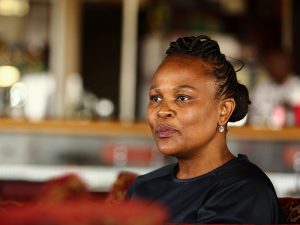
The biggest shock appointment of the year so far isn’t England manager Roy Hodgson, but an overlooked Nigerian who should have taken top job at the World Bank

World Bank misses out?

The biggest shock appointment of the year so far isn’t England manager Roy Hodgson, but an overlooked Nigerian who should have taken top job at the World Bank

Africa wanted her, Brazil wanted her, senior staff of the World Bank wanted her and even outgoing president Robert Zoellick wanted her. And yet the next president of the World Bank, replacing Zoellick, will not be Nigeria’s reforming, female Finance Min...

Waging wars against oil subsidies to the middle classes, Nigeria’s central banker, Dr Lamido Sanusi, is not short of adversaries

Lamido Sanusi fights Nigerian corruption

Waging wars against oil subsidies to the middle classes, Nigeria’s central banker, Dr Lamido Sanusi, is not short of adversaries

Most central bankers live behind closed doors, spending much of the day poring over pages of data before emerging to make the occasional speech about the economic outlook. But that’s not how Dr Lamido Sanusi, the governor of Nigeria’s central bank,...

European banks take €530bn of ECB’s fund

Europe’s banks have relied on the ECB yet again. But will funds be distributed fairly?

European banks snapped up €530bn from the ECB in late March in the second offering of low-cost three year funds by the bank in recent times. Expectations are that this money will eventually find its way to businesses and cash strapped governments who ha...

As the RBI defends its monetary policy as 'stable', commentators and investors have been disappointed with recent indecision

Was the Reserve Bank of India’s policy review a non-event?

As the RBI defends its monetary policy as ‘stable’, commentators and investors have been disappointed with recent indecision

Leading figures from the banking industry in Mumbai described the Indian Reserve Bank’s decision to leave all key interest rates unchanged as ‘on expected lines’. They identified the bank’s reduction of the cash reserve ratio by 75 basis points...

Sir Mervyn King continues to face sharp criticism

As credit issues rumble on in the UK and the eurozone, the Governor of the Old Lady of Threadneedle Street continues to come under the critical gaze of many

Governor of the Bank of England, Sir Mervyn King, has been the focus of heavy criticism since markets crashed. He has been in his post during some of the most difficult economic times in the UK, but some financiers believe that his actions worsened the cr...

Constantly answering to the press and politicians alike, the job of a central banker is never easy. We try to dig out some of the job's merits, comparing some of the best and worst performers

A thankless task?

Constantly answering to the press and politicians alike, the job of a central banker is never easy. We try to dig out some of the job’s merits, comparing some of the best and worst performers

Despite playing influential and crucial roles in the banking world, central bankers do not always earn exactly what members of the public might expect, based on the size and performance of the country they are representing. Britain's top central banker...

Bollard’s tenure to draw to a close

New Zealand’s central banker not seeking another term

The banking world is reacting to the recent news that Alan Bollard, Governor of New Zealand’s Central Bank, will step down after ten years at its helm. Famous for his tight control of interest rates, he guided the central bank through a period of both h...

Central Bank of Sri Lanka presents a model to follow

Despite domestic accusations of corruption and calls for reform Sri Lanka’s central bank still commands the basis of a largely successful infrastructure

The Central Bank of Sri Lanka is a relatively young establishment. It came into existence in 1950, two years after the country gained independence. The first bank governor appointed was John Exter, serving under the then Minister of Finance, J.R. Jayaward...

Bernanke and co under the microscope

The credit crisis has drawn the general public’s attention to the inner workings of central banks everywhere. World Finance considers the work done and undone by the US Fed Res

In the US there are two institutions that have authority over interest rates: the Federal Open Market Committee (FOMC) and the Board of Governors of the Federal Reserve. The board makes its decisions on interest rates after submissions by one or more of t...

The threat to financial stability is possibly even graver today than it was in 2008

Cross-border banking in the balance

The threat to financial stability is possibly even graver today than it was in 2008

The gravity of the eurozone crisis has finally sunk in. The stakes could not be higher. Governments and international financial institutions have scrambled to put together a solution within exceedingly tight political and economic constraints. Many questi...

Pakistani central bank governor quits

The governor and head of the State Bank of Pakistan, Salim Raza, has resigned following two years at the bank

Pakistan's central bank governor has stepped down citing "personal reasons," two days before the announcement of the 2010/11 federal budget, the Finance Ministry said. "We don't know what the reasons are for the resignation, but the timing of it can be wo...

ECB to cut rates as focus on bond buys intensifies

The ECB is expected to cut rates and unveil a new package of bank aid on Thursday, with markets also watching for any hint it …

The ECB is expected to cut rates and unveil a new package of bank aid on Thursday, with markets also watching for any hint it will intensify its bond buying support for the bloc's struggling periphery, setting the stage for a critical eurozone summit. ...

Banco Central do Brasil supports nation’s growth

The central bank of any country wields a great deal of sway over the prospects of that country. In Brazil, the central bank has a long list of adorers

Like many nations around the world, the function of the banking system in Brazil includes a central bank. This bank, the Banco Central do Brasil, serves as the primary force behind monetary policy within the country. Formed in 1964 and functioning under t...

Central bankers step in to manage growth

From the Central Bank of India to the European Central Bank to the US Federal Reserve, central banks the world over are establishing themselves more and more in the play of markets

The role of central banks in protecting the integrity of the economy is crucial. In fact, this role is often considered to be key to whether or not a nation experiences extreme financial shifts, such as severe recessions or periods of inflation and how lo...

‘Russia must address fundamentals’

Do the Russian authorities and banking professionals share the same vision for strategic development of the banking system? Promsvyazbank (PSB) President Artem Konstandian discusses the development of privately owned banks in Russia

In a nutshell, the vision of the Russian government for future development of the national banking sector may be summarised as follows: Russian banks must become bigger and stronger. Having fought the liquidity crisis throughout 2009 and dealt with the fi...

<< Older posts

Delve into the archive...

Explore the 2012 list here >>

Highest corporate tax
rates in Europe

European countries are scrambling to raise every last penny of funds through taxes. But some countries may have gone too far...

Belgium

Though all business taxes in Belgium can be paid online with little effort and preparation, the rates are still sky-high at 57.7 percent, including a staggering 50.8 percent total rate on profits only in social security contributions.

Belarus

In Belarus, a company spends up to 338 hours annually preparing for and paying ten different taxes and duties. The total tax rate has incredibly been lowered to 60.7 percent, from 117.5 percent in 2008.

France

A company in France pays seven different taxes and duties, the sum of which can amount to 65.7 percent of profits; though President François Hollande has announced a wave of business tax rate cuts coming up.

Estonia

A business in Estonia pays 67.3 percent of profits in tax, 37.2 percent exclusively in social security contributions. The country has gone against the grain in Europe by raising businesses taxes from 48.6 percent in 2008 to the current rates.

Italy

While corporate income tax (IRES) in Italy is limited to 38 percent of taxable profit, a company operating in Italy can expect to pay 14 other taxes and duties, including social security contributions, bringing their total payable tax to 68.7 percent of profits, according to the World Bank.

Norway

Norway taxes motor fuels twice, with a road use tax and a CO2 emissions tax. Combined with strikes in the energy sector that have curbed output, the price of gas at a local pump has soared to $10.12 per gallon.

Turkey

Though Turkey sits on the Suez Canal and neighbours many oil rich countries, the price of a gallon of average gas clocks in at $9.41 in Turkish pumps, because of a 60 percent share of taxes. 

Israel

Like Turkey, Israel is surrounded by oil-rich neighbours, but drills very little itself. Gas prices are controlled by the government, so about half of the $9.28 per gallon goes to taxes.

Hong Kong

There are few gas stations in Hong Kong, but the ones available charge up to 76 percent more per gallon than mainland China, where the government caps the cost of fuel. A gallon at the pumps will cost around $8.61 on the island.

Netherlands

Expensive labour costs make the Dutch petrol prices the dearest in Europe, at $8.26 per gallon; though the 57 percent tax add-ons don’t help.

The credit crisis

8 February 2007
HSBC warns of subprime mortgage losses

2 April 2007
New Century goes bus

14 September 2007
Wholesale markets have dried up

17 March 2008
Rescue of Bear Stearns

7 September 2008
Rescue of Fannie Mae

15 September 2008
Lehman Brothers file for bankruptcy

3 October 2008
US congress approves $700bn bailout

14 February 2009
$787bn stimulus approved by congress


The effects of the current financial crisis are global and irrefutable. With the collapse of Lehman Brothers, the domino effect of irresponsible public monetary policies, huge levels of unsustainable debt, and a deregulated financial sector, has escalated to the point where no corner of the globe has been left untouched.

1973 oil crisis

October 1973
Syria and Egypt launch an attack on Israel on Yom Kippur and set off a twenty day war;

1977
US President Carter creates Department of Energy, which develops the US strategic petroleum reserve


The Organisation of Petroleum Exporting Countries (OPEC) used their oil reserves as a weapon with the Arab Oil Embargo against those who supported Israel. By January 1974, world oil prices were four times higher than they were at the start of the crisis, especially in the US, and the shock led to a huge drop in the stock market with NYSE losing $97bn in just six weeks.  The embargo lasted five months, and the effects are still seen today.

German hyperinflation

1922-1923

Hyperinflation
1923 – 1924
Stabilisation


The trouble began when Germany missed a repatriation payment, worth about one third of the German deficit in this period. Inflation was already high but by 1923 it was raging. Prices doubled within hours, and by late 1923, it cost 200bn marks to buy a single loaf of bread. People burned money as it was cheaper than buying firewood. Germany eventually regained control of its economy when it introduced the Rentenmark into circulation in 1923, and then the Reichmark in 1924.

The Great Depression

1929-1933
The Great Crash
1934-1939
Recovery and Recession


After the decadence of the Roaring Twenties, the 1930s saw the biggest economic slump of all time. The stock market crashed on 29 October 1929, and optimism and decadent living tumbled along with the figures. The GDP fell from $103.6bn in 1929, to $66bn in 1934 and the subsequent years of recovery were the most dramatic in US history.

1907 bankers’ panic

1907
Otto Heinze and his brother Augustus Heinze bought shares of United Copper.


The stock market was already cautious over the tight money supply, but the US was thrown into a depression after the stock market fell nearly 50 percent from its peak in 1906. The Heinze brothers thought they could influence market shares but ended up bankrupting lenders that provided the financing to buy the stock. A chain reaction left nine institutions bankrupt. By February 1908, the panic was over and the government created the Federal Reserve system, to prevent banks from exercising too much control over the economy.