


New routes to a better world and health for all

Download Video: MP4, WebM, Ogg

Above: EXPO 2020: Can İzmir deliver “Health for all”?

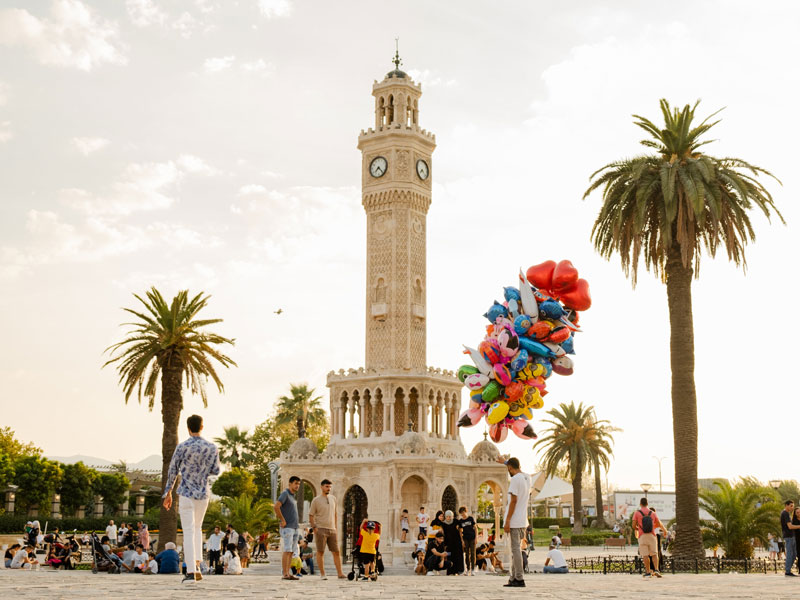
Izmir, candidate city for EXPO 2020, has a rich history of providing forward-thinking luminaries in healthcare. Keeping with that theme, Izmir’s message for 2020 is better health for all

EXPO 2020 Izmir will be a major step forward in solving the health challenges the world faces today. EXPO 2020 Izmir aims to increase awareness of health among individuals and signpost healthy living habits in different countries. It will demonstrate best practices and innovative approaches to health issues. Izmir plans to bring together people, organisations, and companies to work for a healthier world.

The world deserves a healthier future
Health is one of the most important issues in mankind’s history. Today, developing and developed countries alike are both confronted by diverse challenges on healthcare. Izmir dreams of a world where everyone can receive high-quality healthcare services. With EXPO 2020, Izmir wants to be the platform that brings together all countries to share problems, as well as solutions, for a healthier world.

EXPO 2020 Izmir is designed to assist in the worldwide battle against health challenges and help make life better for the people of all countries. Specifically, it will draw on what we believe is Turkey’s remarkable experience in creating high-quality modern health services for its people in recent years.

Turkey is already sharing its vision on world health with other countries through international aid and relief efforts.Through EXPO 2020 Izmir, Turkey plans to share its experience and learn from others.

How will Izmir 2020 improve health?
EXPO 2020 Izmir will be designed to bring together people, organisations, companies, and systems from across the world, harnessing their energies to serve the common goal of ‘Health for All’ for humanity.

EXPO 2020 Izmir will focus on best practice, innovation, and areas of success in healthcare. The aim will be to show what has been achieved in healthcare globally and how those achievements can be rolled out to others. Izmir plans to put particular stress on innovation and practicality. Izmir’s ‘Health for All’ vision can be turned into reality by implementing four sub-themes for both individuals and society:
- ‘Healthy Living’ is the key to improving the living standards and prolonging lives
of individuals;
- A focus on ‘Public Health and Education’ will permit the effective and equitable use of healthcare resources;
- ‘Innovation’ will provide solutions for current and future health issues;
- ‘Care and Collaboration’ will bring together all involved to act upon global challenges.

The perfect site for EXPO
Izmir has been a world famous city for health for centuries. Izmir’s Asklepion was the world’s first ever mental health hospital and the school of many famous doctors.

Throughout the centuries, Izmir has provided health and healing to its people and its visitors with its medical centres, thermal springs and curative waters. Today, healthy living continues to be a tradition in Izmir.

Citizens of Izmir love exercising and prefer a light, olive oilbased cuisine. Izmir is also a very relaxed and a safe city despite being Turkey’s third-biggest economical force.

Nowadays, Izmir has many health projects underway, in order to be the international health centre of its region in the future.

Izmir possesses all the qualities needed to be the host for EXPO. It is only a three-hour distance by air from almost 50 countries and is located next to the sea, containing many unique historical and tourist sites. Izmir is offering Inciraltı, one of its most beautiful localities, for EXPO. Inciraltı lies by the seashore. It is full of natural wonders and it is easy to reach. Zaha Hadid, winner of the Pritzker Architecture Prize, will design Izmir’s EXPO site.

A land of sunshine
Since the very earliest times, the Izmir region has been blessed with a unique combination of resources: dazzling natural beauty, gracious cities and fine buildings, a healthy and talented population, and consequently a thriving economy with a high level of prosperity.

Now, Izmir would like to share these blessings with the whole world in an EXPO 2020 that will help future generations enjoy better and healthier lives. Good health should come before everything else in life. Today, modern medicine and healthy living make it possible to free people from age-old scourges which have blighted countless lives down the ages. Izmir invites you to join it in the sunshine of EXPO 2020 Izmir, building a better life for humanity in all countries.

Izmir believe in EXPO
Turkey’s government, the people of Izmir and the whole country pledge their full support for Izmir’s EXPO 2020 candidacy. Izmir is ready to do all that is required to make its dream of ‘Health for All’ into a reality.

Tags:
Comments: 0
Join the discussion below

The May – June 2013 Issue

Highest corporate tax
rates in Europe

European countries are scrambling to raise every last penny of funds through taxes. But some countries may have gone too far...

Belgium

Though all business taxes in Belgium can be paid online with little effort and preparation, the rates are still sky-high at 57.7 percent, including a staggering 50.8 percent total rate on profits only in social security contributions.

Belarus

In Belarus, a company spends up to 338 hours annually preparing for and paying ten different taxes and duties. The total tax rate has incredibly been lowered to 60.7 percent, from 117.5 percent in 2008.

France

A company in France pays seven different taxes and duties, the sum of which can amount to 65.7 percent of profits; though President François Hollande has announced a wave of business tax rate cuts coming up.

Estonia

A business in Estonia pays 67.3 percent of profits in tax, 37.2 percent exclusively in social security contributions. The country has gone against the grain in Europe by raising businesses taxes from 48.6 percent in 2008 to the current rates.

Italy

While corporate income tax (IRES) in Italy is limited to 38 percent of taxable profit, a company operating in Italy can expect to pay 14 other taxes and duties, including social security contributions, bringing their total payable tax to 68.7 percent of profits, according to the World Bank.

Norway

Norway taxes motor fuels twice, with a road use tax and a CO2 emissions tax. Combined with strikes in the energy sector that have curbed output, the price of gas at a local pump has soared to $10.12 per gallon.

Turkey

Though Turkey sits on the Suez Canal and neighbours many oil rich countries, the price of a gallon of average gas clocks in at $9.41 in Turkish pumps, because of a 60 percent share of taxes. 

Israel

Like Turkey, Israel is surrounded by oil-rich neighbours, but drills very little itself. Gas prices are controlled by the government, so about half of the $9.28 per gallon goes to taxes.

Hong Kong

There are few gas stations in Hong Kong, but the ones available charge up to 76 percent more per gallon than mainland China, where the government caps the cost of fuel. A gallon at the pumps will cost around $8.61 on the island.

Netherlands

Expensive labour costs make the Dutch petrol prices the dearest in Europe, at $8.26 per gallon; though the 57 percent tax add-ons don’t help.

The credit crisis

8 February 2007
HSBC warns of subprime mortgage losses

2 April 2007
New Century goes bus

14 September 2007
Wholesale markets have dried up

17 March 2008
Rescue of Bear Stearns

7 September 2008
Rescue of Fannie Mae

15 September 2008
Lehman Brothers file for bankruptcy

3 October 2008
US congress approves $700bn bailout

14 February 2009
$787bn stimulus approved by congress


The effects of the current financial crisis are global and irrefutable. With the collapse of Lehman Brothers, the domino effect of irresponsible public monetary policies, huge levels of unsustainable debt, and a deregulated financial sector, has escalated to the point where no corner of the globe has been left untouched.

1973 oil crisis

October 1973
Syria and Egypt launch an attack on Israel on Yom Kippur and set off a twenty day war;

1977
US President Carter creates Department of Energy, which develops the US strategic petroleum reserve


The Organisation of Petroleum Exporting Countries (OPEC) used their oil reserves as a weapon with the Arab Oil Embargo against those who supported Israel. By January 1974, world oil prices were four times higher than they were at the start of the crisis, especially in the US, and the shock led to a huge drop in the stock market with NYSE losing $97bn in just six weeks.  The embargo lasted five months, and the effects are still seen today.

German hyperinflation

1922-1923

Hyperinflation
1923 – 1924
Stabilisation


The trouble began when Germany missed a repatriation payment, worth about one third of the German deficit in this period. Inflation was already high but by 1923 it was raging. Prices doubled within hours, and by late 1923, it cost 200bn marks to buy a single loaf of bread. People burned money as it was cheaper than buying firewood. Germany eventually regained control of its economy when it introduced the Rentenmark into circulation in 1923, and then the Reichmark in 1924.

The Great Depression

1929-1933
The Great Crash
1934-1939
Recovery and Recession


After the decadence of the Roaring Twenties, the 1930s saw the biggest economic slump of all time. The stock market crashed on 29 October 1929, and optimism and decadent living tumbled along with the figures. The GDP fell from $103.6bn in 1929, to $66bn in 1934 and the subsequent years of recovery were the most dramatic in US history.

1907 bankers’ panic

1907
Otto Heinze and his brother Augustus Heinze bought shares of United Copper.


The stock market was already cautious over the tight money supply, but the US was thrown into a depression after the stock market fell nearly 50 percent from its peak in 1906. The Heinze brothers thought they could influence market shares but ended up bankrupting lenders that provided the financing to buy the stock. A chain reaction left nine institutions bankrupt. By February 1908, the panic was over and the government created the Federal Reserve system, to prevent banks from exercising too much control over the economy.