After facing pressure trade commissioner temporarily reduces levy to stimulate negotiations
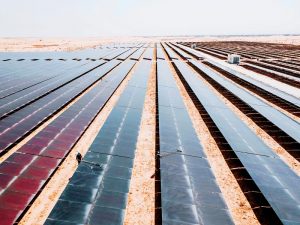
The European Commission has temporarily lowered sanctions against solar panels imported from China, in an attempt to stave off a potential trade war. The original plan was to levy sanctions of up to 47 percent on solar panels imported from China, which...
While Africa emerges as a strong contender to supply oil worldwide, finding the right support for its growth is crucial.
Africa is a crucial source of oil supply to some of the world’s most commodity-hungry economies. In recent years the continent has attracted significant investment from independents looking to capitalise on this proven resource base. One of the most suc...
World Finance interviews Yuriy Rubin, Chief Financial Officer of Irkutsk Oil Company, on the company’s east Siberia drilling and highly productive Yaraktinsky field
Irkutsk Oil Company has enjoyed great success recently, with a growth rate of 65 percent for the last five years, and 2.3m tonnes of liquids produced in 2012, double that of the previous year. Chief Financial Officer Yuriy Rubin outlines some of the key d...
The potash project has been put on hold amid soaring prices and delays
Argentina has given Vale, the world’s largest producer of iron ore, until the end of February to decide when work will be resumed in the potash project in Rio Colorado after work was suspended in December. Vale has requested tax deferrals of up to $2bn ...
Amplats to close mines, cut jobs
Anglo American Platinum (Amplats) has announced plans to close four mines and sell off another as part of an overhaul of its South African operations. The world’s largest producer of platinum said that lower demand and higher costs had made the operatio...
Looking to increase economic development, Irene N Muloni and FA Kabagambe-Kaliis address how Uganda has emerged from severe power shortages with the Bujagali Hydropower Project
In 2006, Uganda was faced with an acute power supply shortage of between 90 and 210MW, which affected all sectors of the economy. The manufacturers and providers of commercial services were not able to operate in a predictable manner. As a result, thOrgan...
Over the past decade, Colombia has gone through major internal changes to encourage growth and build wealth. Few would argue, however, that its domestic security has shone as brightly
A state presence in most areas has drawn the attention of many international corporations now seeking a place in and a share of the growing Colombian market and economy. This is precisely what President Juan Manuel Santos – the former minister of defenc...
ACWA Power has been providing energy and desalinated water to the Middle East for five years, and has now embarked on a series of new business opportunities overseas, while investing in new technology
ACWA Power is not an ordinary energy company. It was founded less than a decade ago as an independent water and power developer in Saudi Arabia, but has since transformed into a major international energy and desalinated water producer. In times of long-t...
Capacity for innovation, as well as a team of experienced and well trained staff, has allowed Pacific Rubiales to become the first independent Colombian producer of oil and gas
Colombia is a country that is always changing. The political dynamics, changes in social conditions, and the perceptions of its citizens about the present and future are continually in flux. That climate of change extends to the economy too. From a nbuy c...
Rosneft and BP have established a new global energy alliance, which many believe will be beneficial to both companies. Jinan Harb assesses the situation
For years, BP has been struggling with a joint venture that made it a business partner with a selection of Russian billionaires. Now, board members have found a strategic way out through a cash-and-shares deal worth £16.8bn, that will make it a shareho...
With new developments in intelligent policy making and robust investments in technology, the US is on course to reach energy independence by 2020. But will other countries look to follow suit?
New technologies have opened innovative frontiers for exploration, and research continues to churn up cleaner and more efficient alternatives. The instance has responded to the public criticism of hydraulic fractioning (known as fracking) by investing in ...
Climate change talks disappoint most delegates
Appropriately, the issue of hot air was easily the most strenuously debated matter at the Doha talks on climate change that ended mid-December with a hastily assembled agreement in the final hours. With the deadline already passed, chairman Abdullah bin H...
Oil and gas companies face multiple issues; uncertain availability of resources, competition from new energies, and pressure from environmental groups. World Finance presents its 2012 Oil & Gas Awards to the companies that are best securing the industry’s future
The past few years have been a rollercoaster for the oil and gas industry. It has been affected by internal and external factors that couldn’t have been predicted, causing a mixture of results for the sector. The oil and gas industry is one that face...
Pacific Rubiales Energy has just been included in the Jantzi Index, a testament to its international standing, and is already planning for the future
Sustainalytics, a world leader in the investigation and analysis of environmental, social and ESG corporate governance issues, has announced the inclusion of Pacific Rubiales Energy (Pacific) in the Jantzi Social Index. In a statement, Sustainalytics said...
While only 19 countries currently export liquid gas, the rise in LNG projects means reserves can be sold across the globe
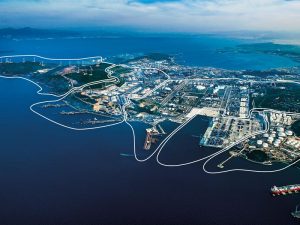
The topography of the Gulf of Mexico’s coastline might have been designed for the hydrocarbons business. In a flat landscape, a shoreline punctuated with bayous and other watery inlets offers havens for big ships to load and unload cargoes of oil, gas a...
European countries are scrambling to raise every last penny of funds through taxes. But some countries may have gone too far...
Though all business taxes in Belgium can be paid online with little effort and preparation, the rates are still sky-high at 57.7 percent, including a staggering 50.8 percent total rate on profits only in social security contributions.
In Belarus, a company spends up to 338 hours annually preparing for and paying ten different taxes and duties. The total tax rate has incredibly been lowered to 60.7 percent, from 117.5 percent in 2008.
A company in France pays seven different taxes and duties, the sum of which can amount to 65.7 percent of profits; though President François Hollande has announced a wave of business tax rate cuts coming up.
A business in Estonia pays 67.3 percent of profits in tax, 37.2 percent exclusively in social security contributions. The country has gone against the grain in Europe by raising businesses taxes from 48.6 percent in 2008 to the current rates.
While corporate income tax (IRES) in Italy is limited to 38 percent of taxable profit, a company operating in Italy can expect to pay 14 other taxes and duties, including social security contributions, bringing their total payable tax to 68.7 percent of profits, according to the World Bank.
Norway taxes motor fuels twice, with a road use tax and a CO2 emissions tax. Combined with strikes in the energy sector that have curbed output, the price of gas at a local pump has soared to $10.12 per gallon.
Though Turkey sits on the Suez Canal and neighbours many oil rich countries, the price of a gallon of average gas clocks in at $9.41 in Turkish pumps, because of a 60 percent share of taxes.
Like Turkey, Israel is surrounded by oil-rich neighbours, but drills very little itself. Gas prices are controlled by the government, so about half of the $9.28 per gallon goes to taxes.
There are few gas stations in Hong Kong, but the ones available charge up to 76 percent more per gallon than mainland China, where the government caps the cost of fuel. A gallon at the pumps will cost around $8.61 on the island.
Expensive labour costs make the Dutch petrol prices the dearest in Europe, at $8.26 per gallon; though the 57 percent tax add-ons don’t help.
8 February 2007
HSBC warns of subprime mortgage losses
2 April 2007
New Century goes bus
14 September 2007
Wholesale markets have dried up
17 March 2008
Rescue of Bear Stearns
7 September 2008
Rescue of Fannie Mae
15 September 2008
Lehman Brothers file for bankruptcy
3 October 2008
US congress approves $700bn bailout
14 February 2009
$787bn stimulus approved by congress
The effects of the current financial crisis are global and irrefutable. With the collapse of Lehman Brothers, the domino effect of irresponsible public monetary policies, huge levels of unsustainable debt, and a deregulated financial sector, has escalated to the point where no corner of the globe has been left untouched.
October 1973
Syria and Egypt launch an attack on Israel on Yom Kippur and set off a twenty day war;
1977
US President Carter creates Department of Energy, which develops the US strategic petroleum reserve
The Organisation of Petroleum Exporting Countries (OPEC) used their oil reserves as a weapon with the Arab Oil Embargo against those who supported Israel. By January 1974, world oil prices were four times higher than they were at the start of the crisis, especially in the US, and the shock led to a huge drop in the stock market with NYSE losing $97bn in just six weeks. The embargo lasted five months, and the effects are still seen today.
1922-1923
Hyperinflation
1923 – 1924
Stabilisation
The trouble began when Germany missed a repatriation payment, worth about one third of the German deficit in this period. Inflation was already high but by 1923 it was raging. Prices doubled within hours, and by late 1923, it cost 200bn marks to buy a single loaf of bread. People burned money as it was cheaper than buying firewood. Germany eventually regained control of its economy when it introduced the Rentenmark into circulation in 1923, and then the Reichmark in 1924.
1929-1933
The Great Crash
1934-1939
Recovery and Recession
After the decadence of the Roaring Twenties, the 1930s saw the biggest economic slump of all time. The stock market crashed on 29 October 1929, and optimism and decadent living tumbled along with the figures. The GDP fell from $103.6bn in 1929, to $66bn in 1934 and the subsequent years of recovery were the most dramatic in US history.
1907
Otto Heinze and his brother Augustus Heinze bought shares of United Copper.
The stock market was already cautious over the tight money supply, but the US was thrown into a depression after the stock market fell nearly 50 percent from its peak in 1906. The Heinze brothers thought they could influence market shares but ended up bankrupting lenders that provided the financing to buy the stock. A chain reaction left nine institutions bankrupt. By February 1908, the panic was over and the government created the Federal Reserve system, to prevent banks from exercising too much control over the economy.