Real Estate

The property investment seesaw

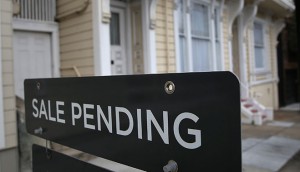
Why is residential property – thought to be one of the chief catalysts of the ongoing financial crisis – today seen as a prime market for investment?

How can a property sector be one of the causes of the global financial crisis and at the same time a safe investment for many investors because of the financial crisis? Looking back at the last six years, this is exactly what has happened to residential p...

Many housing markets around the world are still suffering. Latest figures suggest that European real estate markets could be in serious trouble when central banks eventually stop propping them up

The harsh realities of European real estate

Many housing markets around the world are still suffering. Latest figures suggest that European real estate markets could be in serious trouble when central banks eventually stop propping them up

The house-price boom that preceded the financial crisis was remarkable for its scope and scale. With very few exceptions, there seemed only one way for prices to go: up. Things have been more diverse since, and the latest review of house prices by analyst...

Qatar will be rapidly expanding its real estate presence over the next 10 years as it gets ready to welcome visitors from across the globe for the World Cup in 2022

Setting the foundations

Qatar will be rapidly expanding its real estate presence over the next 10 years as it gets ready to welcome visitors from across the globe for the World Cup in 2022

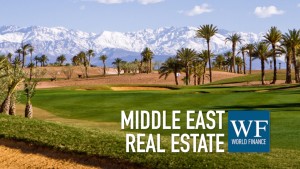
Rapidly expanding Arab countries, rich from an abundance of oil and gas, have been eager to invest in their infrastructure in order to provide the foundations for a future not solely reliant on fossil fuels. While parts of the UAE, such as Dubai and Abu D...

Ahead of Asia’s property curve

With a strong presence across Asia, CapitaLand has harnessed innovative measures to grow its core markets

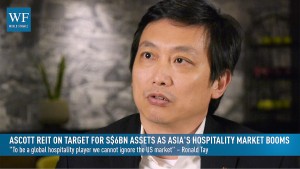
As one of Asia’s largest listed real estate companies, CapitaLand has group-managed assets of S$63bn. Its core businesses in real estate and hospitality services are focused on markets in Singapore, China and Australia. The company’s portfolio – whi...

With the UK’s bank base rate at 0.5 percent for 3.5 years, pain continues for investors. Will peer-to-peer asset-backed lending provide them with a real alternative?

The benefits of peer-to-peer lending

With the UK’s bank base rate at 0.5 percent for 3.5 years, pain continues for investors. Will peer-to-peer asset-backed lending provide them with a real alternative?

The UK base rate has been held at 0.5 percent since March 2009, and investors holding cash tend to receive very poor returns if their main concern is capital preservation. Relendex – a new peer-to-peer lending marketplace – may have an attractive a...

Super-prime property becomes safe haven

In difficult economic times high-end property might be worth a look, writes Sergio Burns

These are not the best of times for investors. Sheltered harbours in which to anchor assets, as we search for wealth generating opportunities, seem difficult to find. Volatile equity markets, a eurozone still in intensive care and with investor faith in b...

Qatar is investing in infrastructure projects to become the next rising star of the Middle East. The Wall, a Doha-based real estate developer, has been taking advantage of the country’s steady growth

Qatari real estate prepares for World Cup

Qatar is investing in infrastructure projects to become the next rising star of the Middle East. The Wall, a Doha-based real estate developer, has been taking advantage of the country’s steady growth

Qatar is growing fast. In 2011, the oil-rich Gulf state saw its real GDP grow by 18.8 percent – the world’s fastest rate, and one that European economies can only wish for. It may still only be the 52nd wealthiest country in terms of GDP, but in the w...

Plugging the property funding gap

The UK’s troubled property market could benefit from peer-to-peer exchanges such as the one offered by Relendex. Such systems could provide some much-needed lending capacity

The banking crisis in the UK over the last few years has created a problem for the real estate market. With an inability to get loans, borrowers are struggling to secure and retain properties. Banks have been constrained by the need to clean up their bala...

Spanish real estate – what happened after the bubble burst?

Spanish companies in the struggling real estate sector are trying to escape the shackles of their domestic country

Actividades de Construction y Servicios (ACS), which had  the defunct financial institution Bankia as one of its major investors, is rumoured to be looking for a buyer for its own headquarters. It has already pledged €900m worth of shares in German bui...

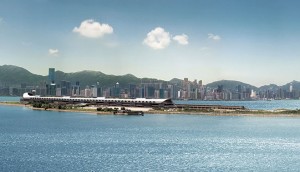
Analysts argue the Hong Kong property market remains unhinged following cases of corruption amidst growth forecasts

Sales and sins

Analysts argue the Hong Kong property market remains unhinged following cases of corruption amidst growth forecasts

Figures released by the Land Registry indicate that sales of new properties have increased and have led to a growth in sales of 10.7 percent from 2011 figures, with 3,884 properties going under the hammer in February. John Tsang, the Hong Kong Financia...

Property markets in Abu Dhabi have struggled over the last few years. However, after a few much-needed stimulants, the sector is up and running again

Wealth on the horizon

Property markets in Abu Dhabi have struggled over the last few years. However, after a few much-needed stimulants, the sector is up and running again

Industry experts indicated in mid-March that recent talks of mergers between major property developers in Abu Dhabi is a signal that the real estate industry in the capital is passing through a market cycle. After rents reached record highs in 2008 the...

Shenzhen property prices stumble

If property prices are anything to go by, China might have hit a bump in the road to becoming the world’s biggest economy

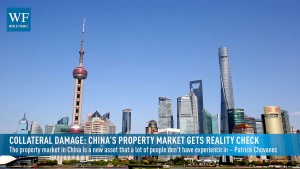
For the last few years, the Chinese economy has been booming, as corporate growth, rising property prices and an expanding middle class have fuelled an incessant upward trend in the country. some experts are concerned that this streak may be coming to an ...

US real estate market to recover as house prices stabilise

Prices stabilise in the US property sector as 2012 promises growth

The chief economist of the National Association of Realtors is very upbeat about the US real estate market for 2012. In fact he predicts an across the board increase of two percent in house prices for the year. Lawrence Yun was addressing the NAR annual c...

Chinese property developers look abroad

Chinese real estate magnates have started to look toward international markets for investment options

The Chinese government’s attempts to calm down what it perceives to be inflated property prices has resulted in a number of Chinese developers moving to the international market. The government seems serious about preventing a similar real estate bu...

African property markets skyrocket

Regions throughout Africa enjoying international interest in domestic property markets

More and more countries are showing interest in investing in Africa. There are certain countries on the continent where property prices have escalated significantly over the past decade. Currently, the most expensive real estate in Africa can be found in ...

<< Older posts

Delve into the archive...

Explore the 2012 list here >>

Highest corporate tax
rates in Europe

European countries are scrambling to raise every last penny of funds through taxes. But some countries may have gone too far...

Belgium

Though all business taxes in Belgium can be paid online with little effort and preparation, the rates are still sky-high at 57.7 percent, including a staggering 50.8 percent total rate on profits only in social security contributions.

Belarus

In Belarus, a company spends up to 338 hours annually preparing for and paying ten different taxes and duties. The total tax rate has incredibly been lowered to 60.7 percent, from 117.5 percent in 2008.

France

A company in France pays seven different taxes and duties, the sum of which can amount to 65.7 percent of profits; though President François Hollande has announced a wave of business tax rate cuts coming up.

Estonia

A business in Estonia pays 67.3 percent of profits in tax, 37.2 percent exclusively in social security contributions. The country has gone against the grain in Europe by raising businesses taxes from 48.6 percent in 2008 to the current rates.

Italy

While corporate income tax (IRES) in Italy is limited to 38 percent of taxable profit, a company operating in Italy can expect to pay 14 other taxes and duties, including social security contributions, bringing their total payable tax to 68.7 percent of profits, according to the World Bank.

Norway

Norway taxes motor fuels twice, with a road use tax and a CO2 emissions tax. Combined with strikes in the energy sector that have curbed output, the price of gas at a local pump has soared to $10.12 per gallon.

Turkey

Though Turkey sits on the Suez Canal and neighbours many oil rich countries, the price of a gallon of average gas clocks in at $9.41 in Turkish pumps, because of a 60 percent share of taxes. 

Israel

Like Turkey, Israel is surrounded by oil-rich neighbours, but drills very little itself. Gas prices are controlled by the government, so about half of the $9.28 per gallon goes to taxes.

Hong Kong

There are few gas stations in Hong Kong, but the ones available charge up to 76 percent more per gallon than mainland China, where the government caps the cost of fuel. A gallon at the pumps will cost around $8.61 on the island.

Netherlands

Expensive labour costs make the Dutch petrol prices the dearest in Europe, at $8.26 per gallon; though the 57 percent tax add-ons don’t help.

The credit crisis

8 February 2007
HSBC warns of subprime mortgage losses

2 April 2007
New Century goes bus

14 September 2007
Wholesale markets have dried up

17 March 2008
Rescue of Bear Stearns

7 September 2008
Rescue of Fannie Mae

15 September 2008
Lehman Brothers file for bankruptcy

3 October 2008
US congress approves $700bn bailout

14 February 2009
$787bn stimulus approved by congress


The effects of the current financial crisis are global and irrefutable. With the collapse of Lehman Brothers, the domino effect of irresponsible public monetary policies, huge levels of unsustainable debt, and a deregulated financial sector, has escalated to the point where no corner of the globe has been left untouched.

1973 oil crisis

October 1973
Syria and Egypt launch an attack on Israel on Yom Kippur and set off a twenty day war;

1977
US President Carter creates Department of Energy, which develops the US strategic petroleum reserve


The Organisation of Petroleum Exporting Countries (OPEC) used their oil reserves as a weapon with the Arab Oil Embargo against those who supported Israel. By January 1974, world oil prices were four times higher than they were at the start of the crisis, especially in the US, and the shock led to a huge drop in the stock market with NYSE losing $97bn in just six weeks.  The embargo lasted five months, and the effects are still seen today.

German hyperinflation

1922-1923

Hyperinflation
1923 – 1924
Stabilisation


The trouble began when Germany missed a repatriation payment, worth about one third of the German deficit in this period. Inflation was already high but by 1923 it was raging. Prices doubled within hours, and by late 1923, it cost 200bn marks to buy a single loaf of bread. People burned money as it was cheaper than buying firewood. Germany eventually regained control of its economy when it introduced the Rentenmark into circulation in 1923, and then the Reichmark in 1924.

The Great Depression

1929-1933
The Great Crash
1934-1939
Recovery and Recession


After the decadence of the Roaring Twenties, the 1930s saw the biggest economic slump of all time. The stock market crashed on 29 October 1929, and optimism and decadent living tumbled along with the figures. The GDP fell from $103.6bn in 1929, to $66bn in 1934 and the subsequent years of recovery were the most dramatic in US history.

1907 bankers’ panic

1907
Otto Heinze and his brother Augustus Heinze bought shares of United Copper.


The stock market was already cautious over the tight money supply, but the US was thrown into a depression after the stock market fell nearly 50 percent from its peak in 1906. The Heinze brothers thought they could influence market shares but ended up bankrupting lenders that provided the financing to buy the stock. A chain reaction left nine institutions bankrupt. By February 1908, the panic was over and the government created the Federal Reserve system, to prevent banks from exercising too much control over the economy.