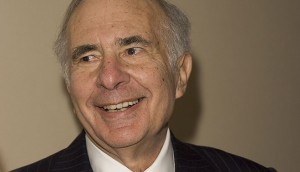
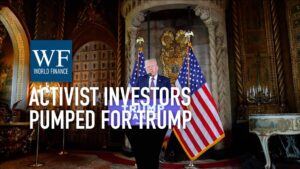
In a large-scale case of corporate back scratching, some of the world’s biggest private equity investment firms are accused of colluding to keep the cost of takeover deals down, writes Jordan Bintcliffe
“Henry Kravis just called to say congratulations and that they were standing down”, wrote Hamilton James, President of Blackstone – a rival private equity company to Kohlberg Kravis Roberts (KKR). “[Kravis] had told me before they would not jump a...
The Czech Republic is experiencing high levels of market saturation in its telecommunications industry. T-Mobile is working to maintain its position as a leader in that market
According to many, the old world ended on December 21, 2012 and we have entered a new, more spiritual era. Frankly, I’m not sure about that, but what I know for sure is that we have entered a new business era. And, on a personal note, this is the first ...
As businesses recover from the global meltdown, treasury management is becoming essential. World Finance presents its 2012 Treasury Management Awards to companies which show promise for the future
Treasury management has long been an important aspect of many corporations’ financial management. It ensures the business is accurately tracking its daily sales and payments in an effective manner, while also having sufficient liquidity to meet both exp...
Despite Brazilian equities receiving lacklustre interest from investors, one firm is outperforming the market. Partners Hugh Anthony Harley and Alexandre Sabanai told World Finance how Perfin Investimentos has done it
Despite being one of the economies tipped to dominate in the next few years, Brazil has experienced a relatively difficult period in its equity markets. In recent years, the Brazilian economy has seen money pour in off the back of enthusiasm for the count...
With more attention than ever on credit ratings, Blaise Ganguin, EMEA Head of Corporate & Infrastructure Ratings, Standard & Poor’s Ratings Services, asks whether they actually do the job they are designed for
The track record of our corporate ratings as indicators of default risk is very strong and has remained so during the financial crisis. But before examining this track record in detail, it is important to state what a credit rating actually is, and just a...
Vikram Pandit’s remuneration position considered misplaced
A plan that would have seen the chief executive of Citigroup, Vikram Pandit, receive tens of millions of dollars has been criticised by the company's shareholders. About 55 percent of the shareholders either refrained from voting or voted against the p...
The decade-old act that continues to keep a watchful eye. But is it enough?
The importance of secure internal financial control systems have long been realised by the business community. The Sarbanes-Oxley Act, 2002, named after Senator Paul Sarbanes and Representative Michael Oxley, has, however, shifted the responsibility for t...
With millions of dollars at stake in every-day global transactions, the need to process corporate actions correctly is paramount
The riskiest business line for custodians is corporate actions. The current approach inserts risk deep into the system at a sizeable cost to deal with risk consequences. This is driven by the need to multi-source, scrub, reconcile, and often manually re-e...
IGM Financial has a governance model developed over many years
IGM Financial is one of Canada's premier financial services companies, and one of the country's largest managers and distributors of mutual funds and other managed asset products. It trades on the Toronto Stock Exchange (TSX: IGM) and has a market capital...
Montreal-based Power Corporation of Canada is diversifying its international portfolio of funds to increase shareholder value
Founded in 1925, Power Corporation initially had interests in hydroelectric services. As the industry was gradually nationalised in the decades after, Power Corporation used the resulting capital to invest in a range of companies. Meanwhile, Paul Desmarai...
More and more organisations, from Apple to RBS, have recognised the importance of better investor relations
Investor relations is a term that is used to encompass the organised efforts of a publicly traded business to keep investors informed of what is happening within the company and with their investments in that company. Many businesses create a structured i...
Companies across the globe – including BMW, Unilever, HP, are increasing their CSR credentials
The concept of CSR is embraced by companies all over the world, with many choosing to comply with ISO 26000, a statement and guideline developed by the International Organisation for Standardisation in 2010. There are examples of exemplary implementation ...
The performance opportunities and cross-sectoral benefits generated by sustainability management and reporting have become even more compelling, writes Abdulkareem A. Abu Alnasr
In 2008, the responsible competitiveness initiatives of the King Khalid Foundation and SAGIA sought to catalyse awareness of sustainability issues. Three years on, I believe the time is now right for leading Saudi corporations to adopt sustainability repo...
Lonpac Insurance has made it its priority to focus on some of its newer business arms to ensure it offers the best service to its clientele
Lonpac Insurance is in a league of its own as it listens, learns and acts. The company’s receptiveness to customer needs, and its solid financial performance year after year, have undeniably turned the insurer into one of the winners within the Mala...
Business modernisation in rapidly growing economies is appealing to numerous international investors, who are shying away from the economic situation in Europe and the US
An increasing number of investors are turning their hand to international markets to harvest cross-border opportunities. Now more than ever, it has become crucial for companies to use their investor relations to connect with oversees governments to help f...
European countries are scrambling to raise every last penny of funds through taxes. But some countries may have gone too far...
Though all business taxes in Belgium can be paid online with little effort and preparation, the rates are still sky-high at 57.7 percent, including a staggering 50.8 percent total rate on profits only in social security contributions.
In Belarus, a company spends up to 338 hours annually preparing for and paying ten different taxes and duties. The total tax rate has incredibly been lowered to 60.7 percent, from 117.5 percent in 2008.
A company in France pays seven different taxes and duties, the sum of which can amount to 65.7 percent of profits; though President François Hollande has announced a wave of business tax rate cuts coming up.
A business in Estonia pays 67.3 percent of profits in tax, 37.2 percent exclusively in social security contributions. The country has gone against the grain in Europe by raising businesses taxes from 48.6 percent in 2008 to the current rates.
While corporate income tax (IRES) in Italy is limited to 38 percent of taxable profit, a company operating in Italy can expect to pay 14 other taxes and duties, including social security contributions, bringing their total payable tax to 68.7 percent of profits, according to the World Bank.
Norway taxes motor fuels twice, with a road use tax and a CO2 emissions tax. Combined with strikes in the energy sector that have curbed output, the price of gas at a local pump has soared to $10.12 per gallon.
Though Turkey sits on the Suez Canal and neighbours many oil rich countries, the price of a gallon of average gas clocks in at $9.41 in Turkish pumps, because of a 60 percent share of taxes.
Like Turkey, Israel is surrounded by oil-rich neighbours, but drills very little itself. Gas prices are controlled by the government, so about half of the $9.28 per gallon goes to taxes.
There are few gas stations in Hong Kong, but the ones available charge up to 76 percent more per gallon than mainland China, where the government caps the cost of fuel. A gallon at the pumps will cost around $8.61 on the island.
Expensive labour costs make the Dutch petrol prices the dearest in Europe, at $8.26 per gallon; though the 57 percent tax add-ons don’t help.
8 February 2007
HSBC warns of subprime mortgage losses
2 April 2007
New Century goes bus
14 September 2007
Wholesale markets have dried up
17 March 2008
Rescue of Bear Stearns
7 September 2008
Rescue of Fannie Mae
15 September 2008
Lehman Brothers file for bankruptcy
3 October 2008
US congress approves $700bn bailout
14 February 2009
$787bn stimulus approved by congress
The effects of the current financial crisis are global and irrefutable. With the collapse of Lehman Brothers, the domino effect of irresponsible public monetary policies, huge levels of unsustainable debt, and a deregulated financial sector, has escalated to the point where no corner of the globe has been left untouched.
October 1973
Syria and Egypt launch an attack on Israel on Yom Kippur and set off a twenty day war;
1977
US President Carter creates Department of Energy, which develops the US strategic petroleum reserve
The Organisation of Petroleum Exporting Countries (OPEC) used their oil reserves as a weapon with the Arab Oil Embargo against those who supported Israel. By January 1974, world oil prices were four times higher than they were at the start of the crisis, especially in the US, and the shock led to a huge drop in the stock market with NYSE losing $97bn in just six weeks. The embargo lasted five months, and the effects are still seen today.
1922-1923
Hyperinflation
1923 – 1924
Stabilisation
The trouble began when Germany missed a repatriation payment, worth about one third of the German deficit in this period. Inflation was already high but by 1923 it was raging. Prices doubled within hours, and by late 1923, it cost 200bn marks to buy a single loaf of bread. People burned money as it was cheaper than buying firewood. Germany eventually regained control of its economy when it introduced the Rentenmark into circulation in 1923, and then the Reichmark in 1924.
1929-1933
The Great Crash
1934-1939
Recovery and Recession
After the decadence of the Roaring Twenties, the 1930s saw the biggest economic slump of all time. The stock market crashed on 29 October 1929, and optimism and decadent living tumbled along with the figures. The GDP fell from $103.6bn in 1929, to $66bn in 1934 and the subsequent years of recovery were the most dramatic in US history.
1907
Otto Heinze and his brother Augustus Heinze bought shares of United Copper.
The stock market was already cautious over the tight money supply, but the US was thrown into a depression after the stock market fell nearly 50 percent from its peak in 1906. The Heinze brothers thought they could influence market shares but ended up bankrupting lenders that provided the financing to buy the stock. A chain reaction left nine institutions bankrupt. By February 1908, the panic was over and the government created the Federal Reserve system, to prevent banks from exercising too much control over the economy.